Essay | After RTA Next, Tucson advocates will keep fighting for safer streets
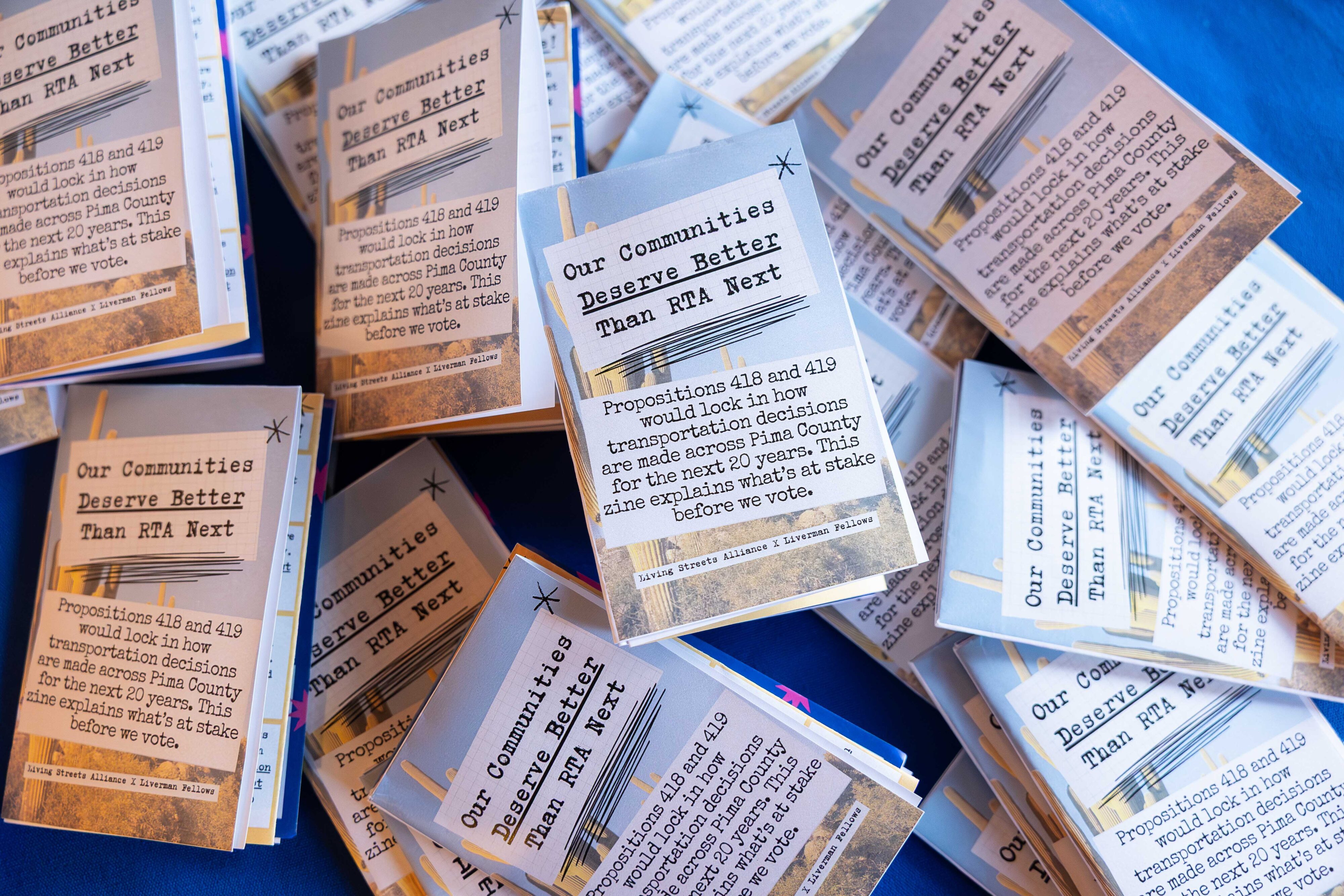
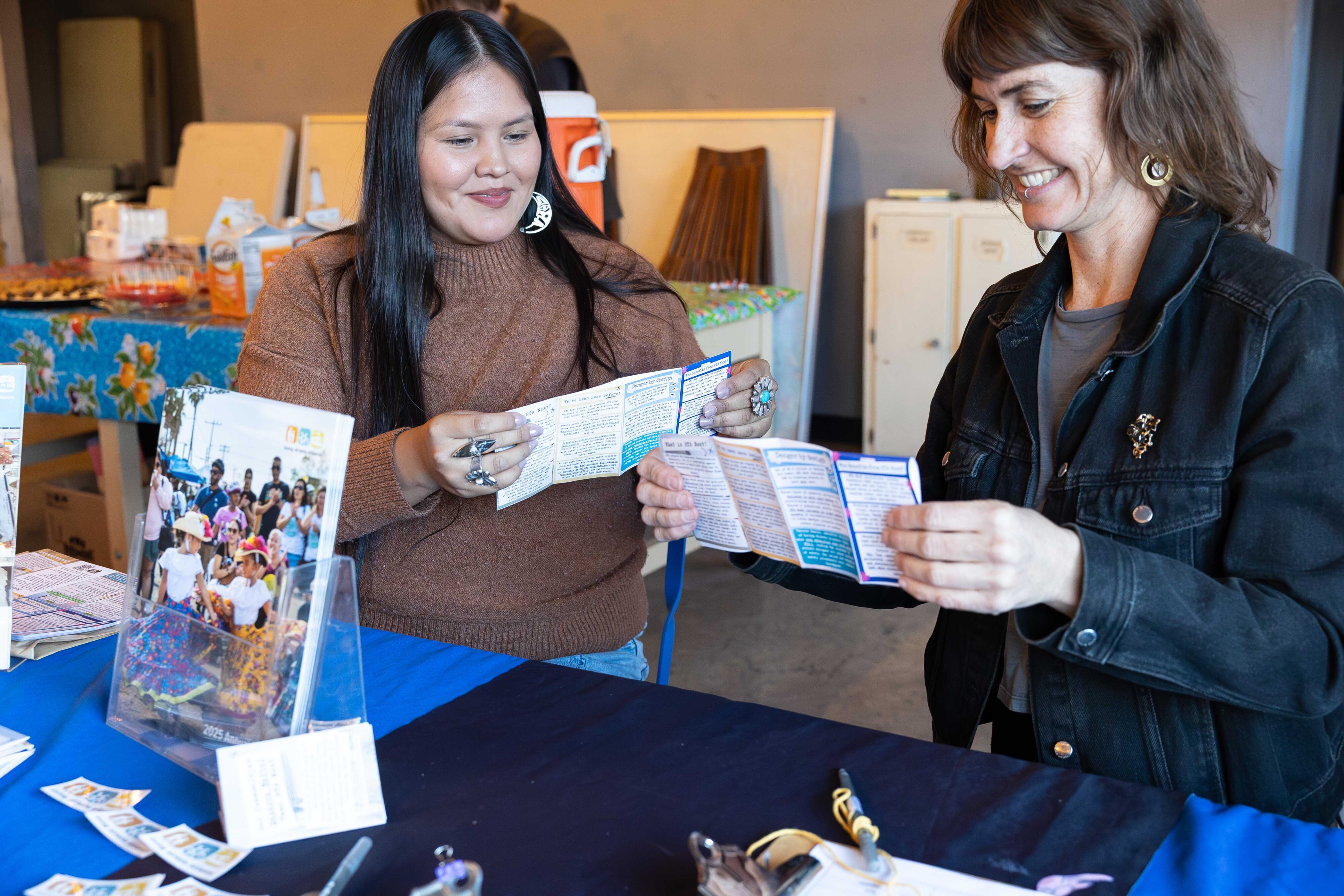
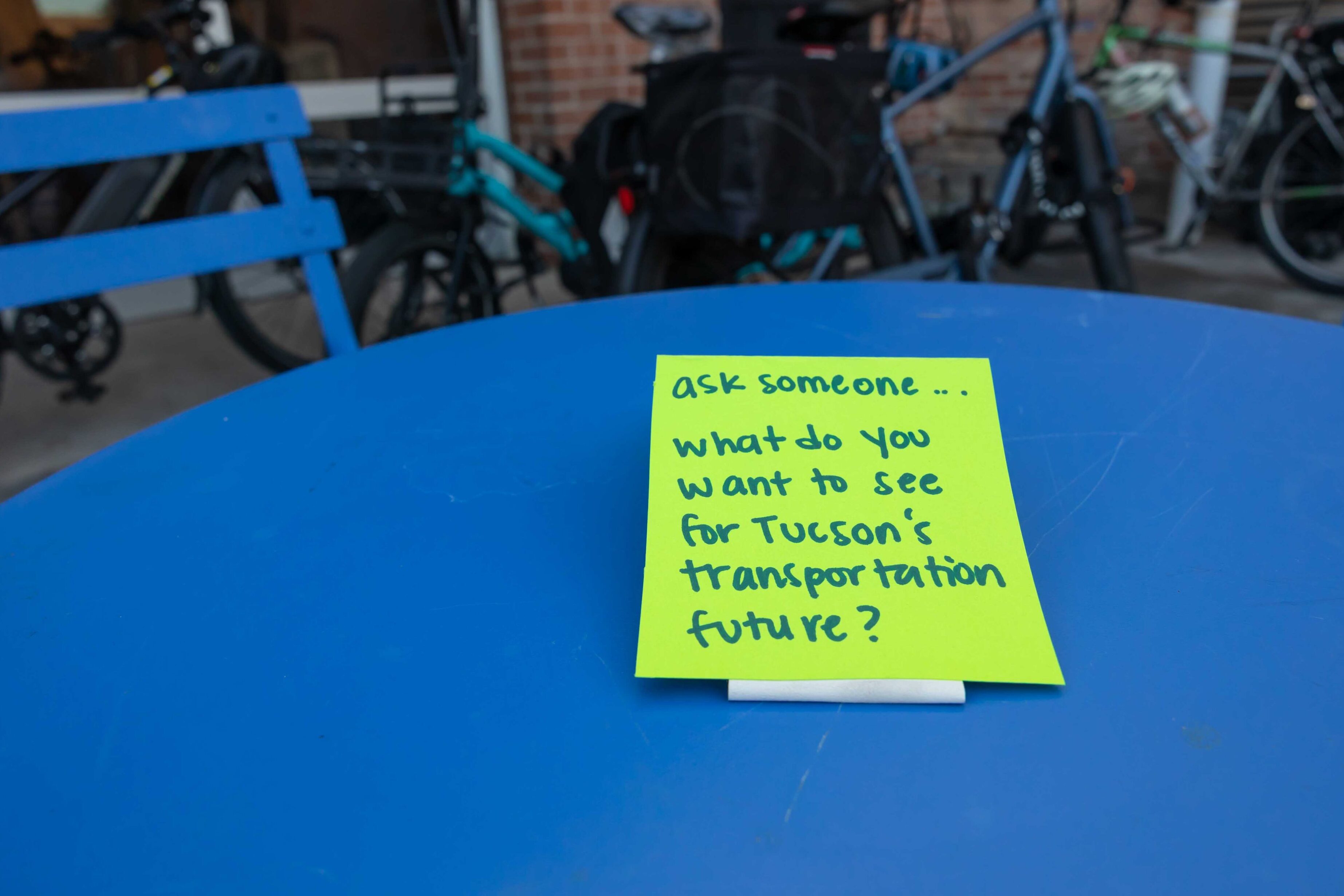
Stacks of small printed zines titled “Our Communities Deserve Better Than RTA Next,” created by the author and distributed at Living Streets Alliance’s “Let’s Talk RTA Next” community forum on Feb. 17, 2026.
This past March, voters in Pima County, Ariz., approved Propositions 418 and 419, together known as RTA Next, renewing a regional transportation tax first approved in 2006.
The Regional Transportation Authority, or RTA, is a countywide agency that uses a half-cent sales tax to fund roads, transit, and infrastructure projects across the Tucson region. The original 20-year plan, known as RTA One, was implemented in 2006 and set to expire in 2026. RTA Next extends that same model for another 20 years, which will raise an estimated $2.67 billion for transportation spending through 2046.
For supporters, the vote represented continuity and long-term investment. For adversaries, it raised a harder question: Why repeat a model that many believe failed to meet Tucson’s most urgent needs?
What RTA Next prioritizes
(Courtesy of Kathleen Dreier)
Several projects promised under RTA One remain unfinished, and RTA Next includes $257 million to complete those seven carryover projects that were not delivered under the original plan, asking voters to extend the tax and fund them again through a new package.
However, the concern over RTA Next was never only about delays in promised projects. Adversaries argue that it fundamentally misaligns with modern infrastructure needs by directing a significant share of roadway funding toward expansion and widening projects designed to move more cars, rather than designing intentional infrastructure to keep pedestrians and bicyclists safe.
This is particularly concerning given that Tucson streets remain among the most dangerous in the nation for people walking, with Smart Growth America ranking Tucson the third deadliest metro area in the United States for pedestrians in 2024.
Although RTA Next includes what it calls “modernization” projects, such as signal upgrades, bikeways, and sidewalks, local advocates like Logan Havens have argued that these improvements are limited in scope and not part of a system-wide strategy to enhance overall safety, reduce crashes, or protect vulnerable road users.
Highlighting this disparity in Tucson Opinion, a section of the Arizona Daily Star, Havens wrote:
While Tucson has adopted Complete Streets policies to prioritize vulnerable users, RTA standards still require vehicle level of service, (how fast cars move) takes precedence over safety outcomes. Tucson is approaching 100 roadway deaths per year, including drivers, pedestrians, and cyclists, even as average commute times remain lower than those of most peer cities. We do not have a crisis of congestion. We have a crisis of safety.
Other local advocates have also pointed out that RTA Next includes no clear safety targets or measurable outcomes to track whether the plan’s investments will actually reduce injuries or deaths. Without those benchmarks, it becomes difficult to hold the plan and overall system accountable or ensure that public dollars are improving everyday conditions for everyone who moves through Tucson.
Reimagining Tucson’s streets
In a desert city facing climate change, rising housing costs, and growing traffic violence, transportation planning becomes a question of public health and environmental justice. Everyone deserves to move through Tucson safely, whether they are living here, visiting, or simply passing through.
Since 2011, Living Streets Alliance has become a visible force in Tucson’s civic life, working to show that streets can be more than channels for traffic. Their mission is to “transform our streets into vibrant public places that bring people together and provide safe, accessible, and attractive transportation options.”
Through LSA’s advocacy, education, neighborhood partnerships, and public programming efforts, they have pushed for safer crossings, bike and pedestrian infrastructure, traffic calming, and transportation systems that reflect how communities here in Tucson actually live.
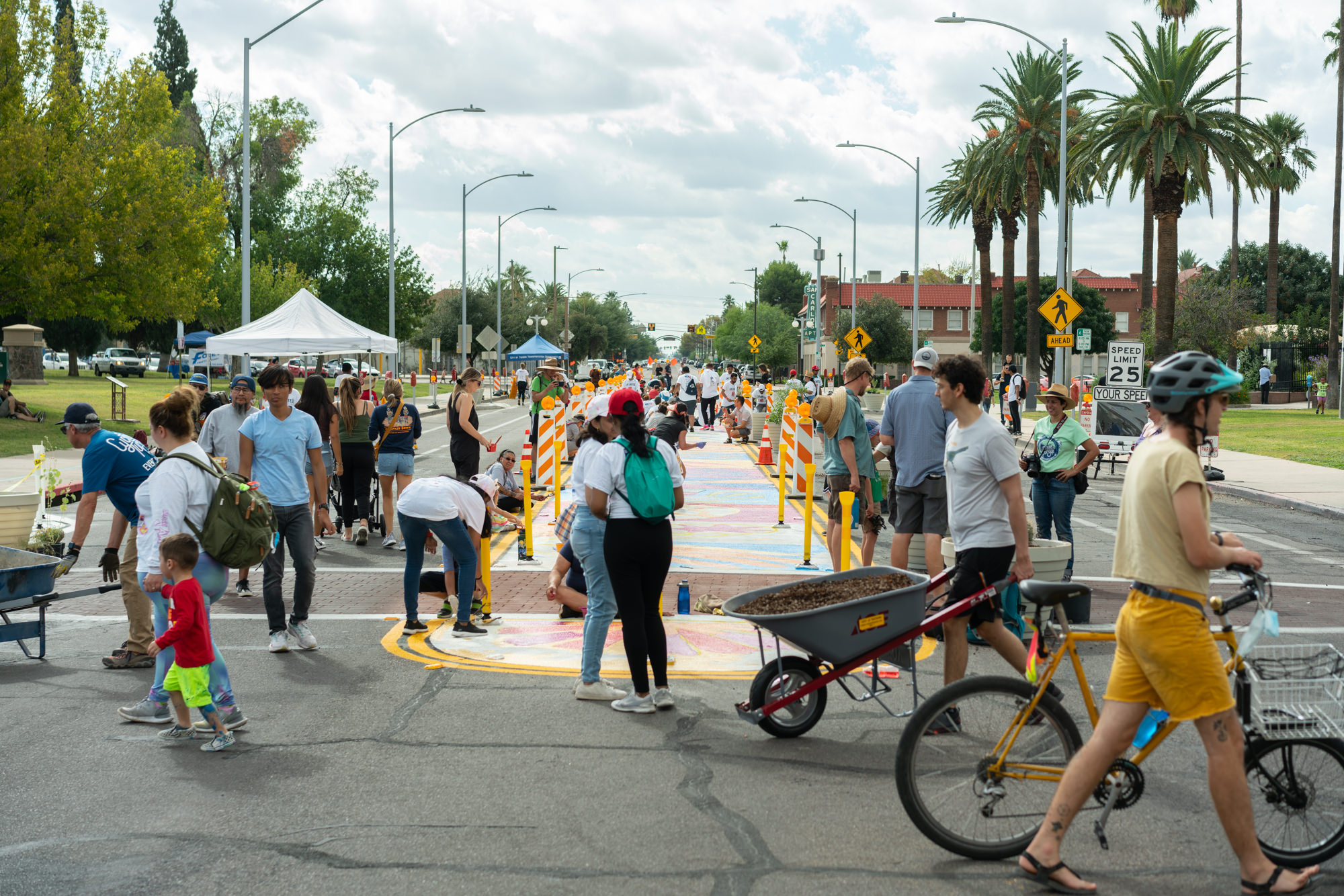
Living Streets Alliance’s Sixth Avenue Block Painting Party in 2022. (Courtesy of Logan Havens)
Over the years, the organization has invited Tucson residents to reimagine streets as places that can hold movement, gathering, play, shade, art, and everyday connection through initiatives like street painting parties, pocket parks, and the Safe Routes to School program, just to name a few. Through this work, they continue to show that transportation should be accessible for everyone.
Dreaming of better transportation futures through Cyclovia
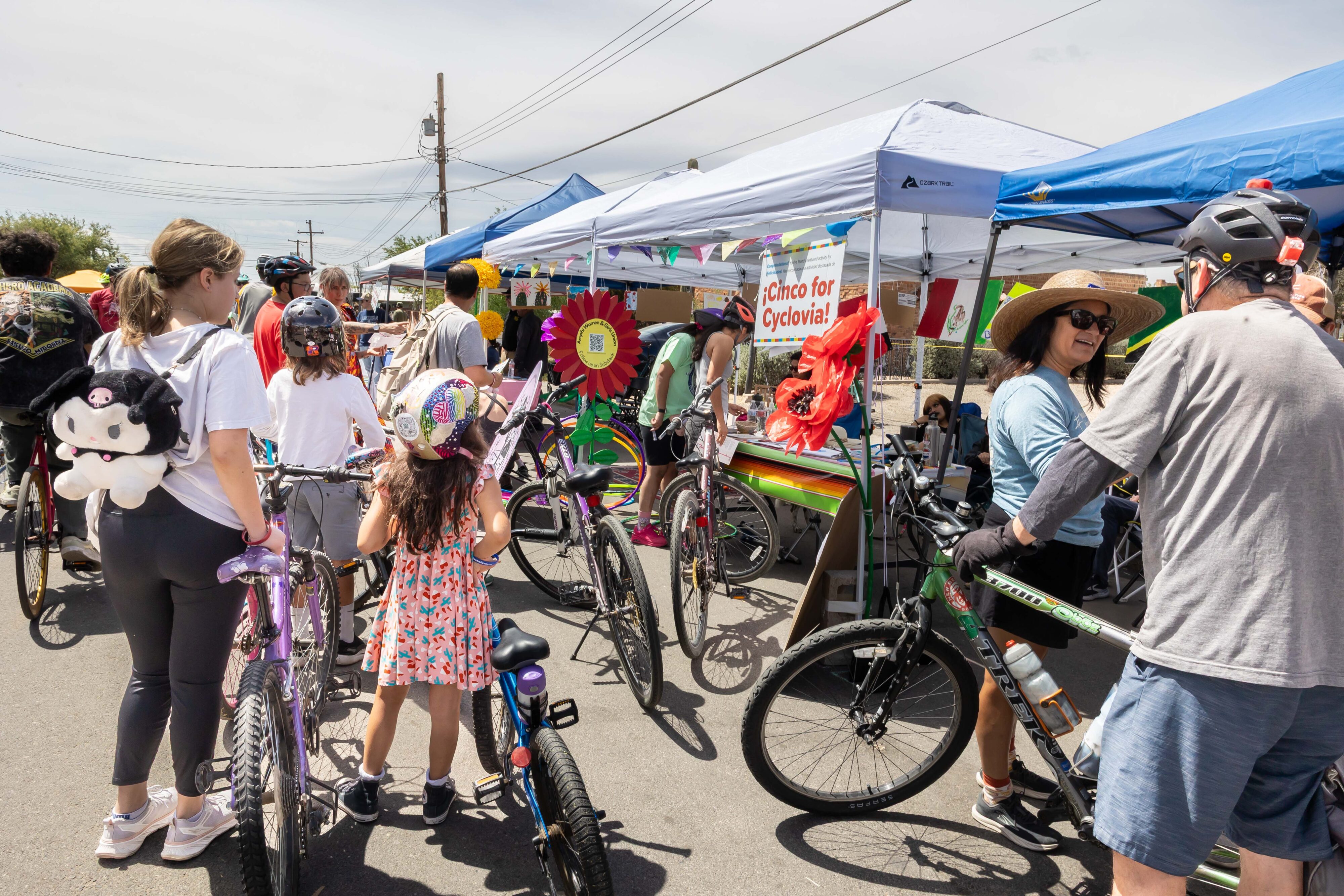
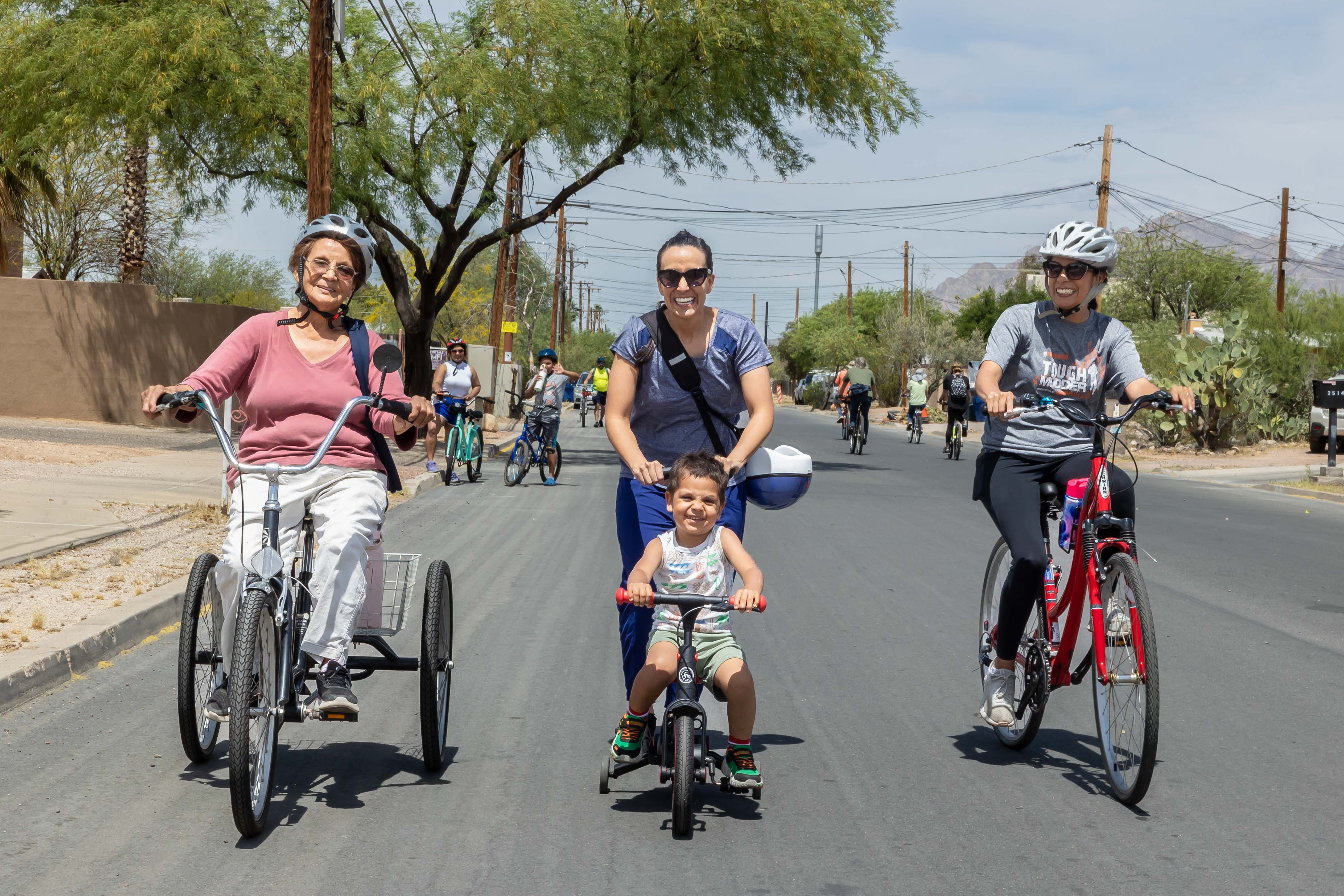
But LSA’s mission becomes most visible during Cyclovia Tucson, the organization’s signature open-streets event that temporarily transforms three miles of city roads into car-free public space for all. For a few hours, families, elders, youth, and neighbors move through Tucson by foot, bike, wheelchair, skates, and strollers without the usual sight of Tucson traffic. The streets become places to linger, support small businesses, participate in free activities, and be in community with others.
The community gathers for Cyclovia in April 2026. (Courtesy of Kathleen Dreier)
This spring’s Cyclovia featured more than 55 nonprofit and community organizations, 31 local businesses, free bike repairs, helmet giveaways, live DJs, dancers, food vendors, adaptive cycling demonstrations, and thousands of volunteer hours that helped bring the day to life. Neighborhood hubs welcomed residents with music, games, mutual aid, public resources, and cultural celebration. It was a beautiful representation of Tucson culture.
People of all ages enjoy the open streets during Cyclovia. (Courtesy of Kathleen Dreier)
In a place where so much urban design has centered on the car, Cyclovia offers a radical example of Tucson street futurisms, where safety, joy, mobility, and community can exist together. It reimagines public space in Tucson, showing us a version of shared roads and grounds where healthier, cleaner, and more connected ways of moving around the city are possible.
However, RTA Next offers a very different vision for Tucson’s streets, one that continues to prioritize expansion, speed, and car-centered infrastructure over the safety and everyday experience of the people who move through the city.
Living Street Alliance’s forum on RTA Next
Before the March vote, Living Streets Alliance became one of the clearest grassroots voices challenging RTA Next, organizing public forums, educational outreach, and community conversations about what kind of transportation future Tucson deserves.
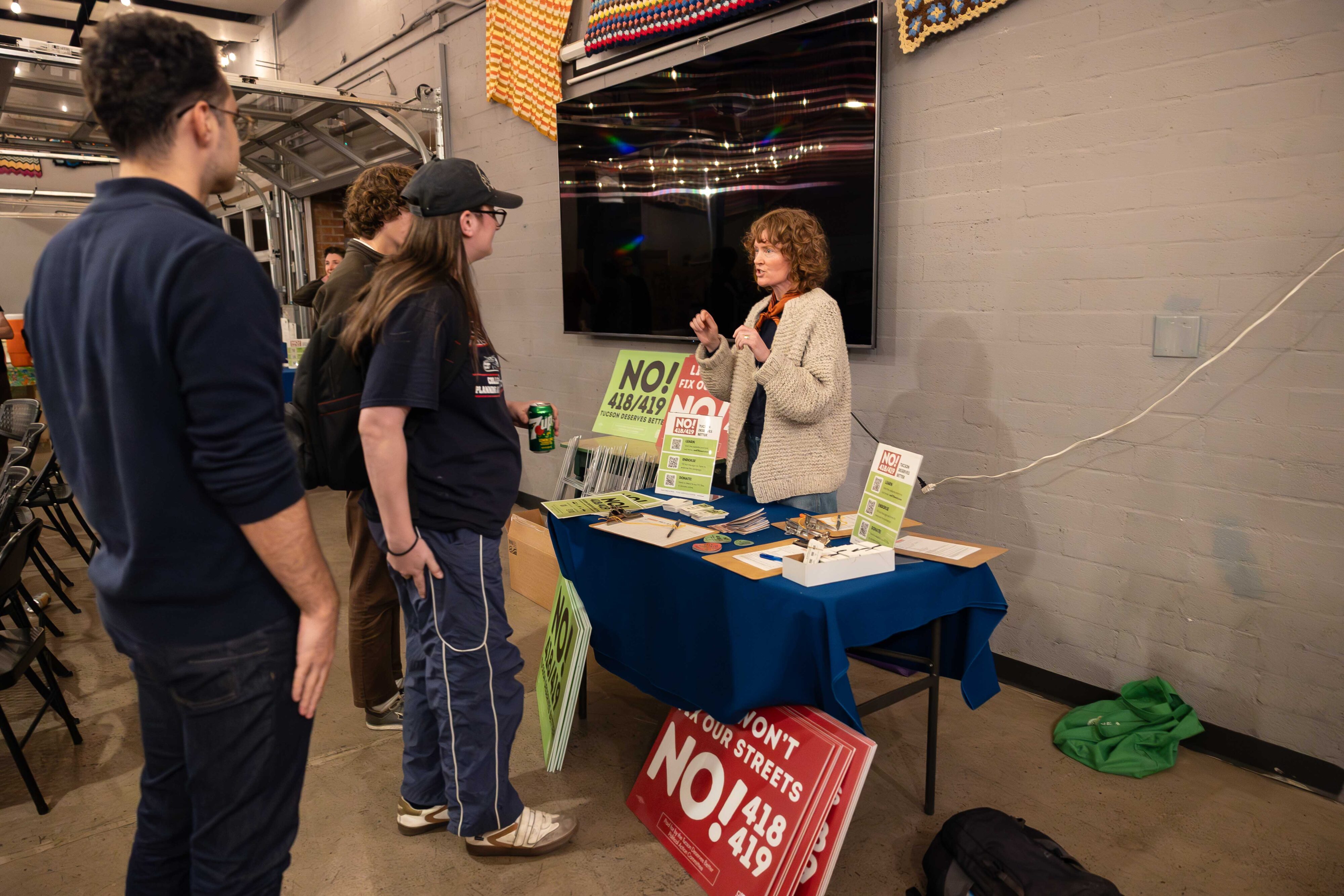
While the “yes” campaign for RTA Next was backed by major business interests and more than $1 million in funding for ads, mailers, and signage, the “no” campaign included local community organizers, advocates, and community members working alongside groups like Living Streets Alliance to share signage and information in their communities.
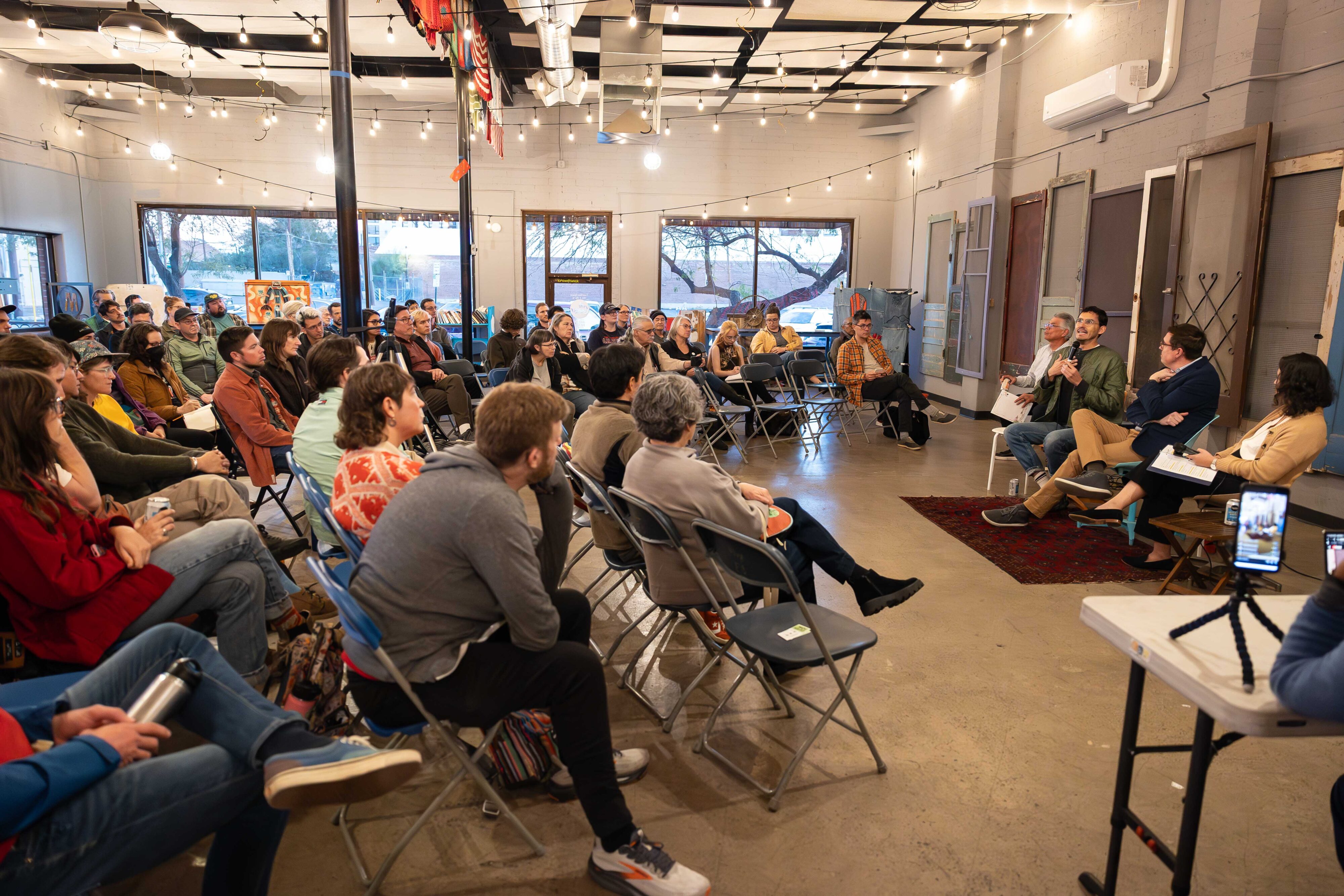
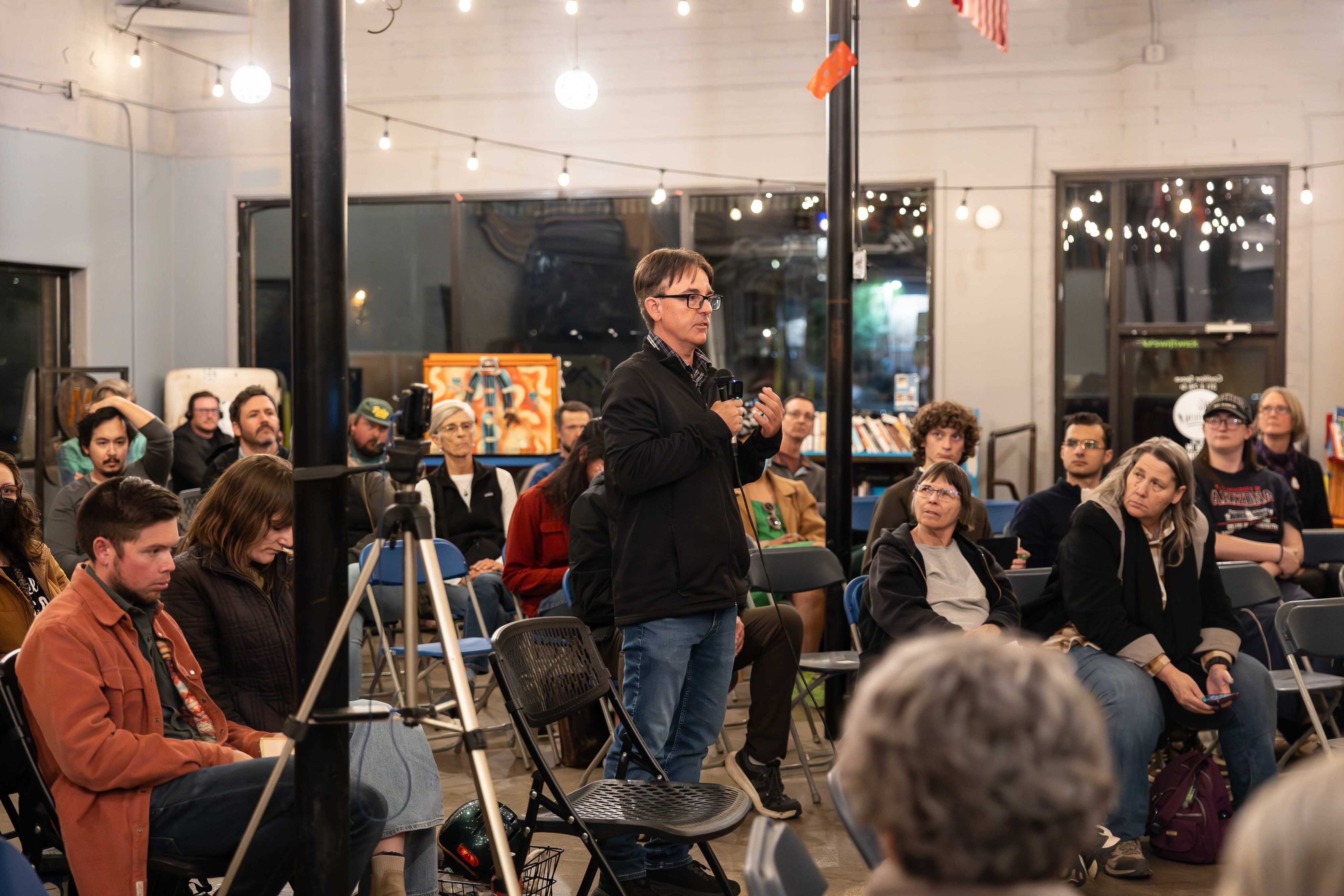
On Feb. 17, Living Streets Alliance hosted “Let’s Talk RTA Next,” a community forum that brought together Tucson community members and a panel of professionals including Havens, Albert Elías, Dr. Arlie Adkins, and Vanessa Cascio to examine what the proposal would mean for the city and the broader region.
A crowd of residents joined the expert panel at the “Let’s Talk RTA Next” forum in February 2026. (Courtesy of Kathleen Dreier)
The room was filled with a mix of students, organizers, longtime residents, and community members who came to listen, question, and understand what RTA Next could mean for the future of their community.
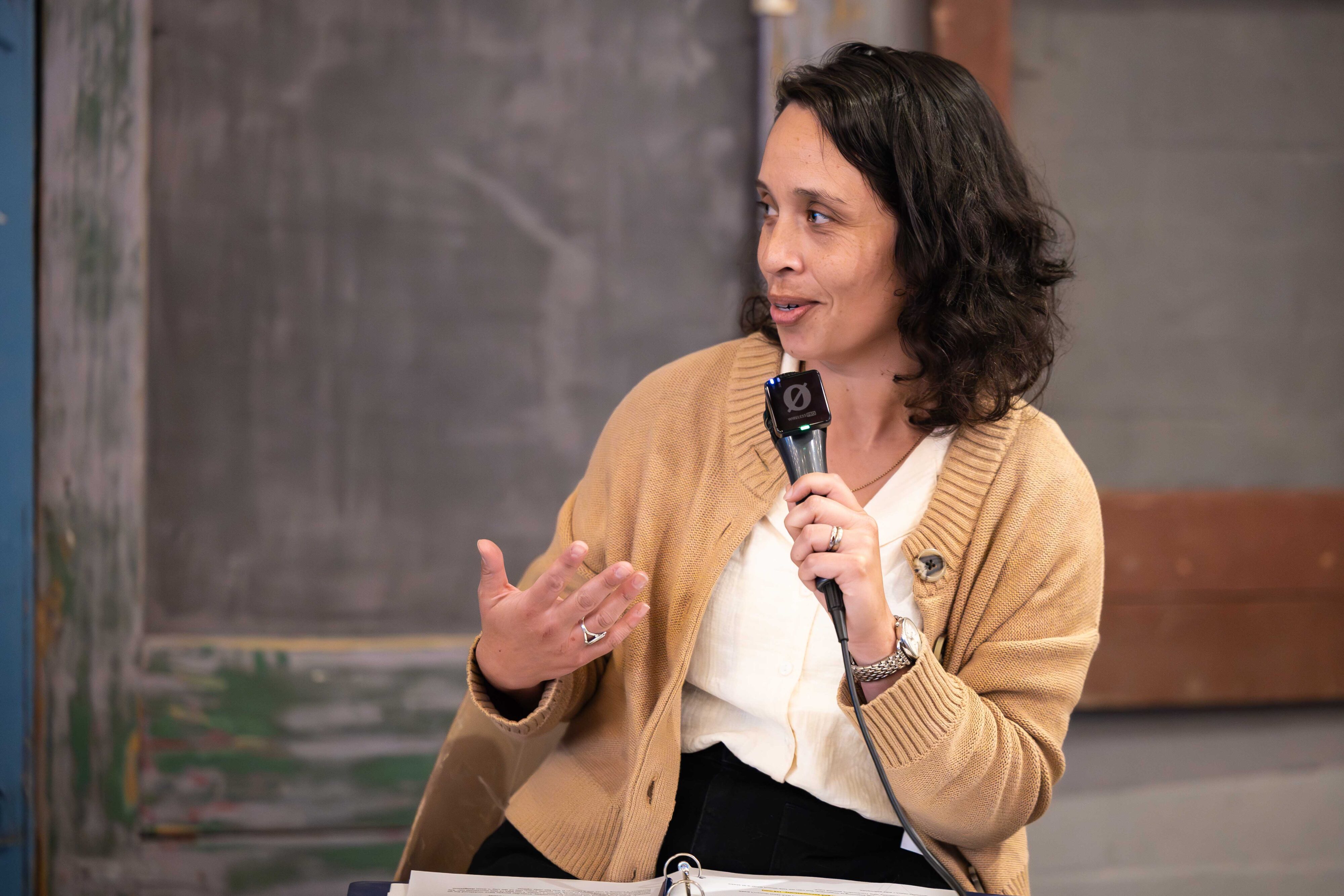
“After 20 years under the original RTA, Tucson’s streets are the most dangerous in the country,” said Cascio, Living Streets Alliance’s executive director. She also highlighted that pedestrian deaths had risen by 243% in Tucson, pointing to ongoing safety gaps that remain unaddressed within RTA Next.
Vanessa Cascio speaks at the “Let’s Talk RTA Next” forum. (Courtesy of Kathleen Dreier)
Cascio also argued that “a genuine regional transportation plan should be guided by safety, climate responsibility, and access,” adding that good transportation plans “set measurable goals, track progress, and adjust as needs change.” For Living Streets Alliance, the issue was never whether Tucson should invest in transportation; it was how that investment affects people’s everyday lives and whether it actually makes the city safer and more accessible.
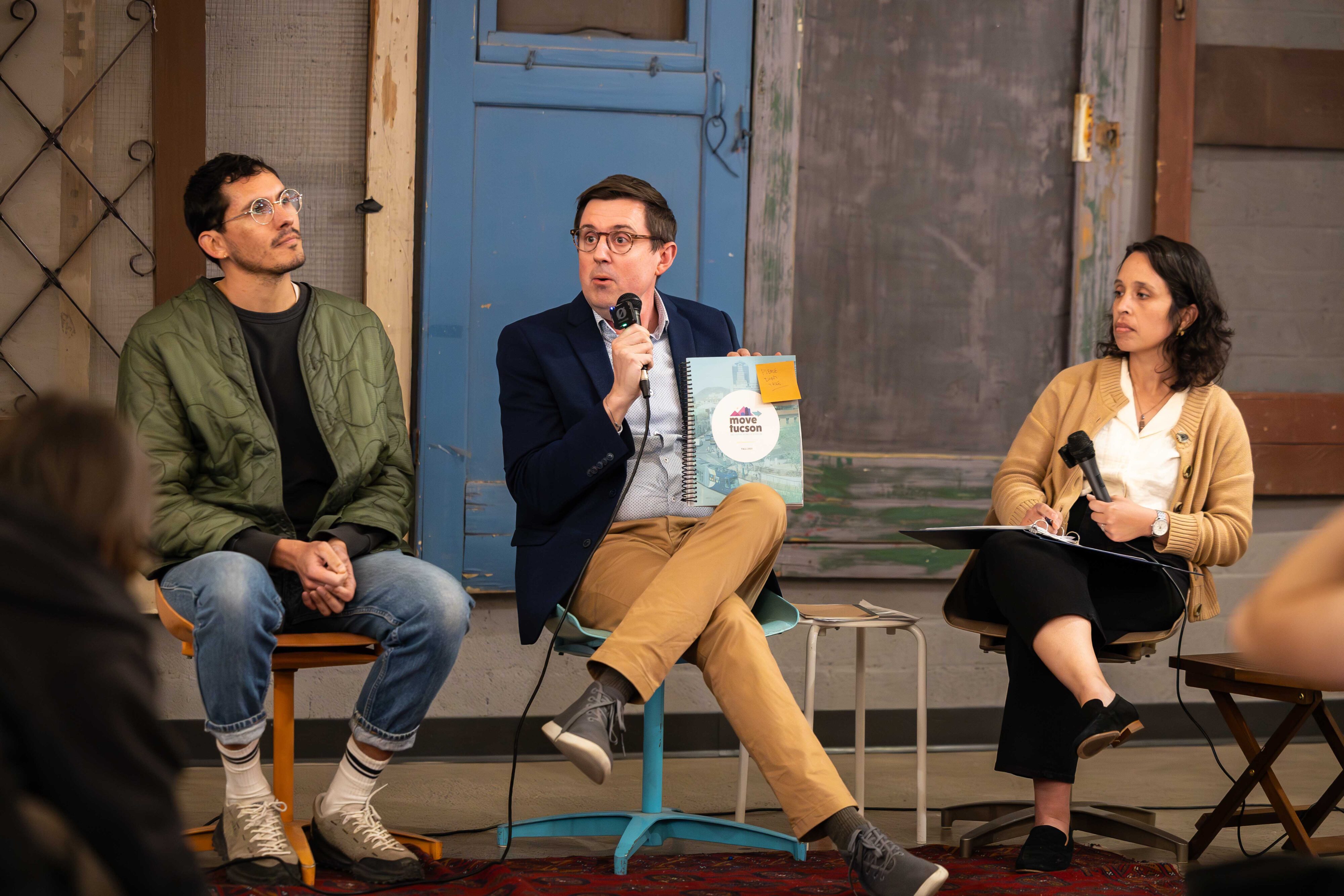
The forum was also about exploring stronger, community-driven alternatives that were built around the needs of the people who live in Pima County. During the discussion, Cascio raised the question of what it would mean for the region if RTA Next did not pass, opening space for the panel to consider other possible directions. The panelists pointed the conversation toward alternatives like Move Tucson, a city-led plan shaped through community input.
Arlie Adkins, associate professor of urban planning at the University of Arizona, center, speaks at the “Let’s Talk RTA Next” forum about Move Tucson while holding a physical copy of the plan. Logan Havens, left, and Vanessa Cascio are also pictured. (Courtesy of Kathleen Dreier)
The panelists emphasized that plans like Move Tucson offer a different model for what transportation planning in Tucson could look like. Unlike RTA Next, which is largely fixed over a 20-year timeline, Move Tucson is designed to evolve with the city, responding to community needs, changing conditions, and a shifting climate. In that sense, it functions less as a one-time alternative and more as an ongoing framework for imagining and building safer, more adaptable streets.
Ultimately, the forum offered a clearer understanding to the community of what RTA Next is and what it is not, also giving an opportunity to residents to ask questions, raise concerns, and consider alternatives that better reflect Tucson’s needs. The forum made it clear that conversations surrounding Tucson’s transportation future should not end after the election — that a paradigm shift is only possible through collective community oversight.
The work continues in Tucson’s streets
Today, Propositions 418 and 419 have passed, and RTA Next will shape Tucson’s streets for the next 20 years. For many in the community, that outcome feels like a loss — but it is not the only path forward, and it does not close off what Tucsonans decide to build alongside it.
Living Streets Alliance is continuing to work toward collective street futurisms through events like Cyclovia, community forums, Complete Streets advocacy, education, and programming across Tucson. Leaders are cultivating spaces where people can come together, share information, be creative, and take part in conversations about how the city should grow and who it should serve. At the same time, LSA also continues to point toward alternatives like Move Tucson, showing that other paths already exist and can be built from the needs and voices of the community.
RTA Next will move forward, but the people of Tucson will too. This work does not begin or end with one vote, and the future of Tucson’s streets will never come from one plan alone. It will be shaped, contested, and reimagined by the people who continue to show up, organize, and fight for something better.
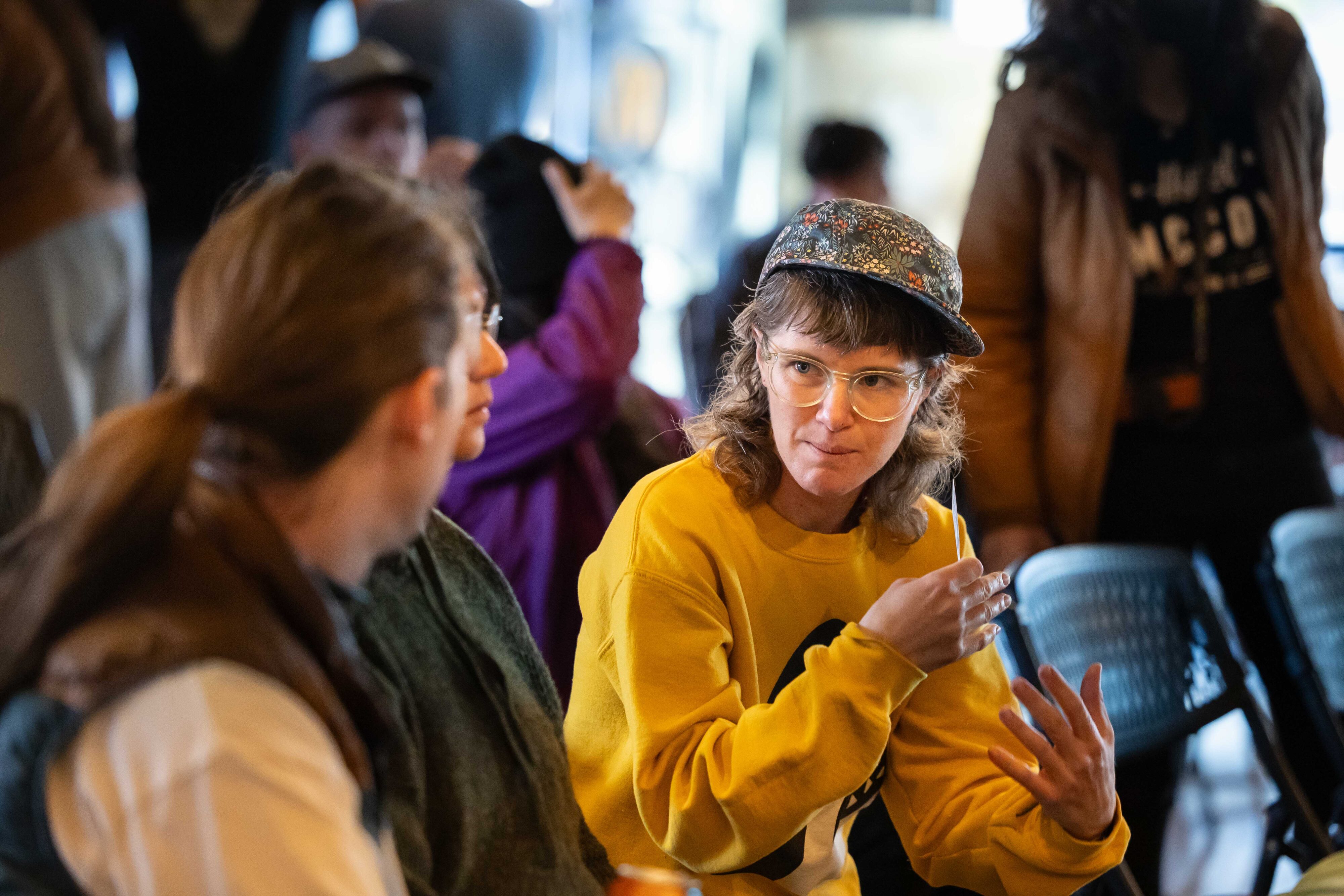
Photos from the “Let’s Talk RTA Next” forum in February 2026. (Courtesy of Kathleen Dreier)
Acknowledgments
Thank you to Living Streets Alliance, especially Kate and Vanessa, for your mentorship to us Liverman Undergraduate Fellows through the University of Arizona, and all the work you do for the Tucson community. I’d also like to extend my gratitude to Sofia Dracopoulos, Ryan Green, Elayna Filippone, and Briana Jamiesonfor their hard work, creativity, and thoughtfulness throughout our time as Liverman Fellows. Thank you as well to photographers, Kathleen Dreier and Logan Havens, for the images included in this piece, and for the amazing work they do in the Tucson community. Ahéheeʼ nitsaago to you all, and also to every organizer paving the way for radical street futurisms, past, present, and future.
This website uses cookies to provide you with an improved and personalized experience. By using this site you agree to our use of cookies. Please read our cookies policy for more information on the cookies we use and how to delete or block them.

 All Topics