Chicago researchers seek sustainable water treatment solutions
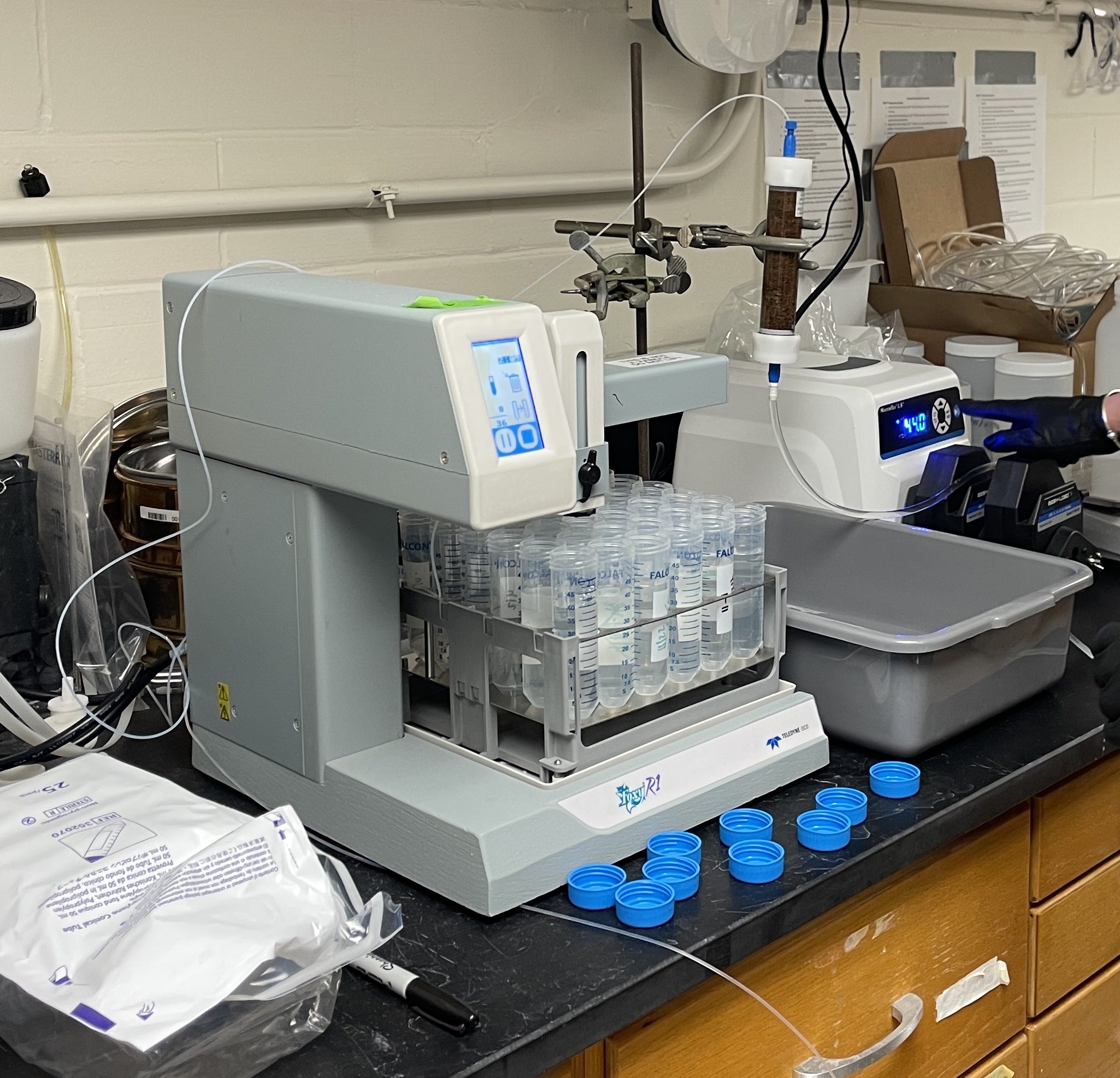
In the lab at Northwestern University, water samples are filtered through a specially coated sponge and tested to determine the material’s efficacy at reducing phosphate from the sample.
A green economy is a system that strives to protect environmental, community, and economic health. But what about a blue economy?
Current — a 501c3 nonprofit organization in Chicago — is hoping to create one. The nonprofit’s goal is to cultivate a circular blue economy where water systems like the Great Lakes are not only protected from contaminants and pollutants, but those contaminants can also be transformed into resources.
Senior communications manager Haylee Gemeiner said Current was established in 2016 with the goal of creating an entity that would drive water innovation in Chicago and the wider Great Lakes region.
“A big part of our strategy is this idea of it being use-inspired,” Gemeiner said, explaining how water research and development supported by Current should have a focus on implementation into the local economy.
A ‘regional innovation engine’
In 2024, the National Science Foundation selected Current to be one of nine inaugural regional innovation engines in the U.S. That award allocated $15 million to the organization from 2024 until 2026, which allowed Current to invest in 12 research projects, largely concentrated in the Chicago metropolitan area.
Gemeiner said Current is the “anchor entity” — no water pun intended — that spearheads the regional innovation engine. The engine itself is Great Lakes RENEW (Recovery of Energy, Nutrients, critical Elements, and Water). Gemeiner explained that the engine encompasses a strategy for catalyzing a regional circular blue economy and the coalition of partners who work with the organization.
Current recently announced that they were also selected for the next tranche of funding from NSF: $45 million over the next three years. Gemeiner said this will allow Current to support even more water innovation endeavors. Though the specific projects have not yet been determined, the goal is to “execute a multi-year strategic plan focused on advancing cutting-edge (research and development), the commercialization of water technologies, and career pathways into the water economy,” according to the website.
Project pillars
When deciding which projects to fund, Gemeiner said Current’s team looks for three main project goals: research and development of materials science, workforce development, and a plan for how to get technology out of the laboratory and into the market. One of those projects at Northwestern University focuses on developing a nanoparticle-coated sponge that can recover phosphorus from wastewater.
Phosphate is the “target ion” for filtration and recovery because it is harmful when not controlled, but very useful when harnessed for agricultural purposes as fertilizer. In freshwater systems like the Great Lakes, phosphorus compounds can cause eutrophication. This occurs when water becomes overloaded with excess nutrients, leading to algal blooms or “dead zones,” said Clare McGillis, a third year civil and environmental engineering Ph.D. student at Northwestern.
Mechanisms for materials science
Kelly Matuszewski, a fourth year Ph.D. student in the university’s materials science department, works on creating that sponge. Matuszewski said her department, under the direction of Vinayak Dravid, Ph.D., focuses on the deployment of nanomaterials onto sponges or other “porous substrates” in order to filter heavy metals, microplastics, and PFAS out of water.
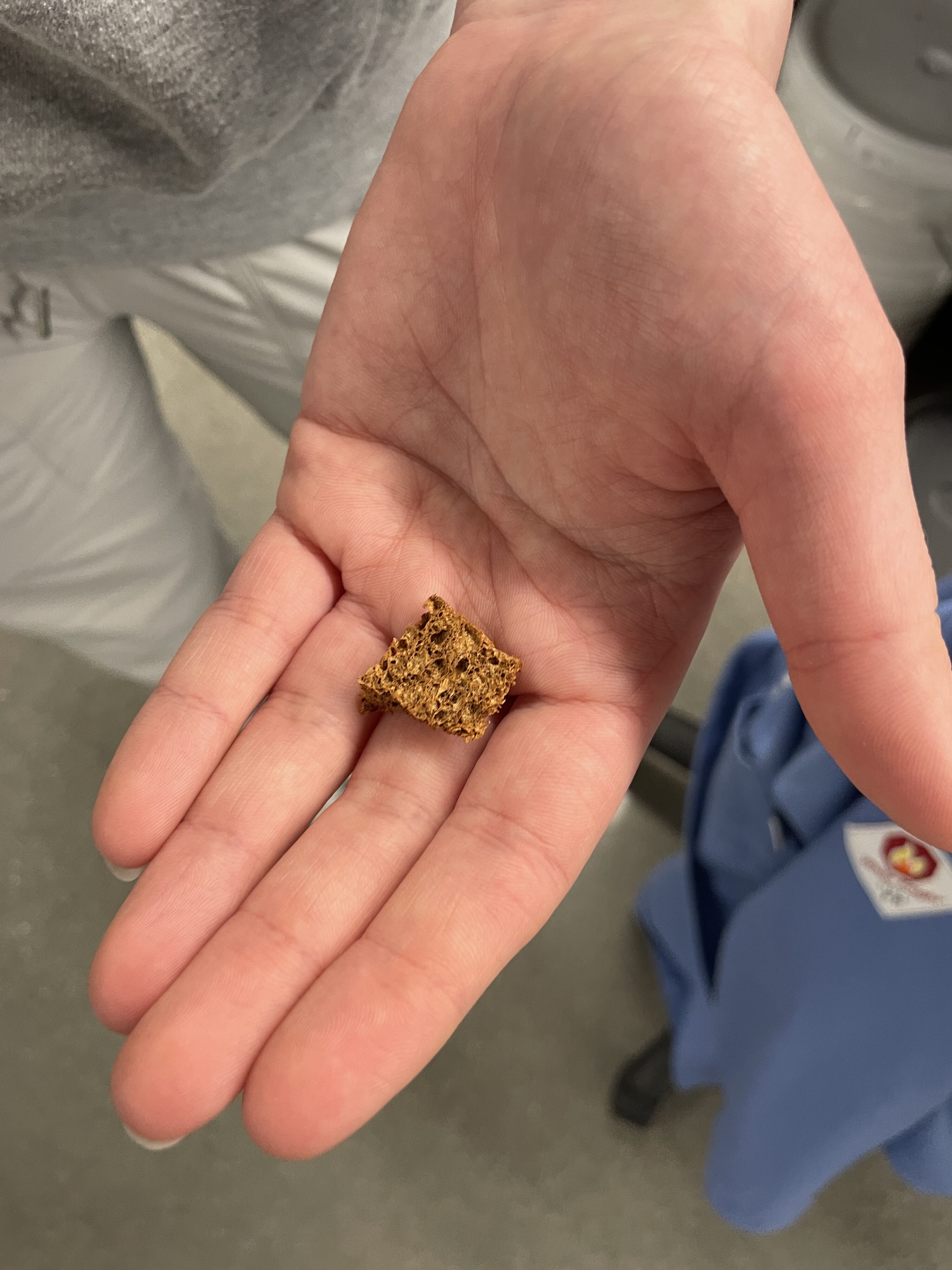
In particular, she is working on a cellulose sponge that is dip-coated in iron oxide nanoparticles in order to absorb phosphate (a form of phosphorus) from wastewater. The sponge can be added to the end of the wastewater treatment process as a “polishing step” once most particles have already been removed, McGillis said.
Later, that phosphate can be recovered and turned into valuable materials like fertilizer through a process involving an alkaline (or high pH) solution, McGillis explained.
“I’m super passionate about creating circular economies and closing the loop on a lot of wasteful processes in a very wasteful world,” McGillis said.
Phosphorus in the future
The material looks much like a kitchen sponge, but is dip-coated in iron oxide nanoparticles to absorb phosphate from wastewater as a “polishing step,” McGillis said.
McGillis said phosphate rock is an ore typically obtained by mining, a process requiring high energy inputs and creating emissions. Additionally, global supplies of phosphate rock are concentrated in a few countries and “we don’t totally know how much we have left,” according to McGillis.
While the U.S. is one of those countries, as phosphate rock becomes depleted, this could increase U.S. reliance on other nations for imports and cause prices to skyrocket. Therefore, there is both an environmental and an economic incentive for creating renewable phosphate supplies.
While research is a critical part of creating climate-friendly wastewater treatment solutions, Gemeiner explained that Current especially focuses on supporting projects which could be implemented at a larger scale, such as Matuszewski’s and McGillis’ work, which will be piloted at a wastewater treatment plant in Skokie, Illinois.
“Science and innovation for the sake of science and innovation is great,” Gemeiner said, “but we’re really rooted in the economic development aspect.”
Policy in practice
Science policy is another key component for supporting the continuation of research. Matuszewski said though she has “fallen in love” with environmental remediation research in the Dravid lab, she sees herself focusing on scientific advocacy after she completes her program. She said she feels passionate about ensuring that sustainable research can come to fruition in the future.
Matuszewski said a potential outlet for that passion is to become a science communicator and work alongside researchers.
“When you come up with these great innovations in the lab, the merit of it is really not enough to get it to deployment,” Matuszewski said. She emphasized the value of communities and investors understanding the importance of climate research.
Environmental stewardship for the shores
Specifically in the greater Chicago community, Gemeiner said being selected for the NSF funding was a “big win” for Illinois and the Great Lakes region as a whole. Great Lakes RENEW was the only inaugural NSF engine focused on water, which has created opportunities for place-based research on the shores of Lake Michigan and beyond.
“We often see this paradox where people refer to our abundance (of water) in the Great Lakes as if it’s this infinite resource that we can just expend,” Gemeiner said, “but it makes it that much more important to ensure that we’re stewarding it properly.” She explained how part of Current’s goal is to sustain environmental health in the Great Lakes for years to come.
“We need to start treating it as the asset and the resource that it is.”
This website uses cookies to provide you with an improved and personalized experience. By using this site you agree to our use of cookies. Please read our cookies policy for more information on the cookies we use and how to delete or block them.


 All Topics