
 All Topics






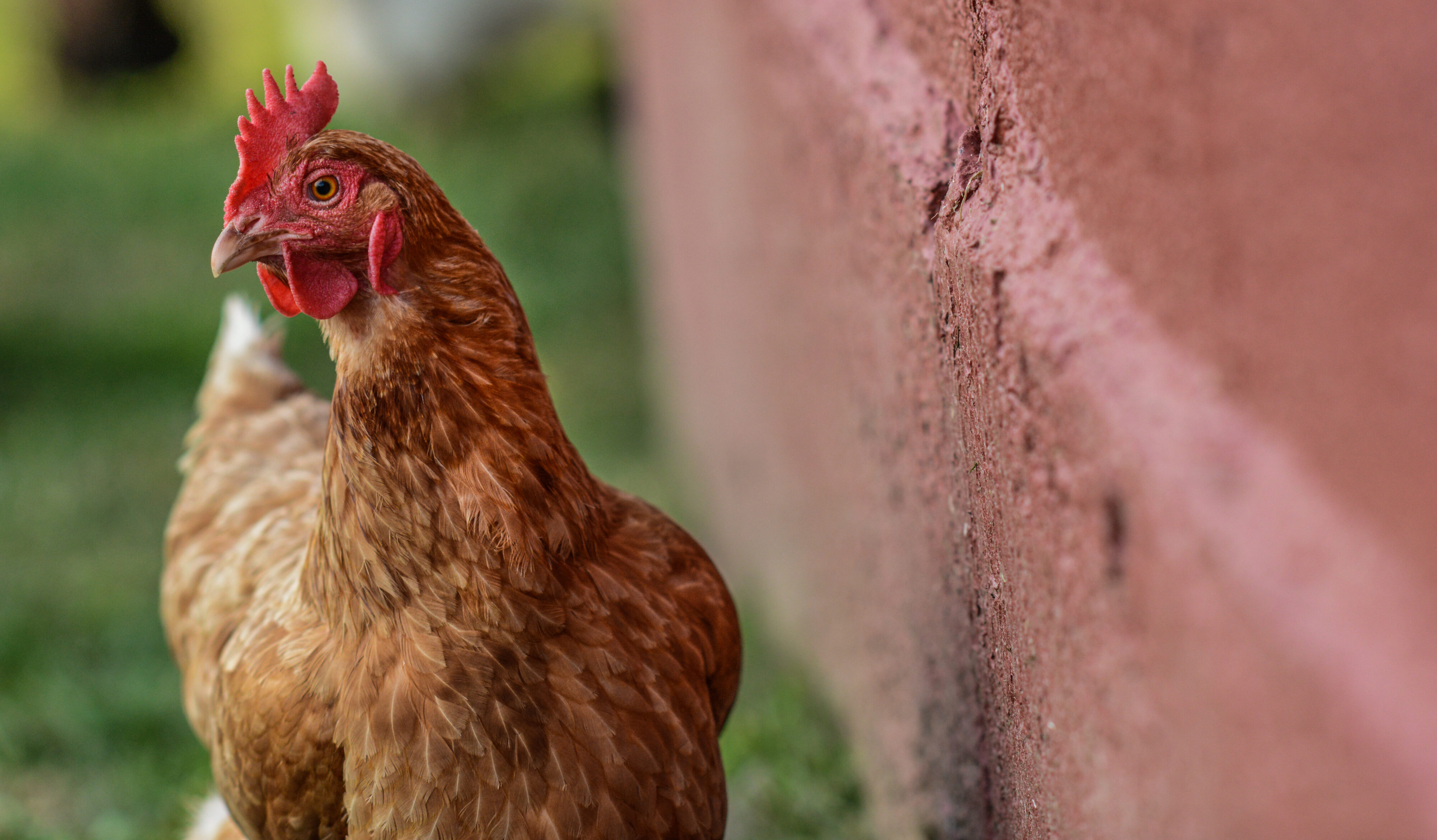
A rescued chicken at Farm Sanctuary in Watkins Glen, New York, United States, 2012.
Jo-Anne McArthur / Licensed via We Animals

June 02, 2026
Jo-Anne McArthur / Licensed via We Animals
I’ve never thought of being vegetarian as a single decision. In all honesty, I don’t even remember when I became one. Instead, it has always felt like an ongoing negotiation between what I believe and how I live. At its core, it stems from the simple idea that my choices should reflect the kind of world I want to live in, one grounded in compassion and sustainability. Yet that idea is constantly tested in everyday life, where choices are shaped by economic realities, social expectations, and systems far larger than any individual.
Vegetarianism and veganism are often dismissed as diets, but for many they represent deeper ethical concerns about animal treatment, environmental harm from industrial agriculture, and the idea that living beings shouldn’t be reduced to commodities for human consumption. However, acting on these values isn’t always simple. Real-world barriers complicate ethical choices, and recognizing them is essential for creating meaningful change.
So what happens when our values are clear, but the systems we participate in make them difficult to act on? What happens when doing the “right” thing becomes less about intention and more about navigating obstacles that complicate even the smallest decisions?
I’ve felt this tension my entire life: a constant push and pull between beliefs and behavior. It’s from this tension that I continually return to one critical question: if so many people care about animals, why don’t their choices reflect it?
Research suggests that most perceptions of farming systems are shaped more by media images and videos than by direct experience. For many, awareness comes in small everyday moments, like learning about industrial farms through documentaries, articles, or online footage. My own understanding started with curiosity and questioning what was on my plate. These experiences evoke genuine emotional responses—compassion, discomfort, responsibility. Yet, however real these feelings are, they meet reality in a far less reflective environment: the grocery store.
Standing in the egg aisle, the choice appears simple. One carton is cheaper; another promises better treatment for hens but costs more. Even then, the choice is often clouded by misleading labels. Terms such as “natural,” “farm-fresh,” and even “humane” frequently lack standardized welfare requirements and create the impression of ethical treatment without guaranteeing meaningful improvements for animals. Consumers are left maneuvering moral decisions within a marketplace built around convenience and confusion.
At the same time, financial realities strongly shape what is possible. Inflation, poverty, and food deserts limit access to higher-cost options. Studies show that while many lower-income consumers care about animal welfare, most cannot consistently pay more for higher-welfare products. Ethical consumption is often framed as individual responsibility, but access and economic stability play a decisive role. For some, cheaper eggs are not a rejection of compassion but the absence of choice. Even for those with more resources, convenience and habit often take precedence.
Behind these decisions lies something deeper than price. It is a system that depends on us not looking too closely. Industrial agriculture has made animal products cheaper and more accessible, but that affordability comes at a hidden cost. Many farm animals are raised in conditions defined by confinement, overcrowding, and restricted natural behavior. The disconnect between concern for animal welfare and purchasing behavior is often described as the “attitude-behavior gap,” highlighting the space between what people believe and how they act.
What this gap reveals is not necessarily widespread indifference, but rather the structural power of systems that make acting on compassion difficult. Price remains one of the strongest barriers. Habit is another. Grocery shopping is routine, shaped by time pressure, automatic decision-making, and systems that reward efficiency over ethics. Even discomfort with industrial farming does not easily translate into changed behavior.
The consequences of industrial agriculture extend far beyond animal welfare alone. Livestock farming is a major contributor to greenhouse gas emissions, deforestation, biodiversity loss, and water pollution. Industrial animal farming requires enormous amounts of land, water, and feed while producing massive amounts of waste. The same system that treats animals as units of production also prioritizes efficiency and profit over environmental sustainability.
Therefore, ethical concern for animals and concern for the climate are deeply connected. Industrial farming shapes how animals live and die, but it also shapes ecosystems, natural resources, and environmental health on a widespread scale. The ethical and environmental consequences are inseparable because they stem from the same system of mass production, exploitation, and consumption.
Acknowledging these barriers shouldn’t excuse the systems that create them. At its core, the issue is less about individual behavior and more about what society is willing to normalize. When animals are treated as commodities, ethical questions extend beyond food and into responsibility and the true cost of convenience.
It would be easy to argue that if people truly cared they would just make different choices, but reality is more complicated. Individual choices matter, but they exist within frameworks intentionally designed to prioritize low cost and efficiency over animal welfare and environmental health.
So what would meaningful change look like?
Clearer and standardized labeling laws would help consumers make informed decisions. Policy support for sustainable and higher-welfare farming could reduce the financial burden on ethical choices for consumers. Most importantly, stronger corporate accountability and agricultural reform are needed to shift responsibility away from individuals alone and toward the industry that produces and profits from it, industrial agriculture itself.
I still think about that tension: the tug-of-war between personal beliefs and what the system easily allows. Being vegetarian remains my way of trying to align my actions with my values, but I understand more each day that this issue is larger than individual choices. Personal decisions matter, but they exist within a larger system that allows empathy to exist right up until it becomes inconvenient.
If we are serious about creating a more ethical and sustainable future, we must confront both the systems shaping our choices and the values guiding them. Until then, many people will continue living in the uneasy space between empathy and action, caring deeply while participating in systems that make acting on that care far more difficult than it should be. The disconnect between people’s values and their choices isn’t answered by indifference. Rather, it is answered as a reflection of the barriers these systems create and the urgent need to realign them with the ethics we claim to uphold.

Planet Forward Correspondent | University of Michigan
Director of Academic Adventures | Planet Forward

Planet Forward Chautauqua Fellow | University of Connecticut

Planet Forward Chautauqua Fellow | University of Connecticut

A project of

in collaboration with