
 All Topics







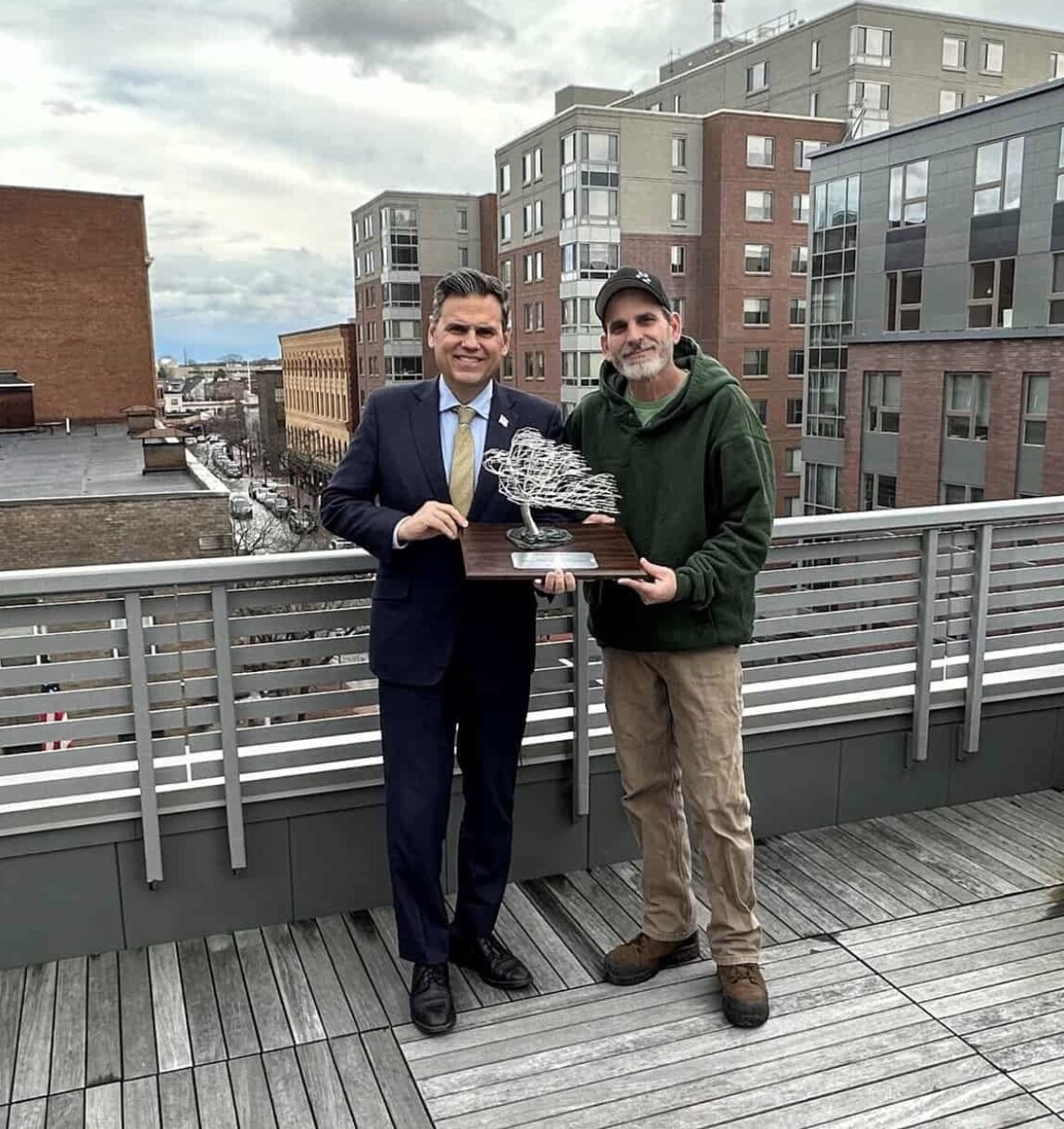
Chris Rosa (right) being presented the Massachusetts Tree Warden of the Year award at the 2024 Massachusetts Tree Wardens and Foresters Association annual conference.
Courtesy of the Malden Advocate

February 04, 2026
Courtesy of the Malden Advocate

Within municipal governments throughout Massachusetts, there resides an appointed title with rather a unique jurisdiction: trees. The state’s great fortress of leafy canopy is protected by 351 guardians called tree wardens, one in every city and town.
Just five miles north of Boston lies Malden, a city of 66,000 human residents. Malden might not be known for its trees, but to one dedicated man, they are his life’s work. Chris Rosa has been caring for trees since he was 15, following in the footsteps of his grandfather and working in landscaping, he owned his own business prior to taking the job of assistant director at Malden’s Department of Public Works.
Rosa, who now holds the title of Malden’s tree warden in addition to serving as the superintendent of cemeteries, spends seven days a week caring for the city’s tree canopy, wildlife, and burials. Malden is home to over 8,000 trees and Rosa is their sole spokesperson, translating their needs to city employees, contractors, and residents.
The official job of a tree warden in Massachusetts is to maintain and protect all public shade trees, as outlined by state laws. This Massachusetts–mandated position, although not unique to the state, has been required since 1899. In 1913, students of Dr. George E. Stone of the Massachusetts Agricultural College founded the Massachusetts Tree Wardens’ and Foresters’ Association to further connect and promote the work of public shade tree managers.
But the title of tree warden may even date even further back, to revolutionary Boston. “There’s rumors how tree wardens came to be,” Rosa said in our interview. In 1775, the Liberty Tree, a symbolic elm where colonists gathered to protest taxes, was cut down by British soldiers. As folklore has it, the colonists assigned someone to look over the rest of Boston’s trees and that was the beginning of the tree wardens.
Today, the director of the Department of Public Works holds the tree warden title in many municipalities out of convenience. However, when done correctly, urban tree management and care is a full time position, as Rosa has experienced. Despite the responsibilities allocated to tree wardens, there are few regulations on the attention municipalities provide to tree wellbeing.
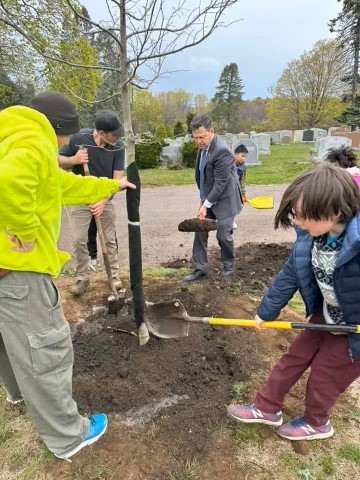
According to the U.S. Department of Agriculture Forest Service, over 141 million acres of America’s forests are within cities and towns, where they play a major role in removing toxins from the air and water, conserving energy, and providing habitats for wildlife.
Urban forests cause economic and social benefits and increase the beauty of our communities. Yet, as Rosa has found, trees often only survive 17 to 28 years in metropolitan conditions due to vehicles, road salt, restricted planting areas, and countless other hazards.
Urban trees are not immune from nonurban threats either. Disease and pests are some of the most hostile invaders, especially to city-dwelling trees. Uneducated planters have spent decades lining the streets of our cities and towns with the same species of trees, allowing disease and pests to infect en masse effortlessly, bounding from one host to the next. The goal for Rosa’s new plantings is always to maximize diversity and longevity. He follows the 10-20-30 tree rule; planting no more than 10% of one species, 20% of one genus, or 30% of one family.
Neglect of trees is old news in Malden. When Rosa was appointed tree warden in 2022, he was able to dedicate more time and care to protecting Malden’s trees from the chronic urban perils than ever before. “That’s when things changed here,” he said.
In addition to daily hands-on work, Rosa has made a number of novel changes to the way the city of Malden treats its leafy citizens. In 2023, he wrote a “Tree List and Planting Guidelines” reference book for city employees, contractors, and residents, complete with an extensive list of native trees, their tolerances, preferred conditions, and how to plant them.
Rosa has also been working to achieve 30% tree canopy, or area covered by trees and their branches — a lofty goal set by the Massachusetts Department of Conservation and Recreation for every municipality in the state. In his time as tree warden, canopy coverage in the city has increased from 14.6% to 19%.
In doing so, he created the first pocket forest in the state, replacing a large area of impermeable concrete with 21 new native trees-revitalizing an area of barren city land into a green space.

Rosa, Massachusetts’s 2023 Tree Warden of the Year (awarded with record–breaking nominations), has no plans to slow his efforts in defending Malden’s trees anytime soon. He recently completed his second book, “Beneath the Canopy” and has a tree steward program in the works. The program, which will educate and train Malden volunteers in all skills needed to promote healthy urban forests in their area, received significant traction and community interest within days of its announcement on the Malden Tree Warden Facebook group.
Despite the efforts of tree wardens and residents to engage their governments, it is still citizens who are the first to recognize the urgent need to protect natural life. “Towns haven’t really caught on yet,” Rosa said. “They don’t like trees,” explaining that municipalities tend to overlook the importance of trees and fail to prioritize informed planting and care.
It doesn’t help that the infrastructure that has historically defined urban spaces actively prevents an environment for growth. Trees need space, soil, and access to water and large areas of concrete and other impermeable surfaces make it nearly impossible to plant trees without the significant funds needed to reinvent these spaces.
Across the United States’ urban environments, tree canopy is rapidly disappearing due to urban threats, disease, and invasive pests — with the loss of 36 million urban trees annually. Chris Rosa and tree wardens throughout Massachusetts are the leaders in a great battle to defend these often-overlooked community members that are crucial to our cities’ well-being.

College of Charleston

University of Wisconsin - Milwaukee | School of Freshwater Sciences

A project of

in collaboration with