
 All Topics





Thi Mai Anh Tran
Michigan Technological University
May 21, 2026
Michigan Technological University
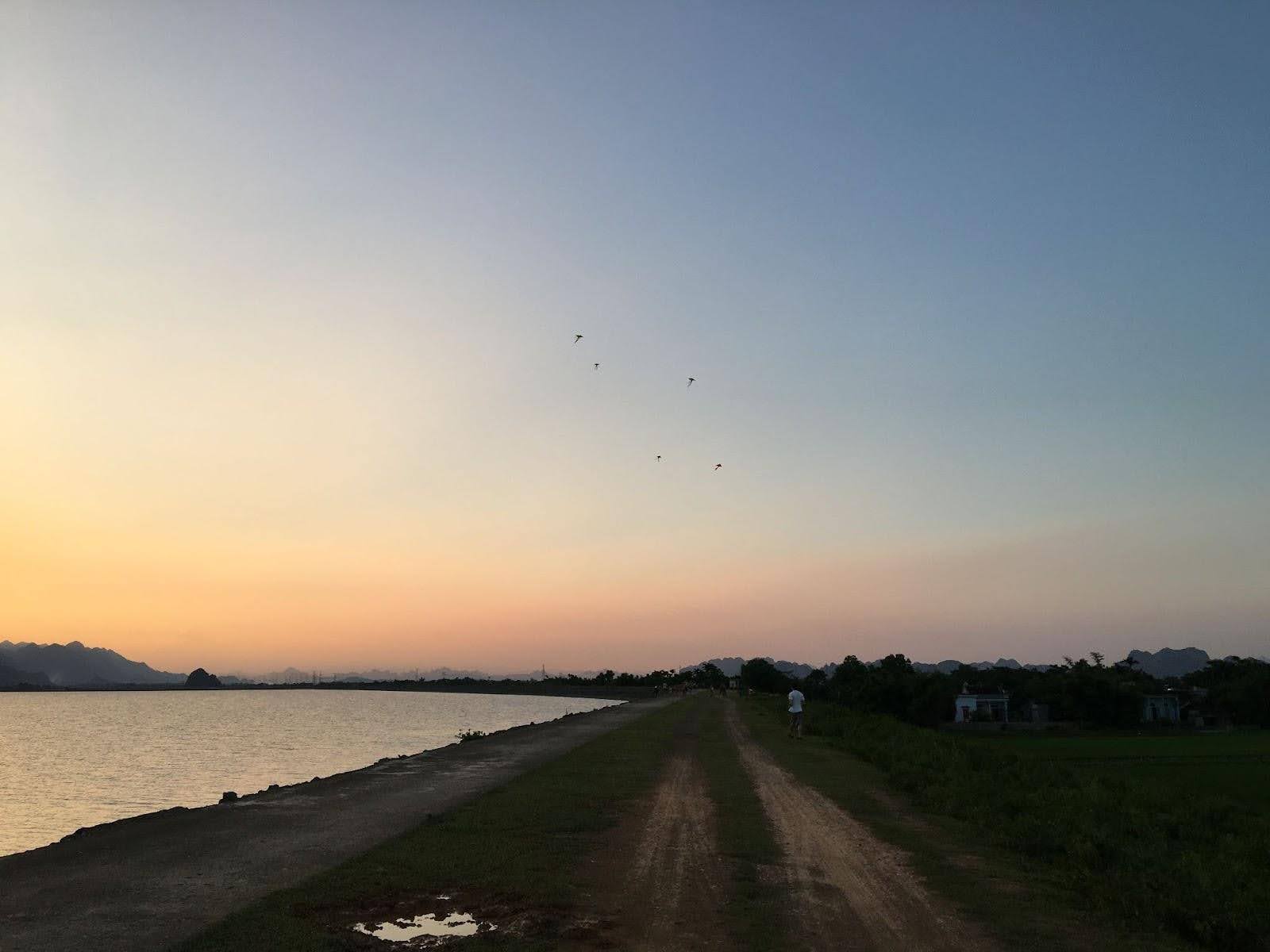
I sat by the riverbank, watching a stork family flying back to their nest after a hard-working day. To my astonishment, a kingfisher landed beside me, his feathers shimmering like the pages of a timeless book.
When I was five, what thrilled me most wasn’t watching cartoons like other children in my village. My great excitement came during power outages at night. Those evenings, my family would gather in our house yard, under the vast canopy of stars, with fireflies dancing in the dark. I would nestle under my aunt’s arm, listening intently as her voice breathed life into tales of fables and satire. She told the same stories countless times, but they never grew old. I would giggle, laugh, and eventually drift to sleep, dreaming of a world where all beings on Earth can talk to each other, where I can fly like a bird, and where every creature holds a piece of the universe’s wisdom waiting for me to explore.
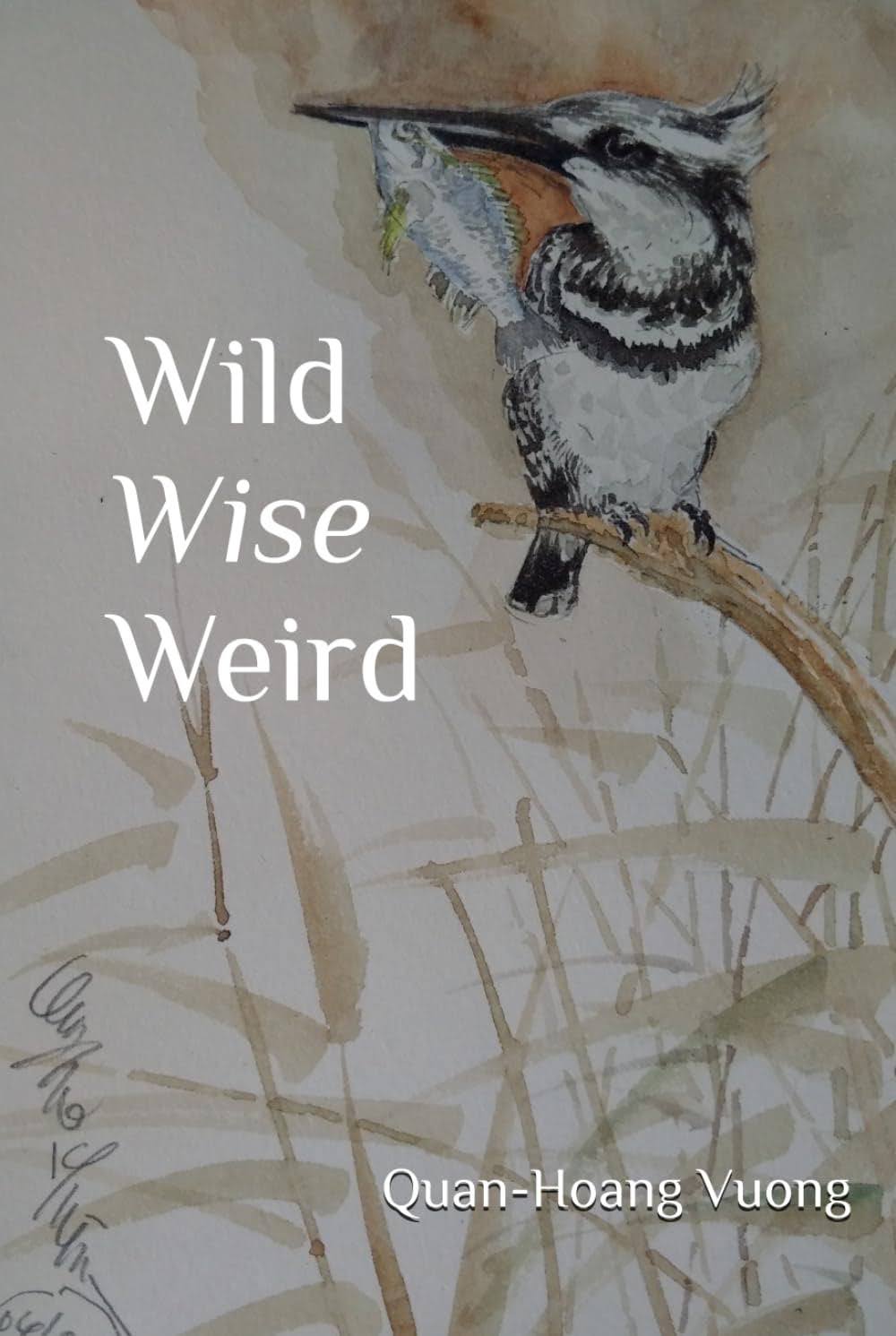
Reading Wild Wise Weird: The Kingfisher Story Collection by Quan-Hoang Vuong (2024) brought me back to those nights. The book, much like my aunt’s stories, captures the transience of life, those ephemeral moments that linger long after they have passed. It made me feel like I was sitting by a riverbank, no longer just an observer of his bird village but as someone in dialogue with the kingfisher, learning layers of wisdom in each story his masterpiece offers.
And it made me think about something I had not quite named before: In an age when we are flooded with data about diversity loss and climate change, what so many of us are still missing is the feeling of belonging to the natural world. Stories, the old kind passed down under starlit skies, may be one of the few things that can close that gap. That is why a book about a bird in Vietnam feels, to me, like a vital step forward for the planet.
While reading the book, I often imagined myself having conversations with the central bird, asking questions like:
“How do readers from across the world find themselves in these distinctly Vietnamese tales? And why do these ephemeral moments in our lives matter?”
Kingfisher dipped his beak toward the still water, creating ripples that expanded outward in perfect circles. Each ring caught the light and reflected to my eyes, like the layers of meaning in Vuong’s masterpiece.
“The most universal truths are found in the most specific moments.” The Kingfisher said, “ And every simple act held deep meanings of life.”
The wild, wise, and weird stories began to make new sense to me. In one ripple, I saw the satire that made readers laugh; in another, the story made people think; and in a third, the deep humanistic values that made them feel, with the circles lingering long after people finish reading it. While deeply rooted in Vietnamese culture, each story delves into universal aspects of human life.
In Food (Story 8), the Sparrow family abandons Kingfisher’s patient ecological wisdom for the easy abundance of the human village, growing plump and prosperous until they vanish entirely; the only trace left is a restaurant sign reading “All-you-can-eat Sparrows.” In Luck (Story 10), Kingfisher finds a precious gem inside a caught fish and watches his peaceful life unravel as snakes, then people, come after what luck placed in his possession; he finds peace only when he loses the treasure altogether.
In Dream (Story 14), a bird lured by a beautiful mulberry tree walks into a cage, is freed, and chooses to return, having decided that where there is food, there is freedom. These stories speak to experiences that resonate across generations and geographies.
What makes this more than a collection of human parables, though, is how Vuong grounds his birds in ecological reality. Each character draws from genuine knowledge of avian life: a kingfisher must dive efficiently or go hungry, sparrows weigh the risks of nesting sites, every creature navigates competition, loss, and the stubborn instinct to survive.
A reader who comes to know these birds as living, choosing creatures, and then laughs when they make the same mistakes humans do, leaves the book with something richer than a lesson. She leaves with affection. And affection, conservation research consistently tells us, is what actually moves people to protect the natural world. We defend what we love.
“What makes a story unforgettable?” I continued.
The Kingfisher tilted his head, perhaps amused by my curiosity. “It is not the story itself but the emotions they awaken and how it resonates with the reader’s own memories.”
This is where Vuong’s genius lies. His stories do not offer answers. Instead, they leave readers with questions that linger, inviting them into a meditation on life’s contradictions: the lure of convenience against long-term survival in Food, the burden of luck and what we truly possess in Luck, and the unsettling freedom of the chosen cage in Dream.
The questions stayed with me long after reading. What is not being told about the allure of convenience? How can letting go of materials or emotional attachments bring a sense of freedom and peace? And, what is the nature of true freedom–having the ability to choose or being content with the choices available?
Through these open-ended reflections and questions, Vuong bridges generations, cultures, and philosophies in a meaningful way. Climate researchers have a name for a persistent puzzle: the information-action gap, that strange distance between knowing what threatens the planet and caring enough to act. I think of it more simply as a loneliness from nature, a slow loss of the felt sense that we belong to the living world and it belongs to us.
When the natural world becomes something we observe through screens rather than something we feel part of, concern stays abstract and remote. Stories that let us inhabit a bird’s perspective, laugh at a sparrow’s poor decision, or feel the weight of a kingfisher’s choices close that gap in a way no dataset can. They make the natural world personal. And personal is where action begins.
As the Kingfisher spread his wings, preparing to leave, I asked one last question: “Why do we need these stories today?”
Kingfisher’s response was both simple and profound: “Because it reminds us that life is fragile and the most profound truths often come wrapped in laughter.”
The Kingfisher flew away, leaving me alone by the river, but our conversation kept echoing in my mind.
In this technological era, where children are often glued to their smartphones and television screens, missing out on the magic of storytelling that once nurtured my imagination. Wild Wise Weird: The Kingfisher Story Collection is more than just a book; it is a vital experience, encouraging readers to reflect on life’s fragility and resilience, and to find in that reflection a reason to care. Quan-Hoang Vuong has created a timeless classic that invites us to find meaning in life’s brief yet beautiful moments. For a planet that needs people to feel as well as know, that invitation is one worth accepting.
Long after you have turned the last page, you will find yourself, like me, still sitting by the riverbank, watching the Kingfisher soar. And this time, hoping he always has somewhere to land.
Thi Mai Anh Tran (she/her) is a natural resources and environmental social scientist at Phenikaa University whose work focuses on livelihood resilience, sustainability, and the relationships between people and forest ecosystems. She is passionate about interdisciplinary research and actively seeks collaborations with people from diverse backgrounds and scientific disciplines. If you are interested in collaborating, please contact her at ttran1@mtu.edu.

College of Charleston

University of Wisconsin - Milwaukee | School of Freshwater Sciences
A project of

in collaboration with