Para leer el artículo en español, haz clic aquí.
In biology, “natal homing” is a concept that describes how, via biomagnetic and olfactory navigation, species across the animal kingdom return to the place where they or their parents were born. Sea turtles, fish, and even some birds do this despite the long swaths of time and distance that separate them from their homelands. Some even use celestial navigation — tracing the stars — to find their way back.
Being a young Latina daughter, raised in the pastoral blufflands of Wisconsin, learning this concept pulled on a string deep within me, tracing from my navel to the depths of the archipelago where my parents were born: Puerto Rico.
Puerto Rico is an incredibly beautiful and biodiverse archipelago of over 100 islands. These islands are connected by an identity greater than simply being American: being Boricua, the Taíno (Indigenous Puerto Rican) name for the peoples dependent on the land. However, due to a wicked trifecta of government neglect — the exploitation of natural resources, the lack of energy infrastructure, and the displacement of local communities — less than ⅓ of Puerto Ricans live in Puerto Rico. The majority have left the archipelago for the mainland U.S., with many others living abroad.
A personal quest for understanding how island communities connect to nature — despite the intertwining threats of climate change and colonialism — took me to Vieques, Puerto Rico, one of the many islands part of a greater whole.
Vieques is a place one could describe as a paradise; it is home to brilliant beaches that host evenmore brilliant biodiversity. However, a paradise to visitors’ eyes is underpinned by silent colonial violence; a toxic legacy hidden behind the persistent joy of a resilient community. Over the course of 62 years, the U.S. government detonated over 17700 tons of Navy ordinance on the island’s most productive coral reefs and mangrove swamps, and continues to constrict food, healthcare, culture, and educational access.
Viequense peoples have historically been forced off their land by the government and now face Airbnbification; the contemporary phenomenon where vacation rental housing displaces communities and raises living costs. As Boricua historian AJ Hudson, Ph.D., puts it: “For centuries, global powers sculpted the landscapes of the Caribbean to suit their needs, producing sugar, coffee, rum, and other luxury goods, but now they sculpt it to produce vacations.”
Much of the Viequense economy is predicated on the health of the brightest bioluminescent bay in the world — an incredible ecological phenomenon that resembles an aquatic milky way,the result of microscopic glowing algae — and its tourism. Yet this source of income is also a destructive force, with light pollution and overcrowding from tours causing the algae to become dormant.
In order to understand the links between humans and nature in Vieques, I spent a month interviewing people across the island. Through discussions with community members and several people who had left the island to return and care for it — other young Boricuas on their parallel natal homing journeys — an alternative narrative of determination and natural connection emerged. It is on this island where an inspiring legacy of popular protest, grassroots organizing, and intergenerational care of coastal ecosystems, coalesce.
During this trip in July 2026, I had the joy of going out to the biobay to monitor the bioluminescent algae, after locals reported seeing less and less glow.
By October, the bay had gone dark.
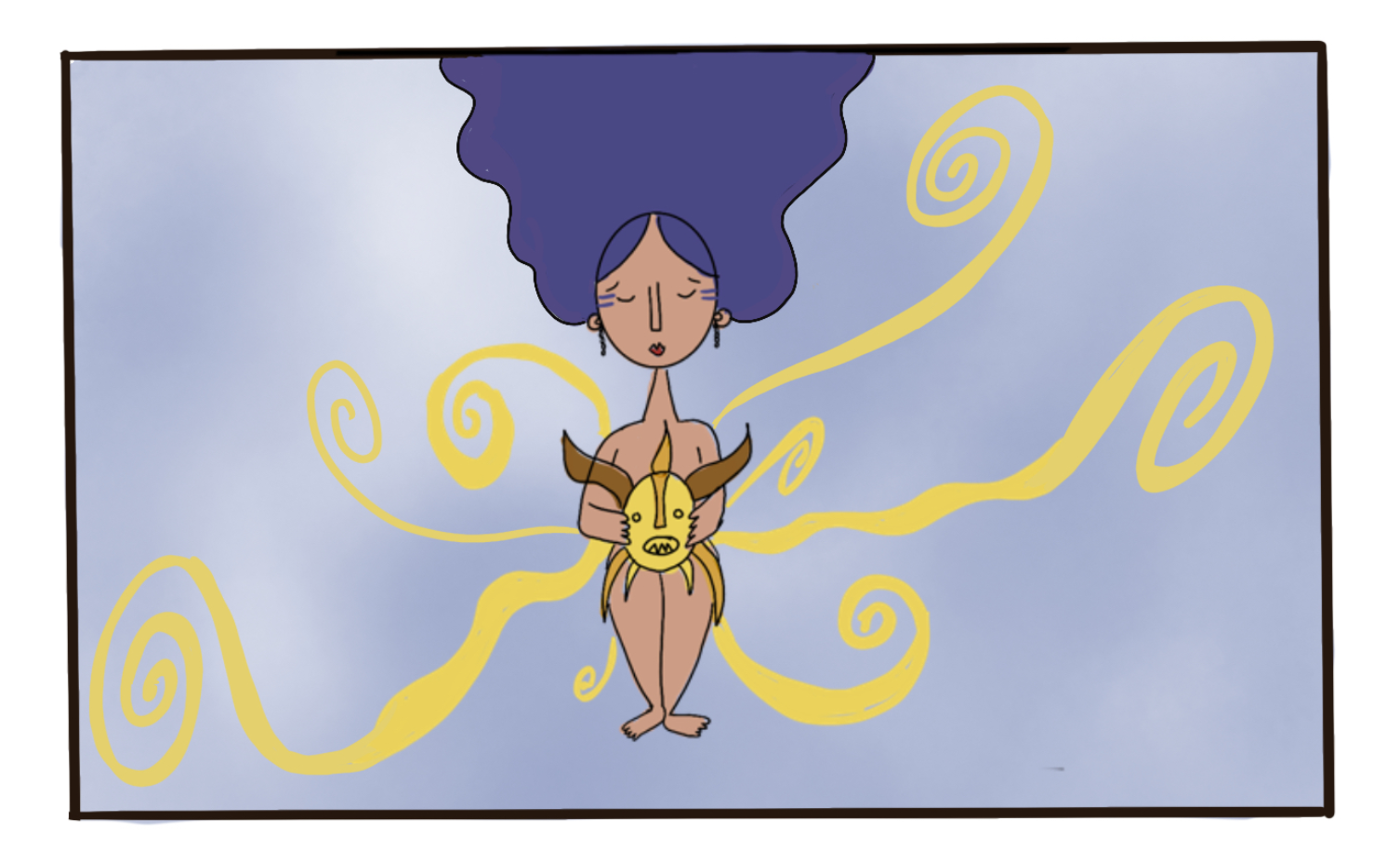
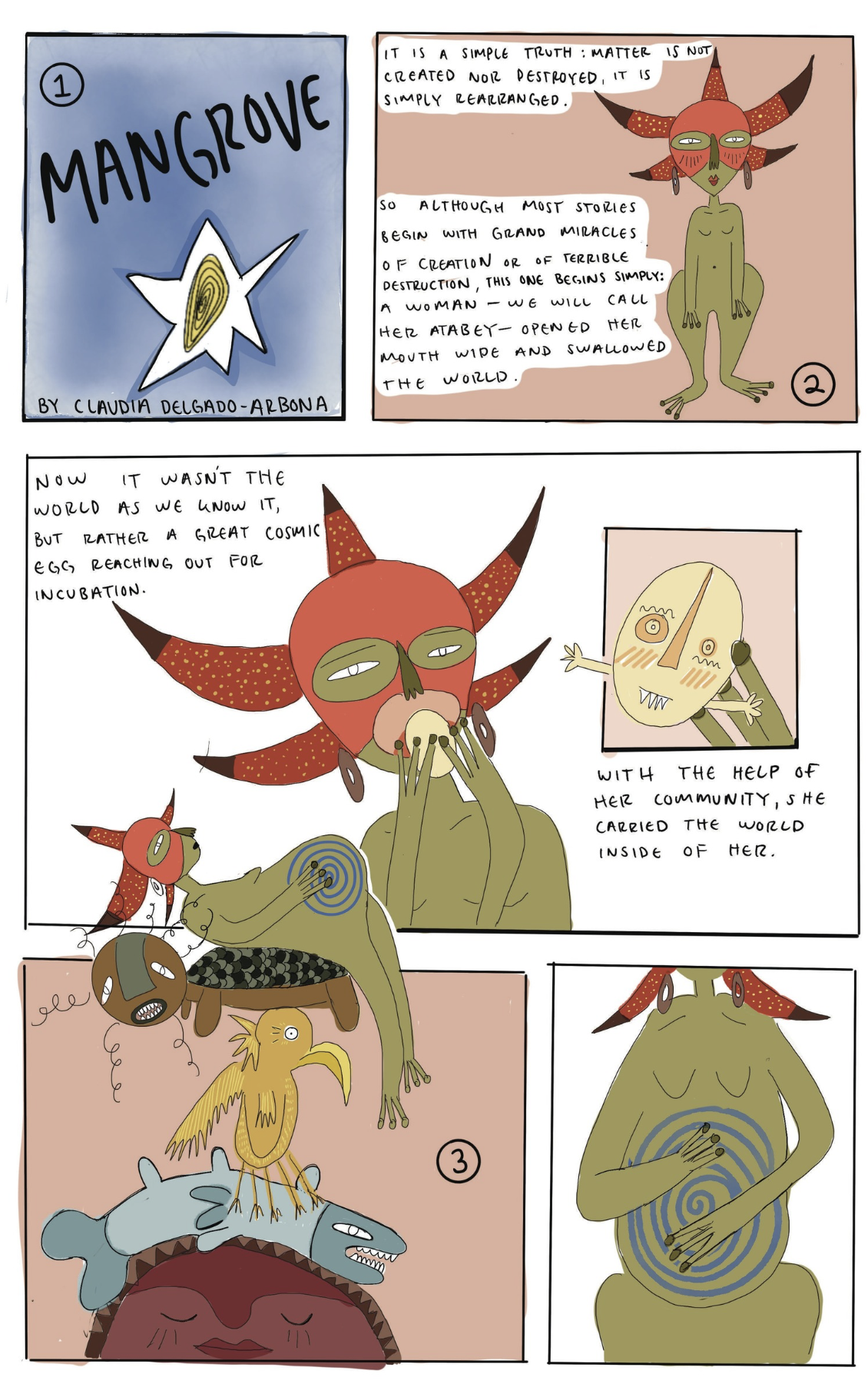
Vieques is shaped by its complex history of dispossession, of climate disasters, of continued governmental neglect, and above all; of standing up for one’s community —all the wings, branches, fins, and legs that form it. This comic is a representation of the magic of Vieques. It integrates the unique biota of the island, the backdrop of colonial abuse, the ancient symbols of Taíno myth, the pride of being Puerto Rican, and the power of harmonizing science and art to demonstrate the inseparability of humans and nature. It could not have been possible without the generosity of many people who shared with me their love for their homeland.
To read this comic, please click on the image below. I encourage you to click on the numbers within each panel. This will pull up footnotes so you can dive deeper into the science, history, and culture that underpins each image.
If you do not want to read the footnotes, simply click through each page using the arrows at the bottom. (For mobile device users: Click the right side of the screen to move through the footnotes.)
My time spent in Vieques woke up a long dormant seed in my Puerto Rican family tree. It made me realize I am from the mangrove, my roots in the sea, my body propped up by the land, and my spirit touching the sky, its range spanning the several islands that we Boricuas call home. I hope that all Puerto Ricans, scattered across a galaxy of various lands yet always connected by the womb of the ocean, will be free to complete their natal homing so that one day, the community will glow brighter than ever.
How do you move the planet forward?
Submit Story


 All Topics