
 All Topics

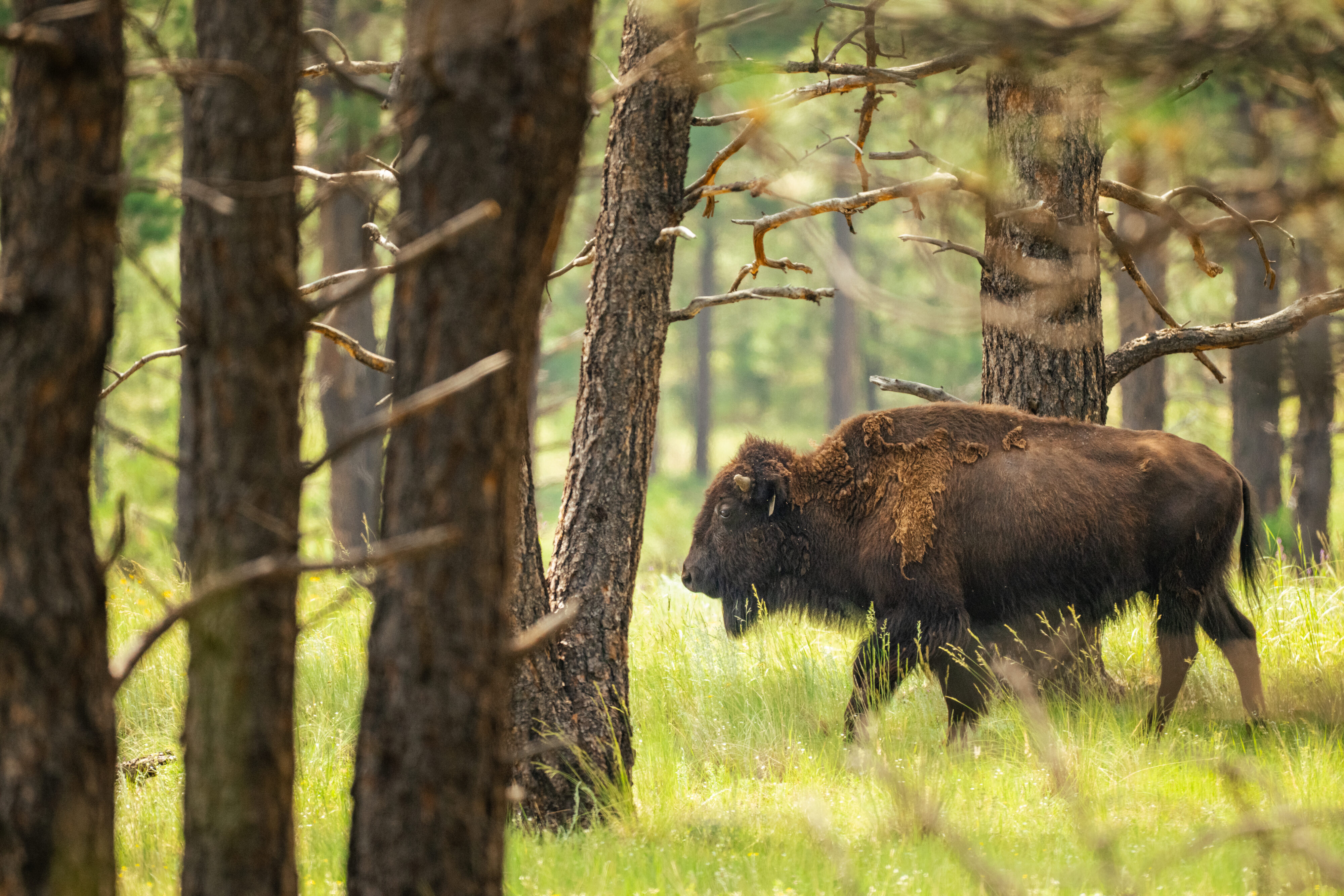



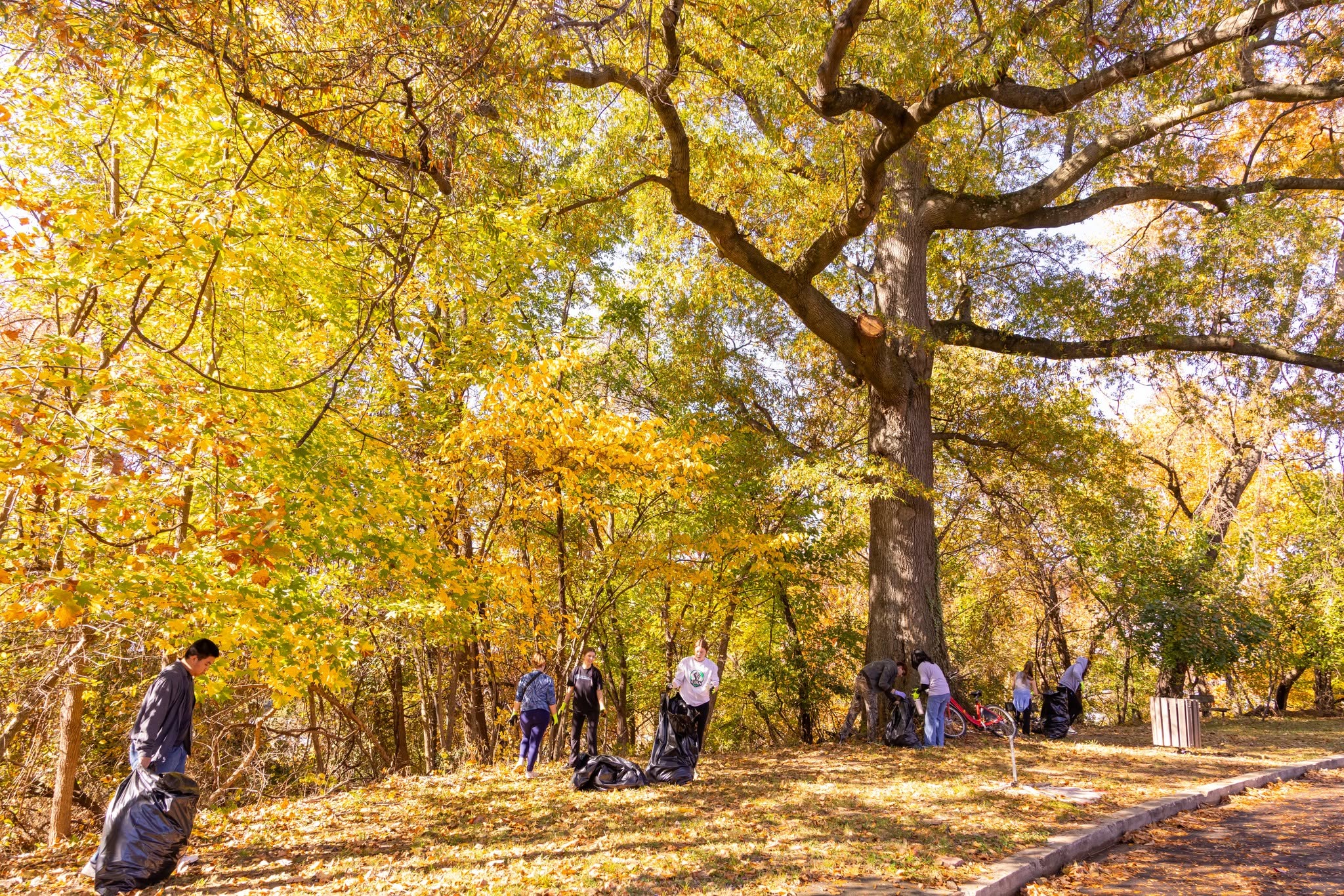
Volunteers and staff collecting trash in parkland in Ward 8 in Washington, D.C.
Photo courtesy of Ward 8 Woods

Raina Pawloski
Planet Forward Correspondent | George Washington University
November 18, 2026
Photo courtesy of Ward 8 Woods
Planet Forward Correspondent | George Washington University
Ward 8 in Washington, D.C., is home to many museums, historic sites, and vast amounts of forest and green space. It is also historically underserved, often neglected by local and federal government due to historical practices of redlining and racially restrictive lending policies throughout the 20th century. More than 500 acres of urban forest east of the city’s Anacostia river are heavily polluted and inaccessible to community members, despite being public land. Park land in Ward 8 is plagued by thousands of pounds of trash, invasive species, and a general lack of maintenance from the National Park Service.
Ward 8 Woods, a grassroots nonprofit organization that works to restore the urban forests in public land of the region. They dub themselves as the “de facto caretakers” of the woods of Ward 8, and focus on making forests places of “healing and empowerment” by collecting trash, organizing volunteers, and creating trails.
Planet Forward talked to Nathan Harrington, the executive director and founder of Ward 8 Woods. Harrington discussed the origins of Ward 8 Woods, giving details about their many programs that range from educational to technical, as well as why the protection of urban forests in Anacostia is crucial to the health and wellness of the local community.
The interview below has been edited for length and clarity.
Raina Pawloski: Can you, in your own words, explain what exactly Ward 8 Woods is?
Nathan Harrington: We are a small nonprofit organization that works to improve the health, the beauty, and the public enjoyment of forested areas in Ward 8 and neighboring areas. We really specialize in finding and remediating trash and invasive species in places that are super neglected that other people weren’t aware of, or haven’t paid attention to, or haven’t wanted to deal with because they had steep topography or they were overgrown or they were hard to access. Ward 8 has a lot of poverty and violence and trauma, and there are all these challenges that we’re dealing with. But forests are really an asset and a resource that we’re blessed to have, and we could be taking a lot better advantage of it.
We’ve removed 1.6 million pounds of trash, and we’ve cut invasive vines from more than 11,000 trees.
RP: One of the programs Ward 8 Woods has is the forest-based learning program. Why do you think it’s important for kids that live in the area to spend time in the woods?
NH: Kids really benefit from being in and playing in nature, and I grew up doing that, but a lot of kids today do not, especially in the city. Either they don’t have access to it, or it doesn’t seem safe because there’s trash and there’s no trail and it’s overgrown. There are a lot of grade levels that don’t really get any environmental education. Some of them take them outside the city, and I think that inadvertently sends the message that nature is out there and not here. We want them to see that there’s nature everywhere, and to specifically start to see some value in these particular forest patches that are next to where they live.
RP: What was the process of founding Ward 8 Woods?
NH: I have lived in Ward 8 since 2009, and I was a high school social studies teacher for a long time. One of the things that attracted me to this part of the city was that there were so many woods. So, in you know, 2010 and 11, I’m exploring the woods and seeing just how much land there is, and how many old trees, and streams, and remains of the Civil War, and so many amazing things that are only being seen and appreciated by very few people, (but) that are polluted with trash and invasive species. So I started just like picking up trash on my own because it felt good, then some neighbors saw what I was doing, and they wanted to join, and they suggested that I go to the neighborhood association for support. So since 2012 and to this day, every second Saturday we do a Shepherd Parkway clean up. I saw there’s more work than wherever we can ever get done with just volunteers, and they’re all these people that want work, and they’re the ones who are most directly affected by this because they live here. They’re the ones who might be in a position to do something about all the dumping that continues to happen.
RP: How did you go from cleaning up trash to ‘Let’s try to map out this trail’?
NH: The mission is to improve the health, the beauty, and the public enjoyment. So, you improve the health and beauty by remediating trash and invasive species. But ultimately, the goal is to allow people to get in and enjoy the woods. And it’s really hard to do that when you don’t have trails. And it’s really not equitable because in Rock Creek Park you have miles and miles of trails, and there are these like smaller sort of greenways or forest corridors that are connected with Rock Creek Park, like Battery Kemble and Glover Archbold, and those all have trails. It means that some people have access and other people don’t. So that’s what we’re trying to change.
RP: Can you talk about Ward 8 Woods as it relates to environmental racism?
NH: Environmental racism generally is this pattern where pollution and, you know, environmental harm is concentrated in areas that are working class, that are less wealthy, that are Black and Latino and immigrant, and trash pollution is very evident. The amount of litter that you see on the streets and in parks is a lot higher in Ward 8 than in other places, and access to parks and sort of park facilities is another part of that.
RP: And how is Ward 8 Woods working toward creating forest equity?
NH: By removing trash, cutting back invasive vines so that the trees don’t die, and by encouraging people to come visit the woods, because I think some people have a sense that it’s not for them, they don’t actually know that it’s public land because and they’re allowed to go there.
RP: What makes this work meaningful to you?
NH: People who’ve lived here for a long time have seen the neglect of the park land for a long time, and sometimes they’ve complained to the Park Service and they’ve complained to the city, and they ask people to clean it up, and nothing happens, and they get frustrated, and eventually they give up, and then finally, Ward 8 Woods comes along, and we get it done. And they’re like, “Well, I never thought, you know, you guys are doing basically what the government has failed to do.”
RP: Can you speak more on that? Do you think there has been improvement over the years with the D.C. government and the National Park Service?
NH: I don’t really think so. The fact that about 80% of the park land in D.C. is federal because of a legacy of the lack of home rule. Until 1972 D.C. really didn’t have a local government, so all of our parks were just run by the feds, and they’re not accountable to us. The parks are grossly underfunded. They’re grossly understaffed.
[The National Parks Service responded with the comment that they are committed to being “responsible stewards of the public lands” of Ward 8 and work year-round to support visitors, local residents, and community organizations. Their commitment is to ensure parks are “welcoming, accessible and beneficial” for all D.C. residents.]
I also think in general a lot of people have the assumption that woods take care of themselves. Like you just leave it alone and it’ll be fine, but in an urban area you got trash that accumulates and invasives that take over. And if you want it to really serve the purpose of being a public park, you have to have trails and other things to welcome people and let them experience it.

Planet Forward Reporting Intern | SUNY-Plattsburgh
Planet Forward Correspondent | Tuskegee University

Planet Forward Correspondent | The New School
A project of

in collaboration with