For Jamie Brown’s children, a heavy rainstorm can mean several days stuck indoors.
“My son practically lives outside, but so much water collects at the end of the driveway and fills up the potholes in the street that he can’t safely play,” Brown said.
Brown, who lives in Tuskegee, Alabama, said her children sometimes cannot play outside for at least three days after heavy rainfall. Throughout the two years she has lived in Franklin, a small town northwest of Tuskegee University, she has not noticed improvements to the drainage problems.
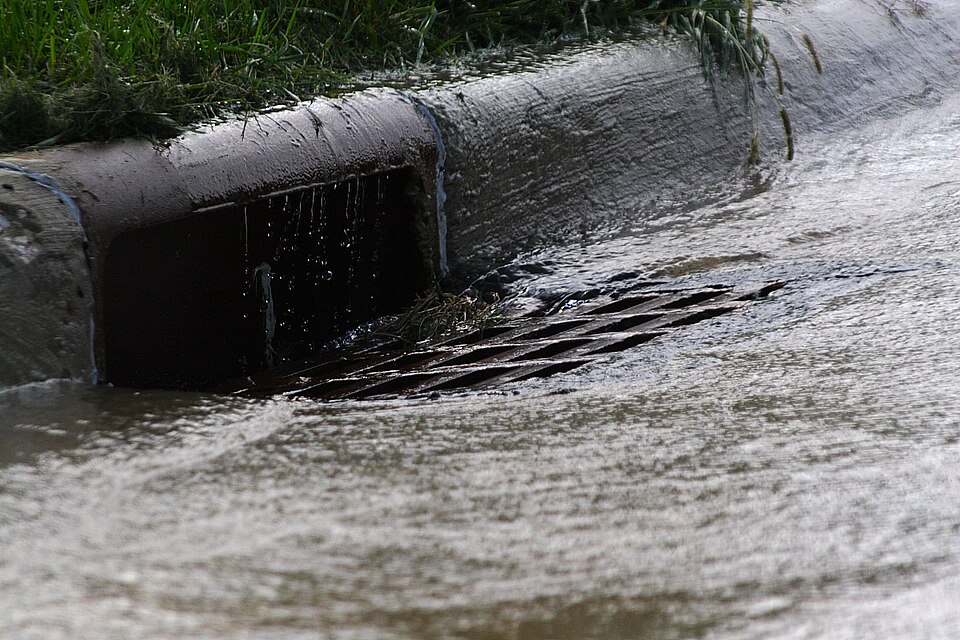
Her experience illustrates one way stormwater runoff can turn an ordinary rainstorm into a disruption of everyday life. Beyond limiting access to outdoor spaces, poorly managed runoff can erode roads and sidewalks, carry pollutants into nearby waterways and contribute to localized flooding. Water that repeatedly collects around buildings can also cause moisture damage, creating conditions conducive to mold growth. Climate change can intensify these challenges by contributing to heavier rainfall, placing additional strain on drainage systems that may already be inadequate.
A problem beneath the surface
Stormwater runoff occurs when rain flows across surfaces such as roads, rooftops, parking lots and sidewalks instead of soaking into the ground. The U.S. Environmental Protection Agency identifies these paved and built surfaces as common sources of runoff because they prevent water from naturally infiltrating the soil. When drainage systems cannot move water efficiently, communities may also experience issues like standing water, erosion or localized flooding.
For communities working with aging infrastructure or limited resources like Tuskegee, managing stormwater can require more than repairing a ditch or clearing a drain. Tuskegee’s drainage problems are compounded by the challenges of updating outdated systems. In Alabama, historic preservation regulation can require review and approval before physical changes are made to designated historic properties, adding another consideration to infrastructure planning in historically significant communities.
In Tuskegee, these concerns intersect with a broader infrastructure challenge. In October 2023, Alabama officials announced a $764,320 Appalachian Regional Commission grant to help the city address drainage problems at 10 locations. According to the Alabama Department of Economic and Community Affairs, many of the problems began during heavy rainfall in 2016 and worsened over the following years.
The grant-funded project was intended to improve stormwater drainage and prevent further damage to city infrastructure and roads. Proposed work included cleaning and restoring ditches and gutters and repairing streets, curbs, and sidewalks damaged by overflowing water. The mayor who oversaw the grant has since left office, and current city officials said they were unable to locate additional details about the project. As a result, questions remain about the grant’s implementation and the status of the planned stormwater improvements.
Looking beyond traditional drainage
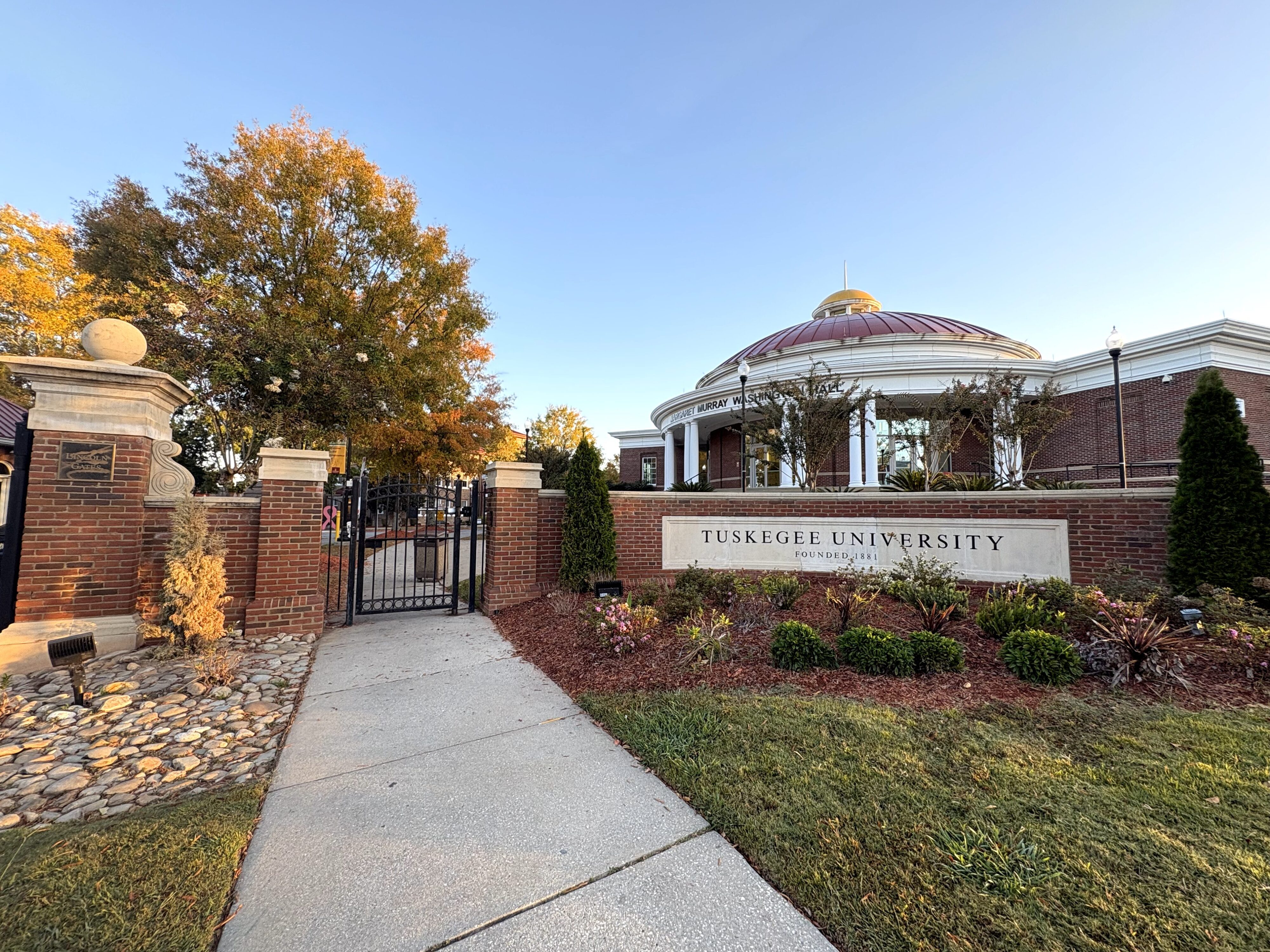
Amma Asamoah, an assistant professor in the Department of Architecture at Tuskegee University’s Robert R. Taylor School of Architecture and Construction Science, said stormwater runoff on the university campus specifically is influenced by climate change, ongoing development, soil composition and the university’s hilly terrain. According to Asamoah, removing vegetation from the region’s clay-rich soil can limit the ground’s ability to absorb rainfall.
“The more that we continue to develop around campus, that means we are removing trees and plants to build. And in that, we are robbing the soil of its ability to be porous,” Asamoah said.
Development on Tuskegee University’s campus has contributed to problems with stormwater runoff, according to Amma Asamoah. (Photo by Savannah Hawk)
These conditions become especially concerning as Alabama faces the effects of increasingly intense rainfall. According to the National Oceanic and Atmospheric Administration, the number of days with at least 3 inches of rainfall has been mostly above average since the late 1990s. To address these issues, Asamoah recommends a comprehensive assessment of the university’s and city’s existing stormwater infrastructure, including pipes, gutters, and roof downspouts, to identify areas needing improvement. She also emphasized training maintenance staff in sustainable landscaping practices and drawing on the expertise of Tuskegee’s faculty and students to develop long-term solutions.
Beyond infrastructure improvements, Asamoah expressed the need to help students and campus staff understand the broader environmental implications of stormwater runoff.
“I think there really does need to be some campus-wide education on climate change and understanding how long term it will impact the campus,” she said. “And it’s not just this one thing. It’s a system of things that have to be addressed.”
Understanding which challenges are present in Tuskegee is essential to identifying solutions that address the community’s actual needs. For instance: Poor drainage and water pollution, while related, are not the same problem. A drainage repair may help water move away from a street without necessarily removing pollutants from it.
That distinction also highlights the importance of looking beyond conventional drainage repairs and considering approaches that manage stormwater before it becomes runoff. Traditional drainage infrastructure plays an important role in directing water away from roads and buildings. Green stormwater infrastructure offers another approach by managing rainwater closer to where it falls. Rain gardens and permeable pavement, for example, can slow runoff, encourage water to infiltrate into the ground, and reduce the amount of water moving across hard surfaces. Depending on local conditions and design, these approaches may complement existing drainage systems and provide additional environmental benefits.
Finding the right fit
The effectiveness of any solution depends on factors such as soil conditions, available land, maintenance needs, costs, and the amount of rainfall an area receives. Green infrastructure is not a universal replacement for conventional drainage systems. Instead, it can be one part of a broader strategy tailored to a community’s specific challenges.
Funding can provide an important starting point, but infrastructure improvements also raise questions about long-term maintenance and accountability. Who is responsible for keeping drainage systems clear? How does the city identify areas that need repairs? And what resources are available when existing infrastructure cannot adequately manage heavy rainfall? For Tuskegee, the answers could help clarify whether the grant-funded improvements addressed the original concerns and what additional investments may be necessary.
Ultimately, managing stormwater is about more than moving rain away from a road. It requires understanding where the water goes, what it carries, and how communities can prepare for the next storm. Tuskegee’s drainage project offers a starting point for examining those questions. Whether traditional repairs, green infrastructure or a combination of both provides the most effective path forward will depend on what the evidence shows about local conditions and the solutions available.
The rain will continue to fall. The question is whether the infrastructure beneath it can meet the community’s needs, and what it will take to ensure that it does.
This website uses cookies to provide you with an improved and personalized experience. By using this site you agree to our use of cookies. Please read our cookies policy for more information on the cookies we use and how to delete or block them.



 All Topics