
 All Topics





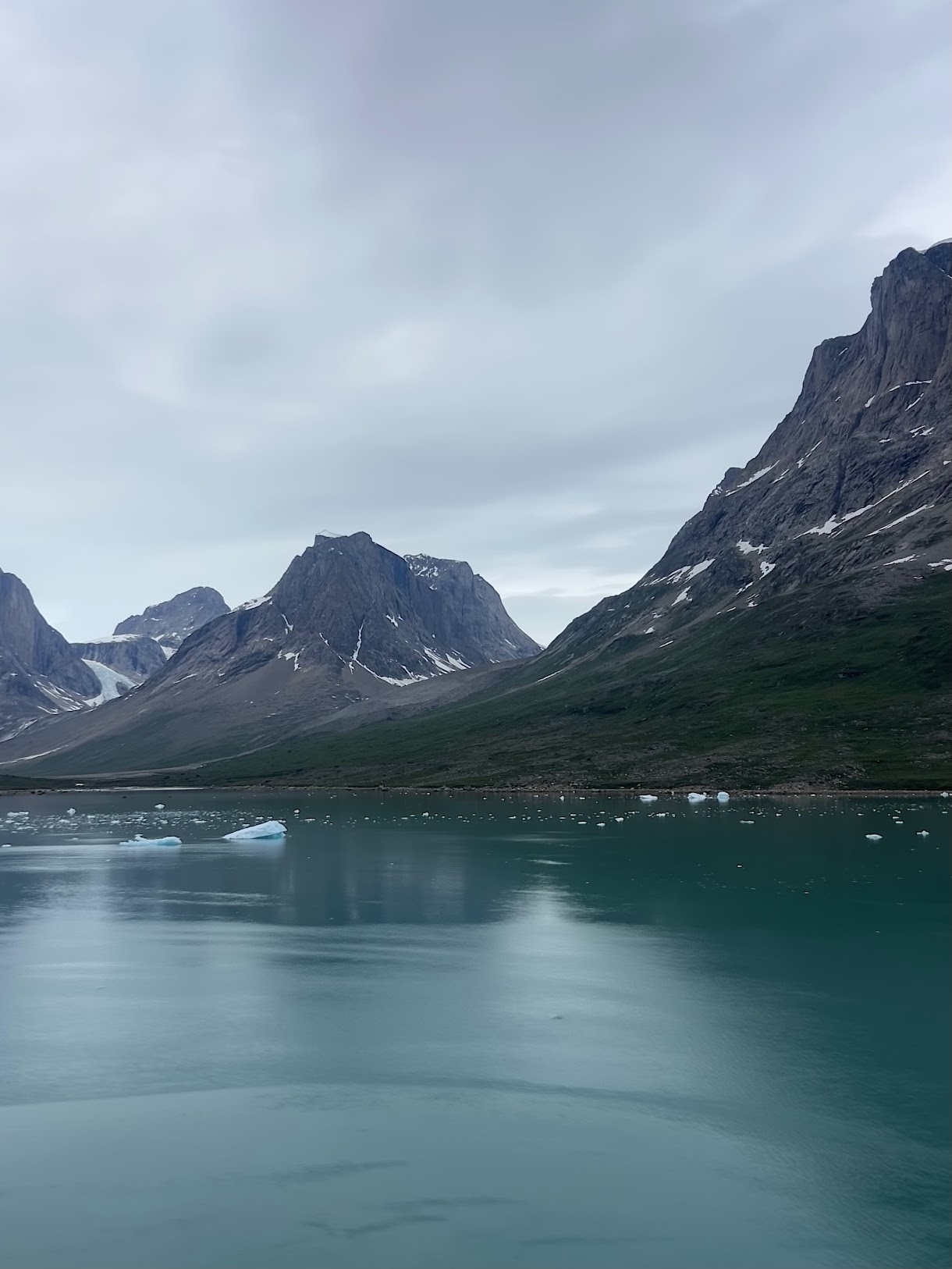
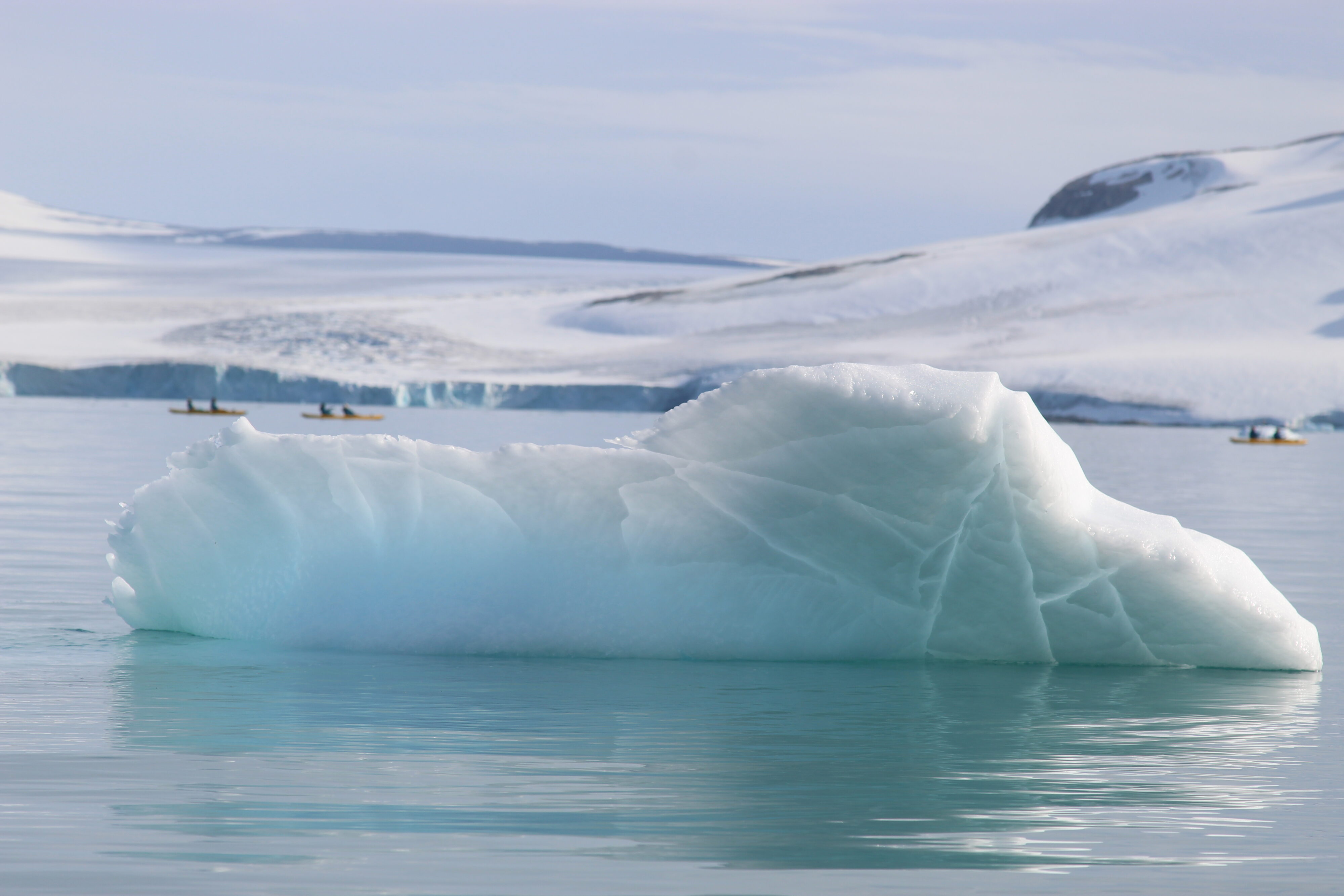
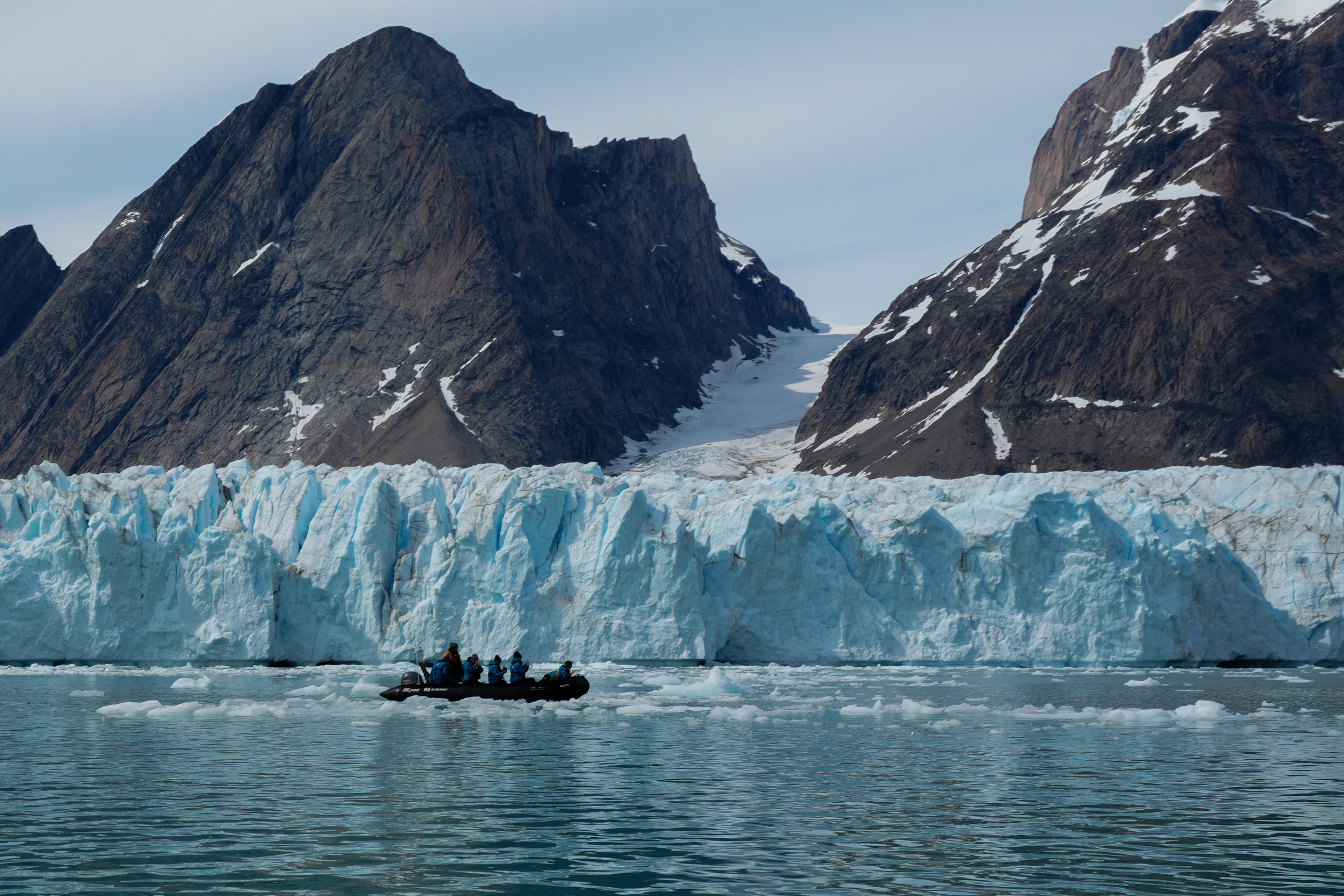
In a southeastern Greenland fjord, small pieces of ice float in the Arctic Sea, surrounded by snowy mountains.
Alexia Massoud

September 23, 2026
Alexia Massoud
“In an age when man has forgotten his origins and is blind even to his most essential needs for survival, water along with other resources has become the victim of his indifference.” This is a quote from Rachel Carson’s Silent Spring, published in 1962, but it might as well have been written today.
Peacefully beautiful, southeastern Greenland’s clear blue sea reflected 6,000-foot-high snowy mountaintops. Visitors sighed — mesmerized by the sheer grandiosity of it all — and breathed in the fresh, crisp, late-July Arctic summer air. There were no sounds: no sound pollution from cars or boats, no phones ringing, no crickets. This was just a moment in a place that most people will never see or relish for the few days that felt endless under a sun that never set.
Greenland’s current landscape is drastically different from how it looked 3 million years ago when an ice sheet spread over most of the land mass. This landscape continues to change as the sheet’s surface melts due to atmospheric warming and global change, according to the University of Cambridge’s Department of Geography.
While this process unfolds, natural resources that are currently covered may surface and allow for considerable mining. As states vie for the opportunity to secure large mining contracts, there is also worry that the scramble for Greenland’s rare earth elements have the potential to be environmentally catastrophic.
This “global race to secure rare earth elements and reduce dependence on China’s dominance in mining, refining, and magnet production,” as defined by Patrick Schröder, Ph.D., from think tank Chatham House, raises the question: Is the effort of securing these materials worth the risk of creating lasting environmental effects that will plague future generations?
Greenland — the autonomous territory of Denmark that neighbors the much smaller Iceland — has never been in the news so much as this year, said Inuuteq Kriegel, an Inuk cultural ambassador from Greenland for Lindblad Expeditions. The 37-year-old Nuuk native said this is the first time he’s seen stories and news articles about his home showing up daily on international outlets. And most make mention of U.S. President Donald Trump.
Trump has had eyes on Greenland since his first presidential term. It’s become a “repeated obsession,” said Vivian Salama, a reporter at The Atlantic who broke the story of Trump’s initial pitches to buy the island in 2019 for the Wall Street Journal.
“It’s gone from this hypothetical idea which the people around the president thought was a smart idea to now being a plan in action,” she said. “It’s become a fixation of his because Greenland is a huge and very logical target, in his mind, to leave a legacy and expand the U.S. map.”
Trump is not the only one. World powers are clamoring to dominate the Arctic, an area rich in critical minerals — minerals that have high economic importance for society and are at high supply risk, according to the Geological Survey of Denmark and Greenland. An assessment carried out by its Center for Mineral Resources and Materials found that 24 of the 34 critical raw materials on the European Union’s list are present in Greenland.
Greenland is rich in iron ore, graphite, tungsten, palladium, vanadium, zinc, gold, uranium, copper, and oil, according to Meredith Schwartz and Gracelin Baskaran, Ph.D., from the Center for Strategic International Studies, a nonprofit policy research organization.
But beyond these are the rare earth elements — 17 metallic elements in the middle of the periodic table with unusual fluorescent, conductive, and magnetic properties, according to the Science History Institute. With deposits all over the world, they are not actually rare; what is rare is to find them in pure form, or unmixed with other elements. They are essential for the green transition, used to produce wind turbines and electric vehicles, according to Schröder. They are also used for electronics like phones, batteries, and lasers, among many uses listed by the U.S. Geological Survey.
“These minerals have proven to be essential to everything under the sun,” Salama said.
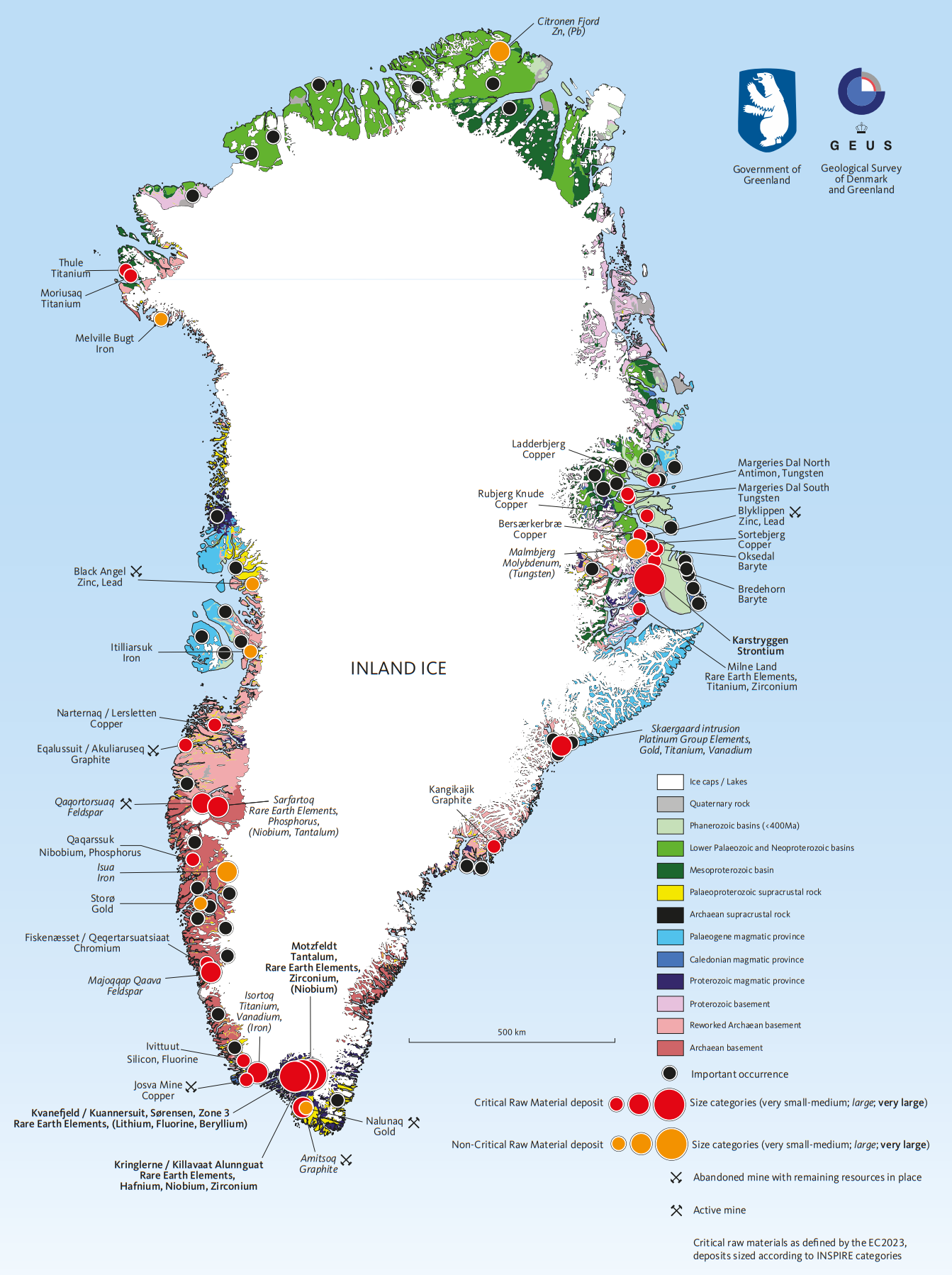
With 1.5 million tons of rare earth deposits, Greenland ranks eighth in the world in reserves by the 2025 Mineral Commodity Summaries. “Rare earths are relatively abundant in the Earth’s crust, but minable concentrations are less common than for most other mineral commodities,” the survey said.
Two of Greenland’s many rare earth element deposits are among the largest in the world: Kvanefjeld and Tanbreez. Still, though, no rare earth mining has taken place on the island to date, as per Schwartz and Baskaran from CSIS.
As of January 2026, there are two active mines in Greenland that are under the responsibility of the Government of Greenland, or the Naalakkersuisut: a gold mine in South Greenland and an anorthosite mine in the fjord of Kangerlussuaq, West Greenland. But world leaders across the globe say they want control of the island’s many possible sites.
As the race for control of these minerals heats up, the U.S. industry leaders and politicians say the U.S. needs greater independence from China and to build its own resource stockpiles. This is all while Trump’s contentious statements about the North American Treaty Organization have led the U.S. to be seen as a less dependable ally, according to Salama. Greenland is part of NATO by extension through Denmark and is also an ally of the U.S., allowing many U.S. air bases on the island.
A fresh deal signed on Sept. 22 between the two governments allows the U.S. to “establish additional defense areas in Greenland and strengthen its military operations or facilities,” among other things. But the U.S. taking sovereignty from Greenland has always been “out of the question,” Salama said.
“If someone’s extracting in my backyard, I’d want them to do it carefully,” said Tim Martin, physics instructor at Elon University and naturalist at National Geographic-Lindblad Expeditions. “And if they mess up, they better clean it up.”
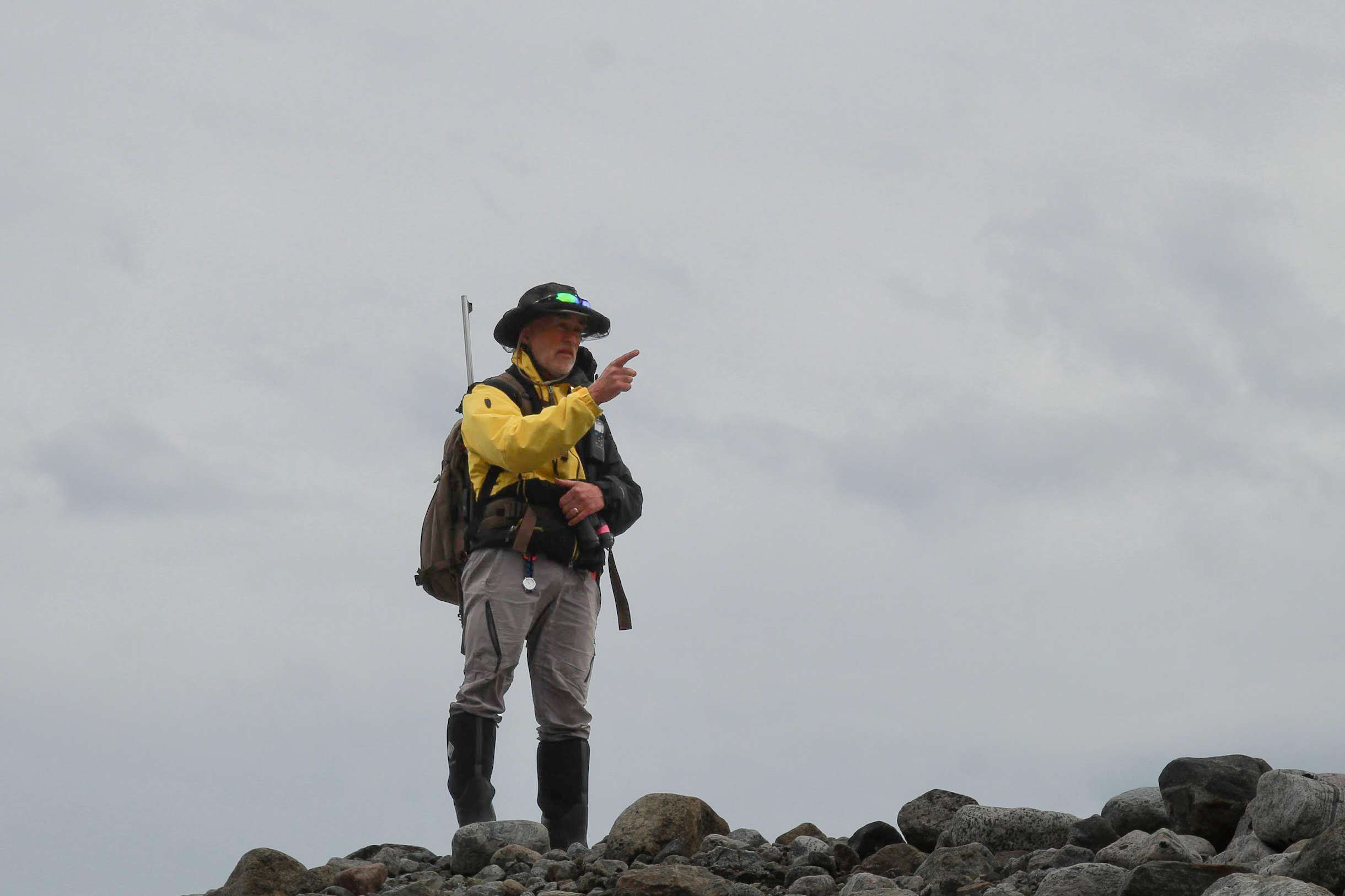
Martin has gone on several of these trips as a naturalist, teaching guests curious facts about geology, icebergs, mirages, and other meteorological phenomena in the Arctic. For him, finding cool rocks and seeing polar bears is routine. Throughout our voyage, I stuck alongside him to grasp just a pinch of the knowledge he carries in that professor brain.
Along the southeastern coast, we landed in several fjords — u-shaped valleys formed by glaciers that are later filled by seawater and are commonly found in the Arctic. During our hikes, Martin found and showed me several mountains and sites that are home to valuable minerals.
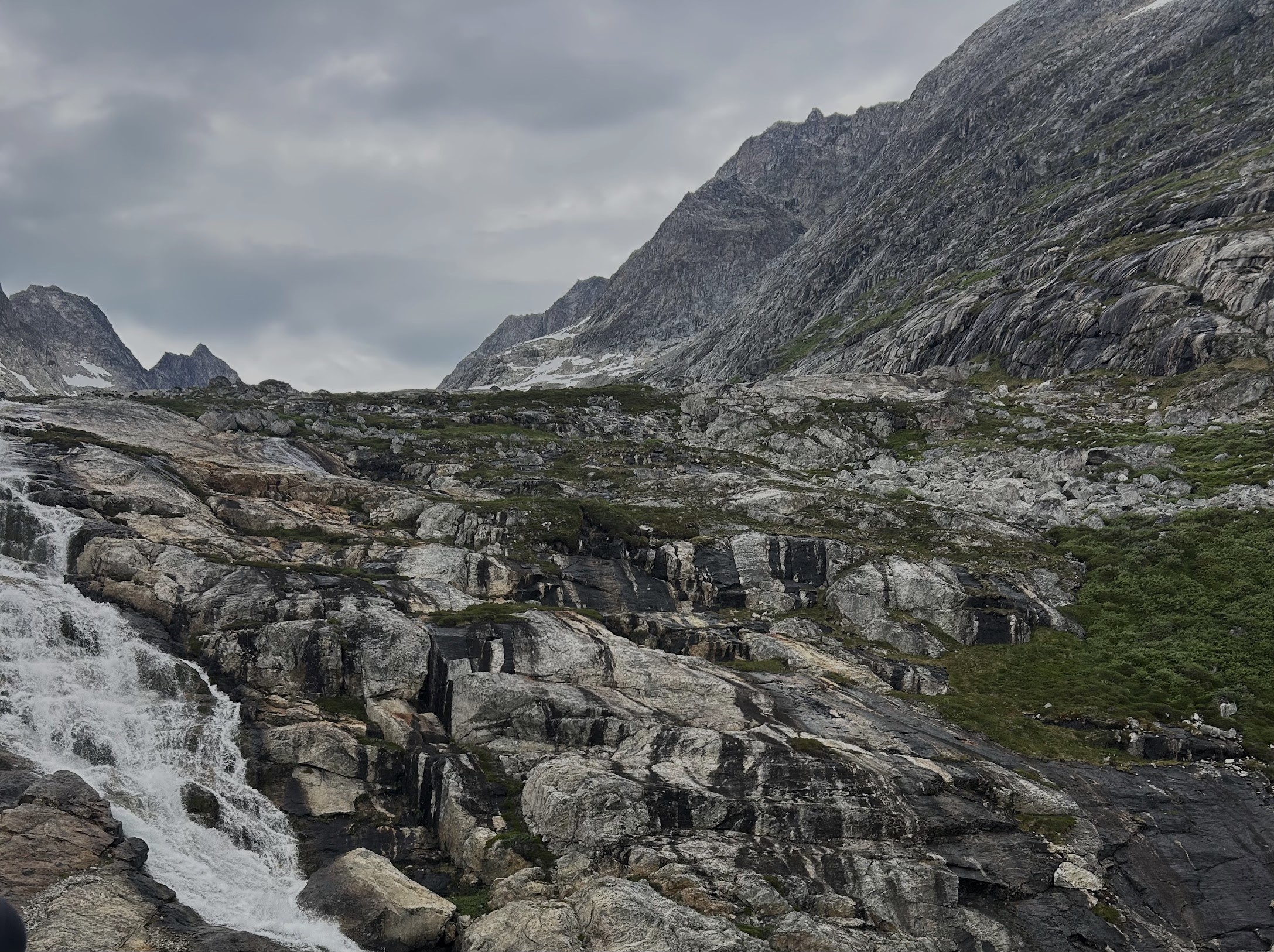
“I’d hate to see a mine open up here, but this is an example of a place that would have resources with economic value,” he said at the beach, where he was holding a few small metamorphic rocks that had been eroded by all the surrounding rocks, water, and ice, and that store minerals.
According to Schröder’s article, every ton of rare earth mineral mined generates double that in toxic waste — including radioactive waste — as well as millions of tons of wastewater annually. Leach pits, for example, which are used in mines to leach out chemicals, require intentionally mixing rocks with toxic chemicals like cyanide, Martin said. As a result, the chances of the toxicity touching the surrounding environment are high.
It’s like a domino effect: One thing touches another, and, next thing you know, entire networks across ecosystems are all polluted. Exactly as Carson wrote in Silent Spring, DDT-polluted lake water in the U.S. was home to plankton, which ate plants; the plants were then eaten by fish; and the fish were then eaten by geese and humans. The chemical was passed on and on, all the way through the food chain.
“If I’m disturbing the earth through agriculture, mining, or plowing a field, the rain is going to wash away all that sediment and impact fisheries, the ocean, and marine ecosystems,” Martin said. “If we have toxic chemicals with the sediments, we’re putting all that bad stuff in the water.”
Carson said it herself: “Of all our natural resources, water has become the most precious.” But here, again, we find ourselves at a crossroads. The mining activities directed toward discovery of our critical minerals end up discharging metals to our soil and critical water supplies. This discharge is the most common and significant impact of mining, according to the Geological Survey of Sweden.
Even if extractors are careful and abide by their permits and regulations to a T, spills can still happen, Martin said.
Oil spills like the Exxon Valdez in 1989 and the Deepwater Horizon in 2010 are just some of the many catastrophic global accidents that spilled between 11 million and over 210 million gallons of oil into the ocean, respectively, according to the Ocean Conservancy. While accidental, recovery is not easy for the wildlife in and around the oceans.
“If a spill happens up here, who’s here to know? Who’s here to watch?” Martin asked, looking at the mountain in southeastern Greenland pictured above, from where the closest town is hundreds of miles away. “The wildlife is watching. And that’s the concern we should have when extracting in remote locations.”
Besides the obvious environmental concern, Martin said, there is the question of whether these deposits are truly valuable enough for countries and companies to invest in all the infrastructure and resources necessary for mining. There is limited time with enough light and warmer temperatures — the summer — for this mining work to be done, he said, which is an added factor.
“We come up here and say there are minerals here and there, but there’s zero infrastructure for that right now,” he said. “They’re so damn hard to get to, so you have to have equipment to go back in there and dig, extract, and process the material, which then requires shipping, docks, and road building, for starters.”
The island of Greenland is three times the size of Texas and has only 93 miles of road, according to Schwartz and Baskaran. Building more roads for access and transportation would incur high costs in addition to those of opening a mine, which can reach billions of dollars, Martin said.
“My personal opinion is that we don’t need to mine if Greenland does well enough with tourism,” said Kriegel, of his home. “No drilling company has a good reputation nowadays, but if it can bring significantly more money to our land, it should be considered.”
He emphasized the importance of every project, mining or not, coming from the Indigenous community — from the ground up, he said. Inuit people comprise 50,000 of the 56,000 residents of Greenland, but many decisions are not up to them. Politically, Greenland must defer decisions to Denmark’s constitution; nationality; Supreme Court; foreign, defense, and security policies; and exchange rate and monetary policy, according to the Danish Prime Minister’s Office.
Even though Denmark “likes to paint itself as good colonizers,” compared to others, Kriegel said, there is simply “no good colonizer, and there never will be.”
The question of whether to mine or not to mine is a complex one, Martin said, as much of our existence relies on materials and minerals that are extracted from the earth.
“How long will these areas like the beautiful southeast Greenland region remain untouched if someone finds the motherload?” he asked. “If there’s so much known already at the edges of the island, there must be lots and lots of amazing resources under the ice sheet.”
Editor’s Note: Lindblad Expeditions, our Planet Forward Storyfest Competition partner, made these series possible by providing winners with an experiential learning opportunity aboard one of their ships. We thank Lindblad Expeditions for their support of our project.

University of Wisconsin - Milwaukee | School of Freshwater Sciences
A project of

in collaboration with