Scaling up sustainability at the University of South Carolina with Luci Green
Luci Green conducts her research at the University of South Carolina with the National Science Foundation Center for Polymers for a Circular Economy (PCE).
Courtesy of Dfscgt21, Creative Commons Attribution-Share Alike 3.0 Unported
This story was originally published in the Fall 2025 issue of Carolina CrossTalk.
Plastic is everywhere in our world; from 1950 to 2017, roughly 10 trillion pounds of plastic are estimated to have been made for automobiles, household appliances, toys, packaging, and hundreds of other industries. The consequences of plastic’s prevalence in daily life are widely known; from microplastics in food and water to garbage patches floating in oceans, plastic is detrimental to environments and human health. In response, scientists are working to uncover the mechanisms behind plastic’s remarkable durability and to replicate those properties in materials that are more environmentally sustainable.
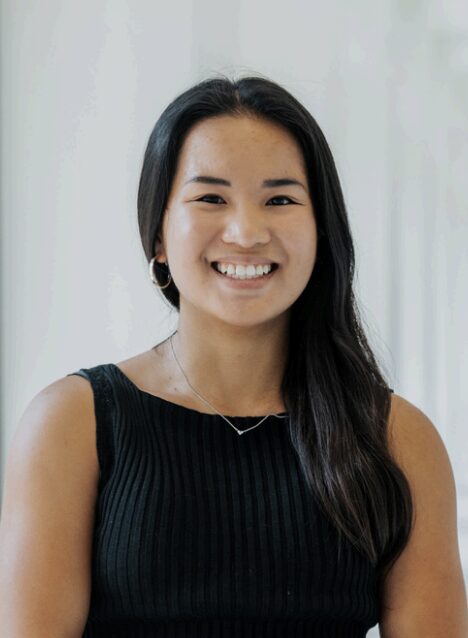
Luci Green is a senior at the University of South Carolina. (Courtesy of Luci Green/Carolina CrossTalk)
Luci Green, a senior chemistry major and chemical engineering/mathematics minor at the University of South Carolina (USC) Honors College, has been one of the scientists working to solve this issue.
The most common kinds of plastic, polyethylene and polypropylene, consist of long, repeating chains of carbon and hydrogen. But what makes this a problem? Commodity plastic is designed to have favorable mechanical properties of durability and versatility, but Green said, “It’s a double edged sword: What makes it good for consumer use makes it bad for the environment.” The plastic’s durability means it is unable to degrade, leading to the global pollution we see today.
As a freshman, Green was undecided on a major and future career path. Her General Chemistry I professor, Alison Luscomb, inspired Green to declare a chemistry major by pushing her to engage with the course material. “That class defined where I am right now,” Green said.
Green took initiative and connected with Chuanbing Tang, Ph.D., a professor in the Department of Chemistry and Biochemistry, who was willing to take on undergraduates showing significant promise in research. Tang’s lab stood out to Green: “I was drawn to disciplines of chemistry with more practical applications, so working in a materials lab investing in sustainability was of great interest to me.” After joining Tang’s group, Green pushed herself to learn more about polymer chemistry and materials science. “A big part of growing into a research role is learning to take more initiative, because there is an incredible difference between course material and lab skills,” Green said.
Green conducts her work at the National Science Foundation Center for Polymers for a Circular Economy (PCE). PCE focuses on developing polymers from inexpensive and recyclable materials. Led by Tang at USC, PCE also includes collaborators from Stanford University, the University of Chicago, Mississippi State University, and Clemson University.
On the benchtop, Green has two distinct tasks: synthesis and characterization. “Synthesis is exactly what it sounds like,” she joked; Green arranges subunits, or monomers, in different patterns to develop polymers with the goal of creating a material with similar thermodynamic properties to plastic but with more sustainable practices. The polymer should have a high molecular weight and glass transition temperature, ensuring the material can withstand significant amounts of heat without melting and be competitive with plastic’s properties.
The second task, characterization, is how Green analyzes the properties of the polymers she creates. Green has been trained in various forms of instrumental analysis, including gel permeation chromatography, nuclear magnetic resonance, and differential scanning calorimetry.
Designing syntheses has led to some of Green’s most exciting moments in her research career. In one memorable case, she had played with the ratios of her reactants for weeks and was finally able to make a polymer with similar properties to plastic, including a high molecular weight and high glass transition temperature. “Successes like that validate the fact that I can do good research,” Green said.
As an Honors College senior, Green is in the process of collecting data for her honors thesis, utilizing the same techniques of synthesis and characterization to create sustainable polymers out of α-methylstyrene, an organic compound.
Green’s work stands out in her discipline because her project focuses on both creating new polymers rivaling plastic and scaling up synthesis processes to an industrial level. “It is one thing to prove that this can be done,” Green said, “but it is another thing to disseminate that process on a wider scale.”
The coursework from her chemical engineering minor has played a large role in guiding her thought processes and experimental design to make sure her polymers are sustainable on multiple levels.
Not only is Green’s project distinctive in the field of sustainable chemistry, but her future career is also unique. Green’s objective is to become a patent lawyer and help scientists protect their life-changing innovations from being stolen. Green still plans on going to graduate school for chemistry, specifically materials science, to continue deepening her technical knowledge and training in order to understand the research she seeks to protect. “My goal is to facilitate the greatest inventions of this century in green chemistry research,” Green said.
As a senior, Green is reflecting on how she has curated her curiosity for sustainable chemistry and how she is choosing to make an impact outside of the lab. Her role as a supplemental instructor at the Student Success Center for Organic Chemistry I and II has allowed her to serve as a mentor for those who may be struggling in their chemistry courses. “I want to help other undergraduates see the value in chemistry, just like I was helped by my professors as a freshman,” she says.
Sharing her story with the broader USC community is another way she is choosing to mentor others beyond the benchtop, by encouraging those who are interested in research to get involved. “Cold emailing professors with genuine interest makes you stand out,” Green said, “and showing initiative to the professors you have for classes makes you stand out even more. Most professors are interested in having undergraduates who are willing to push themselves and be curious beyond course material, so don’t hesitate to put yourself out there!”
By following her own advice, Green has paved the way for herself and others to make a positive impact on her field, the USC community, and the environment.
This website uses cookies to provide you with an improved and personalized experience. By using this site you agree to our use of cookies. Please read our cookies policy for more information on the cookies we use and how to delete or block them.



 All Topics