A livelihood on the line: Artisanal fishing in Guanabara Bay
Antônio Roque Ferreira dos Santos holds up a Piruána fish, caught that morning. For artisanal fishermen, their daily catch has become increasingly less reliable as environmental conditions strain Guanabara Bay.
For more than four decades Antônio Roque Ferreira dos Santos – known more commonly along the shores of Rio de Janeiro’s Guanabara Bay as “Mestre Roque” or just Roque – has fished the bay’s waters and built boats that allow other community members to do the same. He began fishing when he was in the Brazilian Navy, and, after retiring in 1984, turned it into his livelihood as a member of the Association of Fishermen of Bancário Beach on Governor’s Island.
To him, there is no typical “day in the life” of an artisanal fisherman on Guanabara Bay because every day is different. “There’s a saying we use among fishermen,” he said. “You don’t set the schedule. The fish set the schedule.”
For the fishermen of Guanabara Bay, however, the abundance of their catch is often left up to chance, according to Roque. “One day you go out and somebody says, ‘there’s nothing.’ Then you go a little farther out and you catch 100 kilos of fish – which for us with small boats, is a good catch. Maybe you catch 100 kilos, 200, some days you get 300. The next day, you catch nothing. That’s just how it is. There are days of plenty and days of very little.”
Throughout his more than forty years on the water, however, Roque notes that these “days of very little” have become increasingly more frequent, making the once sustainable livelihood of artisanal fishing in Guanabara Bay all the more precarious.
The bay and decline
Guanabara Bay spans more than 384 square kilometers and is fed by over 50 tributary rivers and streams. The bay supports a rich diversity of species, including less than 40 endangered Guiana dolphins. It is also recognized as a UNESCO World Heritage Site, despite being one of the most degraded marine ecosystems in the world, according to a 2023 article by Mongabay.
It is bordered by the sprawling 6.73-million person metropolis of Rio de Janeiro on its southwest shore. To the southeast lies the smaller city of Niterói. Additional municipalities surrounding the bay include Duque de Caxias, São Gonçalo, and Magé, where many shoreline communities face significant socioeconomic challenges.
Despite decades of environmental degradation, Guanabara Bay endures as best it can, continuing to sustain those who rely on it. Shrimpers wade through the shallow waters with their nets cast wide, while soft waves lap against the shore, pushing plastic Guaravita cups and lone Havaianas flip-flops into the tangled mangroves. The rhythm of pagode samba pulses from a phone speaker of a fisherman cleaning and gutting his catch, as a group of long-legged herons stalk him from behind hoping to score an easy meal. As early as 6:00 a.m. every day, artisanal fishermen – small-scale, independent fishermen who rely on traditional fishing methods and modest vessels to support themselves and their communities – push their boats off from shore and into the bay, hoping that their schedule aligns with the fish’s for the day.
For generations, the bay has provided food, livelihood, and cultural identity for those living along its shores, but pollution, industrial expansion, and overfishing have put pressure on artisanal fishermen like Roque.
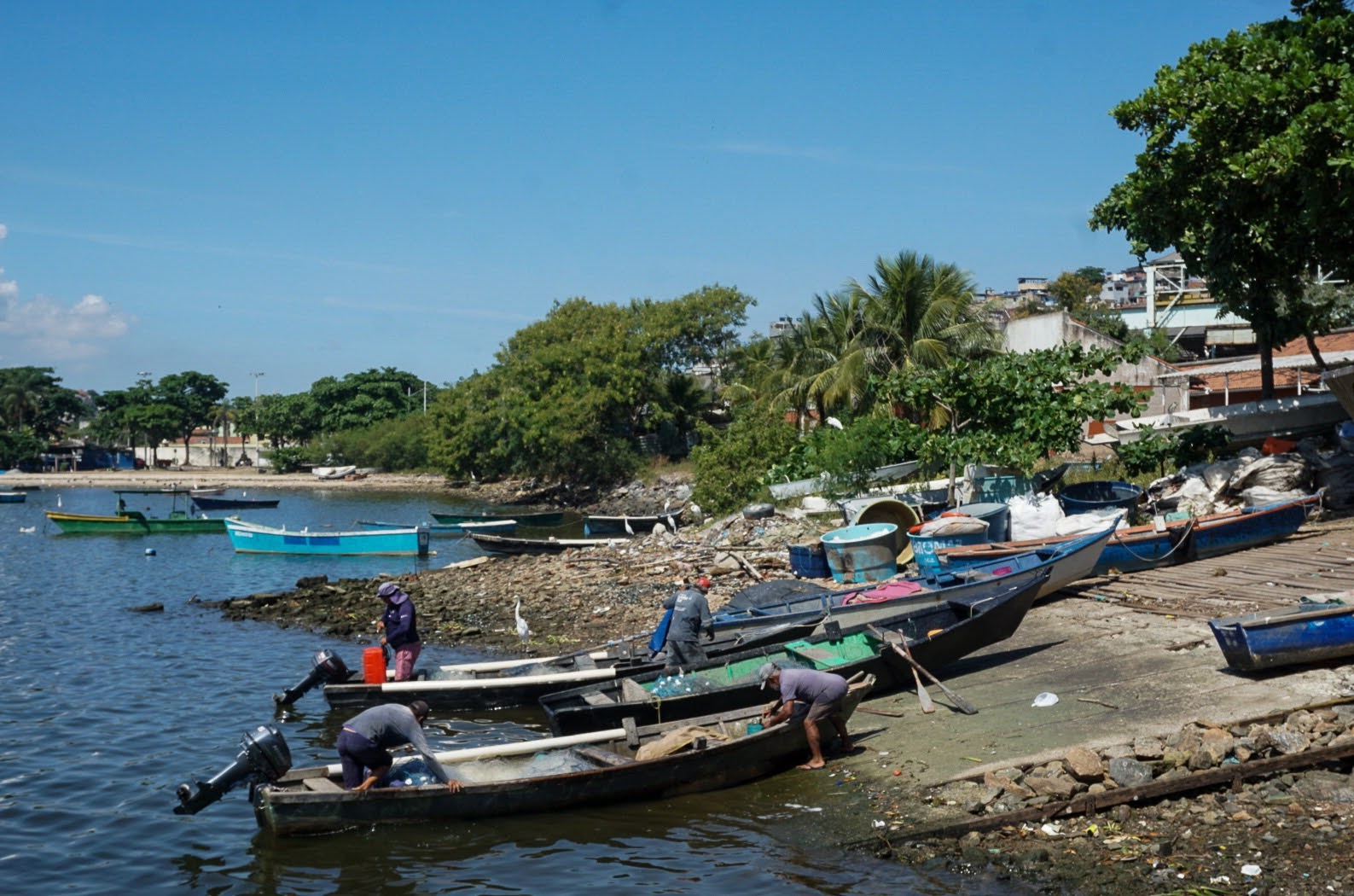
Returning to Governor’s Island after a morning on the water, members of the Association of Fishermen of Bancário Beach unload their catch. (Olivia Lohrer)
Looking around the shipyard where he is repairing another fishermen’s boat, Roque said, “I remember when this shipyard was operating. It was good for everyone. There were six thousand workers there. At lunchtime, the area would fill with people, everyone out buying food, moving around. We sold fish to them, it boosted the local economy. You could invest in yourself and see the community improve. There was a time when I had two boats fishing, with four people on each, all my equipment – it was worth it. Now it isn’t.”
He continued, “The number of fishermen has dropped a lot. There are fewer fishermen because there are fewer fish.”
Artisanal fishermen are being pushed out of Guanabara Bay by myriad social and environmental forces – as well as lack of public policy that adequately addresses them. This is what coordinator of the Baía Viva Movement Sérgio Ricardo de Lima Potiguara describes as “an attempt to eliminate artisanal fishing.”
Among the most harmful pressures that these fishermen face is pollution. According to a 2023 article published by Globo, an estimated 18,000 liters of sewage enter the bay per second. Plastic waste is so pervasive in the bay that many fishermen have turned to cleanup programs supported by environmental organizations as a secondary source of income.
At the same time, access to traditional fishing grounds has been constricted. Much of what once was available to fishermen has been overtaken by the oil industry; only 12 to 19% of Guanabara Bay remains available for fishing today, according to Ricardo.
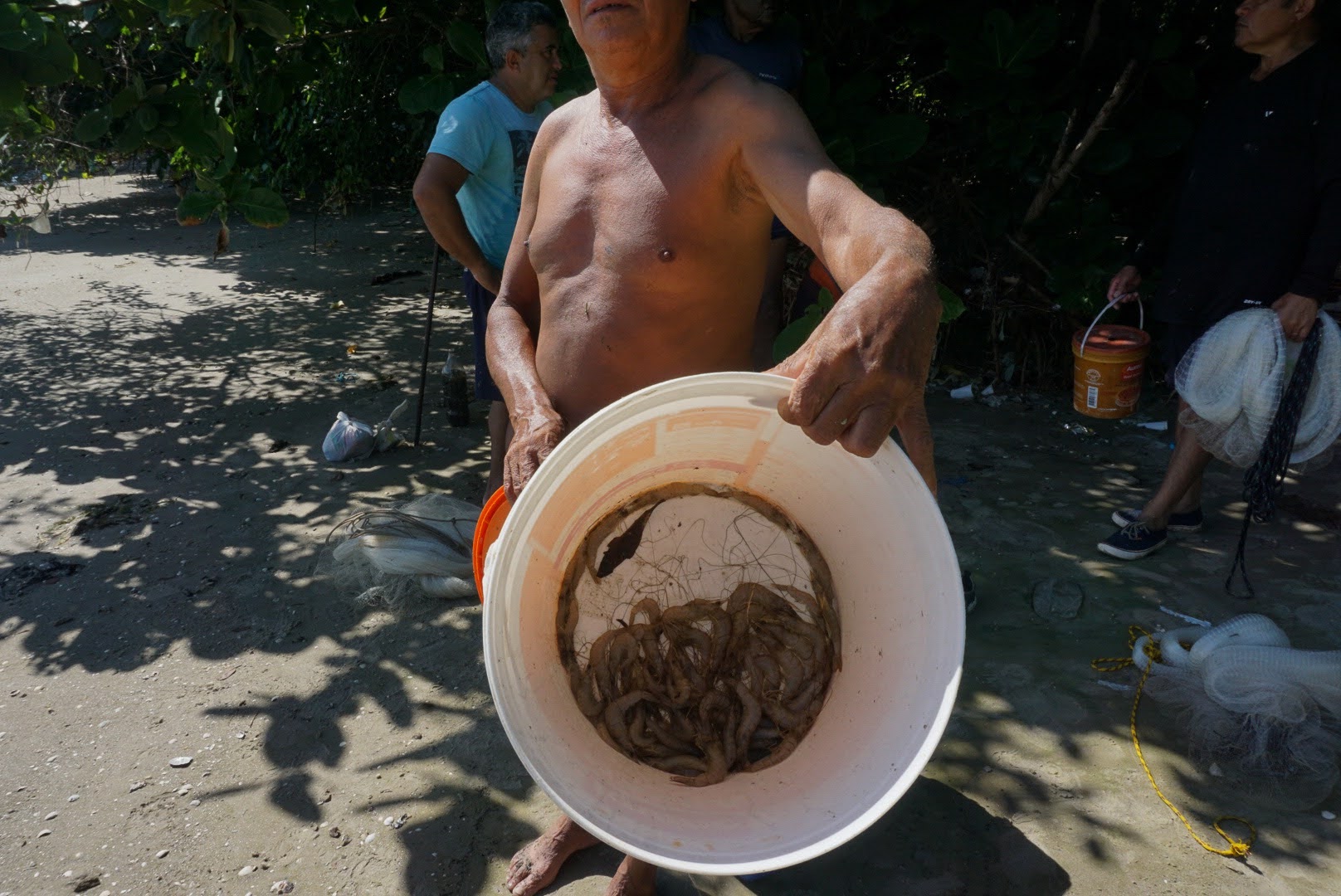
Artisanal fishermen on Ilha do Fundão spend the morning catching shrimp. (Olivia Lohrer)
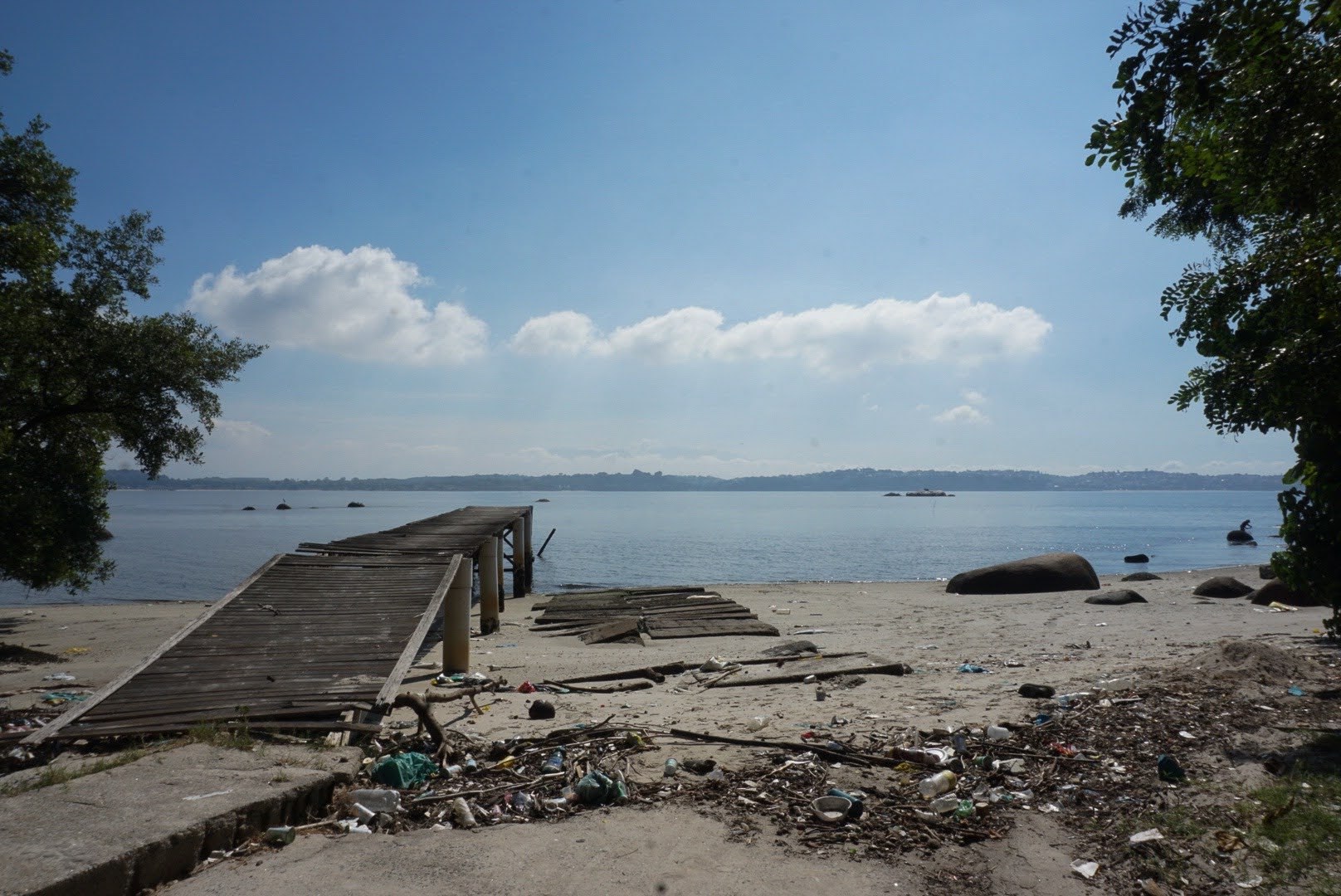
Plastic debris accumulates along the shores of Guanabara Bay, where domestic and industrial pollution place immense pressure on the health of the bay. (Olivia Lohrer)
In Roque’s eyes, however, one change has been even more detrimental than the rest: what he calls “predatory fishing,” or overfishing. The presence of larger vessels and bigger nets have depleted fish populations throughout the remaining fishing territories in Guanabara Bay.
“The fish we would catch over a month, they catch in a single day. So we’re left with nothing,” Roque said. “If that were actually stopped here in Guanabara Bay, artisanal fishermen would be able to breathe.”
Ultimately, Roque believes that predatory fishing results from a lack of education, or even total disregard of the principles of ecology that artisanal fishermen around the bay have followed for hundreds of years.
“We use limited nets. Within our conditions, they’re limited, but they’re enough to make a living. And that limitation is actually good – it helps preserve things. If you fish with respect, you preserve,” he said.
He continued, “Fishermen themselves would need to say ‘enough,’ because they’re destroying their own livelihood. Out of maybe 20 species we used to have here, half have declined drastically. Some you catch today and are surprised they still exist.”
Those who have remained in the trade have been forced to adapt. Previously, row boats had been sufficient to catch the many fish that resided near the shore. Now, many fishermen now rely on outboard motors to reach increasingly distant fishing grounds.
“The changes push you farther and farther from your original fishing grounds if you want to succeed. Otherwise, you don’t catch anything,” he said. “That’s what’s happening: Fishermen are being left behind in terms of development.”
Over the years, organizations and movements have sprung up around the bay to address these converging challenges and to support artisanal fishing communities. As the coordinator of the Baía Viva movement, Ricardo has spent much of his career as an environmental activist, ecologist, and now doctorate student in anthropology working towards an “integrated recovery of the bay’s environmental health” as opposed to just “clean-up.”
“The idea of clean-up, which the government still uses today, is based on the notion that the bay is dead. And if it is considered dead, it allows for the expansion of the oil industry, shipyards, and other economic activities that are harmful to the bay’s health,” Ricardo said.
He continued: “Our perspective is that the bay is alive – you still have dolphins, turtles, rays, seahorses, fishermen, crab gatherers, mangroves, the Atlantic Forest – but it is a body that is very weakened due to decades and decades of impact,” he said.
Tides turning
Much of Ricardo and Baía Viva’s work focuses on the human element of the bay’s ecosystem and he has found a growing loss of interest in artisanal fishing among the younger generations of traditional fishing communities.
“[Fishing] is a cultural practice and a trade passed down from father to son across generations,” he said. “Today, children and grandchildren no longer want to be fishermen. Why? Because they think: ‘I’m going to be poor my whole life like my father, working in a contaminated place.’”
Asked about whether or not he would like his 14-year-old grandson Vitor to work as a fisherman in Guanabara Bay in the future, Roque said, “No.”
“If he wants to fish, that’s fine – he can enjoy it. But he should have another job. Fishing should be a source of extra income, not the main one,” he said. “Living only from fishing here in the bay… I wouldn’t recommend it.”
This generational shift signals something more profound than a changing job market. It marks the erosion of an entire way of life that is deeply tied to the ecological health of Guanabara Bay.
“Wherever there are fishermen, Indigenous peoples, quilombola communities, small farmers — these people depend on forests, rivers, lagoons, and the bay to feed themselves, to survive, to earn a living,” Ricardo said. “In general, they tend to have a stronger commitment to protecting these environments.”
For Ricardo, bridging this generational divide starts with education. Aiming to support the socioeconomic and sustainable development of coastal communities around the bay through education, Baía Viva is launching a new project called Universidade do Mar, or the University of the Sea.
“You have a whole set of universities around the bay, public institutions and also private ones, and often the researchers are working – what we call in Brazil ‘looking at their own navel’ – everything in isolation,” Ricardo said. “Our idea is that public universities should help solve the country’s problems. We are constantly seeking to dialogue, interact, and cooperate with researchers from different fields of knowledge.”
Initially inspired by Baía Viva’s founder, the late Professor Helmo Amador, that vision began to take shape around 2018. In 2023, Baía Viva secured the funding to build a training shipyard at the Federal University of Rio de Janeiro’s (UFRJ) Ilha do Governador campus. “We trained 60 fishermen and fisherwomen to relearn how to build fishing boats, and we built three boats,” Ricardo said.
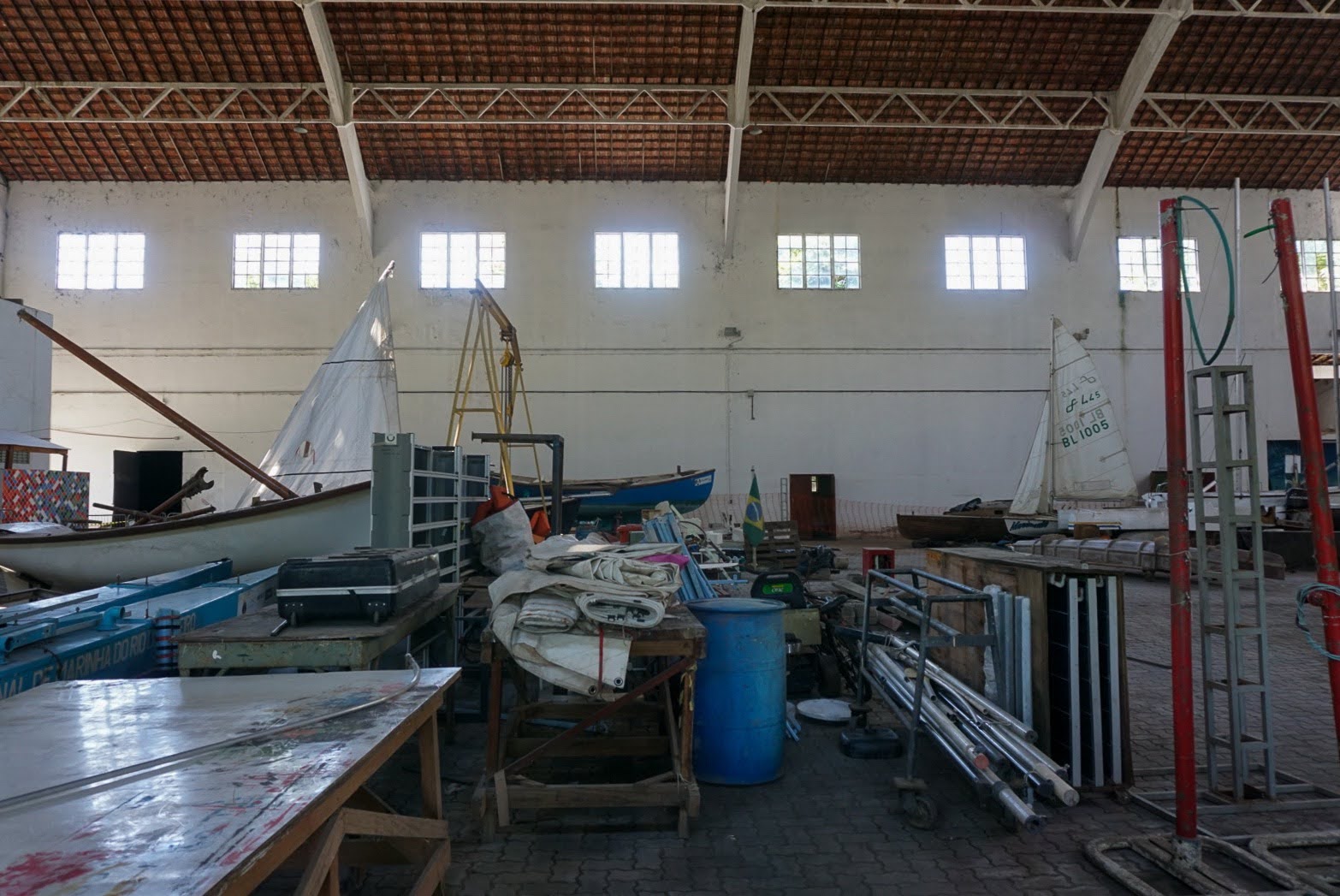
The Training Center for the Marine Economy of Guanabara Bay in the Nautical Hangar of the UFRJ campus, where students of University of the Sea can take a course on boatbuilding. (Olivia Lohrer)
According to Ricardo, additional inspiration for an initiative like University of the Sea comes from other significant social movements in Brazil, such as the Indigenous movement and the Landless Workers’ Movement (Movimento dos Trabalhadores Sem Terra, or MST). In this case, the largest peasant movement in Brazil observed their younger generations returning to their historical territories with post-secondary education to enhance the living conditions within their communities.
Talking about MST, Ricardo said, “More than 80% of those who make it to public university return to their settlements to help. When children and grandchildren of farmers gain access to public universities, they become agronomists, forestry engineers, biologists, or nutritionists, and then return to work on the land with their families.”
“So the question is: If fishermen had access to education, wouldn’t they want to preserve fishing culture?” Ricardo asked.
The situation for artisanal fishermen, however, is more precarious. Out of the 60 students who participated in the University of the Sea’s boat building program, only three are currently attending university. According to Ricardo, the University of the Sea seeks to help fishermen imagine an “alternative future.”
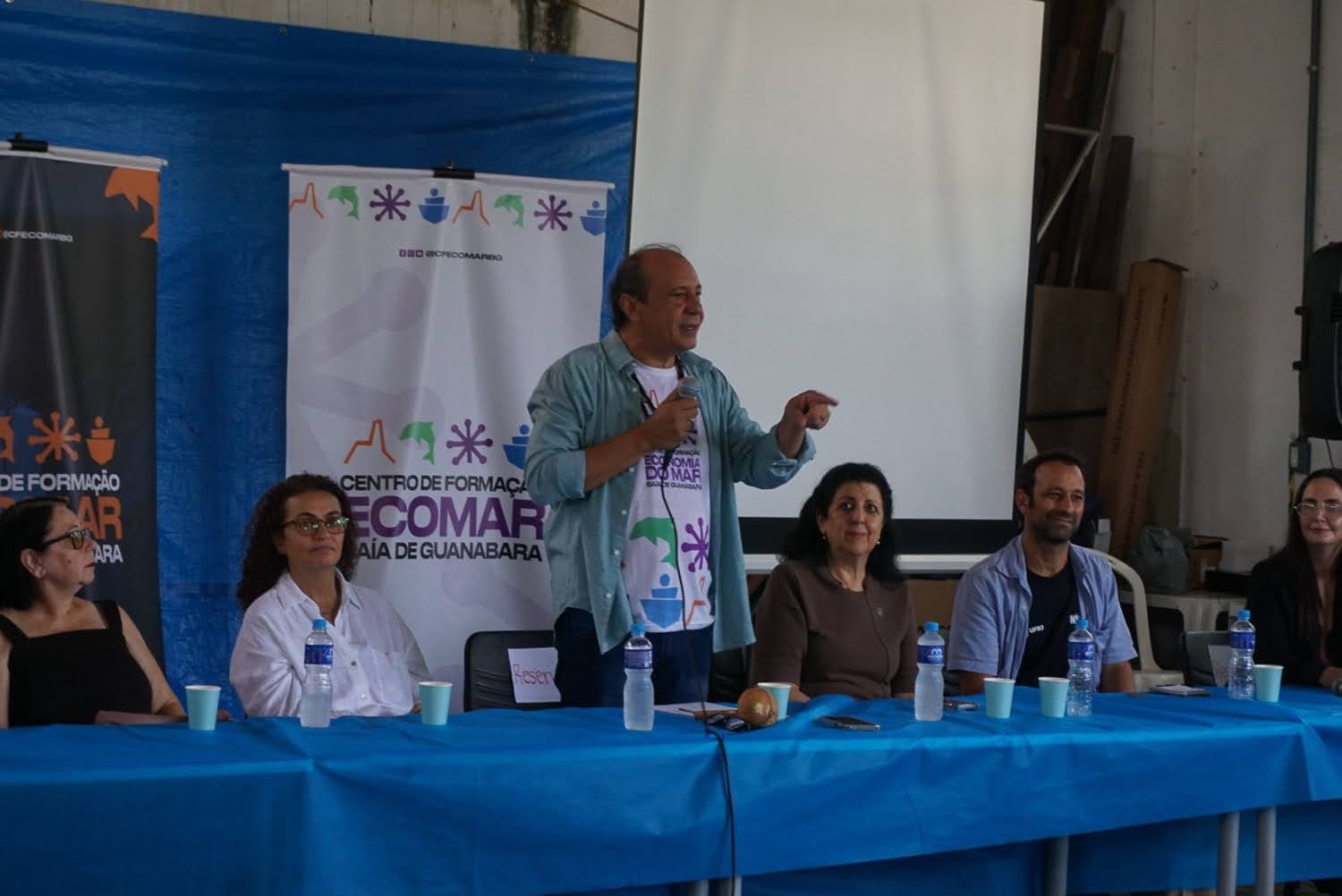
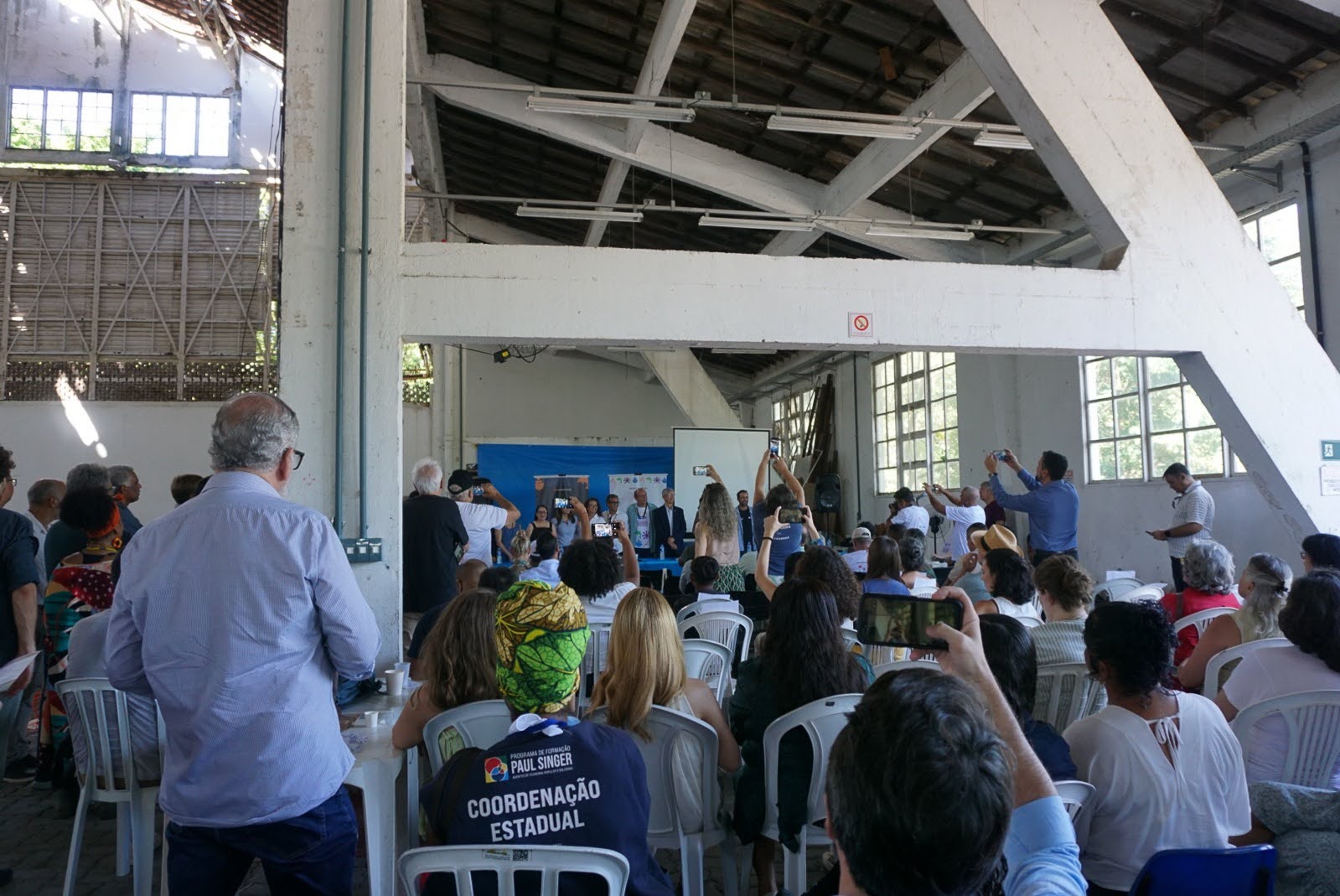
On Friday, April 17, 2026, University of the Sea celebrated the launch of the project at the new site of the new Training Center for the Marine Economy of Guanabara Bay, in the Nautical Hangar of the Federal University of Rio de Janeiro’s Ilha do Fundão campus.
Speakers and audiences gathered at the Nautical Hangar of the Federal University of Rio de Janeiro’s Ilha do Fundão campus. (Photos by Olivia Lohrer)
Prior to the speaker event, participants had the chance to browse market stalls selling food and handmade crafts. The speaker panel included Ricardo, Dr. Roberto de Andrade, Rector of the Federal University of Rio de Janeiro, and representatives of Petrobras’s area of social responsibility, among others.
The training center aims to be an educational space for marginalized communities that rely on Guanabara Bay for their livelihoods, including artisanal fishermen, Indigenous people, and quilombos, traditional Brazilian communities founded by escaped enslaved peoples. During the first semester, construction will continue on the hangar space, which will be expanded to include three large classrooms, a cafeteria, and a dormitory for participants coming from outside of Rio.
Meanwhile, 10 courses will be taught through 2028, including shipbuilding, community tourism, sustainable social entrepreneurship, social technologies for fisherwomen, maritime vocational education, and boat engine mechanics.
As the program takes shape, however, the question remains whether it can revive the younger generations’ interest in artisanal fishing.
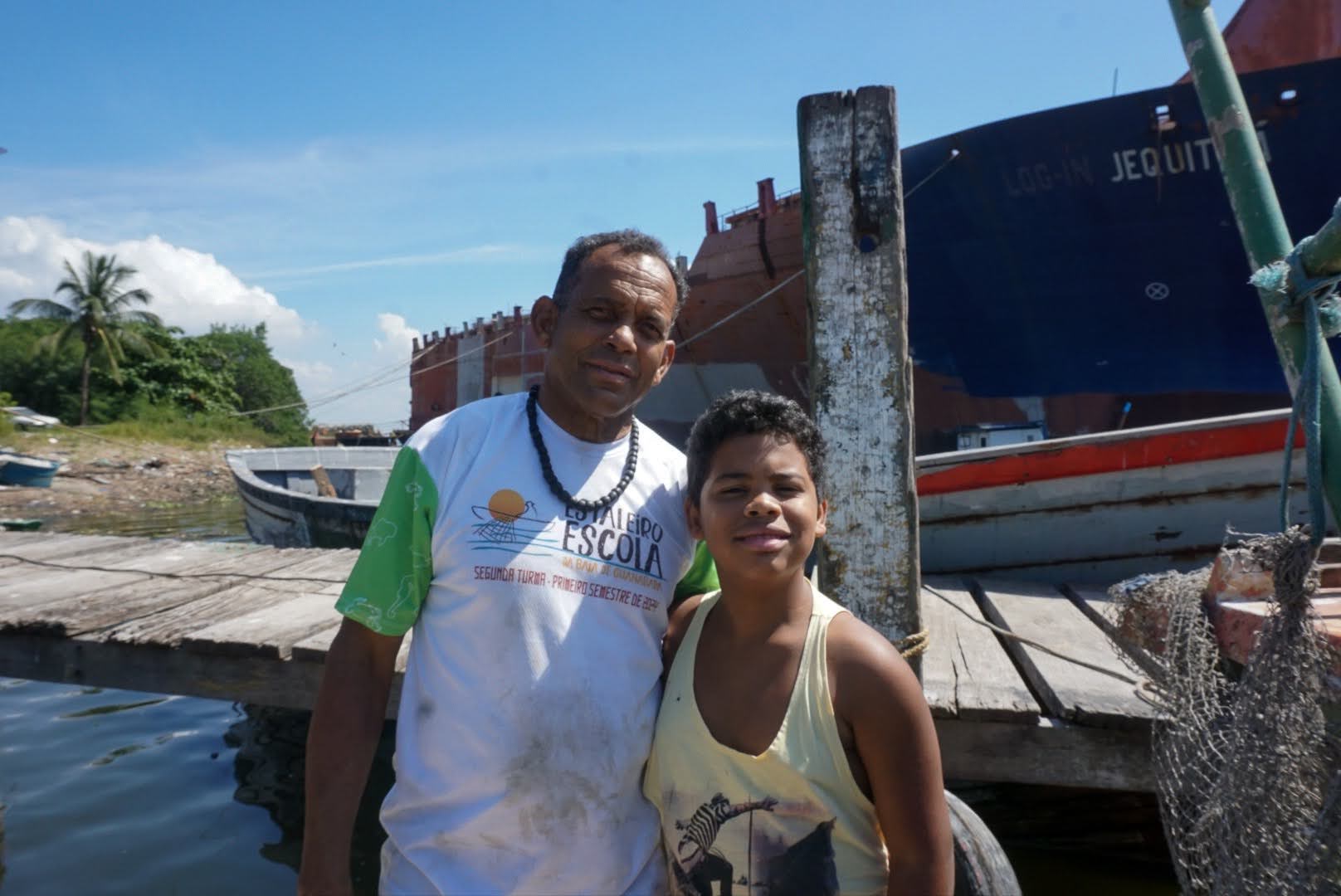
14-year-old Vitor, Roque’s grandson, is already thinking about whether he sees himself as a fisherman one day. Even at a young age, he’s aware of the financial challenges his grandfather’s line of work could impose.
“I also want to have a solid profession because if I choose to live only from fishing I could end up in a difficult situation.”
Even so, Vitor says that he still wants to follow in his grandfather’s footsteps.
“I want to continue my grandfather’s legacy,” he said. “Because fishing isn’t just about catching fish — it’s about bringing food to people’s homes.”
Mestre Roque and his 14-year-old grandson Vitor in the Association of Fishermen of Bancário Beach’s shipyard. (Olivia Lohrer)
This website uses cookies to provide you with an improved and personalized experience. By using this site you agree to our use of cookies. Please read our cookies policy for more information on the cookies we use and how to delete or block them.



 All Topics