
 All Topics











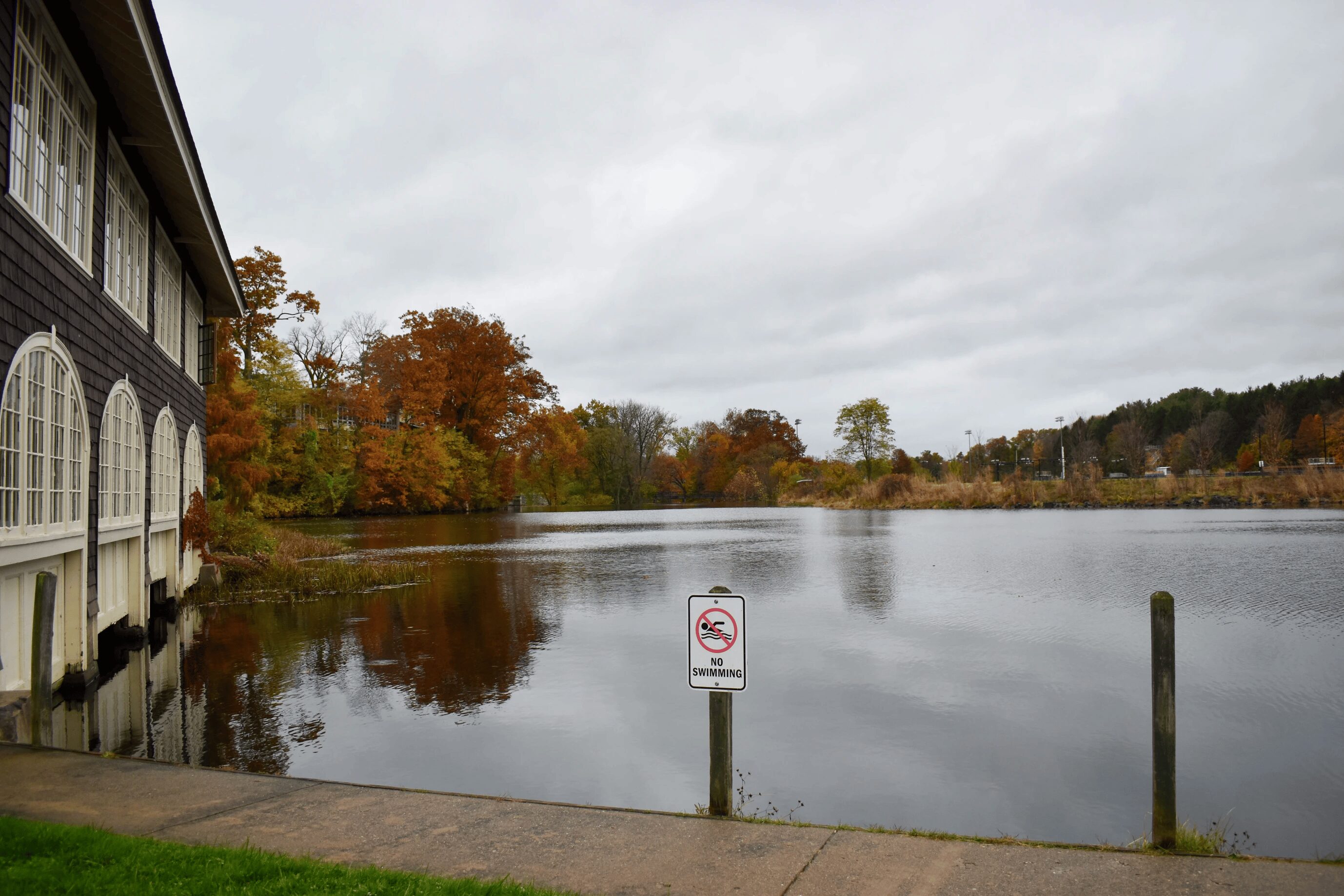
Image shows an example deforestation in the Peruvian Amazon.
flyingfabi/CC BY-NC 2.0

February 26, 2026
flyingfabi/CC BY-NC 2.0

In 2014, government inspectors traveled deep into the Amazon rainforest in eastern Peru, near the border with Brazil. According to official documents, this patch of forest had been carefully managed. Two hundred nine trees were marked for harvest. Eleven “seed trees,” left standing to help the forest regenerate, were supposed to remain.
On paper, it was an example of sustainable forestry. But when inspectors arrived, they did not find a carefully managed forest. They found land devoid of the trees that were supposed to be there. The GPS coordinates listed in official documents led nowhere. There were no marked harvest trees. No preserved seed trees. No logging trails.
Instead of sustainable forestry, they found something closer to a clear-cut, an area where trees had been removed entirely. The trees that existed on paper did not exist on the ground.
Peru’s forestry oversight agency, the Organismo de Supervisión de los Recursos Forestales y de Fauna Silvestre (OSINFOR), carried out this inspection. What they uncovered was a structural weakness in how forests were managed across the Peruvian borderlands of the Amazon.
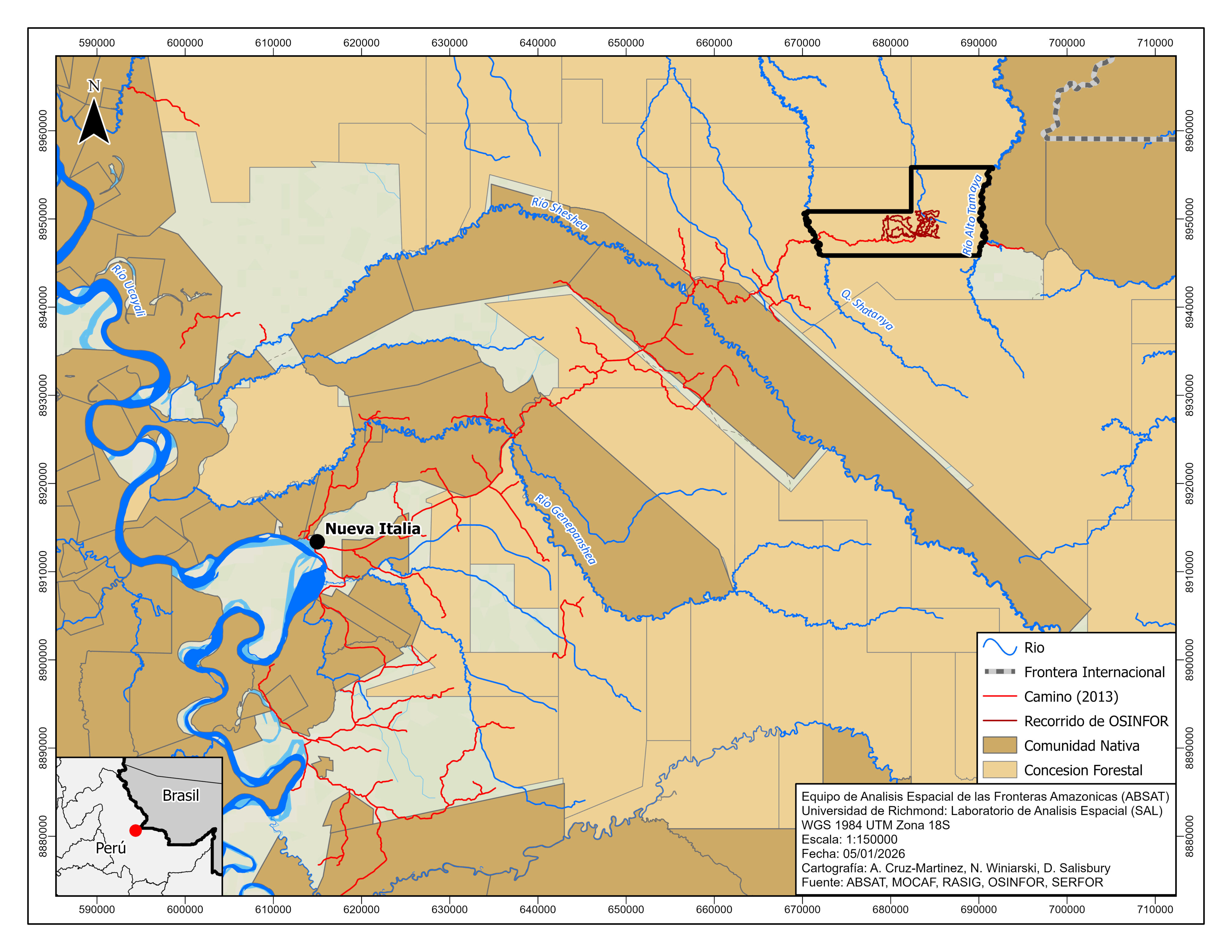
In 2000, Peru passed a new forestry law and began leasing large sections of public forest to private companies for up to 40 years. These logging concessions were meant to encourage responsible management rather than short-term extraction.
On paper, everything worked. The forest had a plan. Trees were marked. Harvest zones were mapped. Transport permits were approved. The system was designed to balance profit and protection.
But paper is patient.
Over time, the lease changed hands several times. Companies came and went. Management plans were submitted. Timber shipments were recorded. Documents showed wood moving out of the forest in large quantities.
Yet when inspectors entered the harvest zones, they found no stumps where trees had supposedly been cut. No marked trunks. No preserved seed trees. No evidence that logging had occurred where the paperwork claimed.
Numbers existed, but the forest did not.
This was not just illegal logging hidden in a remote jungle. The system depended on documents being filed correctly, but no one consistently verified whether those documents matched reality.
Forests had become coordinates instead of living ecosystems.
When a tree is declared “protected” in official records but cannot be found on the ground, it creates an opening for a loophole.
Wood from other areas can be attached to false coordinates, and transport permits make it appear legitimate.
On paper, everything checks out.
In the forest, entire patches can be stripped completely.
Instead of selective harvesting, inspectors found clearings where the canopy had been opened and the forest exposed. The consequences did not remain within concession boundaries.
The Amazon Rainforest is one of the most biologically diverse places on Earth. It stores vast amounts of carbon and regulates rainfall across South America and beyond. When forests degrade, habitats fragment.
Roads cut into what was once continuous forest, making it easier for agriculture, cattle ranching, and further clearing to expand.
What begins as a missing tree on paper can become deforestation.
Communities in these regions feel the effects. Many Indigenous communities depend on intact forests for food, medicine, and cultural survival. When oversight weakens, land conflicts intensify and trust in institutions erodes.
Companies that follow the rules face another challenge. Competing against operations that falsify paperwork becomes nearly impossible, and the market bends toward those willing to take shortcuts.
The 2014 inspection revealed how fragile sustainability becomes when it exists only on paper. A system designed to protect forests had shifted into one that protected documentation instead.
After years of relying on paperwork, OSINFOR changed its approach. Instead of reviewing documents from an office, inspectors went into the field.
They used maps and GPS devices to locate the coordinates listed in operating plans. Each point was supposed to correspond to a real tree.
So the inspectors walked. They followed the numbers. They searched for marked trunks and verified whether seed trees remained. They looked for logging roads that should have cut through the canopy.
In many cases, the coordinates led to empty space.
Inspectors also compared company reports with satellite images showing where forest cover had been disturbed.
If trees had been removed, the canopy should have opened.
If roads had been built, scars should have appeared.
Often, they did not.
The question shifted from whether forms were submitted correctly to whether the forest told the same story as the paperwork. It did not. The contract was eventually canceled and returned to the state.
The story does not end there.
Satellite imagery in the years following the inspection shows continued road expansion and agricultural activity in parts of the concession area. Ownership changes created gaps in oversight in a region defined by distance and limited access.
When monitoring is inconsistent, enforcement becomes fragile.
Forest concessions across Peru cover vast areas. If managed well, they can balance economic development with ecological protection. If poorly managed, they can become pathways for deforestation.
Most timber harvested in the Amazon does not stay there. It enters global supply chains and becomes flooring, furniture, and construction materials far from where the trees once stood.
Forest governance in Peru is connected to consumer choices, international markets, and climate policy worldwide.
This story shows that sustainability cannot rely on paperwork alone.
Environmental protection must be rooted in transparency, oversight, and accountability.
Sustainable forest management does not begin on paper. It begins with verification.
References
Amazon Borderlands Spatial Analysis Team (ABSAT)
https://www.absatrichmond.com/absat
Finer, M., Jenkins, C. N., Pimm, S. L., Keane,
B., & Ross, C. (2014). Logging
concessions enable illegal logging crisis
in the Peruvian Amazon. Scientific
Reports, 4, 4719.
https://doi.org/10.1038/srep04719
Salisbury, D. S., de Melo, A. W. F., & Tipula, P.
T. (2012). Transboundary Political
Ecology in
the Peru-Brazil Borderlands: Mapping
Workshops, Geographic Information,
and Socio-Environmental Impacts.
Revista Geográfica, 152, 105–115.
http://www.jstor.org/stable/43558257
Salo, M., & Toivonen, T. (2009). Tropical timber
rush in Peruvian Amazonia: Spatial
allocation of forest concessions in an
uninventoried frontier. Environmental
Management, 44(4), 609–623.
https://doi.org/10.1007/s00267-009-9343-3
Sears, R. R., & Pinedo-Vasquez, M. (2011).
Forest policy reform and the
organization of logging in Peruvian
Amazonia. Development and Change,
42(2), 609–631.
https://doi.org/10.1111/j.1467-7660.2011.01697.x
Paredes, M., Gianella, C., & Olivera, S. (2024).
Corrupting climate change institutions
from the inside: Systemic collusion in
Peruvian forest governance. Political
Geography, 108, 102991. https://doi.org/10.1016/j.polgeo.2023.102991
Organismo de Supervisión de los Recursos
Forestales y de Fauna Silvestre
(OSINFOR). (2013–2014). Informes de
supervisión de concesiones forestales.
Gobierno del Perú.
MaderaLegal.pe. (s. f.). Plataforma de transparencia sobre actores forestales en el Perú.
Retrieved 2025, from
https://maderalegal.pe/
Navarro, R., & Blue Sky, M. (2017).
“Continuous Improvement” in Illegal
Practices in the Peruvian Forest Sector
(Center for International Environmental
Law). https://www.ciel.org/wp-content/uploads/2017/11/EnglishVersionFinal.pdf
Castro, A. (2025). Funcionarios forestales del
caso Saweto están vinculados a más
denuncias por tráfico de madera.
OjoPúblico.
https://ojo-publico.com/ambiente/territorio-amazonas/saweto-funcionarios-estan-vinculados-mas-denuncias-ambientales
Perú. (2021). Resolución de Dirección Ejecutiva
N°
D00031-2021-MIDAGRI-SERFOR-DE.
Gobierno del Perú.
A project of

in collaboration with