 All Topics

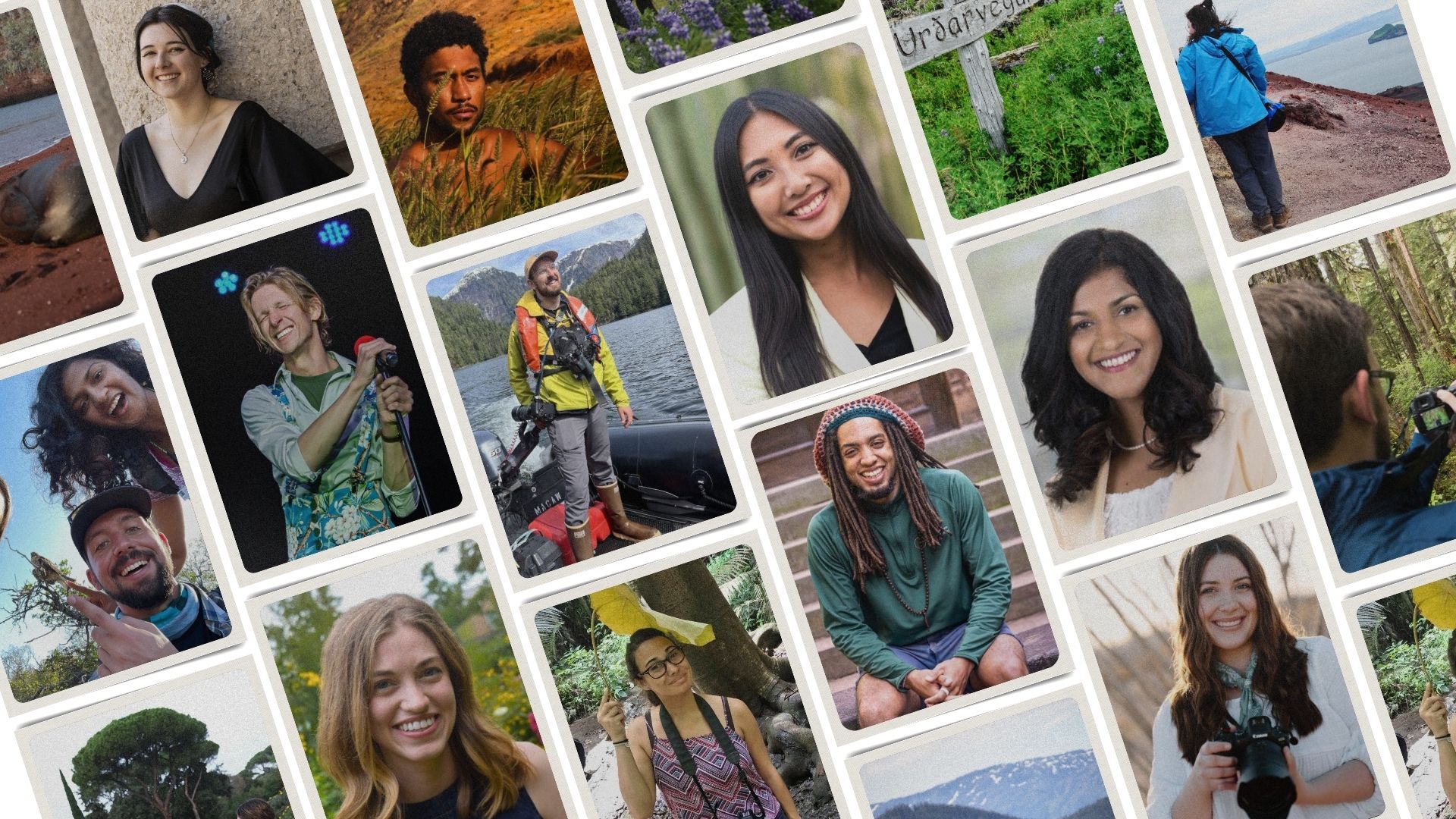



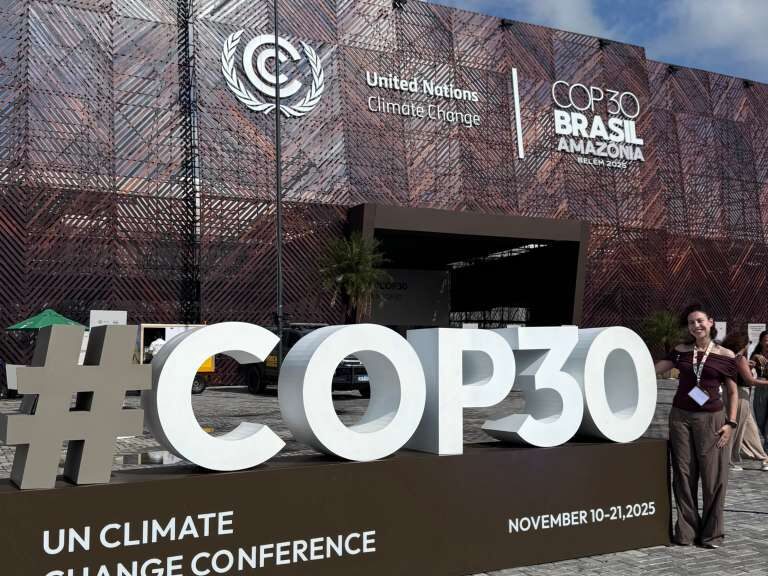
Malak Nechnach outside at COP30 in Brazil.
Courtesy of Malak Nechnach
Jenna Outcalt
Planet Forward Chautauqua Fellow | University of Connecticut
April 13, 2026
Courtesy of Malak Nechnach
Planet Forward Chautauqua Fellow | University of Connecticut
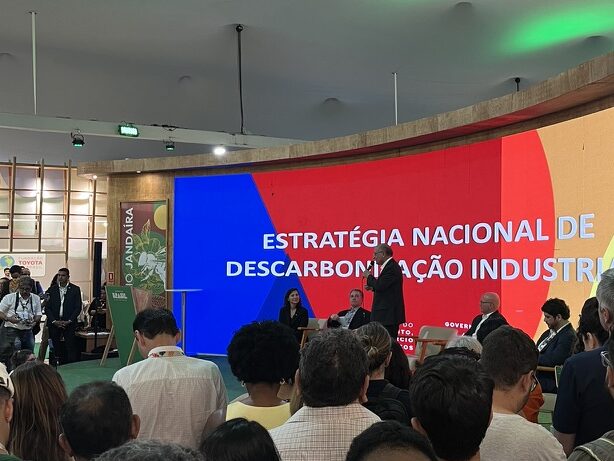
The 30th annual Conference of Parties hosted more than 56,000 delegates from around the world in Belem, Brazil. Among them were students from the University of Connecticut, who attended the second week of the conference to learn about international relations, climate science, and how sustainability can be incorporated into every part of our lives.
Four UConn students sat down with Planet Forward to answer questions about their experience at COP30 and what they took away from it.
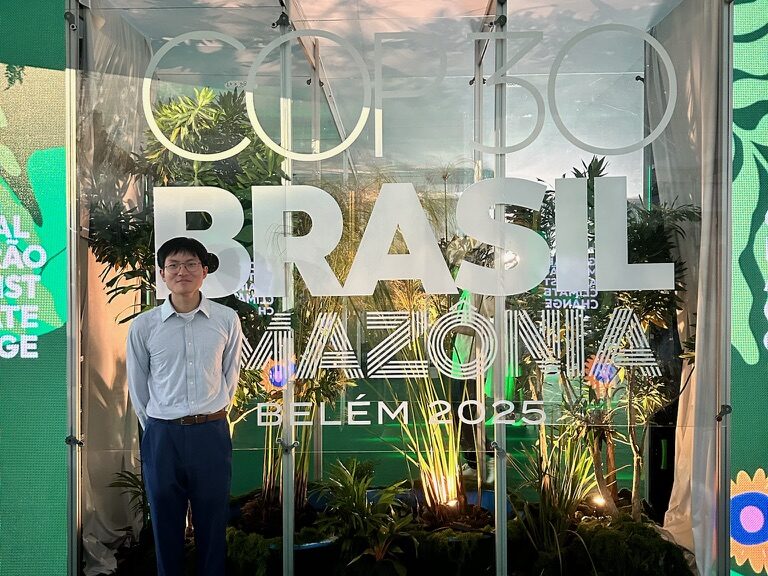
Andy Zhang is a senior studying environmental economics and environmental sciences. He is interested in sustainable food systems and currently serves as UConn’s undergraduate student president.
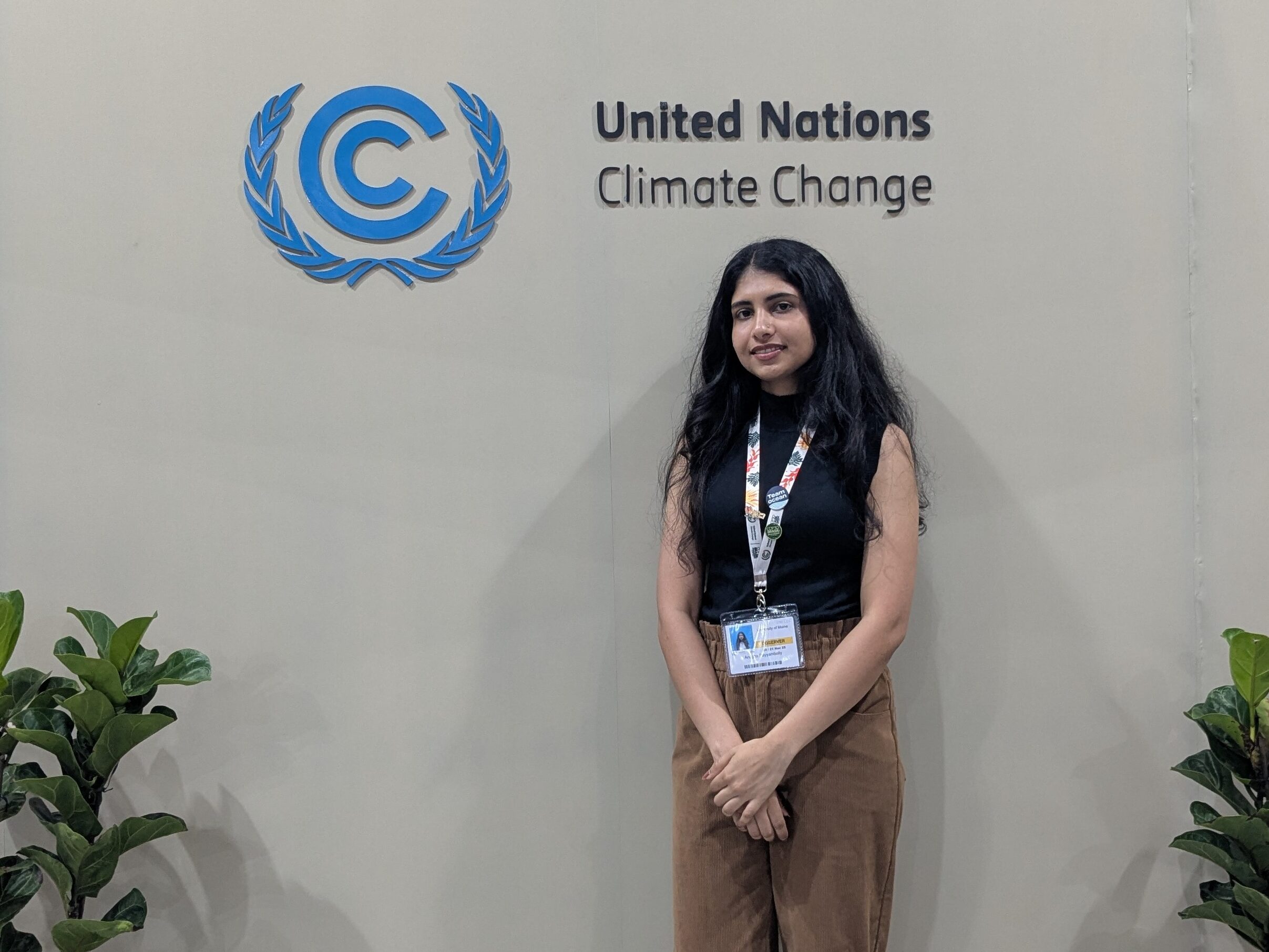
Anagha Payyambally is a marine sciences graduate student at UConn. She studies greenhouse gas emissions in relation to oceans.
Aminieli Hopson is a senior studying real estate and urban economics. He has lived in four U.S. states, as well as Tanzania, and speaks four languages.
Malak Nechnach is a senior studying physiology and neurobiology with a minor in mathematics. She is the founder and president of the Undergraduate Research Society and the Undergraduate Science Journal at UConn.
The interview below has been edited for length and clarity.
Jenna Outcalt: What were your basic expectations going into the conference? What did you hope to get out of it?
Andy Zhang: I’ll be honest. I thought a lot of it would be very high-level and almost detached from what I see as very hands-on policy at UConn. I thought that it would be essentially a lot of diplomats and people in high-ranking positions just talking with one another, not really engaging, and just being in their own bubble. I also wasn’t sure how much of the climate negotiations I’d be able to see. I knew I was an observer, but I didn’t know if that actually meant I’d be able to be in the negotiating rooms. I later found out I was, which was very cool.
Aminieli Hopson: My expectation was that it was going to be incredibly high-level and an experience where you’re more on the sidelines as a student. As far as my hopes go, I study real estate and urban economics, so going into it, I understood a lot about different mechanisms that businesses and the private sector employ in terms of addressing the climate crisis. Everybody talks about carbon credits and things, but there’s also the supply chain aspect, there’s social responsibility of the business, there’s empowerment of small and medium enterprises that are locally sourced but are in saturated markets and maybe aren’t getting as much market share as they deserve. I was really interested in how things of that nature intersected with human rights and what youth are able to do to get involved.
JO: How did your experience live up to your expectations?
AZ: I think there’s both some truth and some differences. I think the approachability of certain people was not so much dependent on people’s titles, but more so on their personality. I had this idea that all these people and officials would be very high-ranking and wouldn’t be very interested in talking to students like myself, but a lot of us students had really positive experiences with people who were strangers and who served in these really cool positions. They did a lot of work showing us around and showing us how we could be a part of this space. It was really nice to know that despite the fact we were in Brazil and maybe not the most acquainted with everything, people were still taking the time to show us the whereabouts.
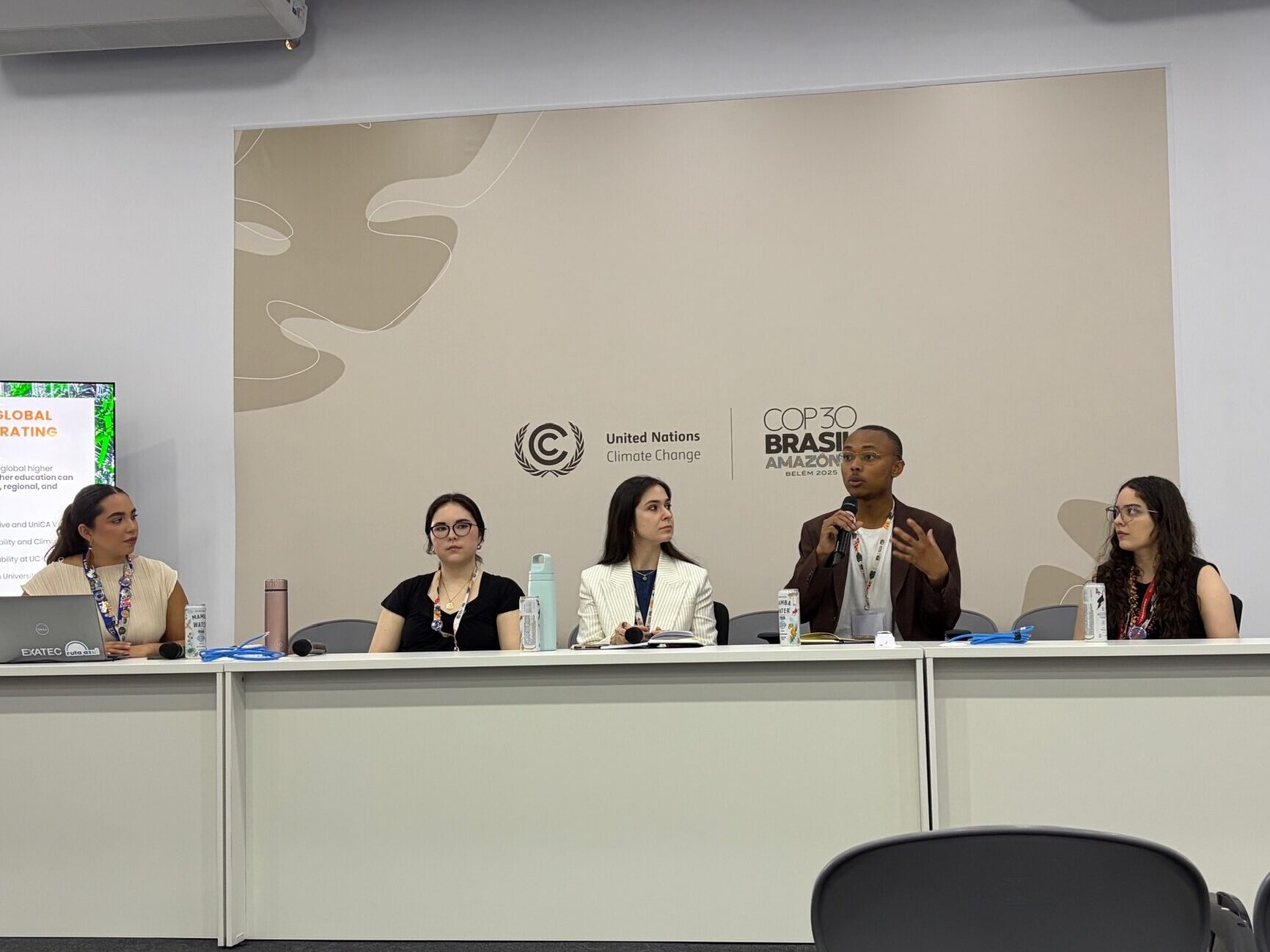
AH: The expectation of youth being excluded ended up being completely untrue. We not only went to negotiations and pavilion talks, but some of us were even able to speak on panels and provide perspective from the youth side of things, as well as from living in the Northeast of the United States. There was the youth and children pavilion; there was a higher education pavilion. The reason it’s important for youth to show up and have these opportunities is because some of the decision-makers in the room are creating these huge complex frameworks, but there are local communities who need to know how they operate and what to do with them. I think youth play a huge role as a connector both intergenerationally and across different cultures, because those who grew up in the post-tech era tend to be able to utilize different technologies to be able to communicate across cultures at a much higher rate.
JO: Did anything at the conference change your previous perspectives or assumptions?
Anagha Payyambally: I went to COP with no previous assumptions. This was my first time, so I only knew the basics. I did know that everyone was saying that this would be the COP of implementation. After 10 years of the Paris Agreement, this was supposed to be the one that implements that agreement. It was supposed to be another breakthrough conference for climate change science. That didn’t really end up happening. In the final reports of COP30, phasing out of fossil fuels wasn’t even in the report.
Malak Nechnach: I don’t know what I was expecting from the countries in the negotiations, but I just thought it was gonna be a bit more professional than that. The language they used, I thought it was gonna be harder to understand. I thought I was going to just stand there like, “Wow, they’re using big words and and I don’t really know where the conversation’s going,” but it was pretty straightforward, pretty easy to understand, and it also seemed… sometimes kind of unprofessional. There would be no direction to a conversation or they would talk for an hour and get nowhere. It makes sense that that’s how politics go, but I thought it’d be different in a big conference that happens every year. I was hoping to see a bit more from them.
JO: What was your experience being from the United States in a year where there was no official U.S. government delegation attending?
AP: Even though we know the United States didn’t have an official pavilion, there were still previous U.S. negotiators who were invested in climate change and were there to support. Even if they’re not representing the United States, they’re there to talk about climate science and what’s happening in the United States. They even made a meeting room to talk with U.S. students. That meeting room was filled with students and very supportive climate change negotiators. There wasn’t even enough room to sit. Even though there was no official delegation, I feel like there’s still hope. The coming generation will still do something in climate change science, even though the government is not participating in this.
JO: Can you share the most impactful event you went to during the conference?
AZ: During the first week of COP, there was an event where allegedly protestors broke through the restricted Blue Zone pavilion. The next day, the secretary of the UNFCCC [United Nations Framework Convention on Climate Change], Simon Stiell, sent a letter to the president of Brazil telling him there were security concerns, there was flooding, and the bathrooms weren’t working. That letter was later leaked. That all happened the first week of COP. While we were there in the second week, I went to an executive town hall where Stiell was talking to NGOs and hearing their concerns. It was really interesting because they were essentially calling him out for being very tone-deaf in his letter, because he was complaining about things like air conditioning and flooding that these front-line climate communities and Indigenous communities have to face. It seemed very tone-deaf to be only addressing the concerns for himself and those in power. It felt like he didn’t actually care for the people who were most affected and couldn’t easily send a message to the president of Brazil asking him to fix it. His response was basically to say the letter shouldn’t have been leaked in the first place. I think it went to show how detached a lot of these high level climate negotiations can be. It was a really poignant moment.
MN: One of the most impactful negotiations was about the developing needs of Africa. Africa’s contributing the least to carbon emissions, but it’s being affected so much. I think it was interesting because it started with the COP president saying they wanted to give as much time to Africa as possible. Then it very quickly changed to a bunch of countries saying they didn’t believe this conversation needed to exist. They didn’t want to talk about the needs of Africa when their country was suffering as much. I couldn’t believe it. Countries from Africa were saying this is not a vulnerability contest, and when the time comes to talk about your country, we’ll be more than happy to talk about your country’s needs, but right now we’re talking about my continent’s needs. This is a conversation that needs to be had. It’s a program in the schedule, so let’s talk about it. They’re not saying they’re suffering more; they’re just saying we need to find solutions to this. And everyone else said, “No, let’s not even discuss it.” A delegate said it was hurting the alliance of developing countries. I was just flabbergasted. The entire conversation went on for an hour and 15 minutes, and I don’t think we got through one point presented at the beginning.
JO: What was the overall tone of delegates in terms of climate optimism and pessimism?
AP: I feel like it’s based on countries. If a country is facing climate change impacts and they believe in climate change, they’re actually optimistic, saying, “Okay, we can do this, we can make changes.” For example, the Fiji minister was there at a lot of events about oceans and coastlines, and he said what he was doing he could envision every other country doing. But there are some countries that seemed like they didn’t even care that much about climate change. They seemed like they were ready to take climate action, but not at the cost of their economies. We need to intertwine more with the economy, because if it looks like we’re conserving without getting anything, I don’t think countries will be happy enough to protect the world. It seems like the countries who are already doing things are the most optimistic.
JO: What discussions/topics made you feel hopeful or optimistic for the future of the global environment?
AZ: There was a talk between the ministry of nature for the United Kingdom where they were talking about how they’re trying to do these multilateral agreements with countries like Brazil and working to give Brazilian farmers low-carbon agricultural technology. It was really awesome to see other countries weren’t deterred by the fact the United States wasn’t there engaging in climate policy. In some ways, I feel like the gap from the United States is almost welcomed in some cases because it gives these other countries a space to set up and doesn’t give them the excuse to rely on someone else. And admittedly, the United States doesn’t have a very strong track record of being the most active within climate policy and the most strong in these negotiations, so I thought that some change, even if it might seem outwardly negative in the moment, it’s good that it’s happening. It was really hopeful to see all these countries still doing the climate work even though they know the United States isn’t there or participating.
AH: I had the opportunity to speak alongside fellow students on a two-part panel for higher education, followed by administrators on the second panel. It was this exchange of dialogue between youth who are learning about this space, who are passionate about it and have different ways of looking at it, and the administrators who are creating the platform for the youth to test and learn. Some of the ways they were talking about were hackathons or simulation-based learning. That was really hopeful for me because it allowed avenues for non-environmentally centric students and majors to get involved and incorporate the environment into their work. A student who’s studying sports management can learn about how to incorporate sustainability into their work. A student who’s studying business can better understand the impacts of climate finance, supply-chain management, etc. That was really insightful because the theme of this year’s COP was implementation. I will say, there was a bit of pessimism because there weren’t as many actionable insights being put into some of the agenda items, so this event, “Higher Education as a Critical Goal Partner,” was super inspiring, because it provided us with those actionable steps within our sector.
JO: Was there any discussion of the environmental cost of holding the conference (emissions for travel, expanding infrastructure, road built through Amazon)? What’s your take on the costs versus benefits of the conference?
AH: There’s an interesting discussion around that because on the one hand, there was infrastructure built for the city that was sped up and brought more community spaces. There was better safety in some areas that previously weren’t as safe. You have a year to prepare, and with that speed, from a real estate perspective, putting some of these big venues in can be risky. We saw some of that, of course, in the interruptions that happened.
However, there was also a discussion about how COP is the one place where the global South can share the mic with the global North and advance their issues at such a grand scale. COP does provide that platform for multilateral collaboration, even if it’s not from a governmental perspective. You have scientists who are able to collaborate, or able to meet someone from the Amazonian region, for example, and begin an initiative for conservation practices. You have people who are understanding whether or not Indigenous groups were accurately represented, and most of the time, they weren’t, unfortunately. But you have these civil society actors coming in who are able to connect and collaborate with Indigenous communities to help with issues like land rights or water contamination from the exploitation of their lands. While I didn’t necessarily have conversations from the cost perspective, those are some of the insights I learned from the social impact perspective. You have people taking flights and taking up space in cities with limited capacities, but you also have this global platform to be able to address some of the world’s most pressing issues, and if you can tell one person, that person can tell five people, and they can share it with 10.
Director of Academic Adventures | Planet Forward

University of Wisconsin - Milwaukee | School of Freshwater Sciences
A project of

in collaboration with