
 All Topics





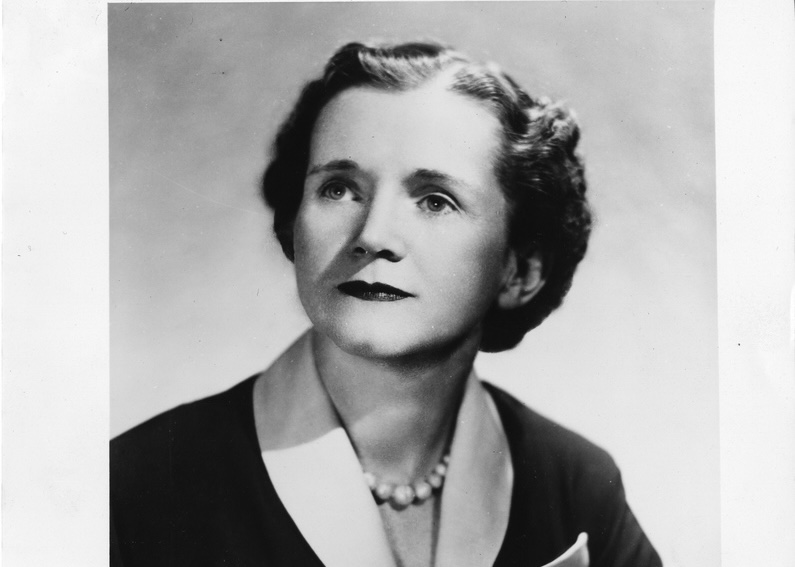
Rachel Carson, author of "Silent Spring".
Picryl License

June 04, 2026
Picryl License
When we were children, we were naturally predisposed to ask questions to the adults around us. It’s how we learned about our world. Incessantly, we repeated over and over, “Why?”, “What is this?”, and “How did that happen?”, until we were shushed, ignored, or scolded. For the most part, we became quiet children — but we didn’t stop asking questions. We just stopped saying them aloud.
Although stifled by society, humans are inherently curious animals. Growing up in the American public school system, I observed many of my peers grow distant or even repulsed by science. Often they were discouraged by teachers, or had difficulty grasping increasingly complex concepts. Over time, they came to think that they weren’t “smart enough” or that science was “too boring”; even though at its core, science thrives on fresh perspective and curiosity. What happened to the child, hungry for knowledge? What happened to our ever-searching, restless minds?
Within our classrooms and the halls of academia, science is something to be striven for, either through grit and endless study or pure genius. While it’s necessary for academics to use hyperspecific language and equations to communicate their findings to each other, the results are often entirely out of reach of the wider public. Therefore, papers containing breathtaking revelations about the universe, our earth, and its ecosystems, are written so the average person could never truly understand them. Even worse, papers unmasking the danger of certain chemicals or the risks of climate change are veiled behind complex diction and strange symbols.
But it doesn’t have to be this way. When someone commits their life to science, they have two choices. They can continue speaking in the veiled tongues of their peers, or they can take the time to clearly explain those discoveries to the world.
Rachel Carson chose the latter. In 1962, the esteemed author and marine biologist published her fourth book, Silent Spring, on the widespread use and effects of pesticides like DDT. Yes, it was comprehensive and made use of a wide array of medical, chemical, and biological papers, but what made Silent Spring so impactful was the way Carson wrote it. In Silent Spring, she explained in simple (but not redundant) terms what DDT is, how it affects the human body, and how long it stays in the environment, and then gave real-life examples of harm. With her captivating anecdotes and well-parsed ideas, she employed not just technical knowledge and high-quality research, but rhetorical strategy and skill.
Carson proved that everyday people can understand science if it’s communicated effectively, and most importantly, that knowledge gives people the power to enact real change. The early publication of pieces of the manuscript in the New Yorker riled a public lulled into passivity by adverts and professional opinion about pesticides into a frenzy. Concerned and intrigued, former President John F. Kennedy asked his scientific advisory committee to create a comprehensive report, which eventually resulted in a national ban on DDT.
More than half a century after Silent Spring, our world still shakes in tumult: the climate’s warming, sea levels are rising, species are going extinct, and all the while we just keep burning more and more fossil fuels. Sixty years after the publication of Silent Spring, who is trying to reach the people?
Today, the vast majority of people spend most of their time online, on social media: on Instagram, TikTok, and YouTube. Despite their problems, these platforms provide scientists and educators from around the world an opportunity to share their passions and arm people with the ability to engage in conversations surrounding science, biology, and our environment. If they make use of these new tools, when the public asks “Why?”, they won’t hear stifled silence: instead, they’ll hear a chorus of new insight.
In a world rife with fear and violence and doom and despair, where the threats of climate change and habitat loss seem inconquerable, maybe the best thing we can do is keep asking “Why?” If Carson had stopped asking about why people and wildlife were dying, where would we be? So, if you have knowledge, share it. And if you’re curious, ask questions and don’t stop until you get answers. Without a continual fight to make science accessible, we will lose touch with our world and our power to change it.
Planet Forward Correspondent | University of Georgia

University of Wisconsin - Milwaukee | School of Freshwater Sciences
Multimedia Editor & Producer | Planet Forward

A project of

in collaboration with