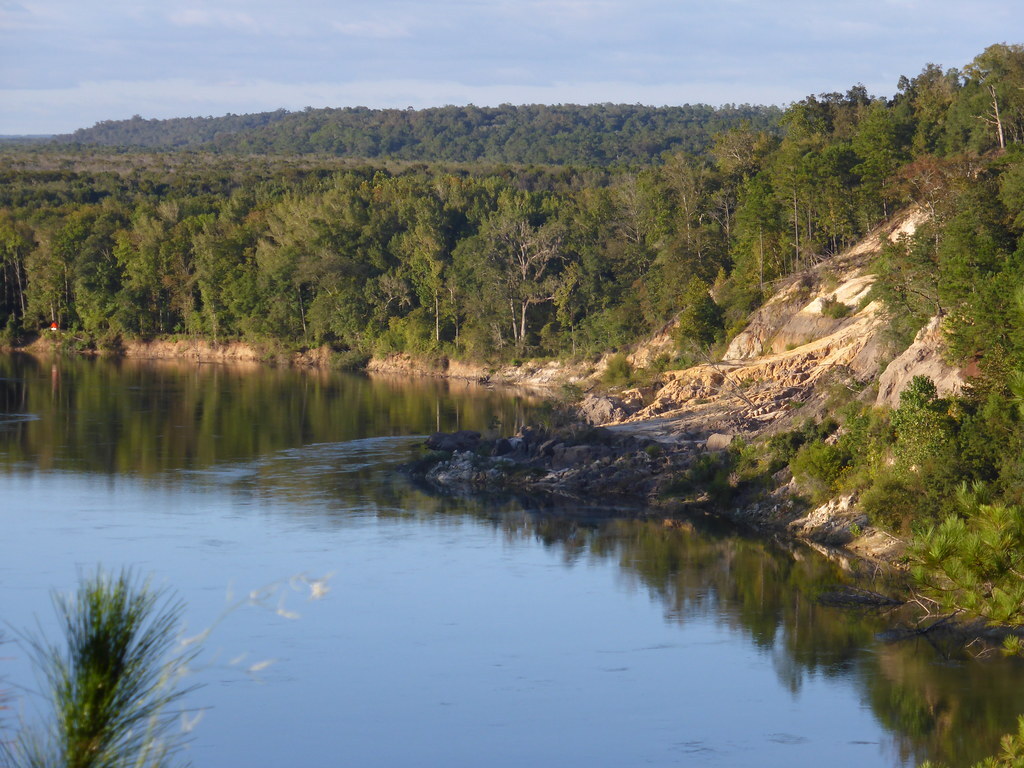
The jewel of North Florida is undoubtedly the rich waterways that breathe life through the Apalachicola River system.
Flowing from the nexus of the Flint and Chattahoochee rivers in the Florida Panhandle, the Apalachicola River nourishes one of the last unbroken ecological systems in North America. This ecosystem is both one of the most biologically diverse in the country – and one of the most endangered.
The Apalachicola River defies being understood through one lens; the issues that it faces are scientific, economic, social, and political.
The river is made up of main waterways and a network of streams and swamps that provide habitats for the diverse reptile, amphibian, freshwater fish, and mussel species that call it home. Years of dredging, overfishing, and spells of drought threaten this ecosystem.
The issues that affect the health and future of the Apalachicola reveal how conservation, science, restoration, and local livelihoods intertwine to make up North Florida’s most remarkable ecosystem.
Apalachicola Riverkeeper
If there is ever an issue in the Apalachicola Bay that makes large headlines, it’s likely because of advocacy work done by the Apalachicola Riverkeeper. For over 28 years, the non-profit group has been dedicated to conserving and protecting the Apalachicola River.
Chris Watkins serves as a board member for the Apalachicola Riverkeeper, a body that supports the organization’s full-time staff and helps to vet environmental policies that impact the broader Apalachicola River system. Watkins has written extensively about the Apalachicola River since moving to Florida, and this work inspired them to become more involved in environmental protection.
“I thought, if I’m going to be writing about this place, [and] enjoying this place as much as I do, I should be helping to protect it,” Watkins said.
Cameron Baxley, who holds the title of Riverkeeper, engages with the community by making connections with communities along the river and staying up to date with policies.
One of the organization’s largest recent political wins was its instrumental involvement with the Kill the Drill Coalition, which brought together many environmental groups in North Florida to oppose a Louisiana-based oil company from drilling for oil in the floodplain of the Apalachicola River.
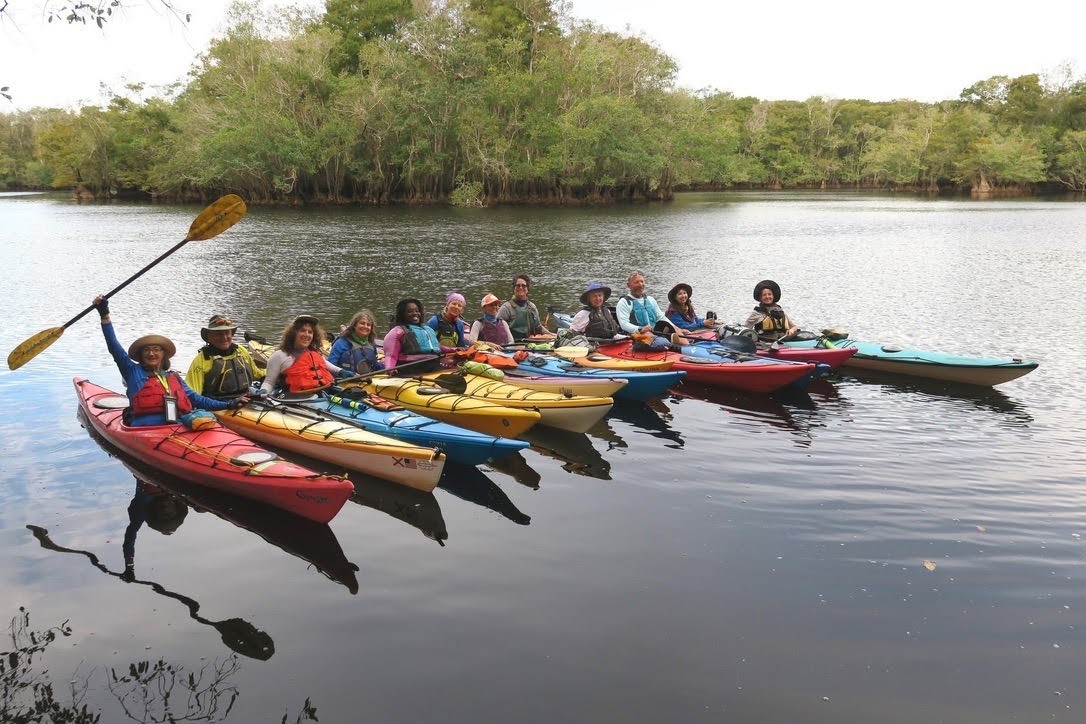
The Apalachicola Riverkeeper annual River Trek event gives locals a unique opportunity to connect with the environment and with the community. (Credit: Apalachicola Riverkeeper’s website)
The Apalachicola Riverkeeper is instrumental in supporting academic research done in the Apalachicola Bay and awareness campaigns, including its annual five-day River Trek event. The trek takes 13 participants down the length of the river, making stops along the way to educate people who live in communities there — helping to connect people to the land in a way that they often don’t get to experience.
“I went on a river trek, and it was kind of a life-altering experience,” Watkins said. “I had paddled, but I had never gone down the entirety of a river like that.”
The Apalachicola Riverkeeper helps put environmental solutions in motion, showing that there is still hope for conservation efforts even if they are being scaled back on the national level.
“Even in a time like this, when it’s really, really bleak for a lot of environmental work, there are still bright spots, and I do think that the Apalachicola is one of those,” Watkins said. “It’s important for environmental advocates to have those bright spots, that not everything is perfect in the Apalachicola, but those things are real, and they’re worth holding on to, and they’re worth fighting for.”
Measuring the cost of drought: Science on the front lines
Dredging, or the process of systematically removing sediment from the Apalachicola River conducted by the Army Corps of Engineers throughout the 20th century. Sediment harvested from dredging is usually disposed of elsewhere, but the Army Corps instead decided to deposit it back on the banks of the Apalachicola River. As a result of this dredging, piles of sediment — sometimes reaching 60 feet high — eroded and traveled through the river, choking the vital nutrient delivery system.
In the face of one of Florida’s most intense droughts on record, an imbalance of sediment can threaten the health of the river. Sumon Hossain Rabby, a Ph.D. student at the joint Florida Agricultural & Mechanical University-Florida State University College of Engineering, has sought to understand how drought conditions impact the stability of nutrients that naturally flow through the river, which can have long-term negative impacts.
“Droughts reduce freshwater inflow, alter timing, and change how nutrients are delivered and mixed,” Rabby and Ahmadisharaf said in a joint statement to Planet Forward.
Nutrients, particularly phosphorus and nitrogen, play a critical role in sustaining Apalachicola’s marsh ecosystem by sustaining algae and other aquatic plants and subsequently providing the foundation of the Bay’s food web. Droughts disrupt regular nutrient delivery, and when rain does come, it causes excess runoff of these nutrients, threatening ecosystem resilience and leading to harmful algal blooms that threaten fish and vegetation in the river.
Algal blooms, like the one above, often precede rapid die-off in marine ecosystems. (Credit: Creative Commons)
Rabby and Ahmadisharaf noted that this both disrupts resilience and shifts natural conditions in the river, which ultimately may cause eutrophication or too many nutrients, which trigger algal blooms, or rapid growth of aquatic plants that later lead to uninhabitable conditions for aquatic life. Rabby and Ahmadisharaf’s research also provides insight into the oyster fishery collapse and how the irregular distribution of nutrients could have played a role in it.
“We do not claim nutrients alone caused that collapse, but see nutrient shifts as one interacting stress among reduced flow, salinity changes, sediment changes, and habitat degradation,” Rabby and Ahmadisharaf said.
Rabby and Ahmadisharaf’s research shows strong justification for expanded and more sophisticated water quality monitoring in the Apalachicola Bay, including expanding to tools like sensors and satellite remote sensors to record water quality data. Managing water upstream more intentionally can help prevent the impacts of drought conditions and nutrient excesses from traveling down the river.
Showing the impacts of nutrient flow on the river can help inform future restoration efforts, which should be informed by the biochemical components of the river.
“That means restoring freshwater delivery patterns and protecting floodplain habitats that help process nutrients before they drive eutrophication,” Rabby and Ahmadisharaf said. “Restoring the ecosystem [including] oyster reefs, seagrass beds, and wetlands can enhance natural filtration, nutrient uptake, and overall system resilience.”
Engineering an oyster comeback
Oysters in the Apalachicola are a keystone species in the bay and a critical part of the region’s economy. At its height, the Apalachicola Bay supplied 90% of Florida’s oysters and 10% of oysters nationwide.
Oysters have unique habitats: they anchor themselves on sturdy surfaces like shipwrecks or rocks and form reefs using dead shell material. Habitat destruction in conjunction with increased predation and drought conditions leads to further vulnerability to predators, physiological stress, and disease prevalence.
One of Apalachicola Bay’s most recent restoration projects was spearheaded by Florida State University’s Coastal & Marine Laboratory (CML), supervised by Sandra Brooke. In 2019, the CML was awarded the Apalachicola Bay System Initiative fund, a project designed to understand the driving force behind why the oyster population in the bay nearly collapsed and inform future Florida Fish and Wildlife Conservation Commission (FWC) efforts.
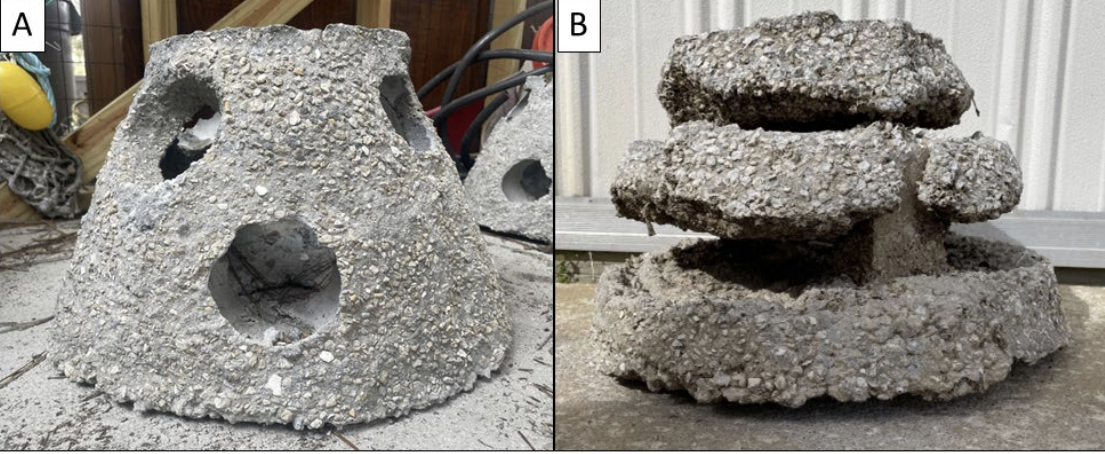
Some structures used in restoration efforts by the Apalachicola Bay System Initiative. (Credit: Apalachicola Bay System Initiative)
Brooke and her team sought to mimic nature with their restoration experiments. Using concrete blocks, they were successfully able to mimic the structures that oysters naturally anchor onto.
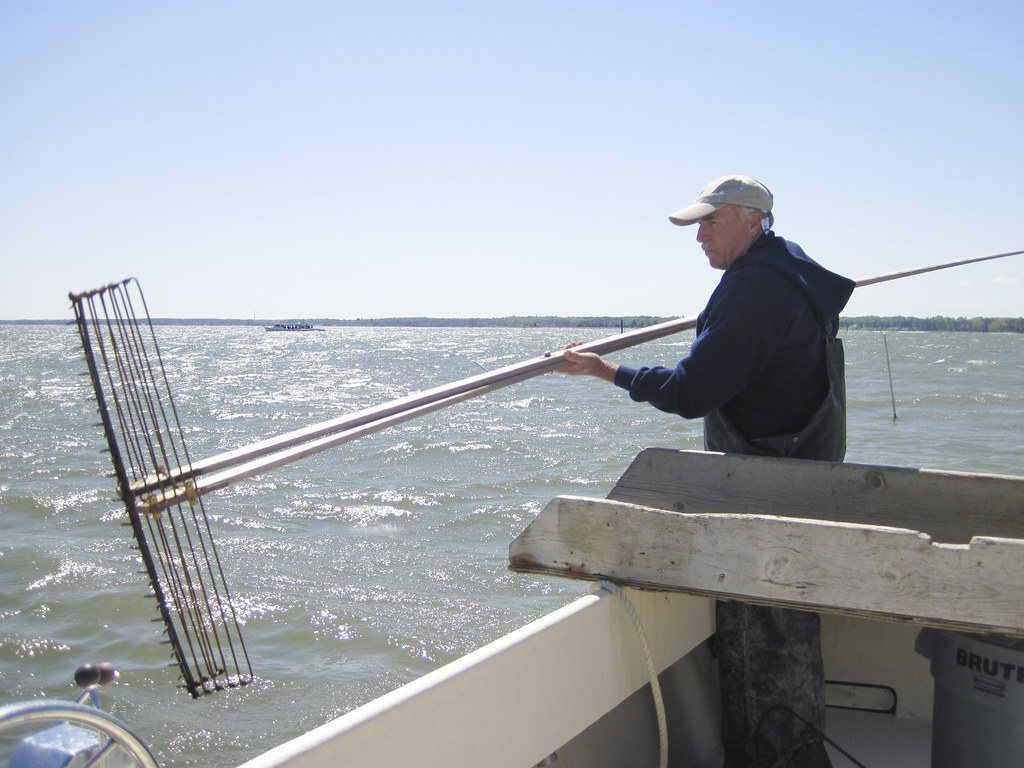
Although the restoration effort saw major productivity, it did pose a problem: tongs, or the instruments that are historically used to harvest oysters, are not able to harvest from the blocks. The concrete blocks also pose a navigation hazard for the largely unmapped wetlands.
This oysterman is using tongs to hunt for shellfish. Similar to scissors, tongs are used to scrape oysters from their reefs. (Credit: Creative commons)
“It was a lesson in that not one approach is good for everything; you need different approaches for a different purpose,” Brooke said of the restoration effort.
The need for community voices to inform restoration led to the creation of the Partnership for Resilient Apalachicola Bay, an independent representative body that includes local fishermen, conservationists, nonprofits, and aquaculture. The group is run by local people and helps to give them a voice in conservation efforts.
Brooke and her team are hoping that with time, the Apalachicola River will be able to support human activity and thrive as it once did.
Tupelo honey: The sweet side of conservation
Tupelo trees play a key role in the broader ecosystem by providing basic vegetation that feeds small microorganisms in the river. Without healthy Tupelo trees, there will likely not be healthy oysters — and, although oysters are the traditional Florida delicacy, they face a fierce rival in Tupelo honey.
Considered one of the rarest honey variations in the country, Tupelo honey is made by honeybees that gather nectar from the Ogeechee tupelo tree, which exclusively grows in southern Georgia and along the Apalachicola River in north Florida.
Pam Palmer and Gary Adkison are the owners of the Blue-Eyed Girl Honey, a mom-and-pop company that specializes in Tupelo honey production. The company was born out of a transitional period for both Adkison and Palmer: when the 2008 recession hit, Adkison, a skilled carpenter, lost work. Palmer was beginning a new season in her life as a recent divorcee. Serendipity brought them together.
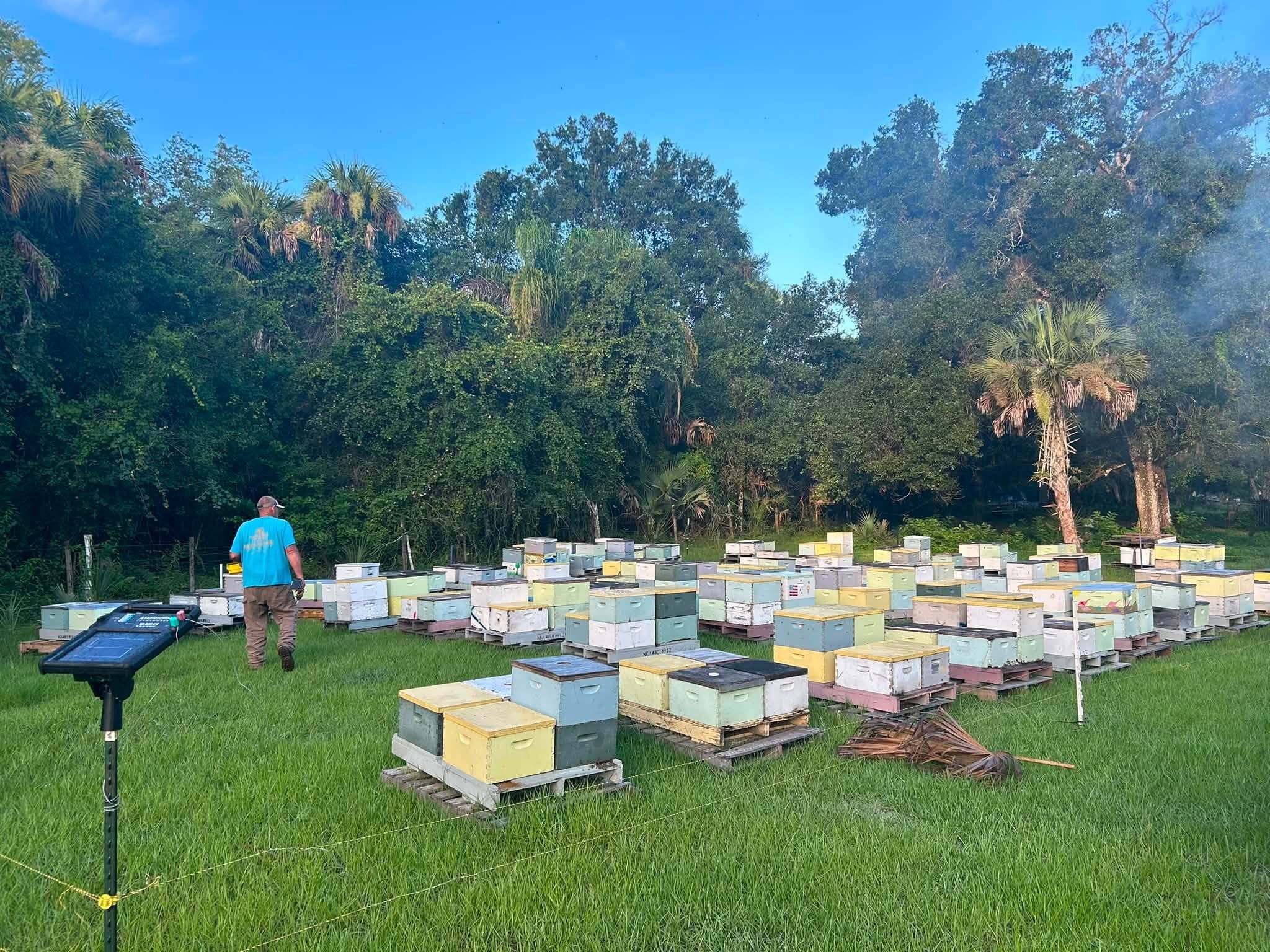
Blue-Eyed Girl Honey’s bee farm, which relies on Tupelo trees to create one of the rarest and most coveted honeys in the country. (Courtesy of Blue-Eyed Girl Honey on Facebook)
“I fell in love with a man who loved the bees, but very quickly I loved the bees too,” Palmer said.
Tupelo honey, often described as having a floral, light, and buttery taste, is a hot commodity for honey lovers in the Apalachicola Bay and beyond. The honey can only be harvested within a two-week window each year, and requires near-perfect conditions of temperature, rain, and humidity to get its signature taste.
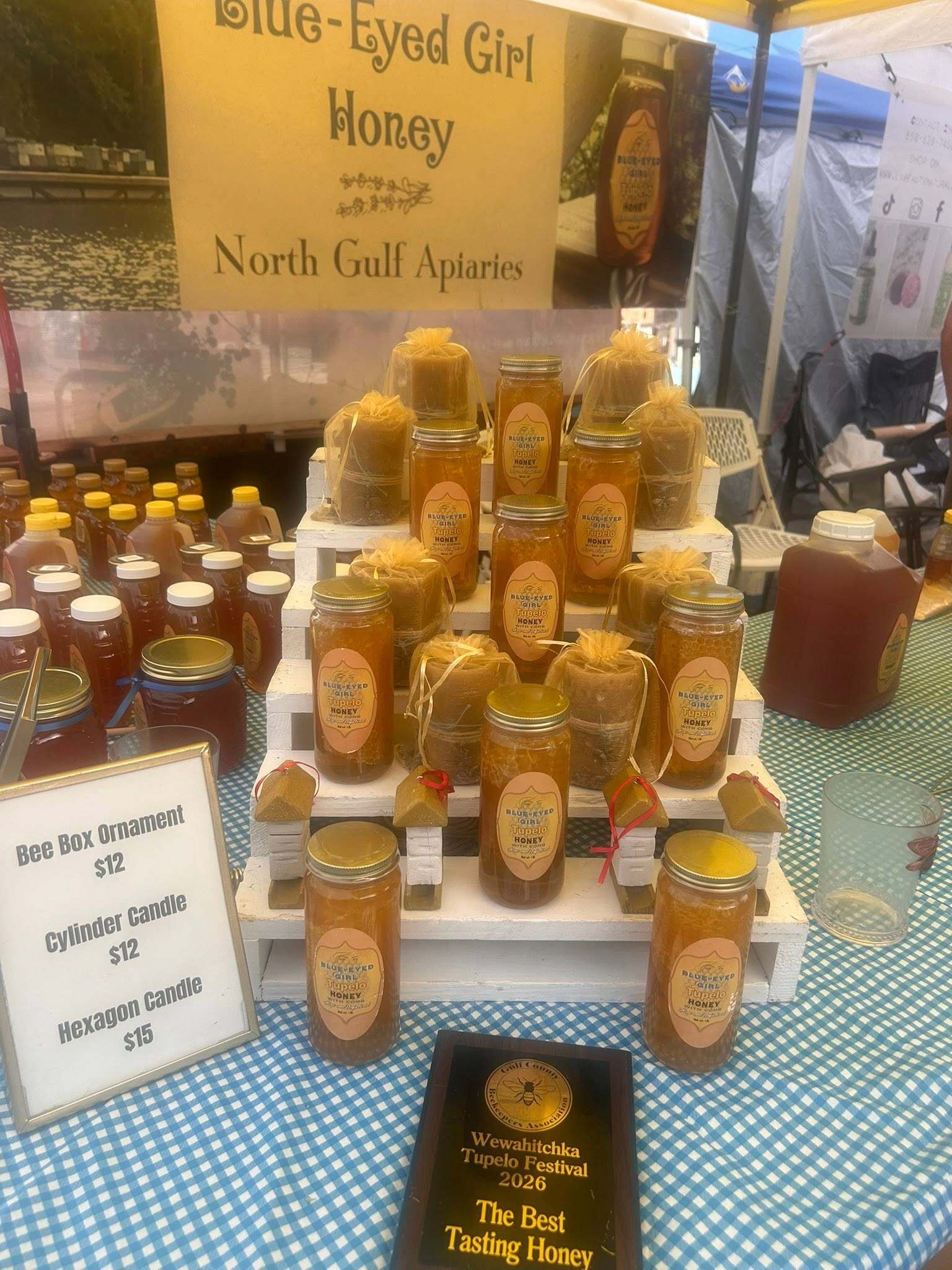
Blue-Eyed Girl Honey’s display at the Panama City Beach Farmers Market. (Courtesy of Blue-Eyed Girl Honey on Facebook)
In addition to running their honey business, Palmer and Adkison do their part to educate the broader community about the ecosystem at farmers’ markets that attract locals and tourists alike.
Connecting to locals presents a different challenge, though. Conservation efforts in the river have had mixed success, sometimes to the detriment of the local economy.
Despite this, Palmer and Adkison are involved with the Gulf County Beekeepers Association and the Apalachicola Riverkeeper, and even go as far as to make their prices accessible to their local community to continue to do outreach. For Palmer, this intentional outreach makes for a “quality of life that’s not measured in dollars.”
“It’s probably what every farmer feels: the love of working the land,” Palmer said. “I think it just connects you to source, to God as you understand it, and I think overall those are happier people.”
This website uses cookies to provide you with an improved and personalized experience. By using this site you agree to our use of cookies. Please read our cookies policy for more information on the cookies we use and how to delete or block them.



 All Topics