Essay | Seabeach amaranth: A plant once lost roots itself home
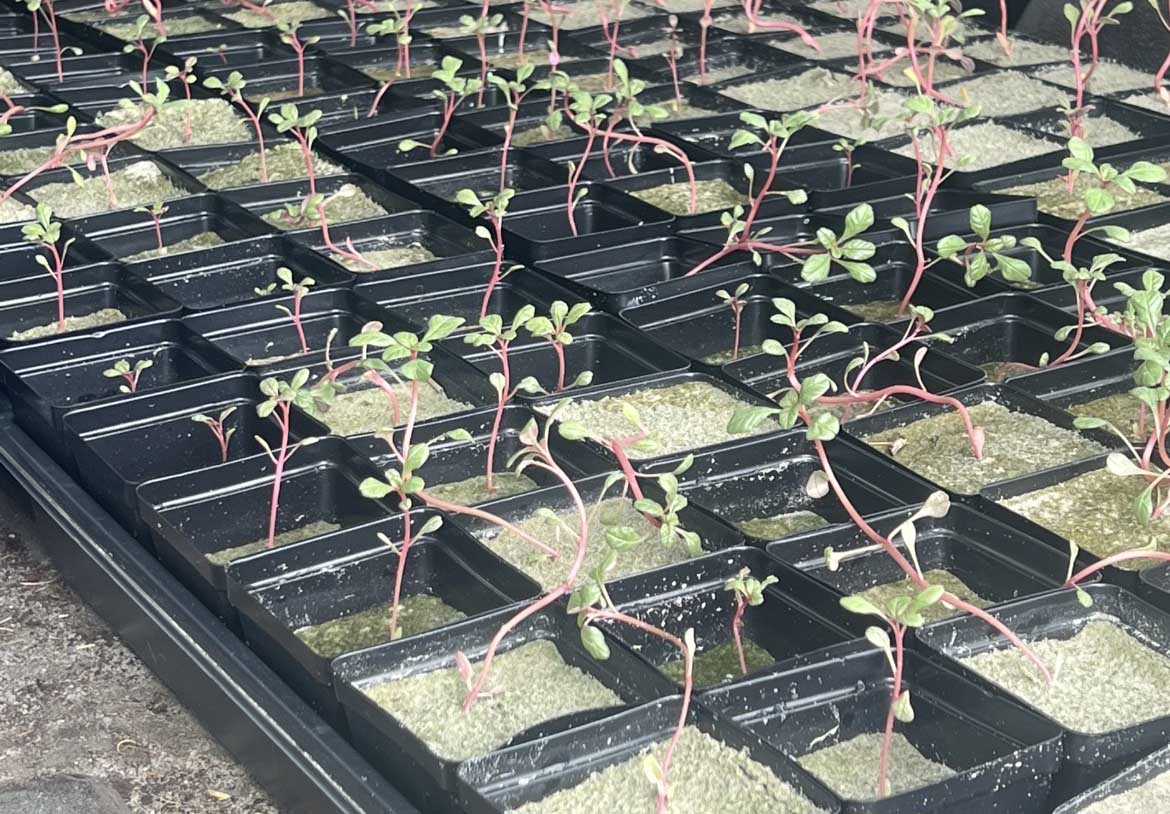
Trays of seabeach amaranth saplings, which are labeled as "Threatened" by the Endangered Species Act, are prepped and ready for planting as part of efforts to prevent coastal erosion.
With coarse sand between my toes, awing at iridescent shell fragments washed ashore, and feeling the sting of saltwater flooding into my nostrils as I swim against the crashing waves – my entire life has been tied to the South Carolina coast.
The beach is a place I had returned to year after year by myself or with family and friends, gradually becoming a second home. Seven years ago, my relationship with the beach evolved as I began directly living and studying nearby in pursuit of an environmental studies degree. My dream is to preserve these coastal ecosystems – my home – that has shaped my entire livelihood.
The beach is not just my home, but it is a shared space. Shared not only with other humans, but with a vast array of life: oysters, fiddler crabs, plovers, spartina grass, willets, sea turtles, palms, bottlenose dolphins, and seaside goldenrods, to name a few, spanning from the ocean to the dunes. The dunes are the beach’s unsung hero: a critical area that defends this home against brutal storms, erosion, and pollution.
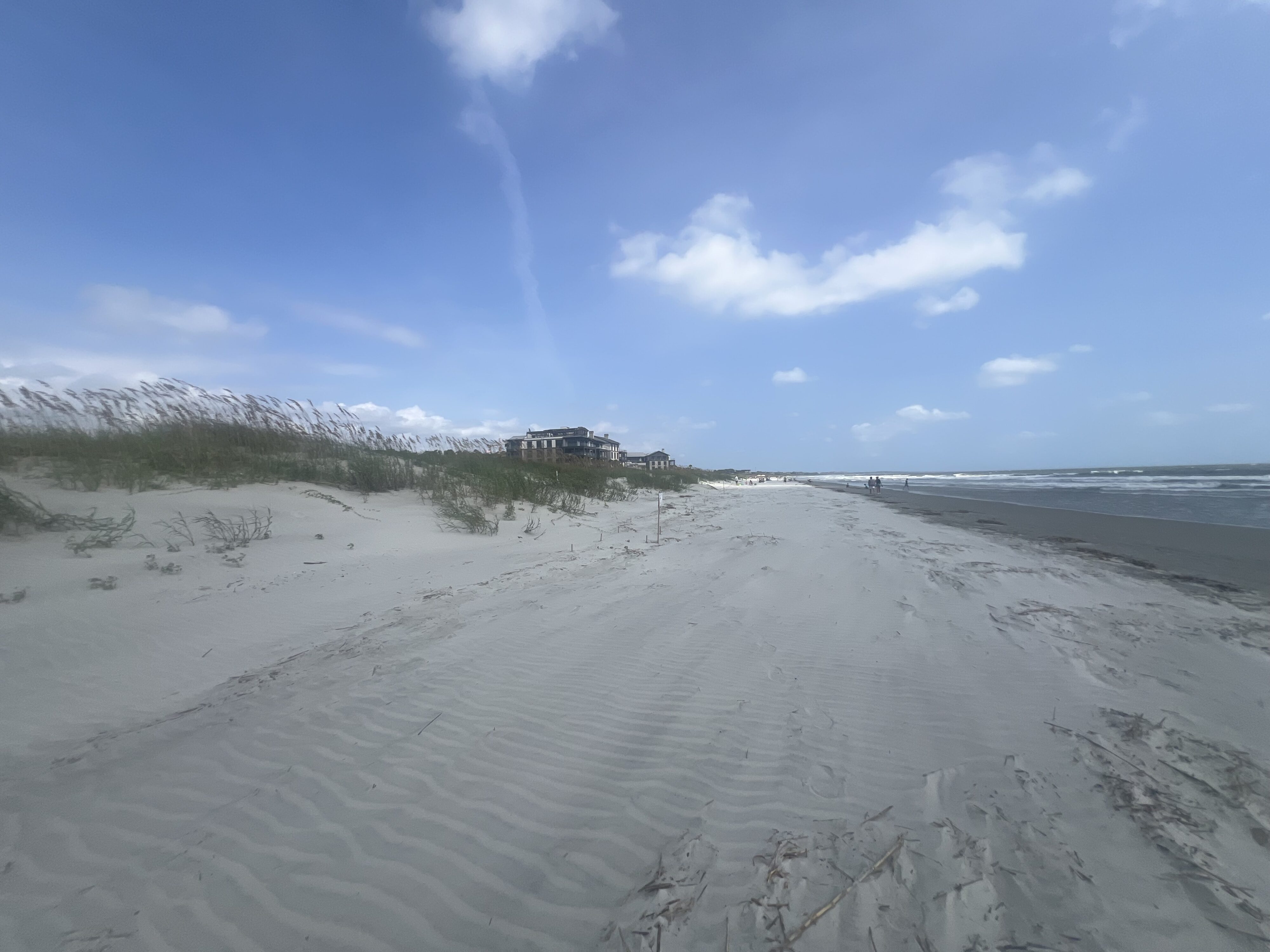
Beachwalker Park on Kiawah Island’s reintroduction site. (Photo by Khloe Turner)
The more I experience this ecosystem on a daily basis, the clearer it becomes that South Carolina’s coastal dunes are facing devastation: climate change, rising sea levels, the onslaught of king tides and hurricane potentials. Alongside these pressures, South Carolina’s rapid growth has strained environmental infrastructure, sapping the strength of the dunes. Newcomers are particularly flocking toward the coastal metro areas of Charleston, Hilton Head, and Myrtle Beach, encouraging the construction of beachfront houses, hotels, and seawalls and bulkheads. All of this may flatten dune beds and disturb the habitat of its vegetation, which binds the sands together, preventing it from being washed or blown away. These deep, interwoven root systems of native plants like sea oats and rockets have begun unwinding, collapsing under the stress, inadvertently allowing beach sands to bleed and crumble.
Recognizing this pressing issue, local government and South Carolina residents have begun working hard to protect the depleting dunes via educational outreach, beach renourishment projects, and stabilization projects, such as native dune planting: using salt-tolerant coastal plants to build, bind, and restore sand dunes along the state’s Lowcountry and barrier islands.
Back in May, my academic advisor told me about Bears Bluff National Fish Hatchery, a 31-acre location on Wadmalaw Island. While the hatchery’s primary goal is to research and conserve threatened fish species (the Atlantic sturgeon in particular), Bears Bluff also promotes the recovery of native plant species through research, collaborations, propagation, rearing, and on-site plantings. When I heard that they were starting up a dune planting project this past summer, I was quick to visit Bears Bluff and volunteered to work alongside the site’s plant biologist, Joshua Pil.
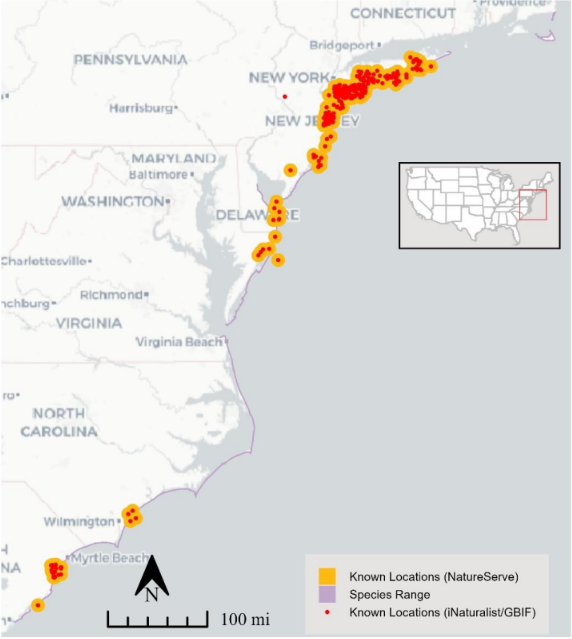
Historic range of the seabeach amaranth, or Amaranthus pumilus. (Courtesy of the Environmental Protection Agency)
According to Pil, the seabeach amaranth “is an annual herb endemic to Atlantic barrier islands,” in which it “grows between beach dunes and the wrack line, where it plays a vital role in stabilizing sand and building dunes.” Seabeach amaranths, however, are “fugitive plants,” meaning that they are easily outcompeted by other dune plants, preferring to relocate to low-competition areas. The seabeach amaranth is federally “Threatened” under the Endangered Species Act and has been in continuous population decline since the early 1900s and plummeting since the 2000s. The primary causes of this decline are habitat loss from the aforementioned coastal development projects, pedestrian and vehicle traffic, sea level rise, and invasive species threats.
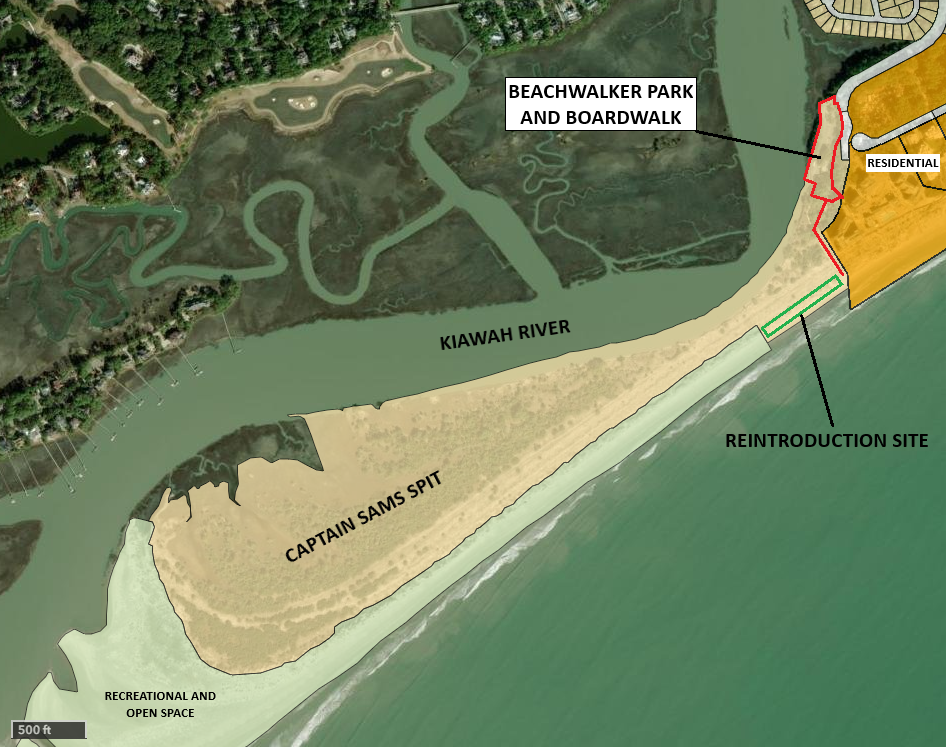
Map of planting site at Beachwalker Park, Kiawah Island. (Courtesy of Joshua Pil)
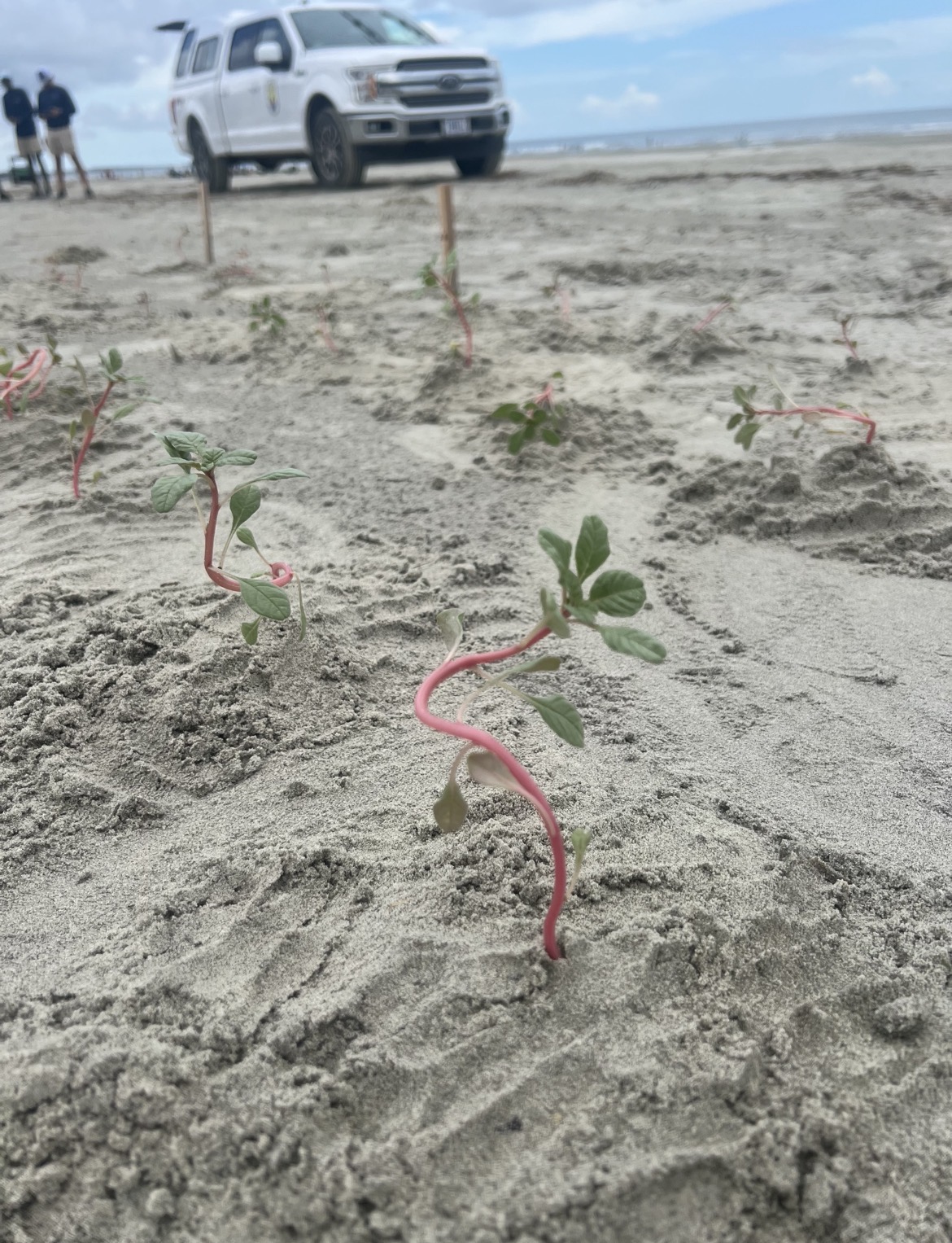
The Bear Bluffs project is set on a 1,000-foot stretch of Beachwalker Park on Kiawah Island, roughly an hour south of Charleston, S.C. As work began on July 14, I rushed to the beach, eager to contribute to rebuilding my home in a natural way, and to bring back the seabeach amaranth to where, as Pil describes, “once lost.” Fortunately, the weather was perfect – partly cloudy, pleasantly warm, and the saplings had preserved their vibrantly red stems and waxy green leaves from the greenhouse. Approximately 10 of us volunteers, with some trowels and our spade-like hands, gently transplanted 270 seabeach amaranth plugs into twined 10’ by 3’ plots in the sands, teeming with hope.
With ecological restoration efforts, there is something infectious about the energy. The work unites people filling the air with chatter, laughter, and a shared sense of purpose. Large-scale planting projects are no small undertaking – they require time, labor, and full commitment. I, the sole student volunteer at the time, cooperated with Charleston County Parks employees and the Bears Bluff team, backed by the funding of the National Fish & Wildlife Foundation. We all came together for the sole purpose of restoring the seabeach amaranth and the dunes in order to salvage an ecosystem we all call “home.”
New amaranth plantings in a 10’ x 3’ section of the foredune for planting. (Photo by Khloe Turner)
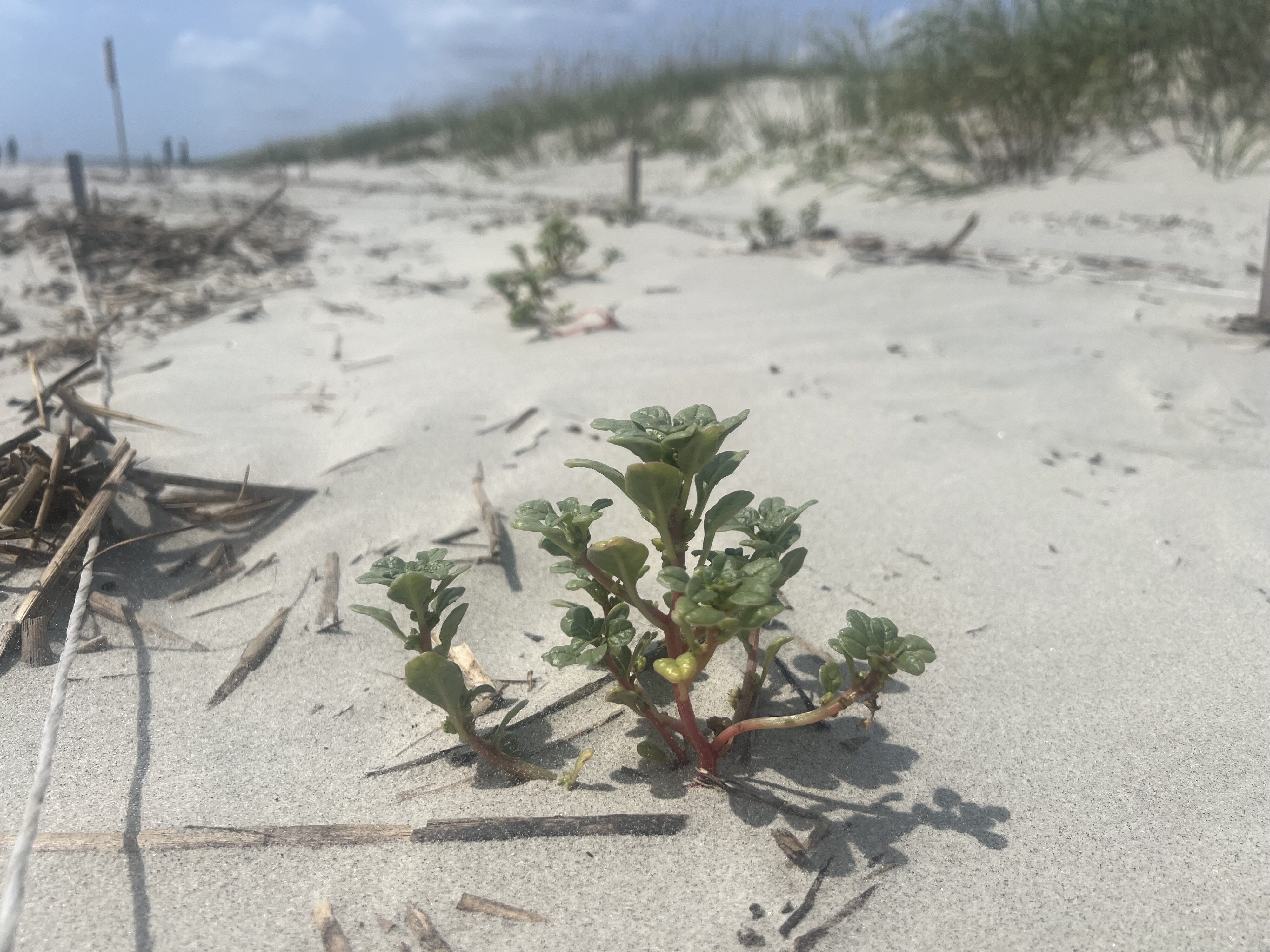
Growth of Amaranthus pumilus two months after planting. (Photo by Khloe Turner)
Several months have flown by since the project began. However, the project was intended to be completed as early as May; following a series of delays, including permitting difficulties, and unusual drought patterns, conditions proved to be quite harsh for the young amaranths. Also, due to low visibility, a vehicle plowed over a portion of the seedlings. This project has seen a 33% survival rate, which is “not great, but not unexpected for the first year of attempting this reintroduction,” said Pil. “[It’s] pretty crazy that we experienced one of their known threats to extinction – vehicular traffic – so soon in our reintroduction effort, [but] Brookgreen Gardens and Huntington Beach State Park are open to sharing seeds in the future so we will have more material to work with in the coming years!”
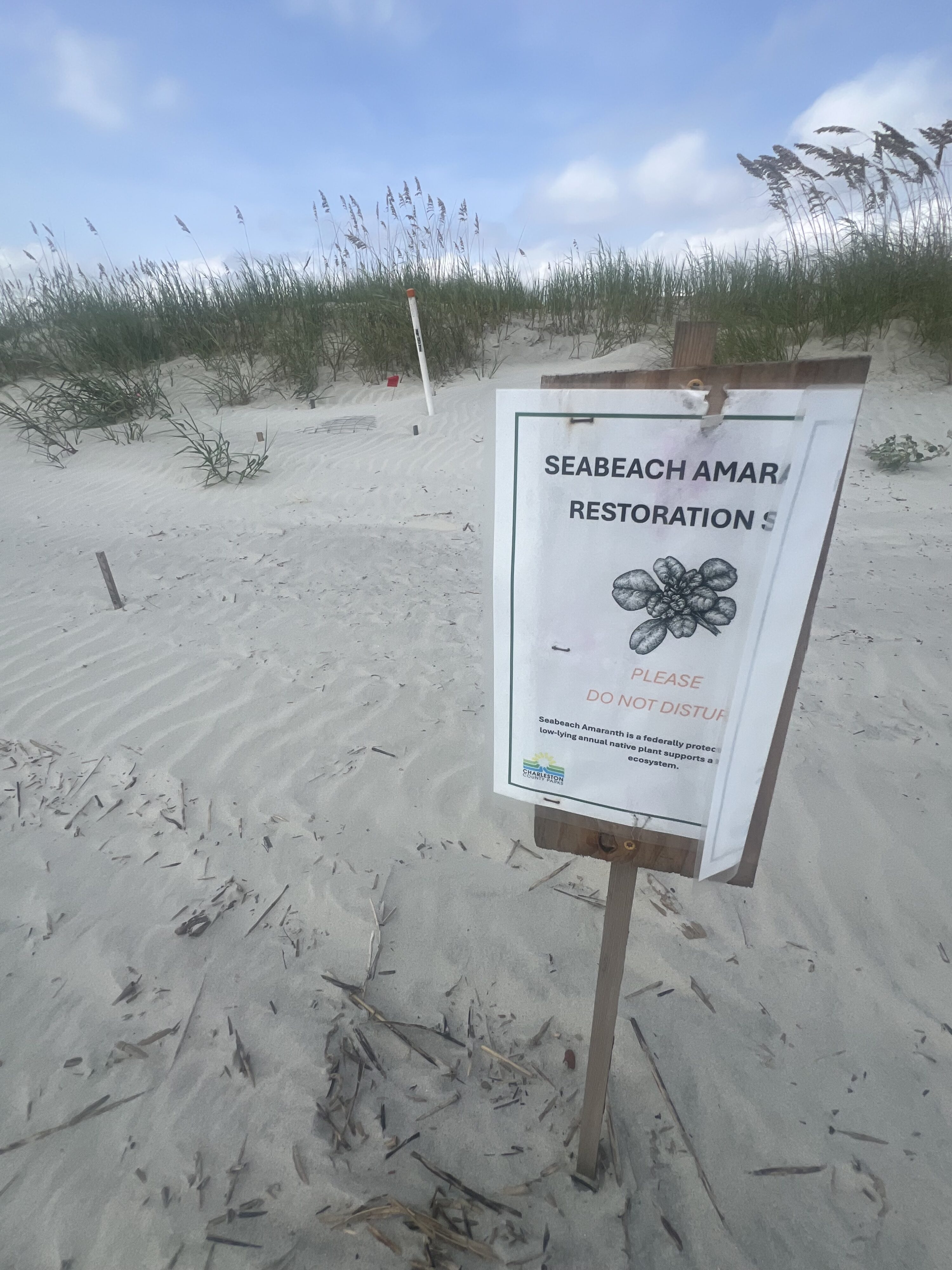
Initially, I felt disappointed with the transplanting’s lower success rate, stymied by the undone work and frustrated at the disregard for our “Please do not disturb” signage. Environmental restoration work tends to face negligence due to systemic and economic barriers as well as a lack of public education. However, fame and attention are not necessarily the primary goals here. Through the knowledge and persistence of Pil, reminiscing on the glowing optimism of the day of the project, and the subconscious reassurance of our reciprocity ethic, I realize that environmental stewardship will often result in a pendulation of progress and setbacks. The end goal is rooted in a greater and more sustainable purpose, which eventually all of our research, outreach, and efforts will catch the waves.
As I gaze out onto the dunes, I recognize that in order to save our coastal habitats, we need constant effort and willpower. Bears Bluff Hatchery welcomes volunteers to help with all sorts of projects (many local and state agencies do), whether it involves planting native flora, removing invasive species, or helping with outreach. If we want future generations to enjoy the same sands, for wildlife to coexist with us on the beaches, we must begin acting now.
A sign warns beachgoers to not disturb the “Seabeach Amaranth Restoration Site.” (Photo by Khloe Turner)
This website uses cookies to provide you with an improved and personalized experience. By using this site you agree to our use of cookies. Please read our cookies policy for more information on the cookies we use and how to delete or block them.



 All Topics