
 All Topics







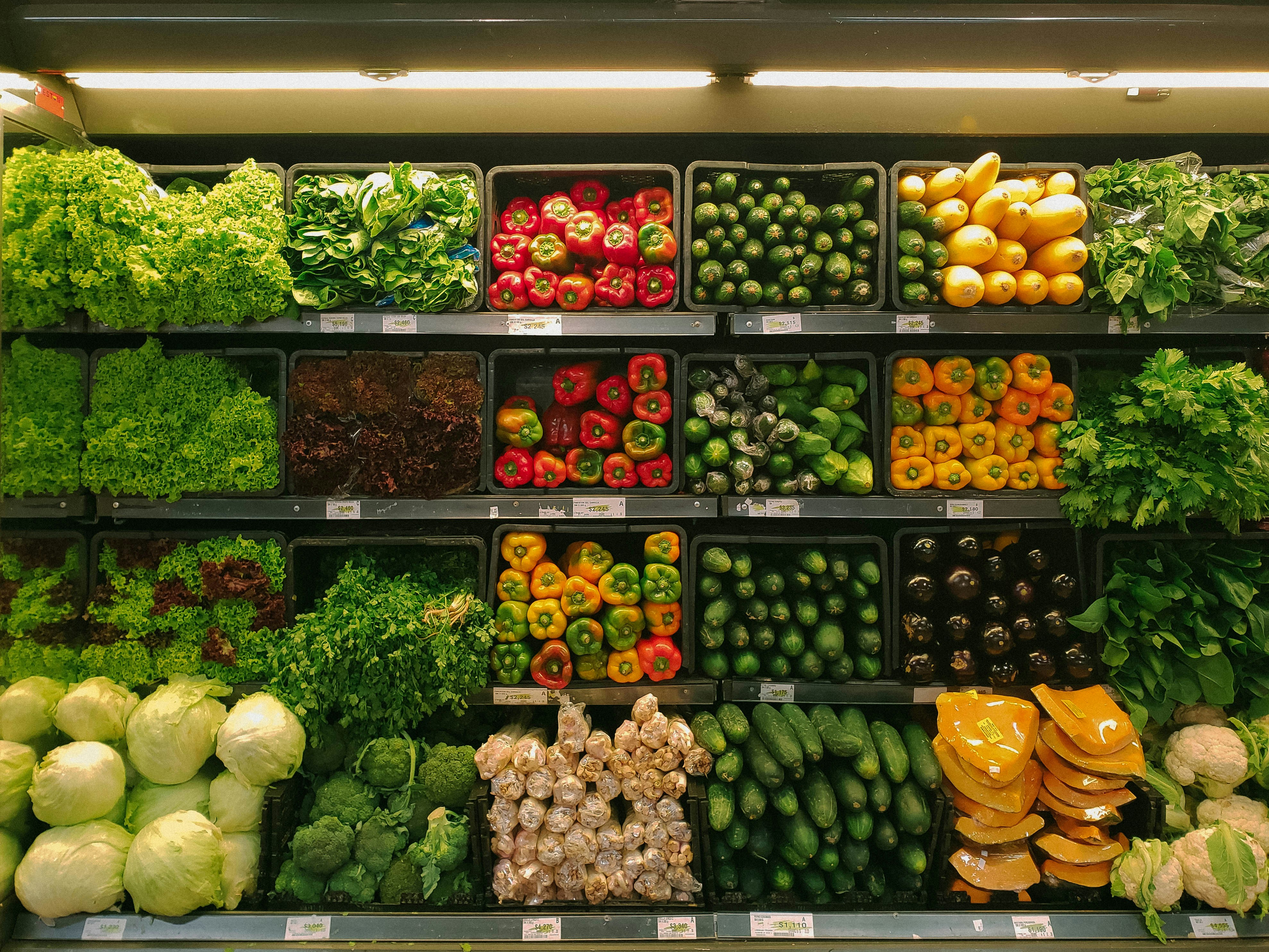
A produce section at a super market filled with peppers, leafy greens, and other vegetables.
Unsplash

Mario Castroviejo
Planet Forward Correspondent | University of Navarra
May 27, 2026
Unsplash
Planet Forward Correspondent | University of Navarra
When families in the Basque Country began weighing their kitchen waste for the first time, most were convinced they had nothing to learn. “The first thing people say is, ‘I don’t waste anything,'” said Antton Alza, Head of Agri-Food Ecosystems at Elika, a public food safety foundation. “Then they measure it and realize they do.”
What Basques find, on average, is 245 pounds (111 kilograms) of discarded food per person every year, which is in line with global averages. According to the Food and Agriculture Organization of the United Nations (FAO), every year, roughly a third of all food produced for human consumption goes to waste globally, which accounts for 8–10% of annual global greenhouse gas emissions — a figure most governments acknowledge, few measure, and fewer still act on. In the region of the Basque Country in northern Spain, officials decided to do all three.
Since 2022, the Basque government has tracked what gets thrown away from farms to fishing boats to restaurant kitchens to household refrigerators. The initiative is coordinated by Elika, a public foundation focused on agri-food safety.
“We wanted to have a picture of what food waste looks like along our entire food chain,” Alza said. “With that picture, you can start working on solutions.”
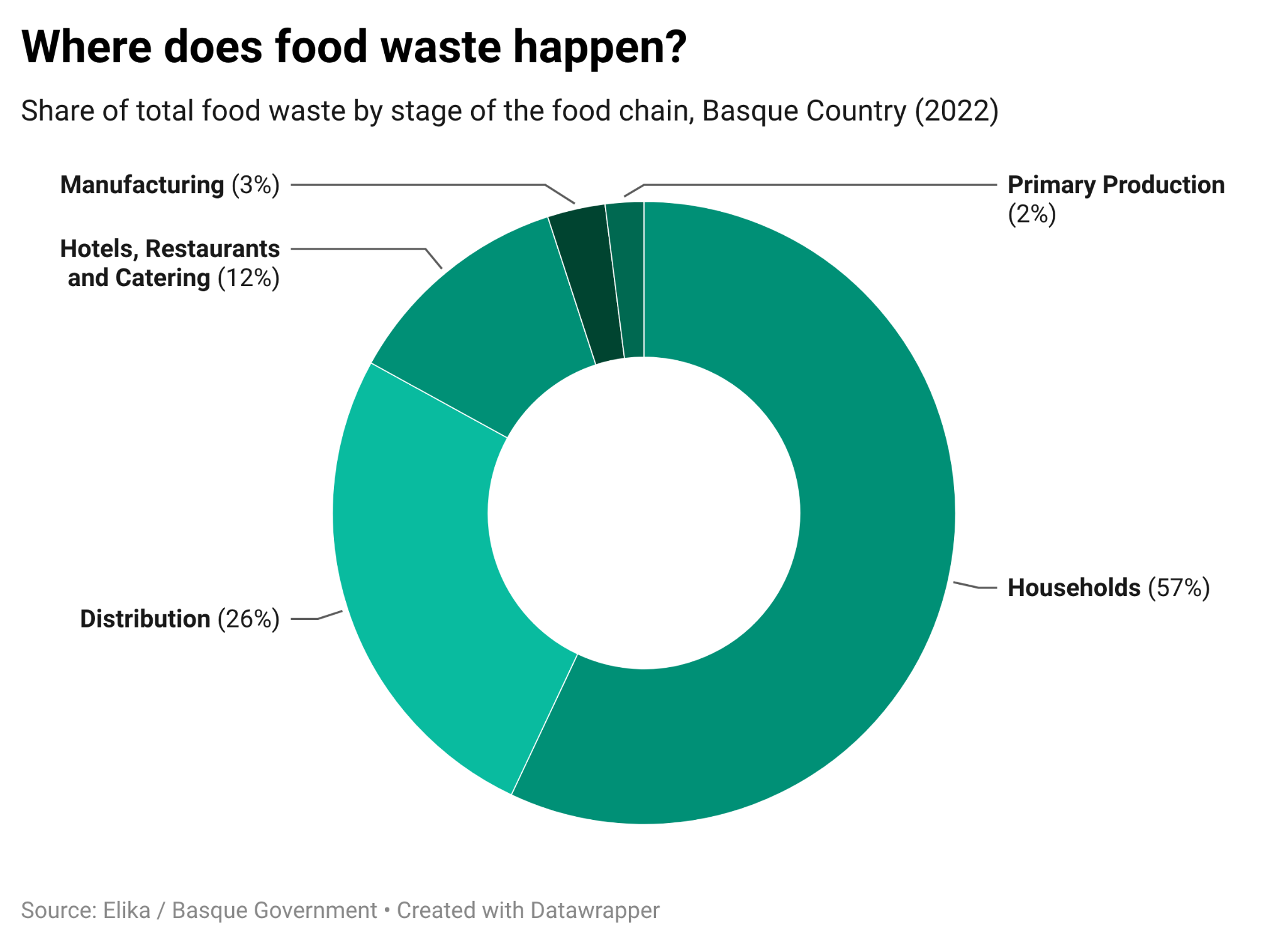
The 2022 diagnostic covered five stages of the food system: primary production (farming, livestock, fishing), food manufacturing, retail distribution, restaurants and catering, and households. Over 1,000 businesses and 151 families participated voluntarily. Of the 245 pounds that the citizens in the Basque Country generate per person annually, more than half comes from households alone.
Armed with that diagnosis, Elika moved to address the problem on several fronts simultaneously: public awareness campaigns, practical guidance for businesses, and network-building across sectors.
The network piece now has a voluntary coalition of around 130 member organizations including farmers’ cooperatives, food processors, supermarket chains, food banks, nonprofits, local governments, and provincial administrations. If one company has a surplus of food that it can’t use, others in the network can redirect it before it becomes waste.
For example, a Basque fruit-processing factory was generating large quantities of fruit skins still containing usable pulp. Previously, the material went to animal feed or, in some cases, simply to landfill. The Elika network connected the factory with a juice producer, which now extracts the remaining pulp for human consumption.
“The key,” Alza said, “is to keep it in the chain as long as possible.” It’s a small transaction in isolation, but Elika sees it as a template: identify the surplus, find the nearest buyer still within the human food chain, and formalize the connection. If the material cannot be used for human consumption, you move down a hierarchy that includes other uses:
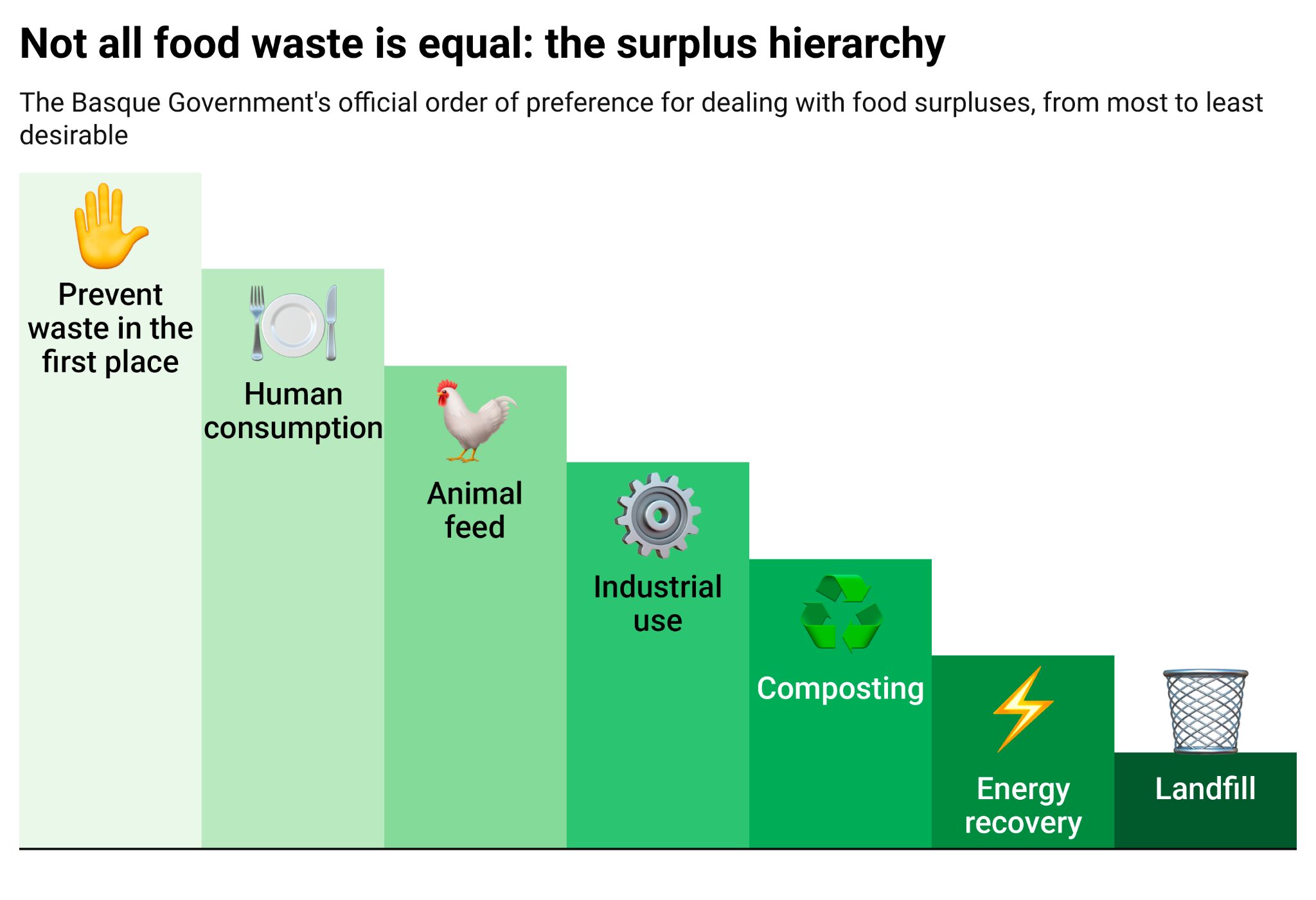
A 2024 Spanish national law on food waste formalized this logic at the policy level, establishing a hierarchy that requires producers to prioritize donation and redistribution over disposal. Now, under the law, Landfill is now the last resort, not the default.
On the retail side, Alza pointed to two trends he finds genuinely promising: discount pricing on near-expiry products and apps which allow consumers to buy surplus food from restaurants and shops at reduced prices. At a local supermarket in Bilbao, I came across fruit, yoghurts, and bread marked down by as much as 40% because they were approaching their expiry date.
Elika is currently completing its second full audit of the Basque food chain and expects to publish results by May. Preliminary data, Alza said, suggests the numbers are moving in the right direction, particularly in households.
If the numbers hold, Alza believes the Basque model could be exported: a replicable blueprint of diagnosis, coalition-building, and legal framework that other regions could adopt without starting from scratch.
Director of Academic Adventures | Planet Forward

Planet Forward Chautauqua Fellow | University of Connecticut

Planet Forward Chautauqua Fellow | George Washington University
Planet Forward Chautauqua Fellow | University of Connecticut

A project of

in collaboration with