
 All Topics









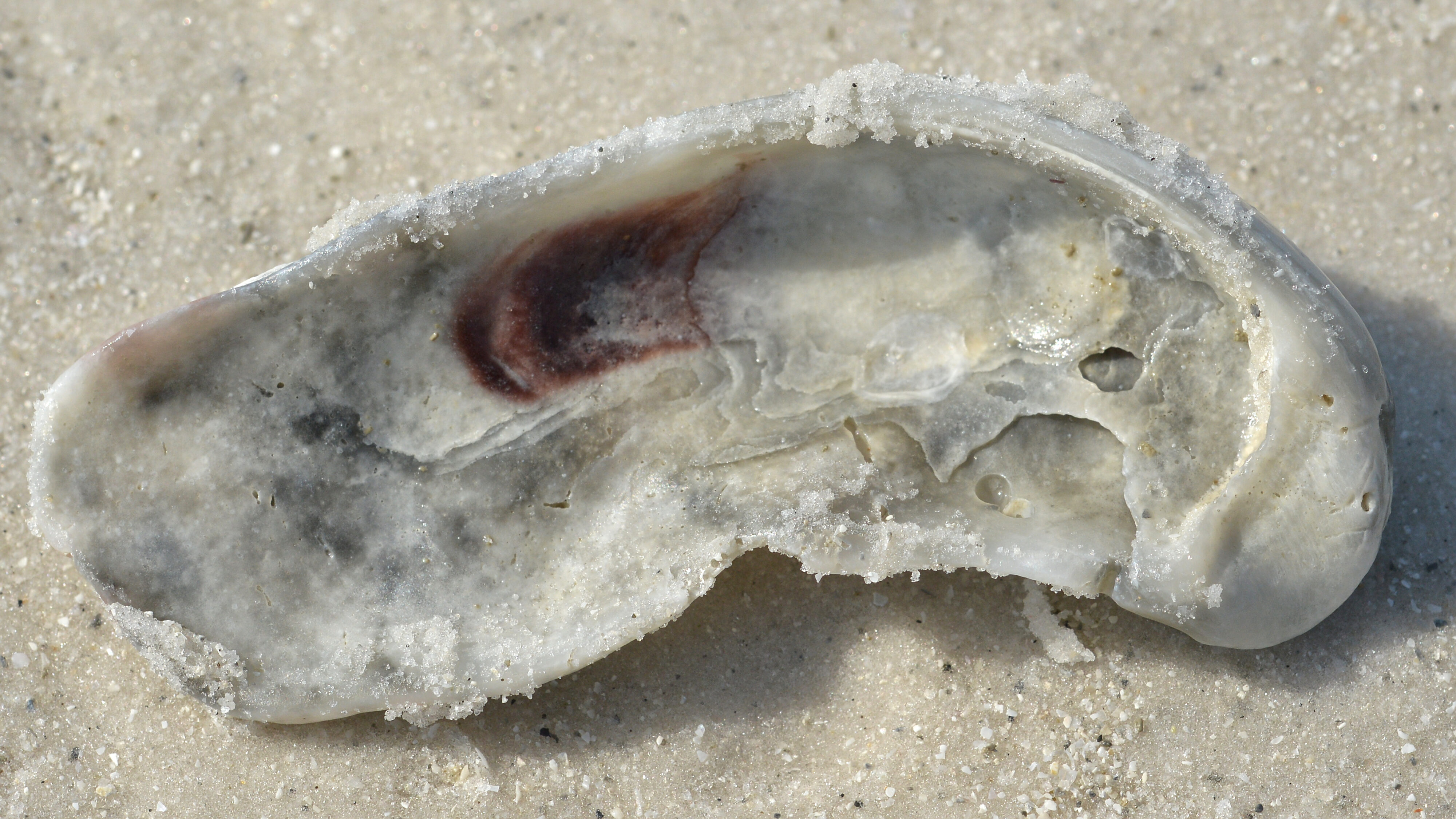
Conservationists in the mid-Atlantic believe oysters may hold the key to a healthier Chesapeake Bay.
Courtesy of Ryan Hodnett, Creative Commons Attribution-Share Alike 4.0 International

February 25, 2026
Courtesy of Ryan Hodnett, Creative Commons Attribution-Share Alike 4.0 International

Oyster reefs are making a comeback in the Chesapeake Bay, but the work is far from over.
After centuries of over-harvesting, pollution, and shoreline development, oyster populations have fallen to just 1-2% of their historical levels, according to the Chesapeake Bay Program.
Oysters are extremely vital to the Bay because of their ability to filter excess nutrients and provide habitats for other species. Restoration efforts are underway, but the Bay’s recovery has hit a roadblock due to ongoing environmental and policy challenges, including those implemented during the second Trump administration.
Along the front lines of restoration is Tara Scully, a biology professor at George Washington University who conducts hands-on research on oyster survival and reef growth. She also leads service-learning projects and even grows oysters with her family to donate to the Chesapeake Bay Foundation. Our conversation covered the history behind the oyster collapse, the road to recovery, and how policy decisions and pollution continue to shape the Bay’s future.
The interview below has been edited for length and clarity.
Mya Petryshyn: From your perspective as a biologist working on the Chesapeake Bay restoration, where does oyster recovery stand right now?
Tara Scully: We’re at a record low. A lot of that removal was done in the 1800s and early 1900s because oysters were very damaging to ships. And in order to get anything moved, including people around this area, they had to remove the oyster reefs to prevent ships from drowning.
I think the recovery efforts are definitely working. It’s just that we’re working against time and harvesting policies.
MP: It does appear that recovery efforts are moving in a positive direction. According to the Maryland Department of Natural Resources, oyster populations in the Chesapeake Bay have tripled over the last 20 years. What can we attribute that to?
TS: There are these amazing laboratory techniques. They take old oyster shells that they collect, and they mainly collect them from restaurants, and they let nature clean the shells for a year. Then they put the shells into a tank and inoculate them.
Naturally, these types of organisms would migrate toward each other. The calcium carbonate signals to them, “This is your home.” They produce this glue-like substance that allows them to attach to the outside of the oyster shell and then start growing.
You can use other substances. They have used concrete, and they’ll make these oyster balls. They have part-like shells and other minerals in there that attract the babies, so they’ll attach to the oyster ball. They’ll bring them out into the bay and then start forming an oyster reef.
MP: You mentioned these “laboratory techniques” as successful restoration efforts, also known as aquaculture. What role does that play alongside wild oyster restoration in the Chesapeake Bay?
TS: Now, we can produce oyster babies called spat in the laboratory. And we can manipulate their DNA so that they’re resilient to infections.
They also grow faster, and they get to market faster, so the oyster person is able to make money much faster. And they don’t reproduce. So they’re not spending their energy on trying to make babies. They’re just spending energy on living. And it’s almost at no cost.
So that has been, I think, a really positive change in the Chesapeake Bay. They were very resistant to it for a very long time.
MP: Despite these restoration efforts, it seems like there are still barriers. Excess nitrogen and phosphorus from agricultural runoff account for a significant portion of the Chesapeake Bay’s pollution. How does this nutrient runoff affect oysters and other species in the Bay?
TS: One of our biggest problems is related to dead zones. In Pennsylvania, there are a lot of dairy farms. All the nutrients that come from those farms go into the creeks that then come down into the bay.
And they cause eutrophication, which ends as a dead zone. We get these devastating fish kills, and the system collapses.
Sediment is another big issue. Oysters are filter feeders, so they’re constantly filtering particles that don’t help them.
And they’re exposed to pesticides and herbicides. A pesticide is designed to kill an animal, and oysters are animals. We’re animals too. We don’t really know the long-term effects—it’s a running experiment.
MP: How resilient are oysters?
TS: Very. They haven’t changed much over evolutionary time because they’re so resilient. They can live in 0% salinity and 35% salinity.
That’s why we want them back. We know they can handle it. The money is worth it because they filter the water and clean the system.
MP: You said that oyster restoration was pretty costly. How much do you rely on funding to help with that?
TS: Pretty much completely.
There are many different methods of getting funding. There’s state level and local level. It’s not just all federal.And there’s some private foundations where different organizations, sometimes they’ll apply together as a collective because it’s more powerful to show that we are doing all of this work. You have citizen scientists who are helping monitor these areas because they care and they see the difference.
MP: How did EPA [Environmental Protection Agency] funding cuts and regulatory rollbacks during the Trump administration affect restoration work then?
TS: This is always a struggle for the nonprofits that do this type of work. It’s not anything new.
Is it frustrating? Yes, because you could see it coming every time you have an administration change. It’s frustrating because what they’re trying to do is help their local community recover from environmental challenges and restore jobs.
We have so many jobs, but they count jobs of people who don’t actually live there full-time. I think it’s a misrepresentation of the impact of these industries that are stealing from the local community.
MP: When scientists talk about successful oyster restoration, what does that mean? Is there a specific population target or ecological benchmark?
TS: I would say that each creek is going to be different, and what their target is. We’re at 2% of the highest population; we’re never going to get to 100% of the highest population or get to that population. It’s just not going to happen because it’s not realistic, given our use of the waterways. But getting to like 40%, I think, is super reasonable.
There are so many different organizations — the Chesapeake Bay Foundation, Chesapeake Restoration Organization, the Alliance for the Chesapeake Bay — and local efforts too. Even in your own creek, people are growing oysters just to help the environment.
All of that together is really helping to move us towards the restoration going in a positive direction.
A project of

in collaboration with