 All Topics







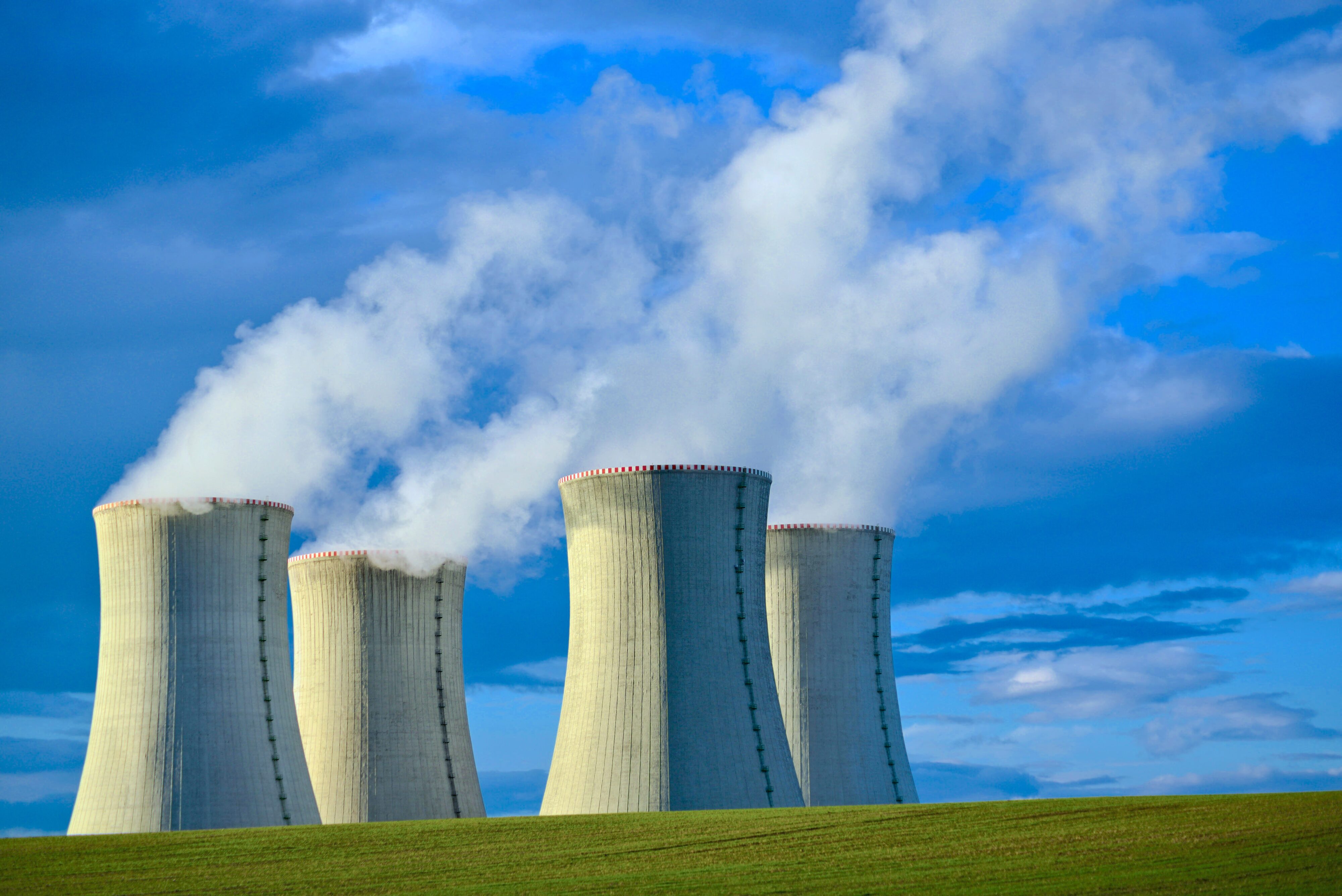
Cooling towers at a nuclear power plant.
Lukáš Lehotský/Unsplash

Maggie Rhoads
Planet Forward Editorial Assistant | George Washington University
July 02, 2026
Lukáš Lehotský/Unsplash
Planet Forward Editorial Assistant | George Washington University
As global electricity demand is projected by the International Energy Agency to rise by more than 20 percent by 2030, policymakers and industry leaders are searching for the next phase of the clean energy transition. While renewable sources like solar and wind have expanded rapidly, questions remain about whether they can meet growing demand on their own.

Nuclear energy is increasingly being reconsidered as a reliable, carbon-free power source. Josh Freed, senior vice president for climate and energy at Third Way, a national think tank and advocacy organization focused on moderate policy solutions, discusses the role nuclear power could play in meeting future energy needs and the barriers to its expansion. Freed’s history in politics and as a European energy security expert informed the discussion about the importance of the United States and European cooperation in shaping global climate policy.
Read the interview with Freed below.
Editor’s Note: This interview has been edited for length and clarity.
Maggie Rhoads: What initially drew you into climate energy policy?
Josh Freed: I had worked on a number of campaigns and got tired of politics. I was looking at what was a big problem that I care passionately about that seemed like it needed a lot more people working on it. And so I was able to convince the people at Third Way to hire me.
MR: So much of your work focuses on scaling clean energy innovation. What does that actually mean in practice?
JF: When we start looking at how we think the United States and the world needs to address climate change, one of the things that struck us was that there’s actually a lot of technologies that we just don’t have yet. Solar and wind are really fantastic and great parts of the solution because they reduce the amount of fossil fuels we need to burn for electricity. There were many areas where we realized innovation was still needed, and those were the areas we decided to look into inventing new technologies or improving technologies that already existed.
MR: What sorts of innovation are you talking about? And do those relate to nuclear?
JF: Nuclear is the cornerstone for our work. We came to the conclusion many years ago, solar or wind would get us a significant way towards eliminating carbon pollution from the electricity sector, but they couldn’t get us all the way.
MR: How exactly does nuclear become electricity?
JF: It’s the same way gas or coal turns into electricity. You heat water to turn it into steam that turns a turbine. You can do that by burning natural gas or coal, which emit pollutants, or through nuclear fission, which heats the water and creates steam without releasing carbon pollution. Once the reactor is built and running, it is one of the cleanest and most efficient ways to generate electricity.
MR: How are these nuclear plants funded?
JF: The Inflation Reduction Act included funding for nuclear reactors, as did the infrastructure law. It helped start the construction of two new, advanced nuclear reactors one by a company called X-energy, the other by a company called TerraPower. Those are getting significant investment from the federal government, matched by private sector investment.
MR: Public support for nuclear energy has increased recently, but disasters like the Three Mile Island incident, the Chernobyl disaster, and other nuclear disasters still shape public perception. How should policymakers address these concerns about nuclear safety?
JF: What we found is that the communities globally that are closest to nuclear plants actually have the most confidence. It’s because safety and communications and engagement with the communities that have the hosts are really held to high standards by nuclear power operators and the governments that oversee them.
MR: And then critics also argue nuclear energy projects could take too long or cost too much compared to renewable energy like wind or solar. Is nuclear power truly scalable enough to play a major role in the energy transition?
JF: The joke in energy circles is that the best time to have built a nuclear plant was 10 years ago and the second best time is today. Nuclear plants have been delayed or slow to get built, in part because the same people that criticize them for being slow or over-cost are the ones that throw a lot of obstacles in the way and work diligently to try to prevent multiple reactors from being built.
MR: I know that you have a background with Europe. I also wanted to talk about how the United States and Europe make up a huge share of the global economy and energy consumption. Where do you see the most important areas of energy cooperation between the United States in Europe today?
JF: We started working on how the United States and Europe could work more closely together in 2016, and a lot has changed politically, economically, and in terms of emissions. The United States and Europe are major energy producers and consumers, and among the wealthiest regions in the world. If they can invent and scale technologies and bring them to market and help bring down costs, those technologies can expand globally. Both have a responsibility to reduce their own emissions and make these technologies more affordable and accessible. Right now, that’s a challenge. The Trump administration has weakened trust between the United States and Europe, pushing Europe to act more independently. That could lead to more innovation, as Europe advances clean energy, including nuclear, solar, and EVs, often with partners like South Korea and Japan. It’s an evolving process.
MR: So is Europe going to get ahead of the United States in terms of clean energy production?
JF: It’s really challenging. Europe’s economy is in shakier shape than the United States. Their industrial base was hurt by COVID, a slower recovery, and Russia’s war in Ukraine. As a result, they struggle to get affordable electricity for manufacturing, enough natural gas for heat, and sufficient nuclear capacity. I hope they develop industries or technologies that can be competitive with the United States, because we’re better off with those partnerships. The United States is working with Poland to build a nuclear plant that will help retire coal, and there is competition to build plants in the U.K. Geothermal also has promise, though tariffs and strained relations with NATO and the EU have made cooperation more difficult. Europe may turn to the United States or China, but neither option gives them the economic and technological autonomy they are seeking.
MR: How will the United States react if Europe is looking to form other relationships with places like China or even in the Middle East?
JF: China is a unique challenge for the United States. It’s impossible to predict how EU relationships with the Middle East will evolve, especially with ongoing conflict in the region. If the EU deepens ties with China, it will likely be because it no longer trusts or relies on the United States. That would likely trigger a negative reaction from the Trump administration, but one they helped create.
MR: Just to close off the International Energy Agency projects, global electricity demand could grow by more than 20 percent by 2030. What successful clean energy leadership between the United States and Europe could look like 10 years from now?
JF: Ten years from now, I sincerely hope there is a partnership where American and European countries and companies are working together to build a variety of nuclear plants across both continents. There is already more interest from European nations to build nuclear plants than the United States has the ability to meet. Over time, this could expand into a broader partnership, with companies and experts from South Korea and Japan working with the United States and Europe to build plants and strengthen the supply chain, so that by 2035 or 2040 many nuclear plants are already being built or operating across these regions. The next phase of growth will be in Asia and Africa, and there should be partnerships to support that expansion, so countries looking to build nuclear power in the 2040s and 2050s can do so collaboratively. I think this is a stepping stone to get there.
A project of

in collaboration with