 All Topics






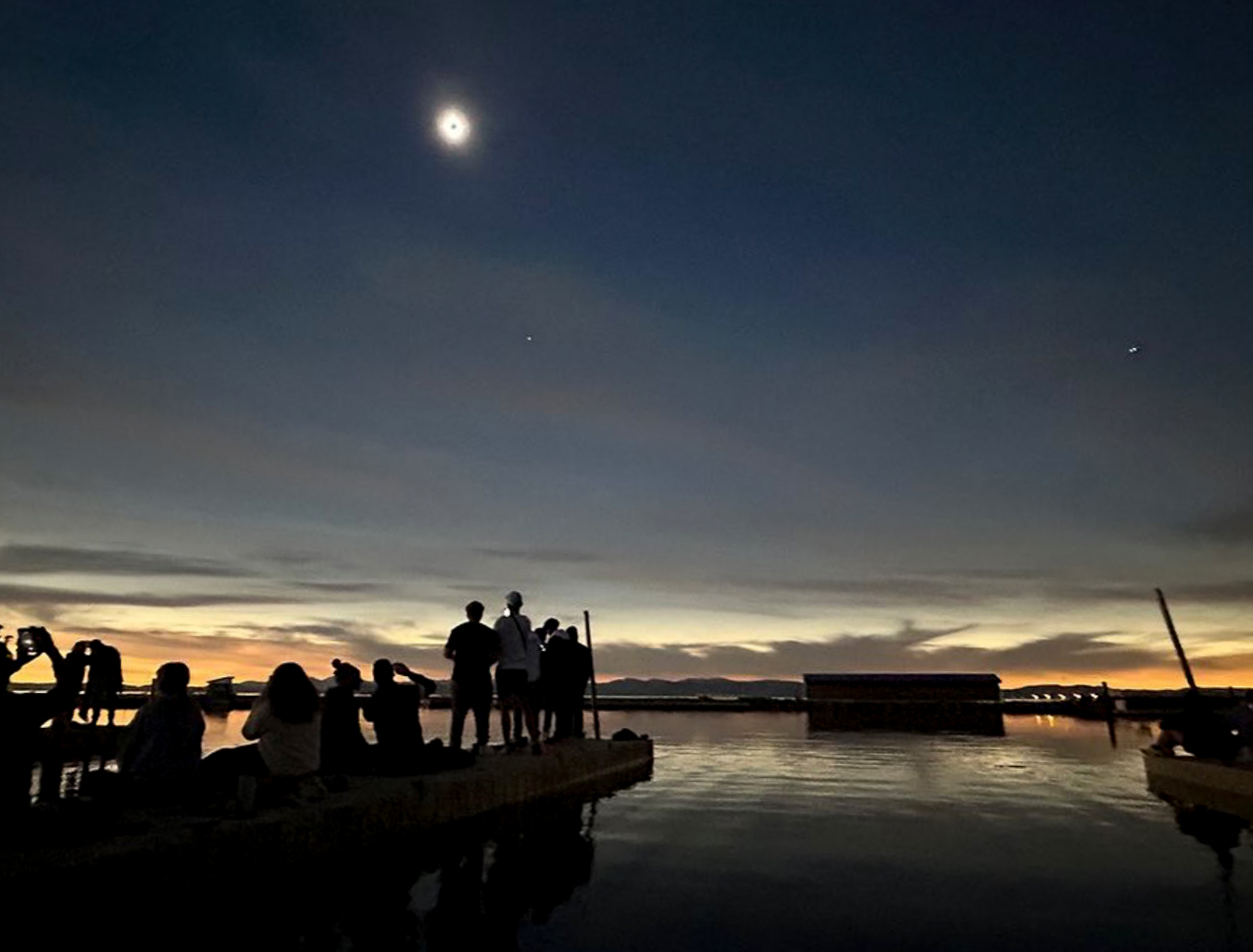
Observers of the night sky at the Columbia Public Astronomy Organization.
Kayla Smernoff

Kayla Smernoff
Planet Forward Correspondent | Columbia University, Howard University
January 12, 2026
Kayla Smernoff
Planet Forward Correspondent | Columbia University, Howard University
The night sky in New York City is always bright. At first glance observers can see the bright lights of the billboards, windows and cars. Stars, however, are notably absent even on the clearest of nights. For those seeking the stars, astronomy-focused nature outreach programs allow New Yorkers to connect with the rarely visible night sky.
New York-based astronomers, including Columbia University’s Astronomy Public Outreach (CAPO) program, are making astronomy more accessible through their telescopes and their community initiatives.
Observation in New York City has unique challenges, one of the largest being the artificial light, or light pollution, that comes from constant activity in the city. Lecturer, Outreach Coordinator, and astronomy faculty member Amanda Quirk said that observing the universe in New York City is difficult and during CAPO’s outreach events they look for the brightest objects in the sky like Saturn, Jupiter and Polaris.
Drowning out the stars isn’t the only downside of light pollution. The phenomena has been found to affect human health and wildlife behavior.
“Anywhere you have a telescope, you’re always going to [need to] build telescopes away from other light sources, away from cities, observing during the night, not during the day,” Quirk said. “These problems exist for astronomers around the world. In New York City they’re just amplified.”
On a clear winter night on Columbia University’s campus, interested parties of all ages file into the sciences building to listen to a lecture on astronomy and then observe the night sky using Columbia’s telescopes. The voices of young children and older people intertwine as they wait for astronomy Ph.D. student and astronomy outreach coordinator Jennifer Mead to begin her lecture.
In front of Mead are various tools. One is a refraction paper that is handed out by Mead to each of the attendees of her lecture. When held up to the light, the paper demonstrates how light bends through different lenses like plastic, glass or even space.
Sounds of joy erupt from the audience as they see small rainbows dance across the refraction paper.
“It speaks to a lot of people’s inner child. Space is one of those things that across space and time, across the earth, across the whole history of humanity, people have connected over,” Mead said. “It’s one of the most accessible sciences in terms of being able to look up and wonder about the biggest questions like, ‘where did we come from?’”
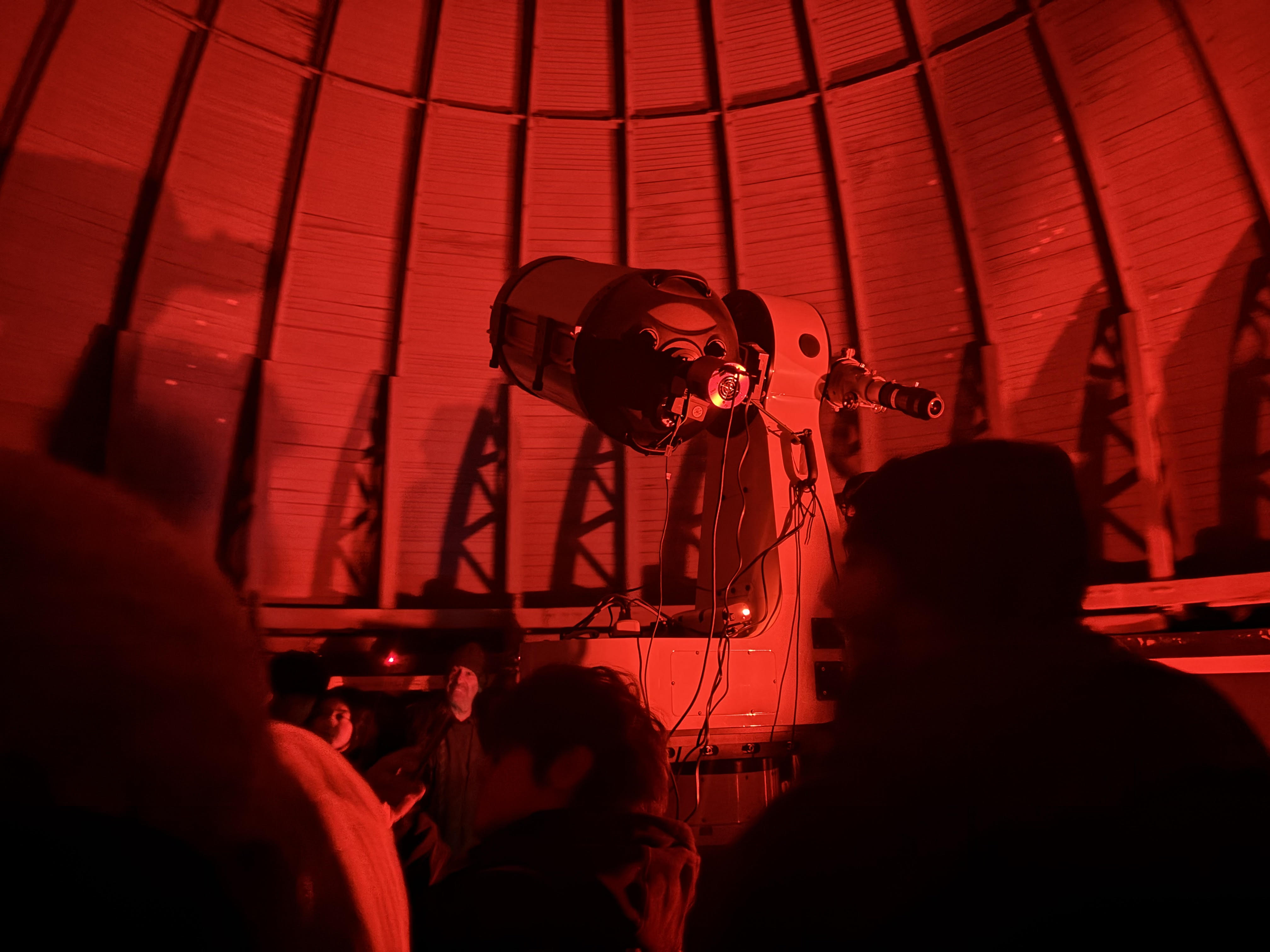
Columbia Astronomy Public Outreach is part of the outreach, teaching, and research activities of the Department of Astronomy at Columbia University. The crowd in Columbia’s lecture hall makes it clear that CAPO’s audience is a range of passionate individuals and excited community members ready to listen and participate in the free information session about space.
Led by Columbia’s astronomy students and faculty, the program attempts to capture the same wonder that drew Columbia’s astronomy students towards their field. Mead also said she wants CAPO’s outreach program to educate the public on bringing science to people who would not otherwise interact with it.
“It’s also for the purpose of educating the public on what science is. What does it mean to be a scientist? What does it look like to do science? Which I think is actually extremely critical, and something that the public is not super well connected with,” said Mead.
But local public awareness is an ongoing issue according to Quirk. Those interested in CAPO’s events are often folks who are already interested in astronomy, whereas Quirk laments that astronomy is not often the first science that New Yorkers think of.
“In New York City, because this sky is not obviously bright, a lot of people just don’t think about the night sky. They don’t pause to look up and see whatever stars are visible or think about astronomy,” Quirk said. “If we can get those people to think, just for a moment, about the cosmos and their place in it, [it]would be really exciting for us.”
Quirk and her team of volunteers have tried everything from community collaboration to guerilla marketing to make New Yorkers aware of CAPO’s programming. Some volunteers have set up a telescope on a street corner and encourage passersby to look through. Others have gone to local libraries and middle schools to teach students about dark matter and black holes.
“We can have some accessible versions of bringing telescopes to campus level, so people don’t have to climb the stairs on the roof. People can take public transportation very easily to get to us. I think that is the benefit of New York, there’s just more people in the heart of the city,” Quirk said.
The campaign towards creating accessible science programming involves CAPO’s and outside programs’ funding. Columbia University’s campus has physical barriers that require the astronomy program leaders to meet students, parents and teachers who are not affiliated with the campus where they are.
“That is one of the reasons that we do things at libraries and we do things in classrooms, because those are places where we reach kids who may not have access to technology or may not have parents who can take them to Columbia on a Friday night,” Mead said.
Activities on campus also sometimes end with a call for listeners to express their support of science programming to their local representatives and to remind the federal government that the American people are interested in astronomy projects being completed.
The American Astronomical Society has kept a close watch on public policy updates about astronomy on their website. At the end of the public outreach lecture on telescopes, a question comes from an elementary student about when the Thirty Meter Telescope (TMT), an infrared and optical telescope under construction in Hawai’i. Mead answered solemnly that TMT’s funding was cut by Donald Trump’s National Science Foundation, which cited the project as unaffordable.
Quirk and Mead say they are excited for the future, both lovingly refer to astronomy as a “gateway science” because of how its accessibility gets people to start thinking. CAPO’s participants express enthusiasm about the upcoming programming, and every outreach program involves teaching children, parents and adults something new.
“It’s totally fair for people to have preferences, but there’s nothing actually built into our brains that says you can’t do math or you can do math,” said Quirk. “Astronomy can be as simple as thinking about your place in the universe, or how your culture, or your spiritual beliefs are tied to the way the Earth moves or other aspects of space. I think it is a really inviting way for people to think.”
A project of

in collaboration with