
 All Topics





What is inherited is carried through changing currents.
Kim Ossi/Planet Forward
September 22, 2026
Kim Ossi/Planet Forward
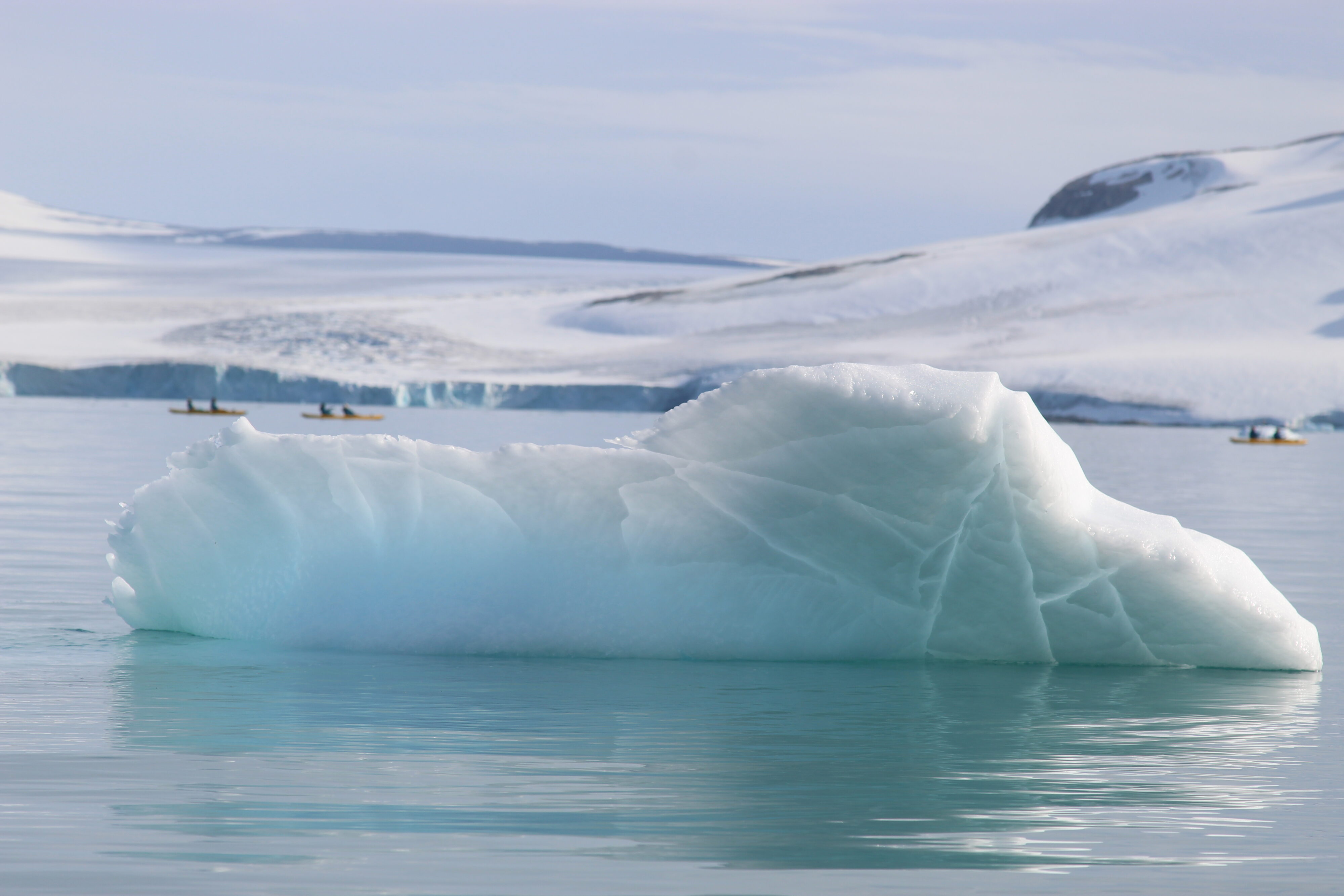
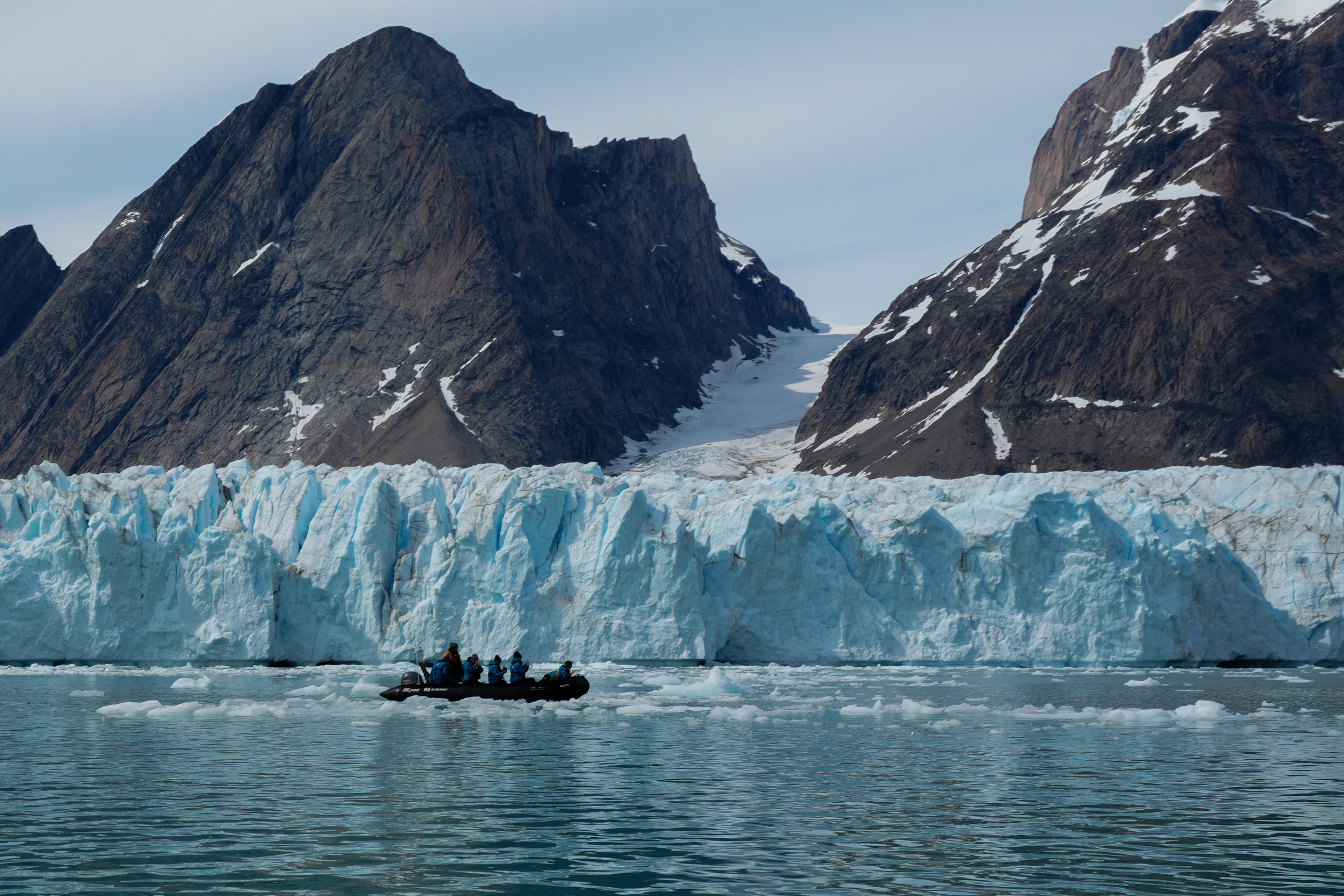
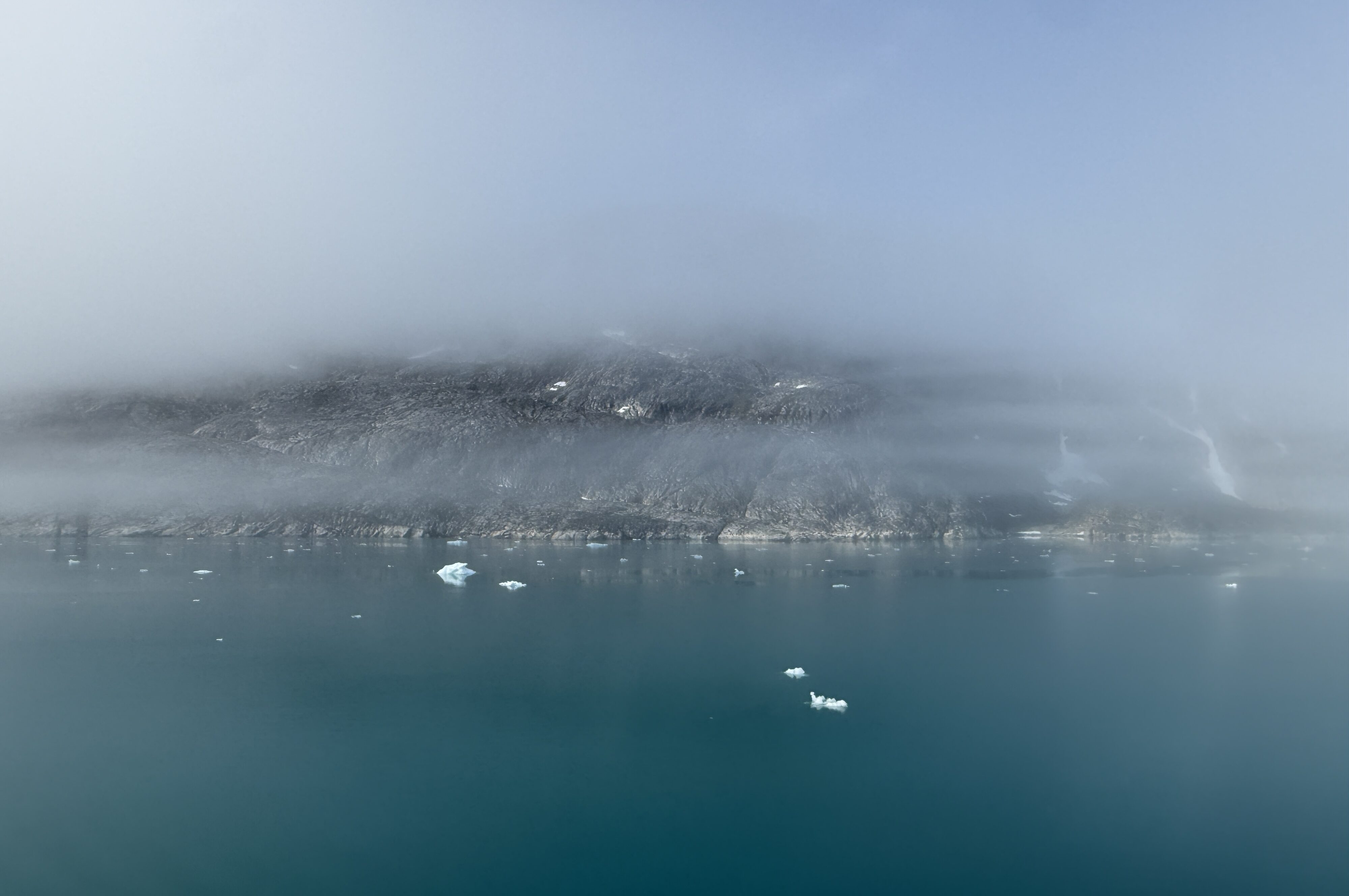
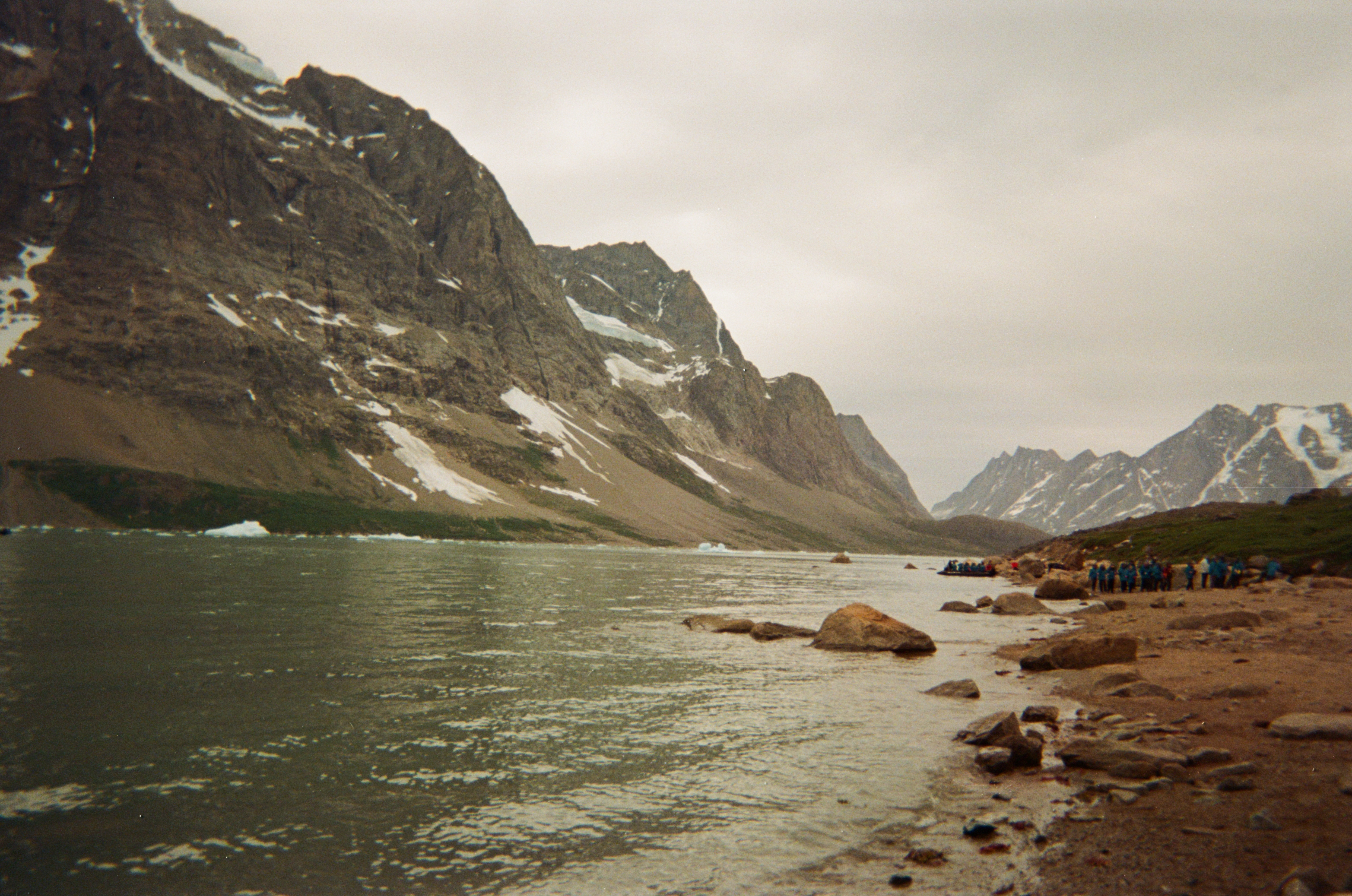
At 11 p.m. during the final days of our expedition, the ship cut through waters along the southeastern coast of Kalaallit Nunaat (the term for Greenland in the local Kalaallit language). The Arctic sun still hung above the sea, casting a warm amber light in its final minutes before dipping below the curvature of the Earth. Mountains rose from the sea and glaciers hushed between them, leaving morning and night to fold into one another.
Looking out across the water, I returned to what Inuk cultural specialist Inuuteq “Inu” Kriegel had said earlier in our voyage: “We all come from here, we are not so distant. Everything is connected. Our consciousness and the weather are connected.”
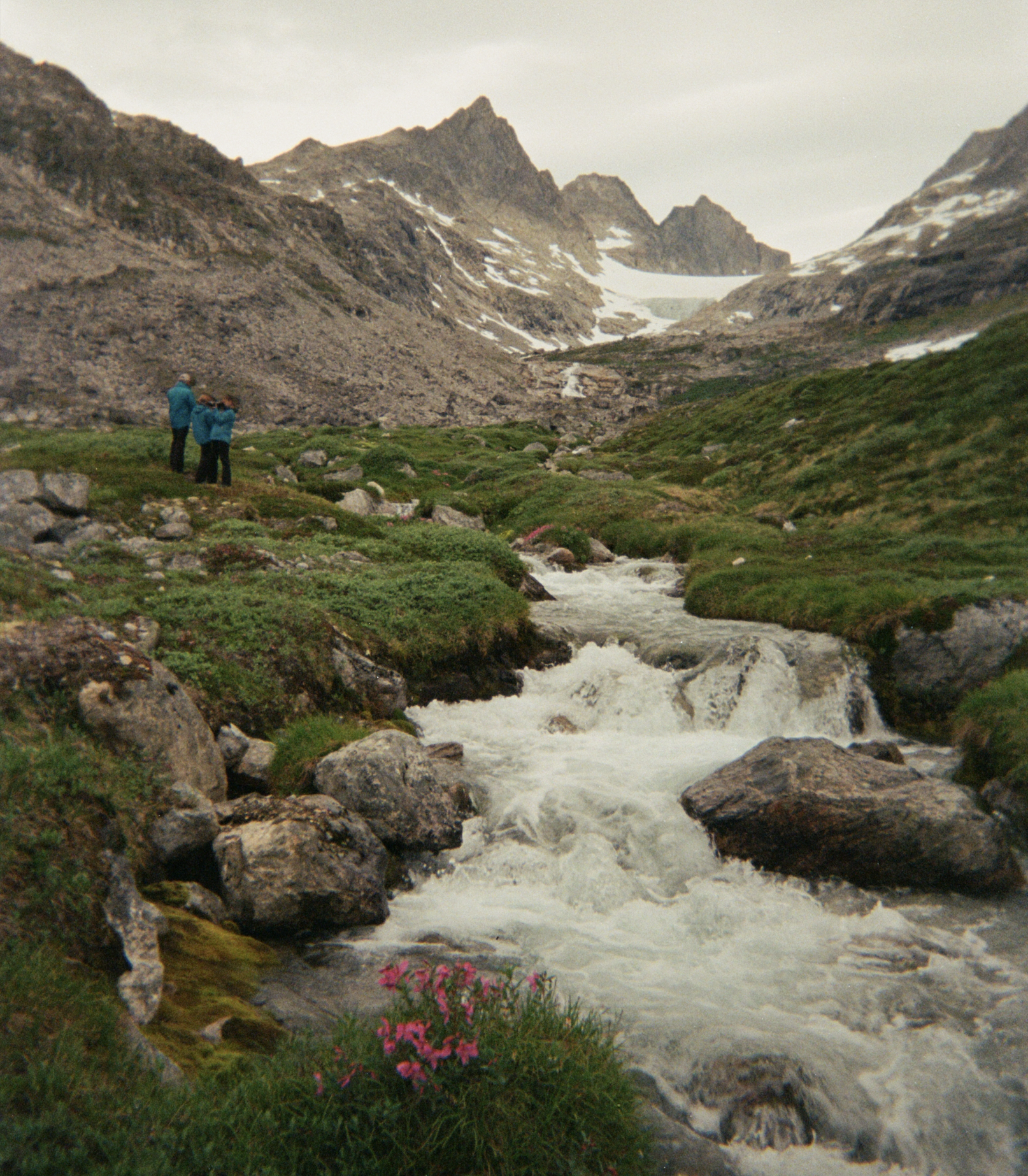
Our bodies are continuations of the living systems around us as we all continually respond to light, water, temperature, food, and season. Our memories gather around particular landscapes and our languages carry what our communities have learned. The weather enters our stories because it shapes how we understand change and how we adapt.
The idea that we all come from here resists the habit of placing ourselves outside the living world. It asks us to understand ourselves not as observers of nature, but as participants in it, bound up in an economy of dependence, change, and relation. None of that thinking belongs exclusively to Indigenous peoples but is part of the Indigenous consciousness: the understanding that who we become is shaped through our relations with the world around us.
Farther north, the coastline curved around islands and opened into fjords, its coves and inlets shaped by glaciers, sediment, weather, and time. For generations, Inuit communities have traveled these waters with the seasons, learning the coastline. The knowledge of this place was formed through relationships sustained over time.
In the winter of 1885, along this same coast in Ammassalik, now known as Tasiilaq, a Tunumiit hunter named Kunit handed Danish explorer Gustav Holm three wooden carvings known as the Ammassalik wooden maps. Two traced the contours of the mainland coast while the third marked the islands offshore. Together, they held entire landscapes in the palm of a hand.
When Holm brought the maps back to Denmark, they became a source of controversy. Some of Holm’s contemporaries refused to believe that an Inuk person could have created a three-dimensional wooden map. Instead, they proposed that the practice had been taught by a shipwrecked European sailor, despite no Western seafaring tradition having ever produced anything like it.
Hans Harmsen of the Greenland National Museum suggests that the carvings may have been used less for practical navigation than for storytelling. Michael Engelhard similarly describes how stories attached to landmarks may have helped travelers remember the way.
Here, the distinction between story and navigation begins to dissolve. A story can become a route, carrying knowledge between generations. Why are we so quick to assume that navigation must be a map’s primary purpose?
I thought about Inu’s words: “Our consciousness and the weather are connected.” To know a place is not simply to know where its coastline bends or where one landmark sits in relation to another. Knowledge is formed through the experience of moving within those conditions, learning what must be remembered for someone else to find their way. The wooden maps allow the person and their landscape to be connected.
Wooden maps represent a place as it was lived. By contrast, the colonial maps we typically see often reduce Indigenous homelands to borders, territories, and jurisdictions, separating the place from the relationships through which it is known. They make land easier to divide and govern, despite the land and sea never having recognized a border.
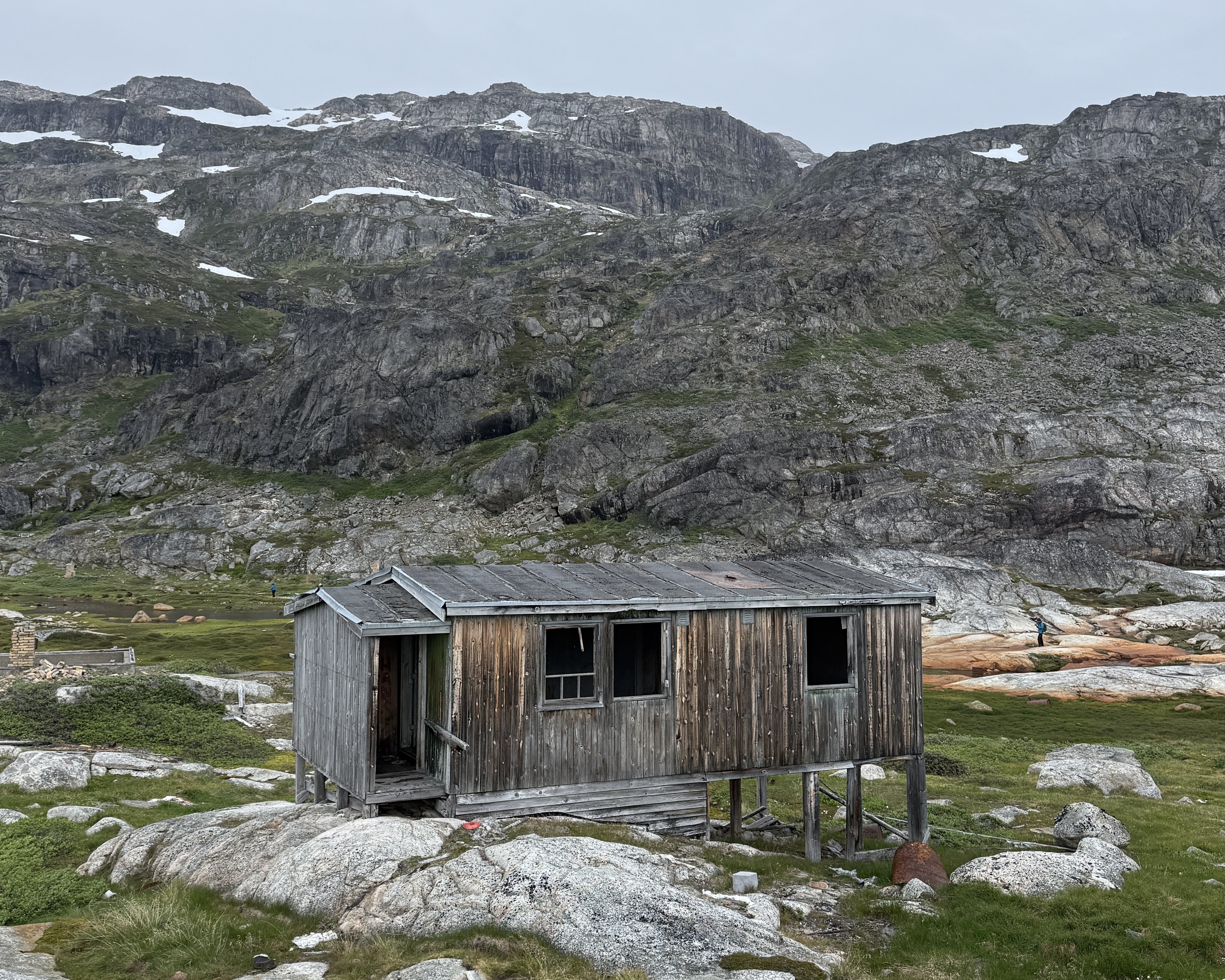
Farther south along the eastern coast, we entered Skjoldungen Fjord and took Zodiacs, small inflatable boats, ashore to explore what had been described to us as an “empty” settlement.
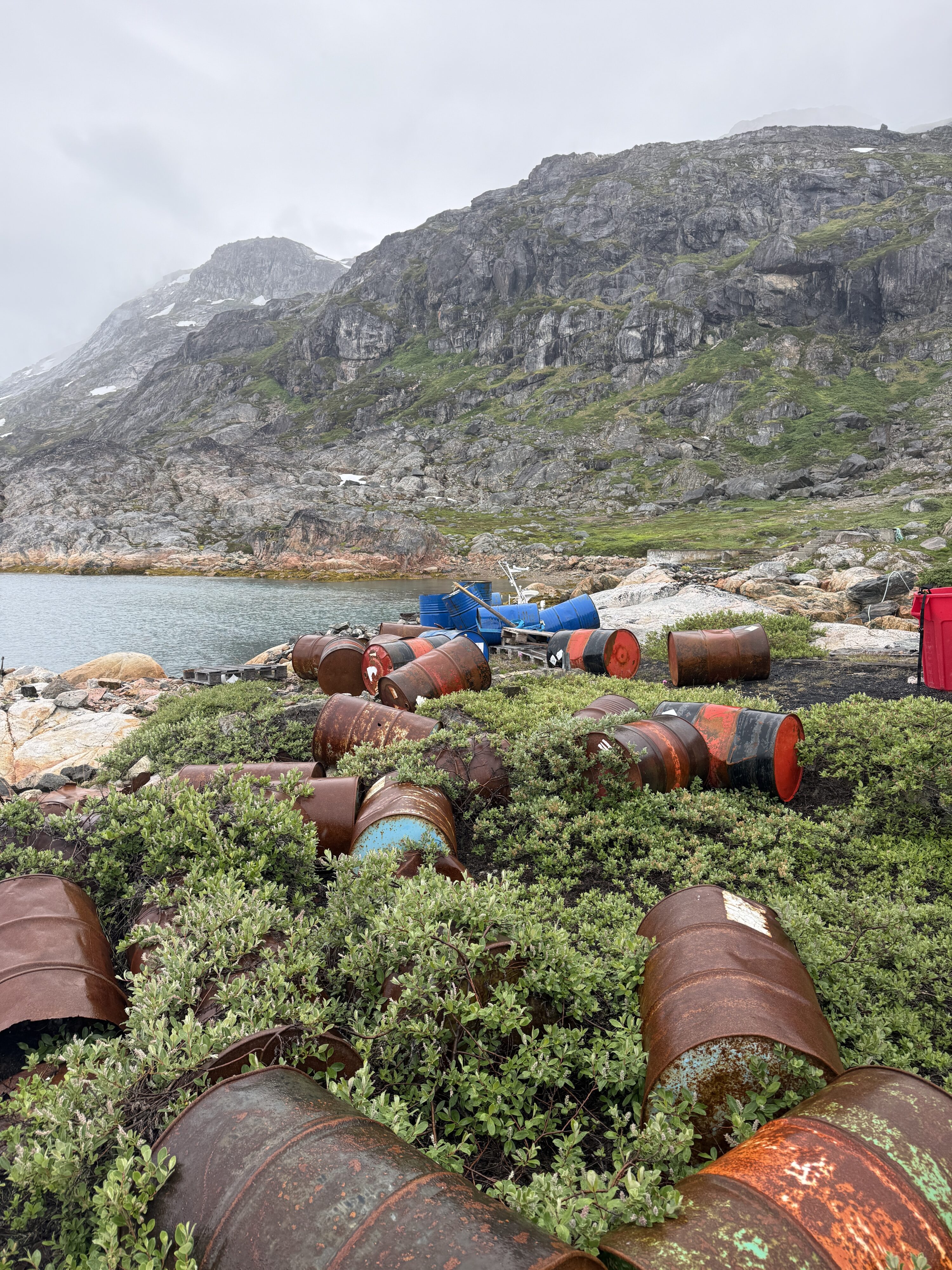
As we approached the shoreline, we spotted rusted Texaco and jet-fuel barrels among what appeared to be newer debris. Dozens of shoes lay scattered between the houses: laced sneakers, black flats, a single silver stiletto. A wrecked boat sat close to shore, and an old radio rested against a rock, its wires exposed to the weather. Above the water, the houses stood with steep, darkened roofs and outer boards weathered gray and brown. Their windows faced one another while the mountains gathered behind them.
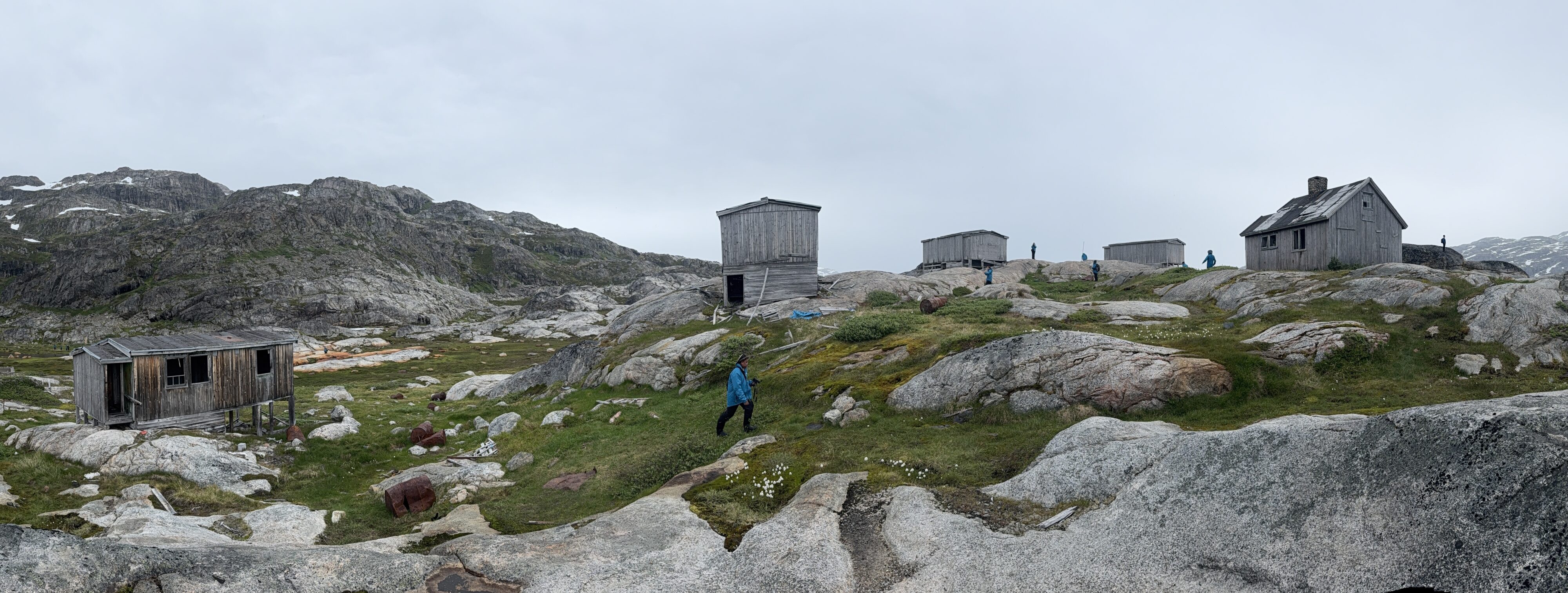
In 1938, Danish authorities encouraged approximately 150 Inuit from Ammassalik to relocate to the Skjoldungen Fjord and establish a fishing settlement. For nearly three decades, families hunted, fished, and raised children, building their lives there. By 1965, the settlement’s last residents had departed.
The reasons behind that departure are difficult to understand from the current condition of the shoreline alone. Our expedition’s cultural specialists pointed to declining hunting conditions, but the settlement was also emptied amid Denmark’s G-50 and G-60 development plans, which were transforming life across Kalaallit Nunaat. Housing, education, healthcare, and wage labor were increasingly concentrated in larger towns as smaller settlements were closed or abandoned. Inuit subsistence practices and seasonal movement were treated as incompatible with the future Denmark had designed for them.
Standing among the remains, I thought about how easily “progress” can be used to justify changes that separate people from their ways of life. Centralization promised greater access to services, employment and permanent housing, but it also changed the terms of everyday life. Food, education, healthcare and the ability to support a family became increasingly tied to wages and institutions in larger towns. Even the land was expected to fit a colonial vision of where and how people should live.
As a Diné person, the colonial logic behind that development felt familiar. Inuit and Diné histories are not interchangeable, and the relationships Inuit communities hold with Kalaallit Nunaat are not mine to define. Both peoples, however, have histories of movement shaped by the land and the seasons while colonial governments treated that mobility as something to contain. The so-called United States has similarly restricted my people’s relationships to land through borders, grazing districts, property regimes, wage economies and definitions of sovereignty that it retains the power to limit.
Returning to Inu’s understanding of consciousness as inseparable from the world around us, I began to think about what colonialism attempts to interrupt. An Indigenous consciousness is formed through relationships to weather, land, food, memory, community, and the world beyond humans, with the person understood as part of a larger living system. When colonial systems restrict movement or displace people, they interfere with the conditions through which people understand themselves and the places that sustain them.
In his book, No Spiritual Surrender, the late Diné anarchist Klee Benally described this colonial idea of progress as a “socially constituted violence against the Earth,” inseparable from a colonial mission written into law and enacted upon Indigenous bodies.
At Skjoldungen, that violence remained visible in the landscape with fuel barrels rusting near the shoreline and abandoned infrastructure. The settlement had been established according to one Danish vision of development and later emptied as another took its place. What remained was not evidence of a failed community, but of lives altered by policies that treated land, labor, and movement as things that could be redesigned. The government could leave, but the land was left to hold the material consequences of those decisions.
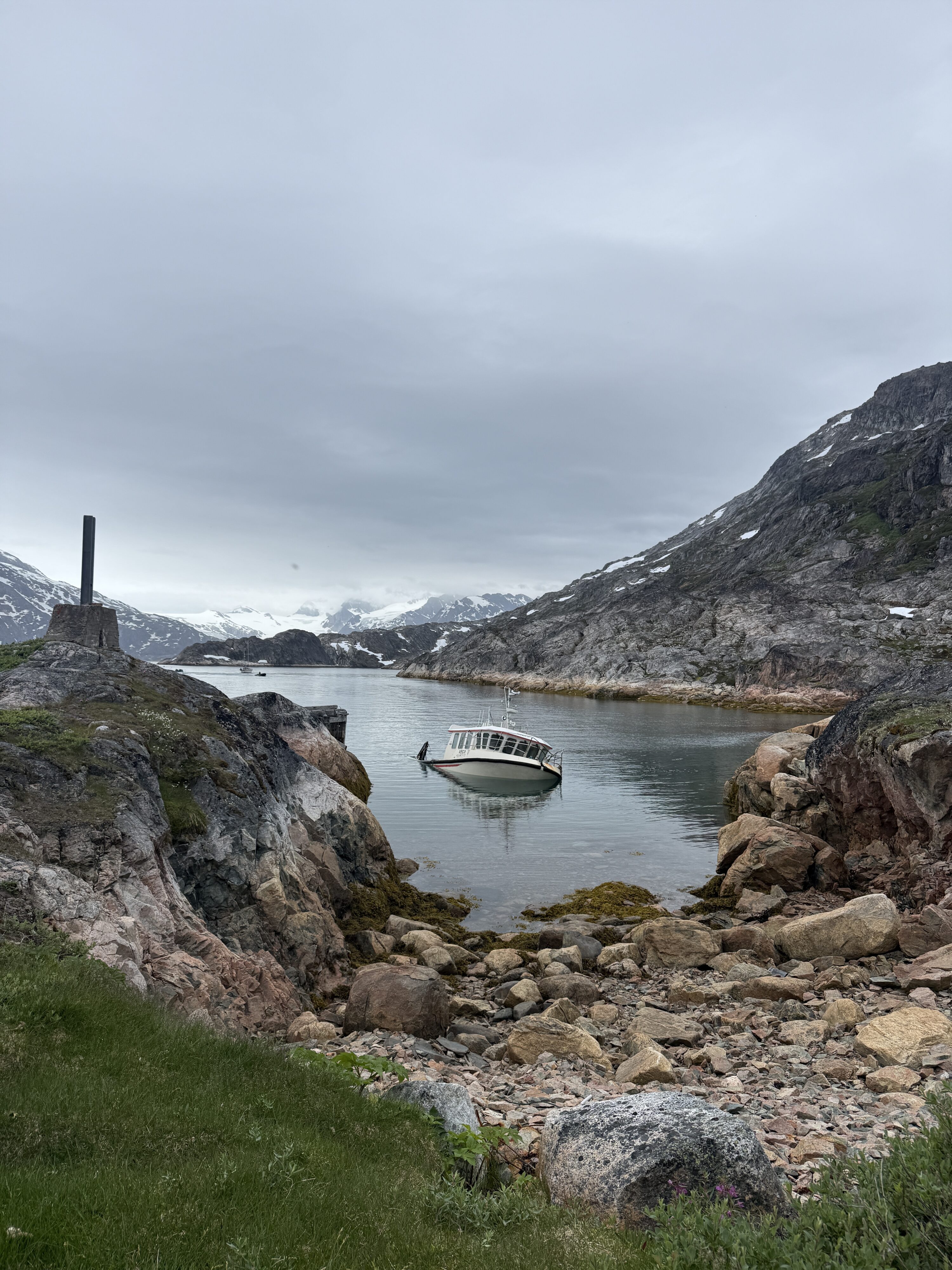
At Skjoldungen, the word “empty” felt increasingly inadequate for what I was walking through. The houses were left behind, but the place was not devoid of history. The language used to describe Indigenous places can make what is living seem finished, fixed or gone.
Diné scientist and National Geographic Grosvenor Teacher Fellow Kim Etsitty told me that she has begun using the term “bioecological knowledge” in place of “traditional ecological knowledge,” or TEK. The word “traditional,” she explained, can make knowledge sound ancient, as though it belongs to a completed past. “Bioecological knowledge” makes space for something living.
What each Indigenous community carries is ancestral, but it has never been static. Each generation inherits knowledge while encountering conditions their ancestors did not. Today, those conditions include rapidly warming temperatures, changing ice, shifting species, and water arriving in unfamiliar ways or becoming scarcer. Despite these disruptions, Indigenous communities continue to use what has been passed down to them to understand the changes unfolding in the present, because what is ancestral does not belong only to the past.
I kept thinking about the wooden maps alongside Skjoldungen. Kunit’s carvings held a familiarity with the coast that had been built over generations and could be passed from one person to another. At Skjoldungen, Danish colonial policy changed where people lived and what they were able to return to. But leaving a place does not mean leaving everything learned there behind. Knowledge can remain in memory, practice, language, and the ways people continue to understand the world around them.
The maps and Skjoldungen left me with another question: if so much of what we know comes from our relationships with place, what do we owe the places that make that knowing possible?
A place never stays exactly as we have known it. Coastlines shift, weather that once felt familiar becomes harder to read, places people have returned to for generations become inaccessible. When the places we learn from change themselves, so does what there is to practice and pass on.
We have always been part of the living world. The work is to remember how to be good relatives to everything that holds us: the water, the mountains, the earth beneath our feet and one another. It is to tend to these relationships, to protect what colonial systems have tried to sever and to leave them stronger because we were here.
I returned once more to Inu’s words: “We all come from here; we are not so distant.” I understood “here” less as a single place than as the living world itself. We come from water, land, food, weather, and generations of relationships that have made our lives possible. Our communities may know those relationships differently because we come from different lands and histories, but none of us exist outside of them.
We are shaped by what we return to: the weather we learn to read, the food that sustains us, the routes we know by heart, the stories that teach us where we are. Long after we leave, some part of that remains. If a place can give us that much, knowing it also means learning what it asks of us. To know a place is to listen for what it needs in return.
Editor’s Note: Lindblad Expeditions, our Planet Forward Storyfest Competition partner, made these series possible by providing winners with an experiential learning opportunity aboard one of their ships. We thank Lindblad Expeditions for their support of our project.

University of Wisconsin - Milwaukee | School of Freshwater Sciences
A project of

in collaboration with