
 All Topics







A view of waterfalls from the Indian Head Trail near Keene Valley, N.Y.
Vyshnavi Vennelakanti

Vyshnavi Vennelakanti
Princeton University
February 04, 2026
Vyshnavi Vennelakanti
Princeton University

I was standing alone, exhausted, and terrified, in the Rooster Comb parking lot in Keene Valley, N.Y. Stranded in the Adirondacks, I watched the last traces of sunset disappear behind the mountains. I kept asking myself: How did I even end up here?
Just one day ago, I was working from home, wrapped in a blanket with a cup of hot chocolate. Then, I received the kind of email that every researcher dreads: My paper came back with major revisions. While two of the three reviewers suggested only minor changes and provided encouraging comments, one reviewer – the infamous Reviewer #2 – caught a mistake that rendered two-thirds of my manuscript unusable. My paper would only be accepted to the Biochemistry journal after addressing this reviewer’s comments.
This paper represented one year of research done during my Ph.D. alongside my undergraduate mentee. I had barely one month to redo most of it before resubmission. I read the comments over and over, hoping that I had misunderstood. But slowly and painfully, it became clear: Reviewer #2 was right. I took his comments personally, and my thoughts spiraled: I am a terrible researcher. How did I miss something this big?
In my paper, I investigated how Cytochrome P450 enzymes catalyze chemical reactions, making transformations that would otherwise require extreme temperatures or pressures possible under ambient conditions. While these enzymes perform a wide range of reactions, I studied how they perform hydroxylation – the addition of a hydroxyl group to a molecule.
Hydroxylation is central to converting methane, a potent greenhouse gas, into methanol, a useful liquid fuel. Understanding how enzymes like Cytochrome P450 achieve this could help design processes that convert methane to methanol under mild, energy efficient conditions, which could both reduce atmospheric methane emissions and create sustainable chemical feedstocks.
In my research, I replaced the iron metal in cytochrome P450 enzymes with other metals to see if these bioengineered variants could outperform the native enzyme by making the process more efficient. Substituting iron with ruthenium, and under specific conditions, iridium, showed promise.
Reviewer #2 pointed out that the substrate (the molecule on which the enzyme acts) we chose in our simulations was unsuitable for the reaction we studied. Once I saw it, I could not unsee it. Everything else was right: the protocol, the computational approach, the analysis. However, the substrate itself could not undergo the reaction. It was a minor error with massive consequences. I panicked, and instead of facing the problem, I fled.
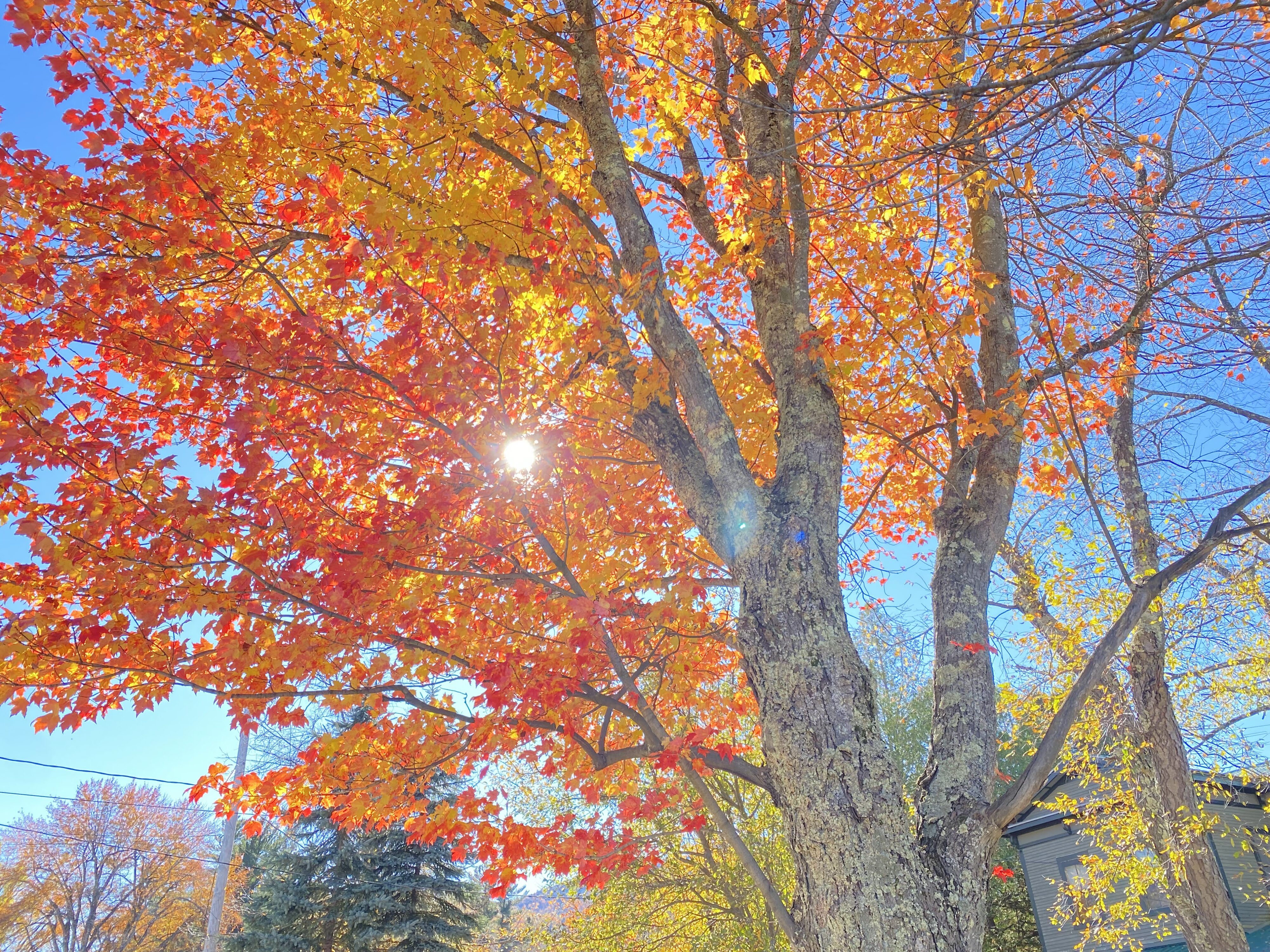
Hiking has always helped me reset, so I boarded a bus to the Adirondacks. I arrived in Keene Valley and did a nearby hike, feeling a little lighter with every step.
After the hike, I was ready to go to the AirBnB, but realized that I had not rented a car. I waited for over half an hour for Uber/Lyft before it hit me: Ride-sharing might not be available here. The sun had set and the temperature dropped fast. As a sudden gust of wind sent shivers down my body, I realized: This is what running away from the problem really looks like.
I knew that I needed help, so I walked to a nearby restaurant, the Ausable Inn. The staff were shocked that I was in Keene Valley without a car and explained that there was no cab service there, which meant that I could not reach the AirBnB.
I was visibly anxious. Sara, one of the staff, noticed and told me to calm down. She spoke with someone and came back with good news: A room was available at the inn. I took it. Sara asked what brought me to Keene Valley. I explained that I wanted to hike the Indian Head Trail. However, since there was no cab service, I would be taking the bus back home the next morning.
Sara responded, “You came all the way from New Jersey to do this hike. You are not leaving without hiking.”
While I loved her optimism, I was mentally exhausted, having been in survival mode for hours. But then she mentioned that her stepson, Avery, liked hiking and would be happy to hike with me and drop me at the train station afterward. I could not believe that a stranger was helping me. I was skeptical and scared. Sara sensed my hesitation and suggested that I talk to Avery over the phone first. Avery was kind, calm, and reassuring. I was still nervous, but I realized that it was time I moved forward with courage.
The next morning, Avery drove us to the trailhead. We hiked for over eight hours, more than 12 miles, with an elevation gain of over 2,500 feet. It was strenuous, but having his company made it easier. Somewhere along that trail, I started to feel confident again. I felt like there was a way out of problems if strangers could show up and help without expecting anything in return.

After the hike, Avery dropped me at Port Henry Amtrak station. As I sat on the train, watching the Adirondacks pass by, I saw the sunset again — the same mountains, the same fading light as the night before. Less than twenty-four hours earlier, the sunset made me panic in a dark parking lot. Now, it filled me with gratitude, courage, and confidence. And then something clicked.
Reviewer #2, who demanded those major revisions, was also a stranger helping me. If they had not caught that mistake, it could have easily misled others, setting sustainability research back. I realized something essential, both in science and in life: Escaping an uncomfortable reality is never a solution. Facing the problem, seeking help, and embracing the people who guide us, whether they are hikers in the Adirondacks or anonymous reviewers trying to strengthen our research, are what ultimately lead us forward.
After I came back home, I worked on the revisions and fixed the mistake, after which my paper was published.

Brigham Young University
A project of

in collaboration with