
 All Topics









Diane Dorfer is one of many Connecticut farmers struggling to adapt to extreme weather conditions.
Ayshah Ilyas

May 06, 2026
Ayshah Ilyas
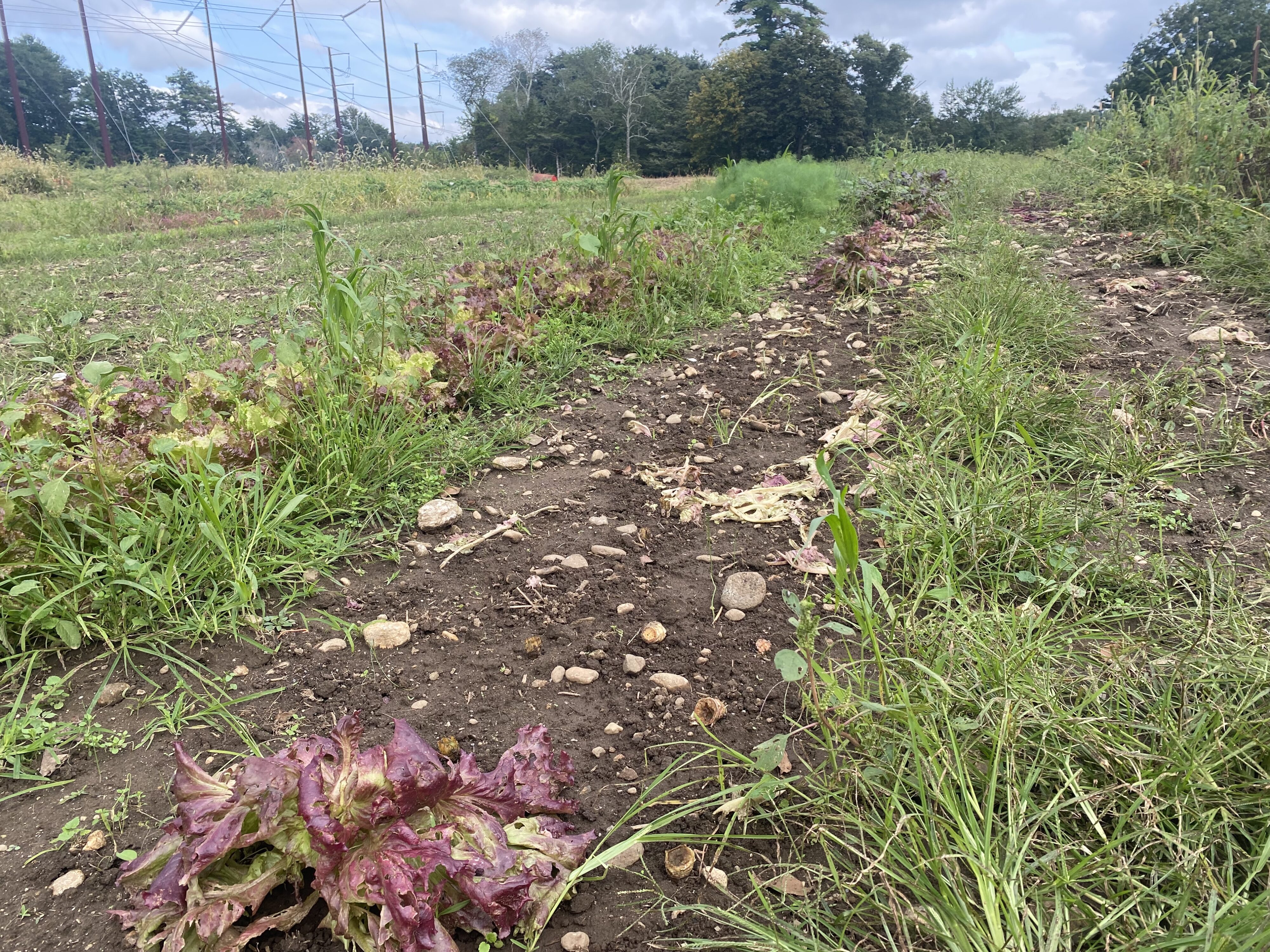
Rows that once held vibrant green lettuce now sit empty at Cobblestone Farm in Mansfield, Conn. What should have been one of the farm’s early spring harvests instead became a costly reminder of how unpredictable the growing season has become.
In May, an unexpected frost swept through the region, destroying most of the lettuce crop planted by farm owner Diane Dorfer.
“Our farm had about a $1,200 loss just from the lettuce alone,” Dorfer said, standing beside the unused rows where the crop once grew.
For Dorfer and many farmers across Connecticut, extreme weather events are no longer rare interruptions; they are becoming part of the normal rhythm of farming.
Across Connecticut, farmers are facing increasing crop losses caused by unpredictable weather patterns, including heavier rainfall and earlier frost. These disruptions are forcing farms to rethink how they grow food, protect crops and maintain financial stability in an industry that already operates on thin margins.
Dorfer has operated Cobblestone Farm in Mansfield for the past eight years, relying heavily on revenue from Community Supported Agriculture members and weekly farmers markets in Storrs supporting local families and students in Mansfield.
Community Supported Agriculture, commonly known as CSA, allows consumers to pay a fixed amount at the start of the growing season in exchange for regular shares of fresh produce.
Cobblestone Farm began its CSA program in 2015 with just seven members. Those early participants paid upfront for fruits and vegetables Dorfer would harvest later in the season while also learning more about the farm-to-table process.
Today, the program has grown to more than 140 members. But the growth also comes with immense rising pressure. “With more members, I have to make sure I have enough crops for everyone who already paid for their share,” Dorfer said.
When crops fail, farmers often turn to each other for help.
Dorfer explained that local farmers sometimes split crops or trade produce so CSA members can still receive their weekly shares. However, that cooperation has limits.
“Every farm grows different crops,” Dorfer said. “If everyone is struggling with weather, there’s only so much to go around.”
State officials are also acknowledging the widespread impact. In response to reports of extensive damage to farms across the state, Gov. Ned Lamont requested federal agricultural disaster assistance.
“We’re receiving reports from a significant number of farms across the state with an incredible amount of damages,” Lamont said in a statement.
Agriculture plays a major role in the state’s economy, according to Stacey Stearns, a communications specialist with UConn Extension. UConn Extension connects communities with research and resources from land-grant universities through the College of Agriculture, helping farmers adapt to changing conditions. Stearns said farming contributes billions of dollars to Connecticut each year.
“Farming is a $4 to $5 billion industry,” she said. “With the dangerous impacts the climate is continuing to cause, it can affect not only our state but worldwide.”
Economists say the financial strain on farms has also intensified in recent years.
Owen Svalestad, an economics professor at the University of Connecticut, said economic disruptions following the COVID-19 pandemic contributed to rising costs throughout the food system.
“During the pandemic, the economy almost went into a state of recession, which caused prices to inflate,” Svalestad said.

He pointed to food prices as an example. While traveling in Maine, Svalestad said he saw eggs selling for about $1.24 a dozen, while prices in Connecticut had climbed to more than $3 in some grocery stores.
In addition to higher prices at the store, farmers are also paying more for labor and agricultural inputs.
To offset those costs, some farmers are looking for alternative ways to generate income.
UConn Professor Charles Towe, who teaches environmental and agricultural economics, said he and his wife created another revenue stream on their farm in Ghent, N.Y.
“We had an Airbnb on the farm property to make more revenue throughout the year,” Towe said.
During the early months of the pandemic in 2020, when fewer customers were visiting farms to purchase produce, the rental generated about $11,000.
For many farmers, this diversification is becoming necessary as unpredictable weather and economic pressures reshape the industry.
Back in Mansfield, Dorfer continues to prepare for the next planting season, knowing the weather may once again decide the outcome.
Farming has always carried risk. But now, Dorfer said, the uncertainty feels greater than ever.

Planet Forward Correspondent | Middlebury College


Planet Forward Correspondent | University of Michigan
A project of

in collaboration with