


 All Topics








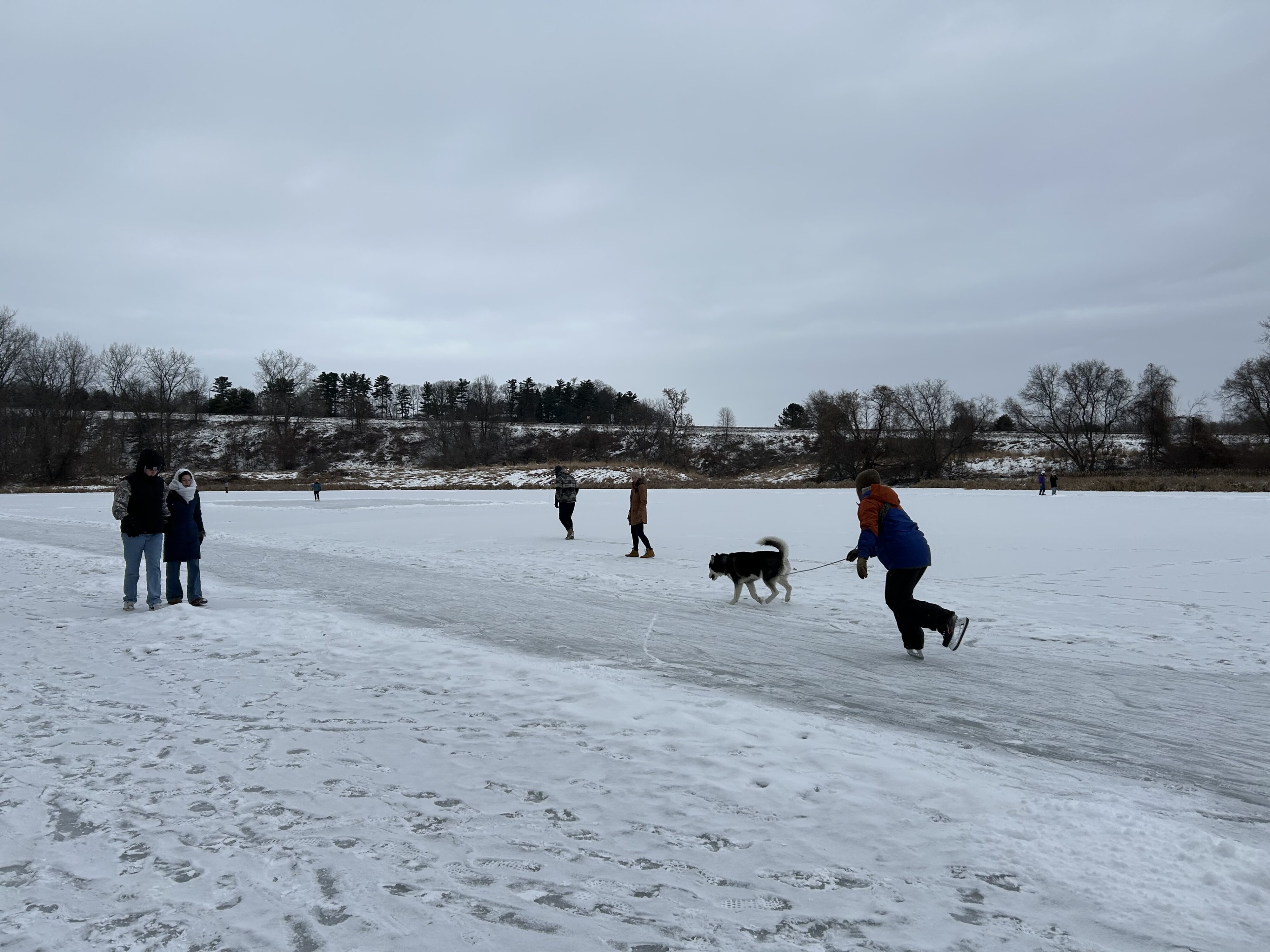
A skater gets towed along the trail by a dog at Burlington's Arthur Park Sea Caves.
Cecilia Luce

Cecilia Luce
Planet Forward Correspondent | Northwestern University
February 24, 2026
Cecilia Luce
Planet Forward Correspondent | Northwestern University

In Vermont, where freezing temperatures and early sunsets are facts of life during the winter, many people have learned to defy the cold and get outside. But in recent years, outdoor enthusiasts and business owners alike have had to evolve as winters become more unpredictable due to climate change.
Just three years ago, three ice fishermen died after falling through the ice on Lake Champlain in an unseasonably warm February. This year, the lake has completely frozen over for the first time since 2019. The risks due to inconsistent winter weather have forced many Vermonters to adapt. Carl Hall, who considers himself a “skilled woodsman,” is one of those Vermonters.
Born and raised in Vermont, Hall has been ice fishing for more than 25 years. As of Jan. 25, he had already been out on the Connecticut River three times. But Hall faces a unique challenge when it comes to the sport: He’s deaf. This means he’s unable to hear if the ice starts to crack, or if someone around him is in need of help.
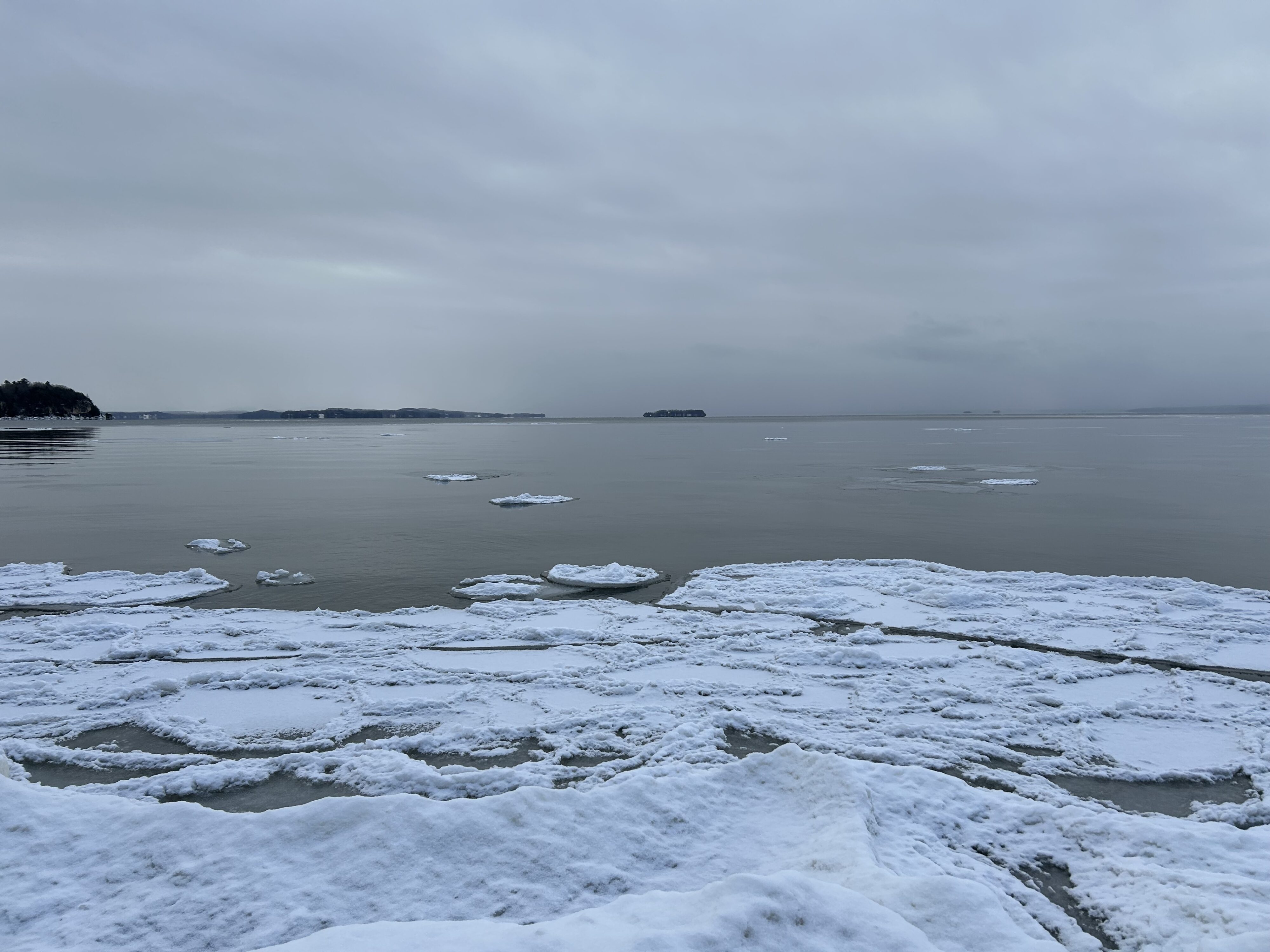
“As soon as it starts to get cold, I rely on my eyes,” he said. “I watch the ice go, I follow Facebook, I have friends that keep me posted about how they feel the thickness of the ice is.”
Hall said he’s sometimes concerned about his safety when temperatures fluctuate and ice melts and refreezes on a regular basis. But thanks to technology, support from his community, and a flexible attitude about adjusting the ice fishing season based on the weather, he has been able to continue the activity he loves.
Hall said that adapting to climate change as an ice fisher means “staying in tune” to conditions and taking advantage of wintry weather whenever it may occur.
Kylie Taylor, the resort experience manager at Lake Morey Resort in Fairlee, Vermont, has a similar attitude. The resort is home to the longest wild ice skating trail in the U.S., sitting at close to four miles this year. The trail is a winter institution in Vermont, and hosts thousands of visitors per weekend, according to Taylor. For comparison, the population of Fairlee is only 988.
Taylor said that the seasonal longevity of the resort’s ice skating trail is “hit or miss.”
“There are previous years where we’ve had to cancel our hockey tournaments because there wasn’t enough ice,” she said.
In order for the trail to be maintained, the ice on the lake has to be four to six inches thick. This year, as of Feb. 11, she estimated the ice to be 14 to 16 inches thick.
Taylor said that the biggest climate-related change she has observed is that Lake Morey freezes and melts at different times from year to year. However, since safety is considered on a daily basis, that hasn’t proved to be a problem in terms of attracting visitors. Even if the trail has to be closed due to mid-winter warm weather, she said, it’s likely that it will re-freeze again and be good as new.
The situation is similar at the Arthur Park Sea Caves in Burlington, Vermont. The sea caves are only accessible when the surrounding marsh is frozen over, allowing visitors to skate right up to the entrance and explore. Dan Cahill, Burlington’s city land steward, said there were more than 15 inches of ice to skate on as of Feb. 11.
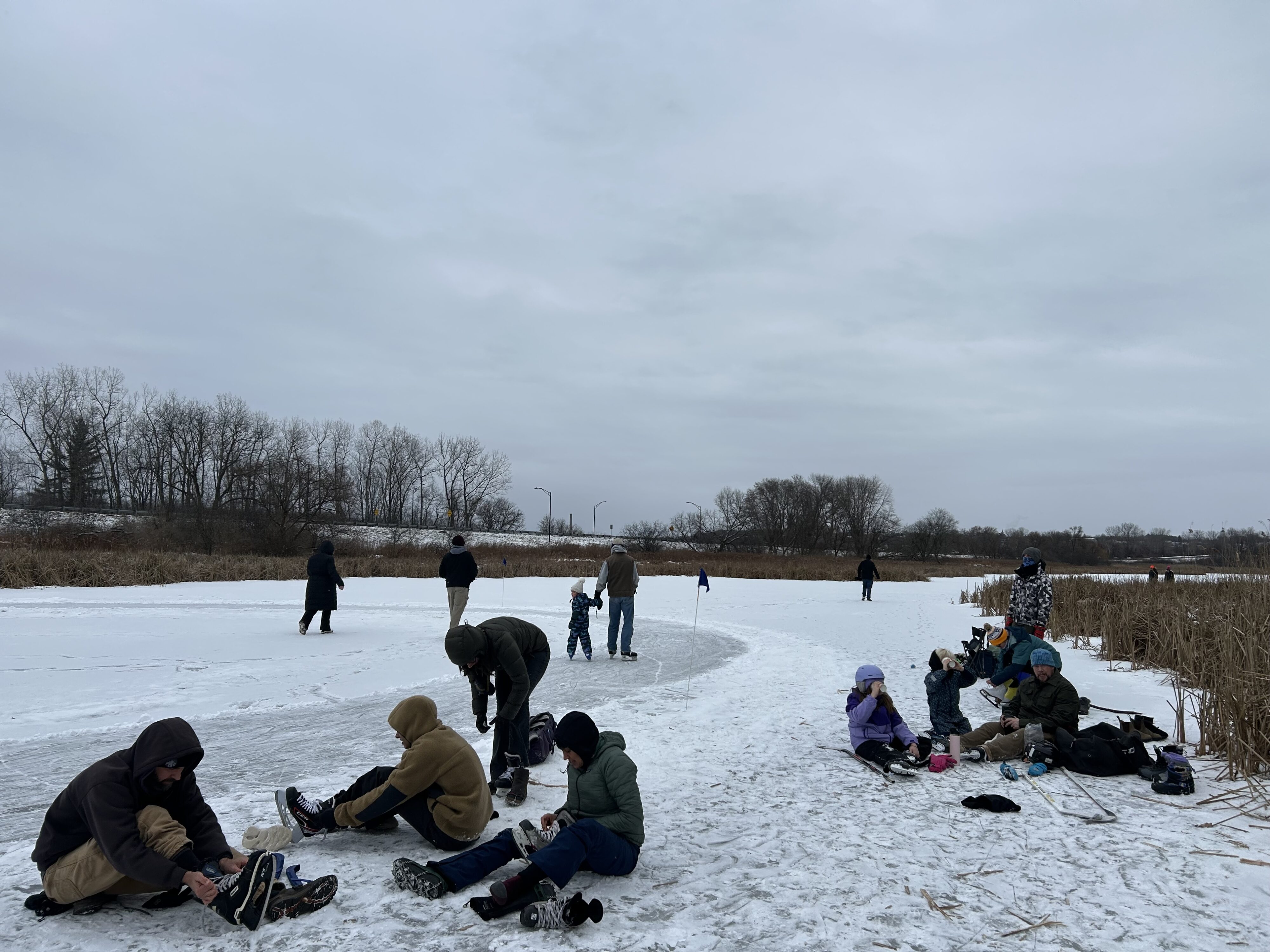
“Next year if we get a tenth of the amount of skating days, we wouldn’t be surprised,” Cahill said, adding that “wintry winters feel like borrowed time.”
Residents of Burlington’s North End started maintaining the Sea Caves for ice skating during the Covid pandemic in 2020, Cahill said, and it became so popular that there are now 500 to 1,000 visits on any given weekend.
Cahill said visitors enjoy pickup hockey games, figure skating, or just exploring the caves. He said he recently took his team out to the Sea Caves to relax after a long week, where they built a snow sculpture together and even caught a glimpse of a heron going in and out of the caves.
Cahill said that in the winter, having accessible outdoor opportunities is important for mental health improvement. Despite winter weather becoming more irregular, his conservation work in Burlington has had a focus on “squeezing as much as [he] can from the seasons.”
Taylor agreed: She said that she hopes the tradition of skating on Lake Morey can persevere because of the joy it brings to visitors.
“I scroll on TikTok, and there’s all these TikToks of people skating on Lake Morey, and that person has thousands and thousands of followers,” Taylor said. “That aspect’s pretty cool.”
Cahill said that in the winter, planning outdoor events can be difficult when weather is unpredictable and it’s not uncommon for a snow-themed occasion to fall on a day with no snow. However, he said that makes it even more critical to employ “DIY-grassroots-energy” and spontaneity in terms of planning events.
“No matter what, you need joy. You need celebration. You need community,” Cahill said. Snow in the forecast? “Let’s throw a festival.”

Planet Forward Editorial Assistant | George Washington University


Editorial Staff


Smith College
A project of

in collaboration with