

 All Topics












Teesside’s industrial frontier lies on the periphery of the shoreline.
Gordon Williams/Unsplash

Jey Draper
Planet Forward Correspondent | Teesside University
November 10, 2025
Gordon Williams/Unsplash
Planet Forward Correspondent | Teesside University

Let’s take a look at three interconnected initiatives across Northern England, all tasked with trapping and transporting carbon emissions permanently underground.
Enter Teesside, a north-eastern British community shadowed by a history of steelwork manufacturing, entrenched cycles of poverty, and pollutants dominating the skies, where carbon capture and storage (CCS) projects are being developed.
These efforts emerge as political consensus over the UK’s net-zero target for 2050 begins to fragment. The policy framework, originally devised in line with the 2015 Paris Climate Agreement to balance the nation’s carbon footprint, has been thrown into question by domestic politicians over its feasibility.
As a result, regions like Teesside look to bring net-zero back on track.

The initial scheme central to these net-zero efforts is the East Coast Cluster, an emerging decarbonization initiative designed to link the manufacturing hubs of Teesside and the Humber – an estuary region in northeast England – through a UK-first carbon capture, utilization, and storage (CCUS) network.
“CCUS includes all the steps of carbon capture and storage plus a utilization component that means some or all of the captured CO2 is used instead of, or before, being stored,” said Faizan Ahmad, Ph.D., a professor and lead researcher in hydrogen and clean-energy innovations at the Centre of Sustainable Engineering for Teesside University. This concept, he stated, can involve industrial uses such as producing man-made fuels, as well as biological processes like food production and biofuel generation.
Dawid Hanak, a professor in the decarbonization industry at Teesside University’s Net Zero Industry Innovation Centre – a £16 million [$21 million] regional hub recognized for its cutting-edge research, knowledge exchange and consultancy services in the realm of climate activism, and for these three initiatives – has outlined the East Coast Cluster as part of a much broader developmental process materializing on Tees Valley soil.
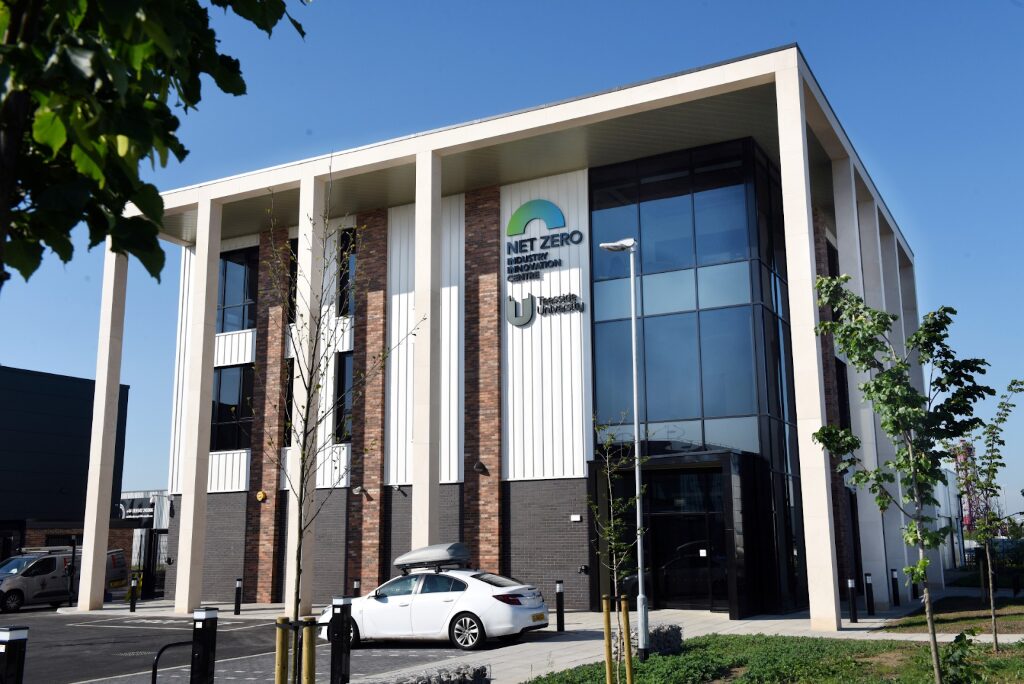
The once-overlooked district of Teesside is beginning to attract green investment into its network of local enterprises, alongside complementary plans for hotels, eco-friendly trail links and retail parks. Together, these initiatives offer fresh opportunities to families and businesses across a longstanding marginalized community, which Hanak labelled as “one of the main benefits from the societal perspective.”
However, the practical rollout of sequestration networks, like the East Coast Cluster, are not always plain sailing, and faces various roadblocks on the road to implementation. Ahmad discussed this, highlighting premature technological readiness, scalability constraints, and even public perception as some of the core issues involved.
“Communities may be concerned about safety, environmental impact, or prolonging fossil fuel use,” said Ahmad, in reference to the worries people may have regarding the sustainability of carbon capture.
He emphasized, however, that this can be rectified through publicly accessible environmental reviews, and by engaging communities through consultation, education campaigns, and local benefits sharing such as with Teesside’s wider transformation.
To support the East Coast Cluster project, a joint venture known as the Northern Endurance Partnership (NEP) will develop the infrastructure needed to transport and sequester carbon emissions from industrial sites across the east-coast region.
Founded in 2020, the NEP is a collaboration backed by European energy giants Equinor, TotalEnergies, and BP, aiming to tackle large-scale carbon capture. The project’s endeavors will commence in 2028 and include constructing onshore carbon-processing facilities, laying 145km of offshore pipeline in the nearby North Sea, and ultimately managing storage for 1 billion tons of CO2.
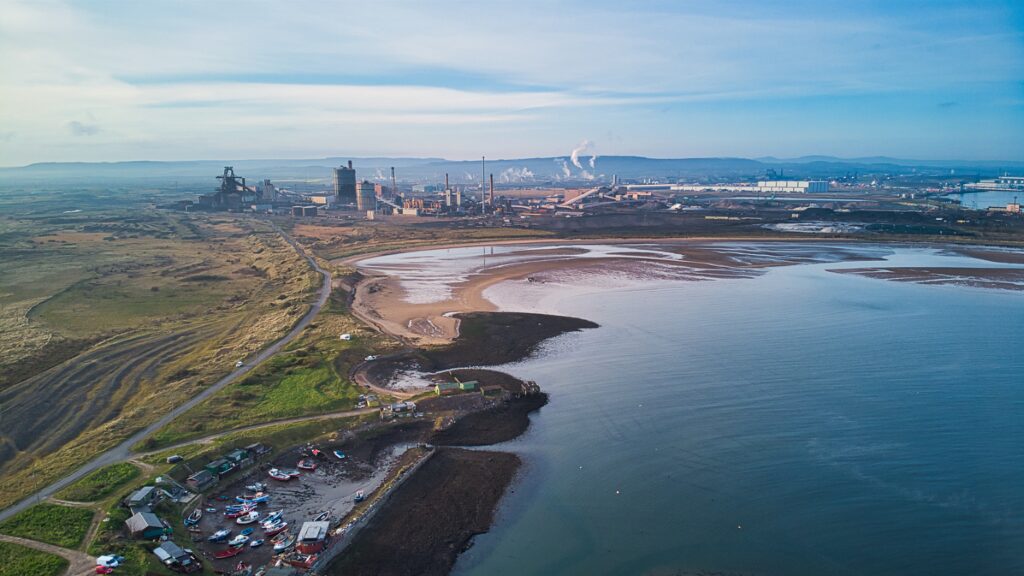
“The carbon dioxide will be permanently and safely stored in the Endurance aquifer, a large, well-characterized reservoir,” said a spokesperson for the NEP. This infrastructure, they added, will be “crucial to achieving net zero in the UK’s most carbon intensive industrial regions.”
Despite these ambitions, the set-up of this sequestration framework has proved challenging, with the “coordination of complex project timings and investment decisions across difficult industries” hampering development, stated the spokesperson. However, they stressed that the UK’s geographical positioning with access to industrial hubs and “world-class offshore storage potential” has helped alleviate some of these obstacles.
Hanak furthered this discussion into progress, outlining how international political affairs have hindered momentum in the field of carbon capture.
“We have good links with the US and researchers over there. They’ve been quite badly affected by cuts in grants, unfortunately, because the [Trump] administration decided not to support net zero anymore,” said Hanak. “So that naturally has [an] impact on what’s going on in Europe because everyone is looking at what’s going on over the pond.”
“So I think we lost a little bit of momentum now, but just need to carry on,” he added.
The third initiative integral to Teesside’s net-zero grid is the proposed Net Zero Teesside (NZT) Power facility, which aims to be the first gas-fired power station with carbon capture and storage, while connecting to the NEP pipeline.
To be constructed in the Redcar and Cleveland district, the plant will adopt a first-generation carbon removal technology, featuring a modernized gas turbine and specialized chemicals known as amines to remove 2 million tons of carbon dioxide from the atmosphere each year.
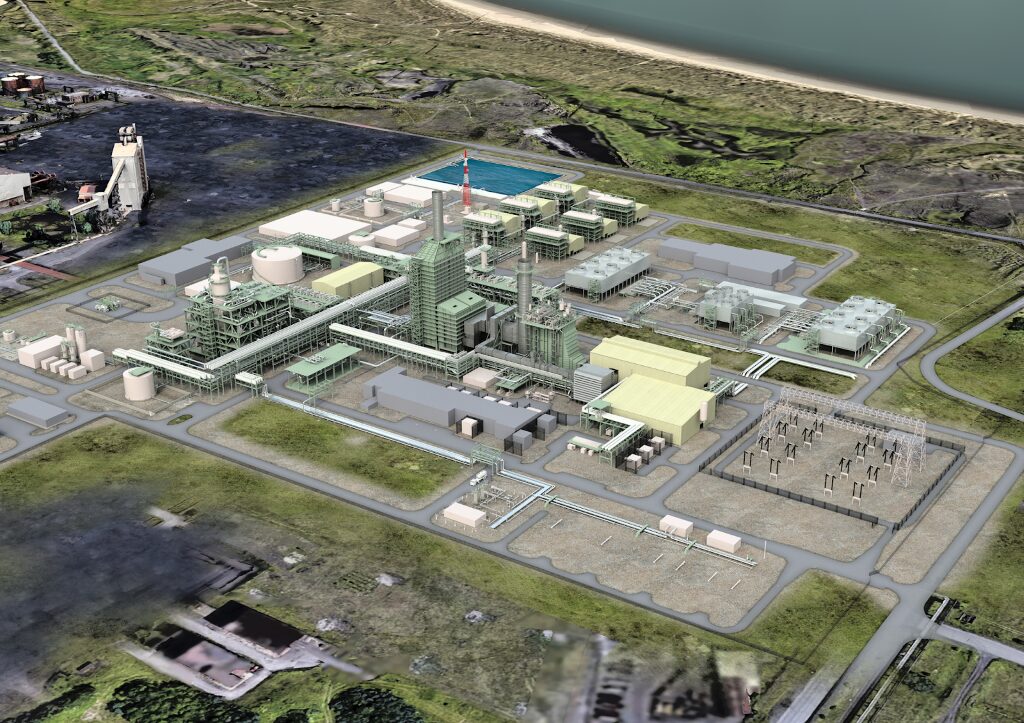
The site also claims it will generate enough electricity to light up approximately 1 million UK homes and create 1,000 employment opportunities once operations commence in 2028.
These environmental and financial gains are a phenomenon which Hanak outlined will “demonstrate to investors that carbon capture technology can work in an economically viable way,” a concept that could improve the cost-effectiveness and overall future of decarbonisation initiatives across both Teesside and the UK as a whole.
Despite this optimism, Hanak noted that first-generation sequestration systems, dependent on amines, are not perfect, with financial and efficiency flaws. As a result, he and his team are exploring next-generation CCS technologies, with particular focus on porous materials known as solid sorbents, at high temperatures.
By overcoming financial, political and public challenges, CO2 capture in Teesside can sustain a greener future, delivering real benefits to local citizens whilst steering the nation’s 2050 net zero target back on due course. A spokesperson for NZT Power emphasised this, stressing that the deployment and operation of their emerging facility should catalyse a movement in the growth of similar technologies locally.
Hanak highlighted this is already coming to fruition, with interest for carbon capture projects arising from sectors that would not usually consider such an approach.
“So we did work with Quorn [a meat-free food company] for example, to see whether they can do carbon capture, even though they are at 15,000 tons [of CO2 emissions] a year,” he said. “We are having these discussions with industry and they seem keen on doing carbon capture if they can connect to the [NEP] pipeline.”
The blueprints of the East Coast Cluster, Northern Endurance Partnership, and Net Zero Teesside Power are therefore more than plans – they are a vision. Teesside is on the brink of becoming the “heart of the green industrial revolution,” Hanak said.
Once the hub of smog and steel manufacturing, coined ‘the British Engine room,’ the humble community of Tees Valley has the chance to become Britain’s eco-epicenter, offering jobs, regenerative development and societal prosperity.

Planet Forward Correspondent | University of Navarra

Planet Forward Correspondent | University of Connecticut


Planet Forward Editorial Assistant | George Washington University

A project of

in collaboration with