Essay | Ethics of distance: Designing signs that promote respect for wildlife
A scratch-art bull elk, head raised in mid-bugle, created by an Estes Park High School student and featured in the upcoming Spirit of the Elk virtual gallery, capturing the majesty of wildlife and the connection between humans and nature.
Standing in the art room of Estes Park High School, it’s easy to forget where you are. Through the windows, the Rocky Mountains rise, dusted with snow, while outside by the football fields, visitors can catch glimpses of Estes Lake and the golf course — favorite haunts of the local elk. Inside, students are absorbed in their elk projects, preparing submissions for Spirit of the Elk, a virtual gallery that seeks to capture not just the animals’ forms, but their quiet presence.
Across the street, the Environmental Club, led by Ravi Davis, is busy preparing four new signs to complement those already installed throughout Estes Park. The club is currently running an art project to design wildlife and flora illustrations for the upcoming signs, which will eventually include QR codes linked to the Respect the Rut phenology journal prompts. These prompts are designed to encourage visitors to pause, reflect, and engage with the elk and their environment — not as spectators, but as participants in a shared landscape.
This is a different kind of wildlife initiative. Rather than asking how to keep people away from elk, the guiding question has become: How can visitors be invited into a relationship that respects the animals they come to see?
By combining art, student engagement, and thoughtful signage, Respect the Rut is exploring whether ethical wildlife viewing can be taught through creativity, reflection, and community participation rather than simple rules or warnings.
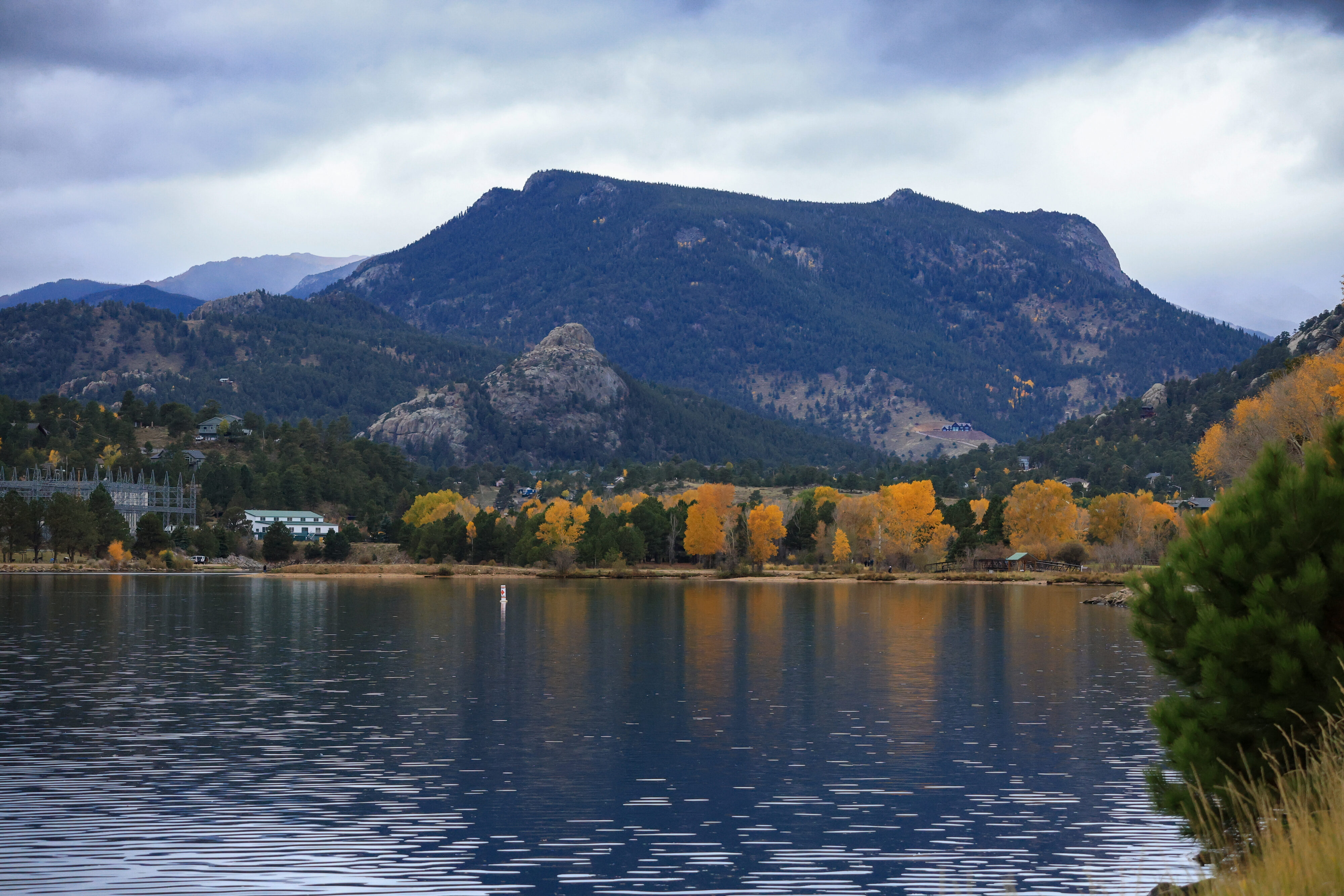
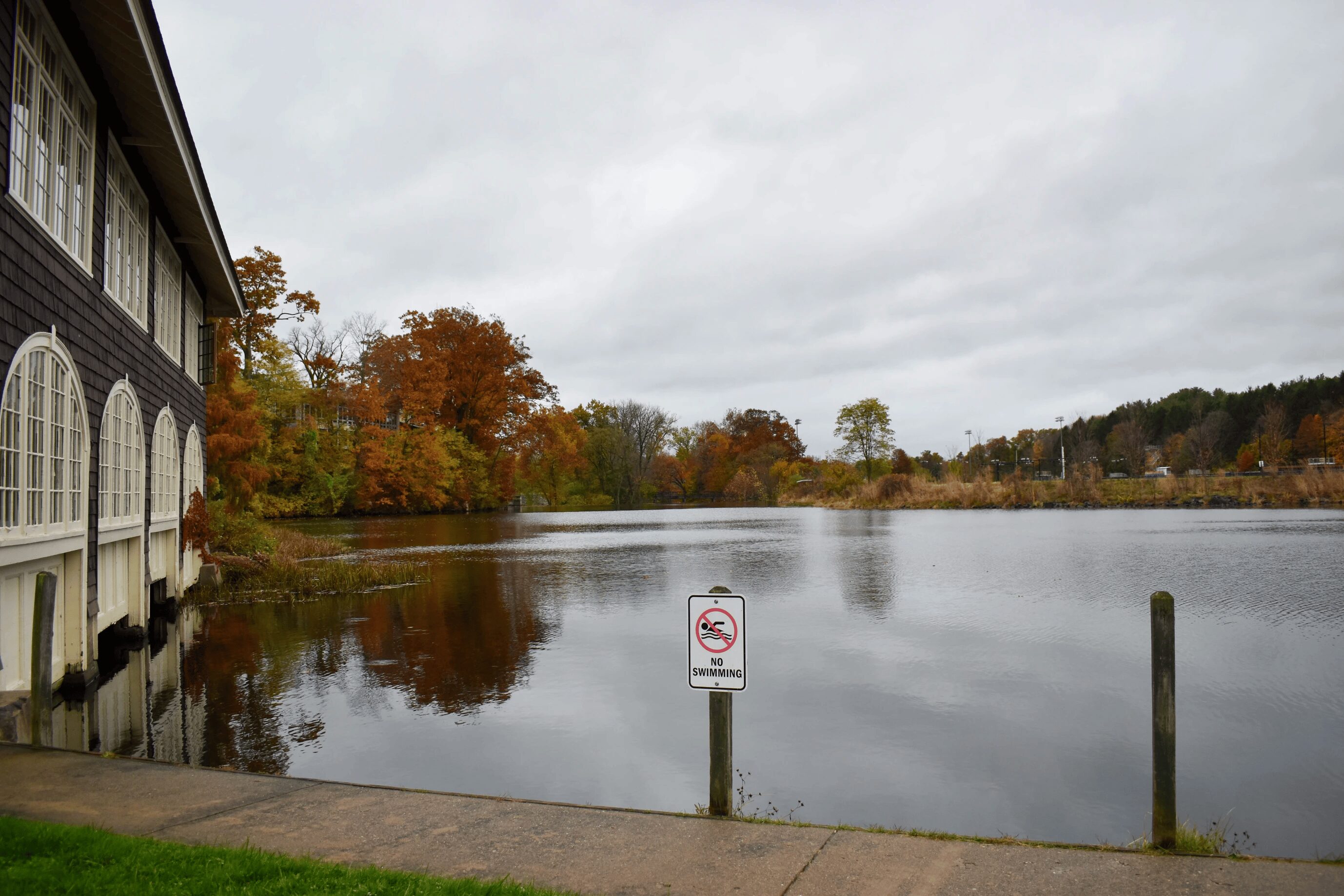
Estes Lake with the town beyond, a landscape where wildlife, community, and tourism intersect — and where initiatives like Respect the Rut guide human-wildlife interactions. (Ashley Glasco)
Why people get too close
During the rut, crowds often press closer than rules allow. Curiosity, awe, or the lure of the perfect photograph drives them. Psychologists have long studied this “attitude-behavior gap”: We may care about wildlife, yet act in ways that could harm it.
Susan Clayton, Ph.D., a conservation psychologist and professor at Wooster University, explains.
“Some of the reasons for an inconsistency between attitudes and behavior are: a person does not know about the behavior that will protect wildlife; they may not understand that their behavior is harmful, … or there are strong social norms encouraging the harmful behavior.”
Many visitors simply don’t realize the consequences of their actions, or they’re following social cues that reward proximity.
“Many visitors want to get a good photo of wildlife, and a lot of incidents involve people getting too close for that reason,” said Sara Melena, a natural resources educator at the National Park Service.
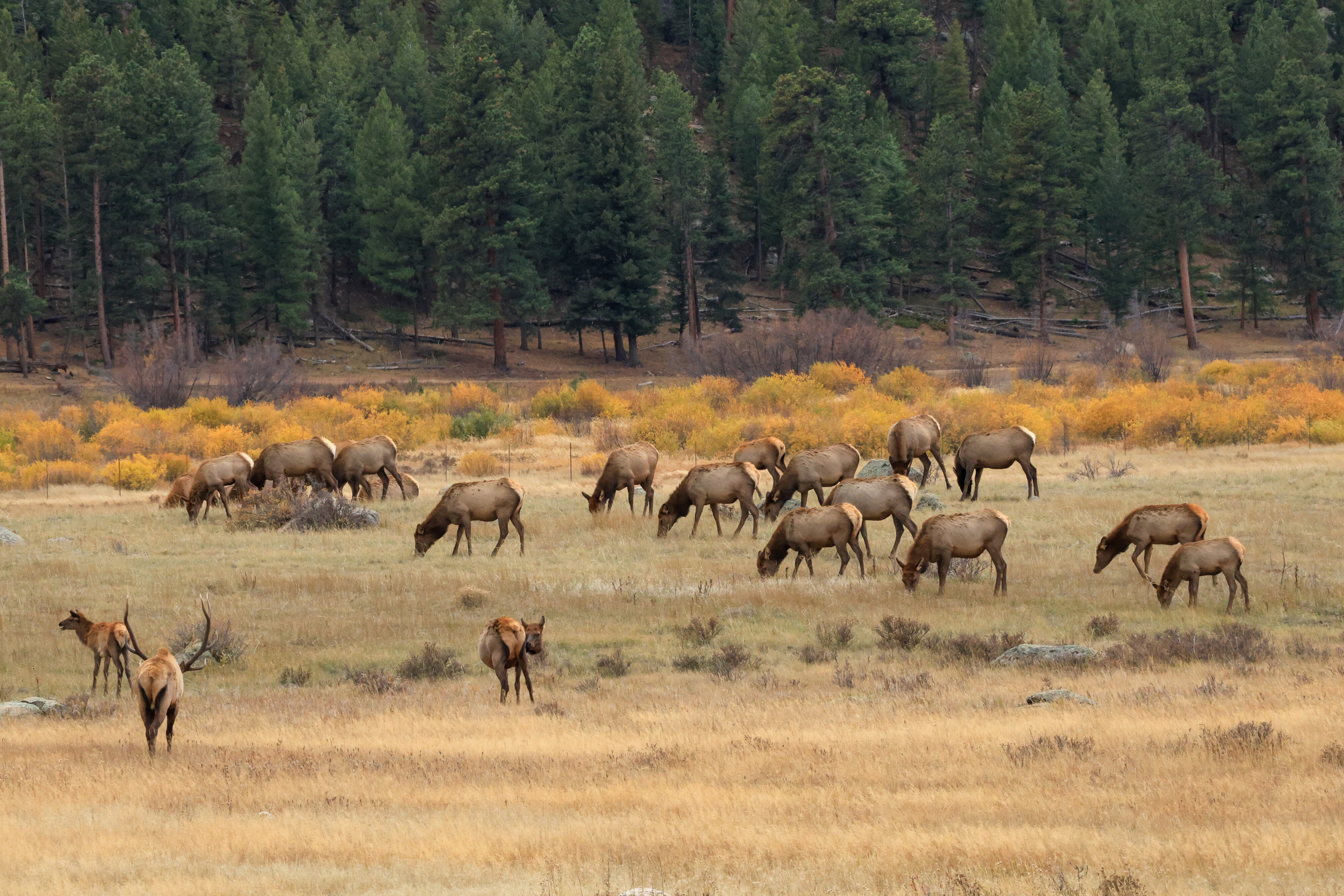
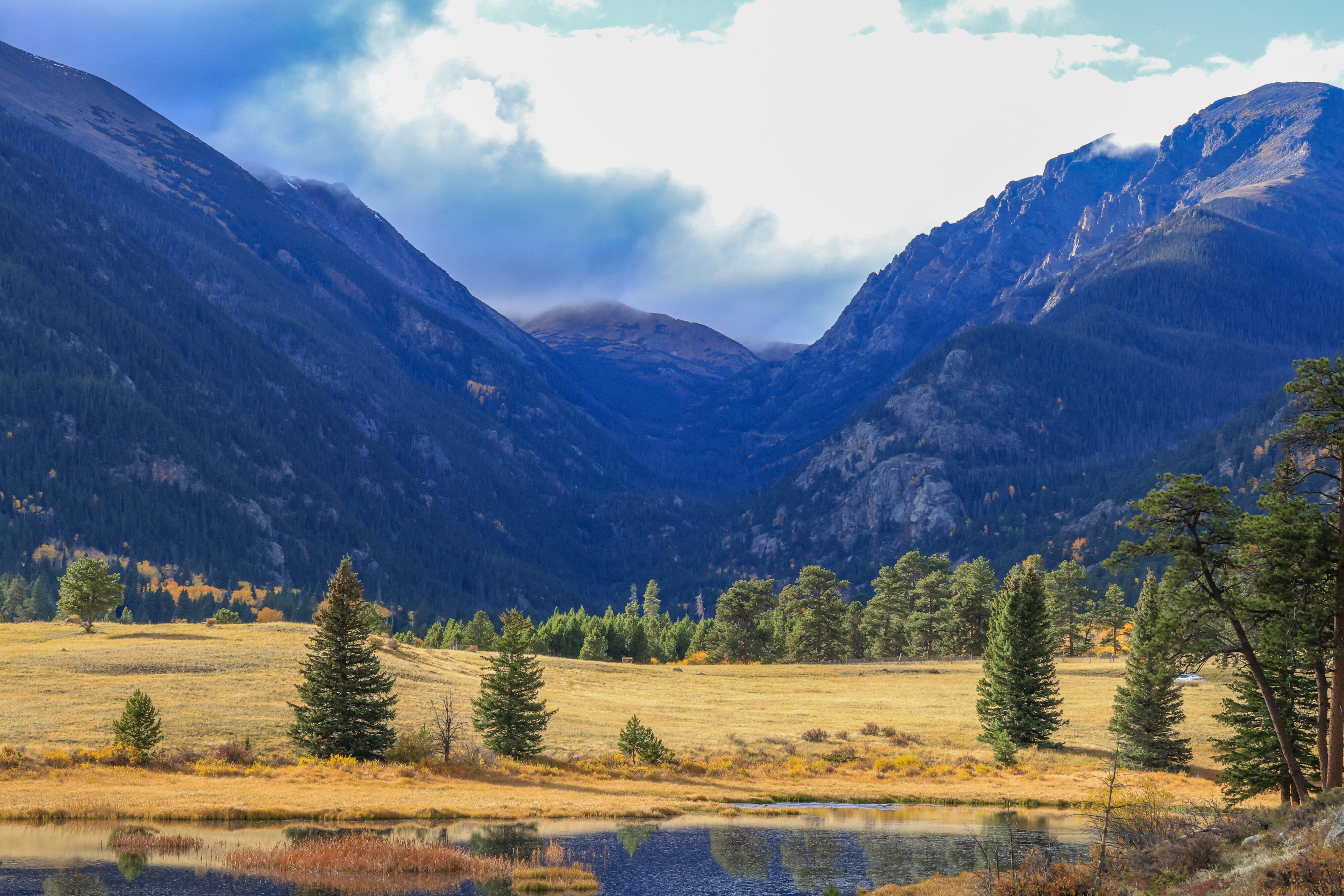
A bull elk and his cows graze in Moraine Park Meadow, Rocky Mountain National Park, illustrating the seasonal rhythms and social structure that visitors hope to observe responsibly. (Ashley Glasco)
Even when rules are clear, simple instruction isn’t enough. Clayton points out that ethical messaging works best when it connects to people’s values rather than mere compliance. “Remind people of their care for the animal, and make them feel like responsible stewards,” she said.
This insight underpins the Respect the Rut approach: Instead of warning signs and fences, the focus is on understanding and empathy.
Rethinking signs and distance
Traditional wildlife signs tend to rely on command. “Do not approach.” “Stay 75 feet away.” “Aggressive elk.” The message is clear — but often stripped of context. Visitors are told what not to do, but rarely why it matters beyond personal safety.
The Respect the Rut initiative asks a different question: What if distance could be taught as care rather than control?
Across town, student-designed signs are being developed to complement existing signage throughout Estes Park. The artwork highlights local wildlife and flora, reframing the landscape as something living and interconnected rather than simply scenic. These signs are not meant to replace regulations, but to deepen understanding — to shift the tone from warning to stewardship.
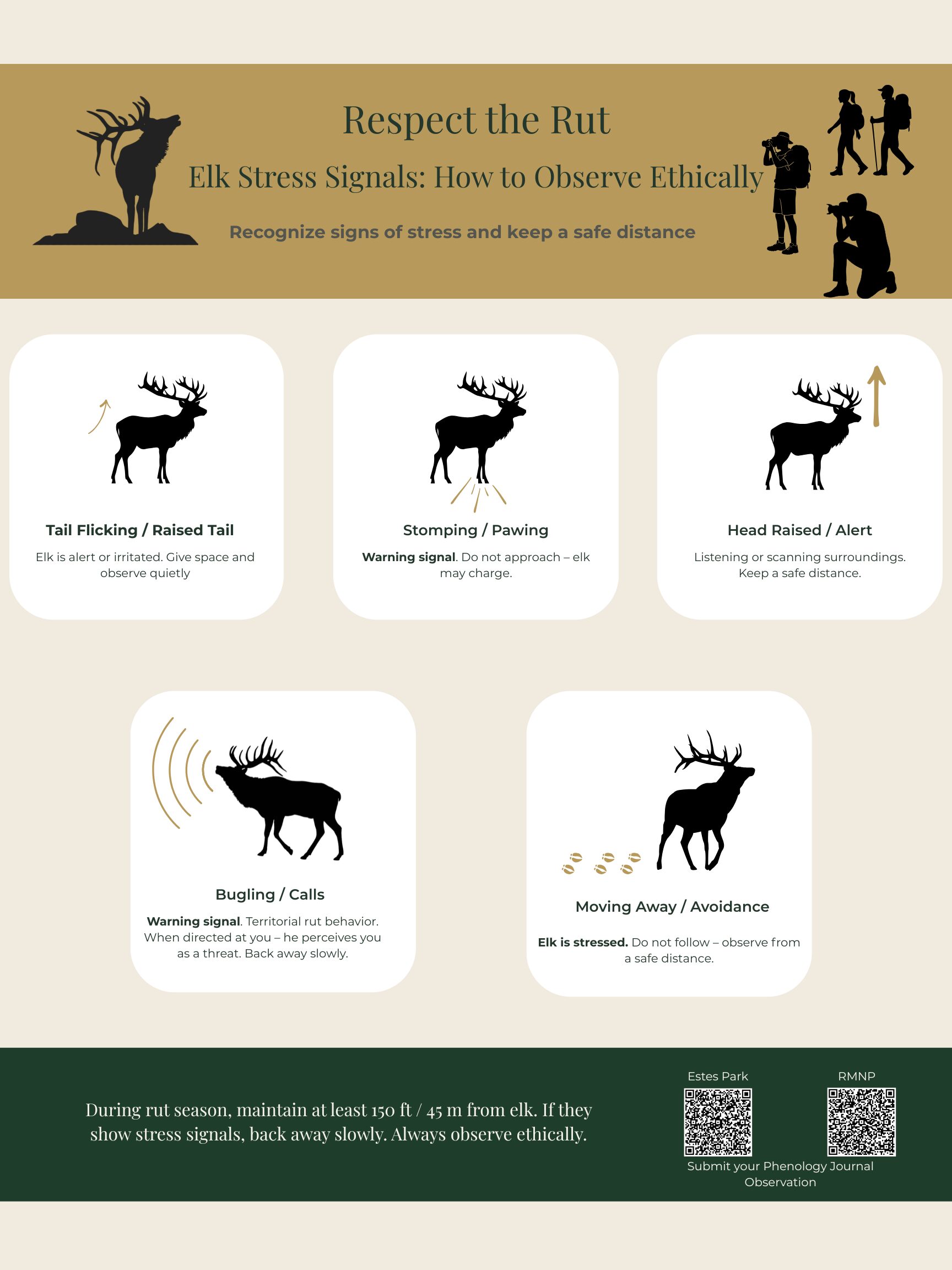
Beyond physical signage, Respect the Rut developed a downloadable infographic that serves as a shareable educational tool. Available online, it illustrates elk stress signals — ears pinned back, head raised, pawing — helping visitors recognize when an animal is uncomfortable rather than aggressive. In the corner, QR codes link to additional resources and to phenology journal prompts for both Estes Park and Rocky Mountain National Park.
The phenology prompts are designed to meet visitors where they are. Instead of centering the encounter on proximity, they offer reflection questions: What behaviors do you notice? How does the season shape movement? What signs of stress are visible? Visitors can contribute their observations to a shared community map, turning a moment of viewing into a moment of participation. The result serves both scientific tracking and personal reflection.
Research suggests this kind of approach can work. Katie Abrams, Ph.D., who studies park communication strategies at Colorado State University, emphasizes aligning safety messages with visitor motivations rather than working against them.
“We wanted to support what they wanted to do, which is get good photos of wildlife … giving them tips on how to take good photos while out of safe distance,” she said.
In a study of a wildlife-viewing campaign tested in four U.S. national parks, visitors were observed standing at safer distances in three of the parks after messages were reframed around visitor goals and behavior alternatives.
The goal is not to eliminate curiosity, but to guide it. Distance becomes less about restriction and more about relationship — a way of ensuring that wildlife can continue to engage in their natural behaviors, unbothered and unharmed.
Youth leading ethical engagement
The middle and high school projects are more than decoration; they are a form of community stewardship. Students create poetry, artwork, and signs that transform the area into a living classroom. Visitors can scan a QR code to contribute to a phenology journal, prompting reflection on the land, the elk, and the ecological rhythms of Estes Park.
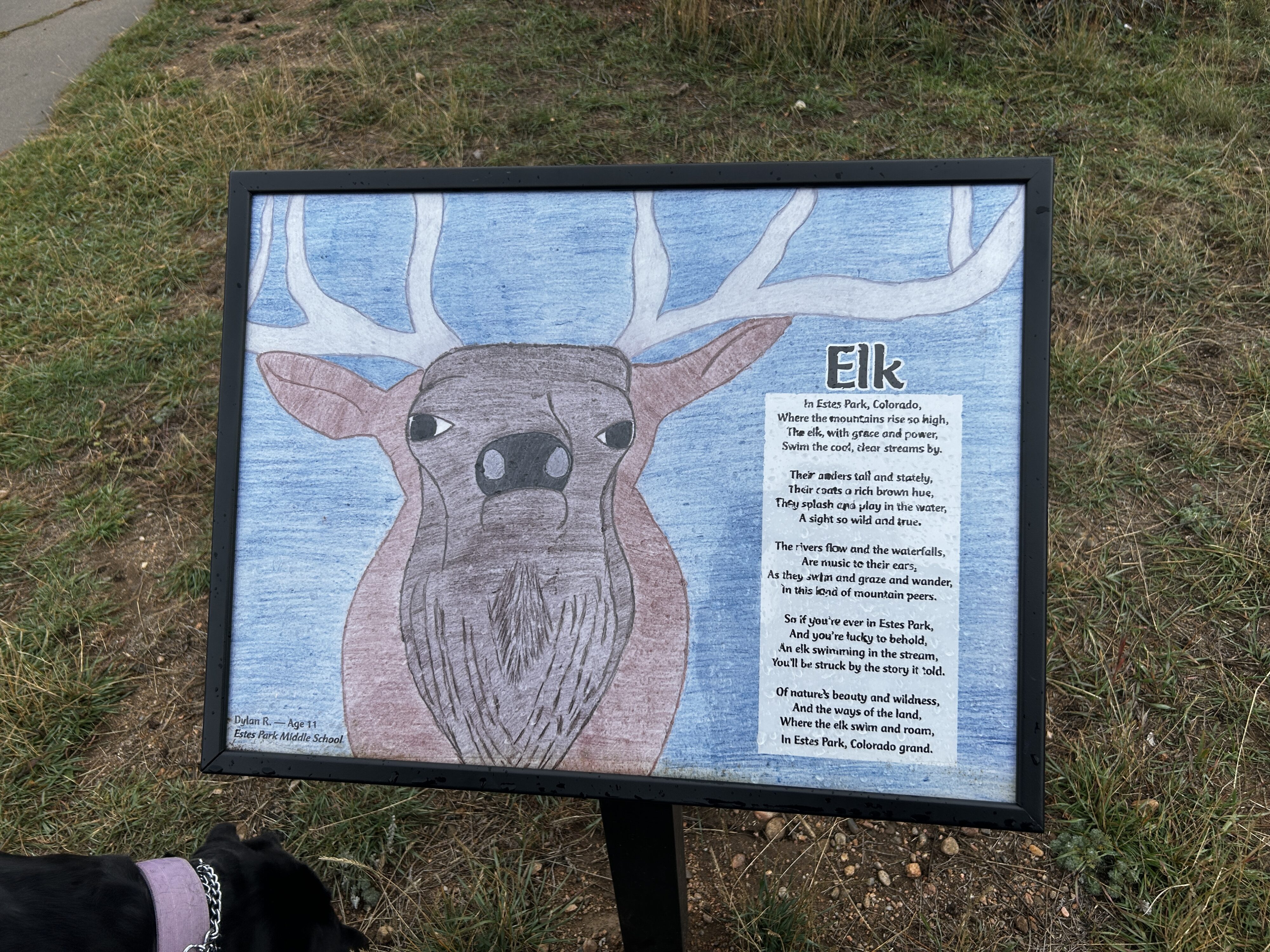
One of the Estes Park Middle School Environmental Club’s signs, featuring student poetry and an elk illustration. The club is creating artwork and signage to encourage ethical wildlife viewing in the community. (Ashley Glasco)
As Clayton notes, messaging is most effective when people internalize it: As a wildlife lover, you know how important it is to give the animal their space….
By involving students, these signs help establish social norms, as seeing others practice and promote respectful viewing encourages visitors to do the same. The Environmental Club’s work shows that ethical behavior doesn’t have to be abstract or punitive; it can be creative, engaging, and deeply human.
Shaping culture and norms
Social media and photography culture play a major role in shaping how people interact with wildlife. Close-up selfies may garner likes, but campaigns such as Respect the Rut aim to reframe what gets attention. Encouraging visitors to share safe-distance photos — combined with interpretive storytelling about elk behavior — subtly shifts social expectations.
Abrams and her team have found that aligning messages with visitors’ goals, such as taking a beautiful photo, makes ethical behavior more attainable.
“Encouraging visitors to share safe-distance photos is one way to make respectful viewing the social norm,” they wrote in their study.
The result is a culture where care and curiosity coexist, rather than conflict.
Looking ahead
The Respect the Rut initiative offers lessons beyond elk. By engaging visitors, students, and community members in a shared ethic, it shows how humans can inhabit landscapes responsibly. Phenology journals, student art, and interactive signage turn parks into spaces of reflection, learning, and ethical participation.
A line from a student’s poem lingers:
“So if you’re ever in Estes Park, and you’re lucky to behold an elk swimming in the stream, you’ll be struck by the story it told. Of nature’s beauty and wildness, and the ways of the land, where the elk swim and roam, in Estes Park, Colorado grand.”
In Estes Park, distance is not just a rule — it is a gesture of empathy, quietly cultivated through curiosity, creativity, and reflection. By combining values-based messaging, community engagement, and creative expression, respectful wildlife viewing becomes a shared value, not a restriction.
A serene lake nestled in the Rockies, offering a glimpse of the habitats where elk roam and visitors experience the park’s natural beauty. (Ashley Glasco)
This website uses cookies to provide you with an improved and personalized experience. By using this site you agree to our use of cookies. Please read our cookies policy for more information on the cookies we use and how to delete or block them.


 All Topics