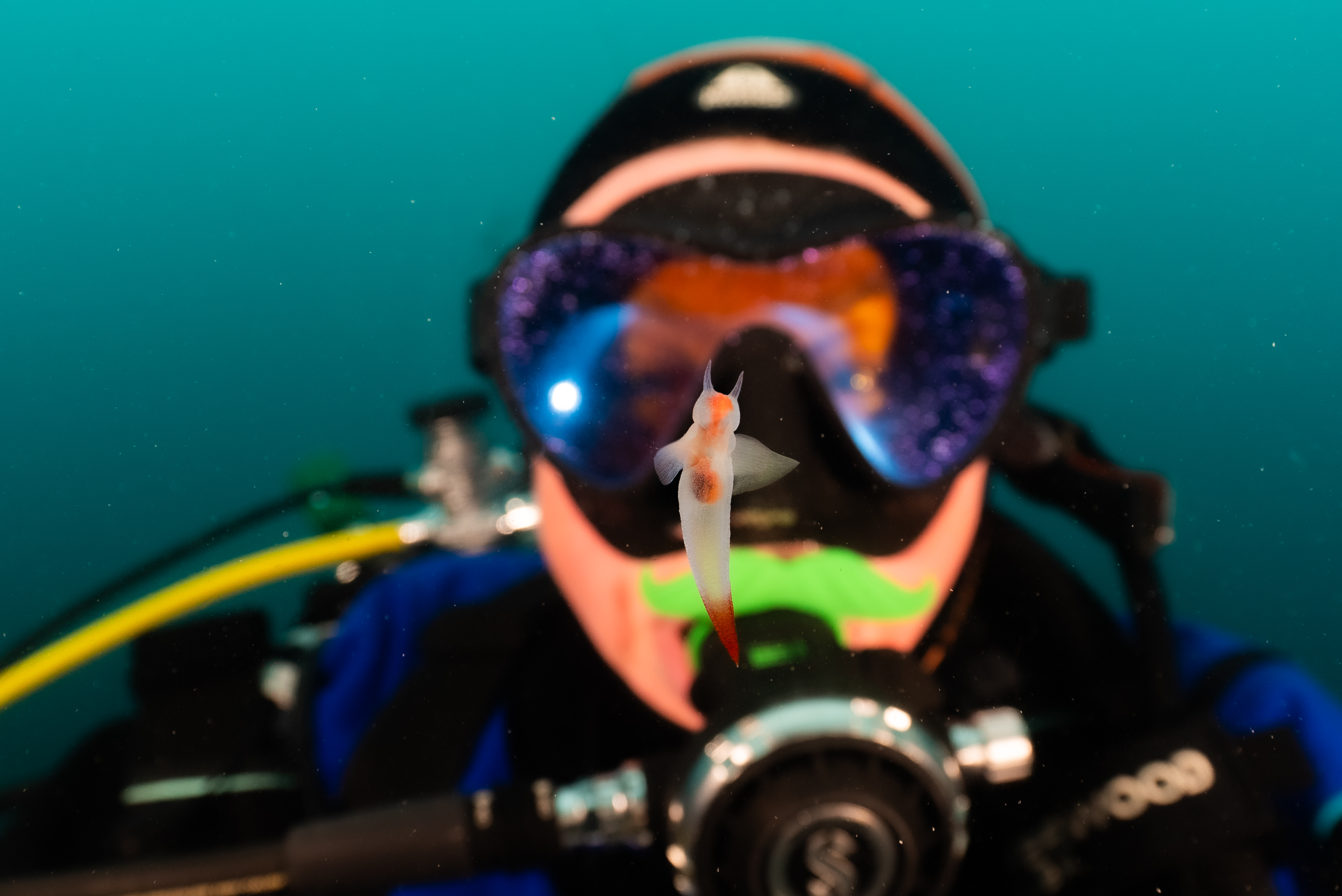
The sea angel is a carnivorous relative of the delicate sea butterfly. Both marine gastropods suffer when ocean acidification and warming waters coincide.
A refreshing dip just a few meters deep in the Arctic ocean will reveal a story of love and loss between creatures who have been in each other’s breadth for millennia.
By refreshing, I mean 28 to 35 degree Fahrenheit water with sub-zero liquid ice that would leave your toes numb in seconds without a thick neoprene drysuit. By love, I mean the process of reproduction in which ironically deemed “heavenly” beings fuse their bodies together in a four-hour visceral embrace, turning their internal organs inside out to cross-fertilize, often leaving permanent physical scars. And by loss, I mean an ambush so brutal it shatters the illusion of delicate beauty. When the predator strikes, its seemingly angelic head splits completely open. Six tentacle-like hooks, made of a hard exoskeleton material called chitin, shoot outward, violently latching onto its prey’s shell before specialized teeth rip the living tissue outward, swallowing it whole.
I’m referring to the sea angel (Clione limacina) and its lifelong, exclusive victim, the sea butterfly (Limacina helicina). A pair of evolutionary companions, both only a few centimeters long, who date back some 130 million years to the Cretaceous period. Despite their ethereal names, both are marine gastropods, a group of soft-bodied mollusks that includes snails and slugs. The sea butterfly is a delicate, herbivorous gastropod, while the sea angel is a carnivorous relative that feeds on it.
But today, this 130-million-year-old dance is being interrupted by an invisible threat: ocean acidification.
Acidification’s dangers
As atmospheric carbon dioxide increases, the world’s oceans absorb the excess. Cold polar waters absorb CO2 much faster than warm tropical seas, causing a rapid shift in the water’s chemistry. For the sea butterfly, this change is apocalyptic. Its fragile shell is made of aragonite, a highly soluble form of calcium carbonate. As the ocean becomes more acidic, the water turns corrosive, dissolving the sea butterflies’ protective homes while they are still alive. Field research from the Arctic and Southern Oceans reveals that more than 78% of sampled sea butterflies already exhibit active shell dissolution, finding that even small scratches in the shell’s outer layer accelerate this damage exponentially.
Furthermore, this chemical shift degrades the foundational prey from the inside out. When ocean acidification coincides with warming waters, the sea butterfly’s fatty acid composition significantly degrades. Even if the snails survive their dissolving shells, they lose essential omega-3s, creating a “nutritional drought” for their hyper-specialized predator, the sea angel, which must now consume far more prey to maintain baseline energy and reproductive success.
Compounding this, shifting thermal zones in northern latitudes are altering the spatial distribution of these creatures, creating a devastating mismatch in timing between plankton blooms and the sea angel’s feeding windows. Without its exclusive, nutritionally viable victim, the sea angel starves.
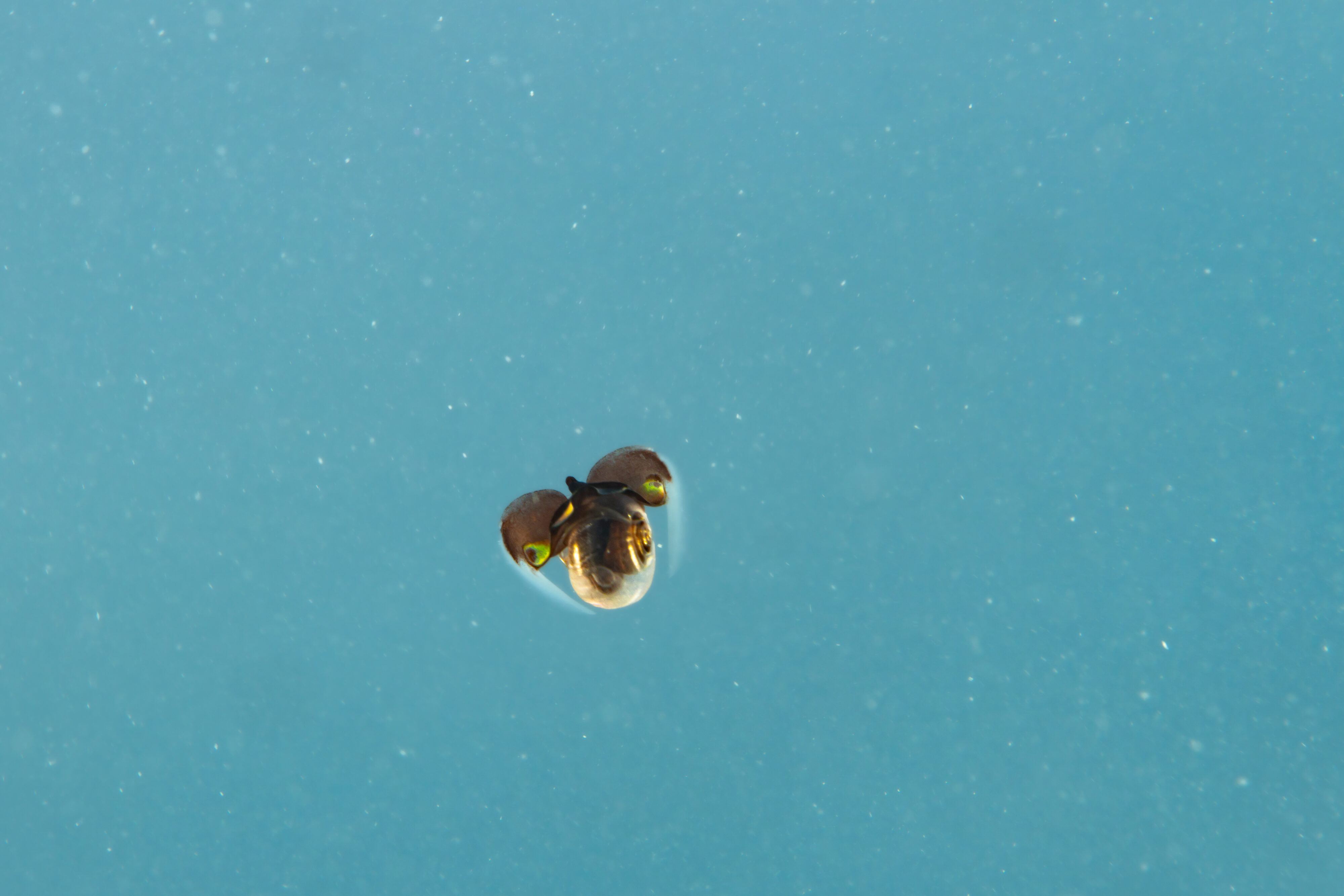
Suspended in a vast, bright blue expanse of polar water, a sea butterfly navigates the currents using its wing-like appendages. (Photo by: Kayvon Malek)
It amounts to a microscopic tragedy on the climate scale, but the echoes of this nutritional deficit are seismic. You might wonder why the fate of a translucent mollusk should matter to someone walking down a street in Des Moines, Iowa or Milwaukee, Wisconsin, thousands of miles from Greenland’s polar ice sheet.
The answer is simply a matter of atmospheric physics amidst our shared planet. The exhaust pipe of a taxi idling in New York City, the heavy industrial sprawl of Beijing, and the gridlocked highways of Los Angeles all release carbon that splits down two destructive paths.
One fraction settles into the Arctic sink. When this atmospheric carbon dioxide is absorbed by cold polar waters, it reacts with the seawater to form carbonic acid. This chemical reaction unleashes a flood of hydrogen ions that bind up free carbonate, effectively stealing the exact chemical building blocks the sea butterfly needs to build and maintain its shell.
In return, the collapse of the sea butterfly, a prime example of a foundational base within the marine food web, threatens the survival of the salmon, cod, and baleen whales that rely on them. Meanwhile, the carbon remaining in the atmosphere traps heat and supercharges the global hydrological cycle, bringing unprecedented droughts, volatile storms, and shifting growing seasons right back to regions in the Midwest.
But to understand this collapse, one must first look past the monumental issues facing the polar landscape.
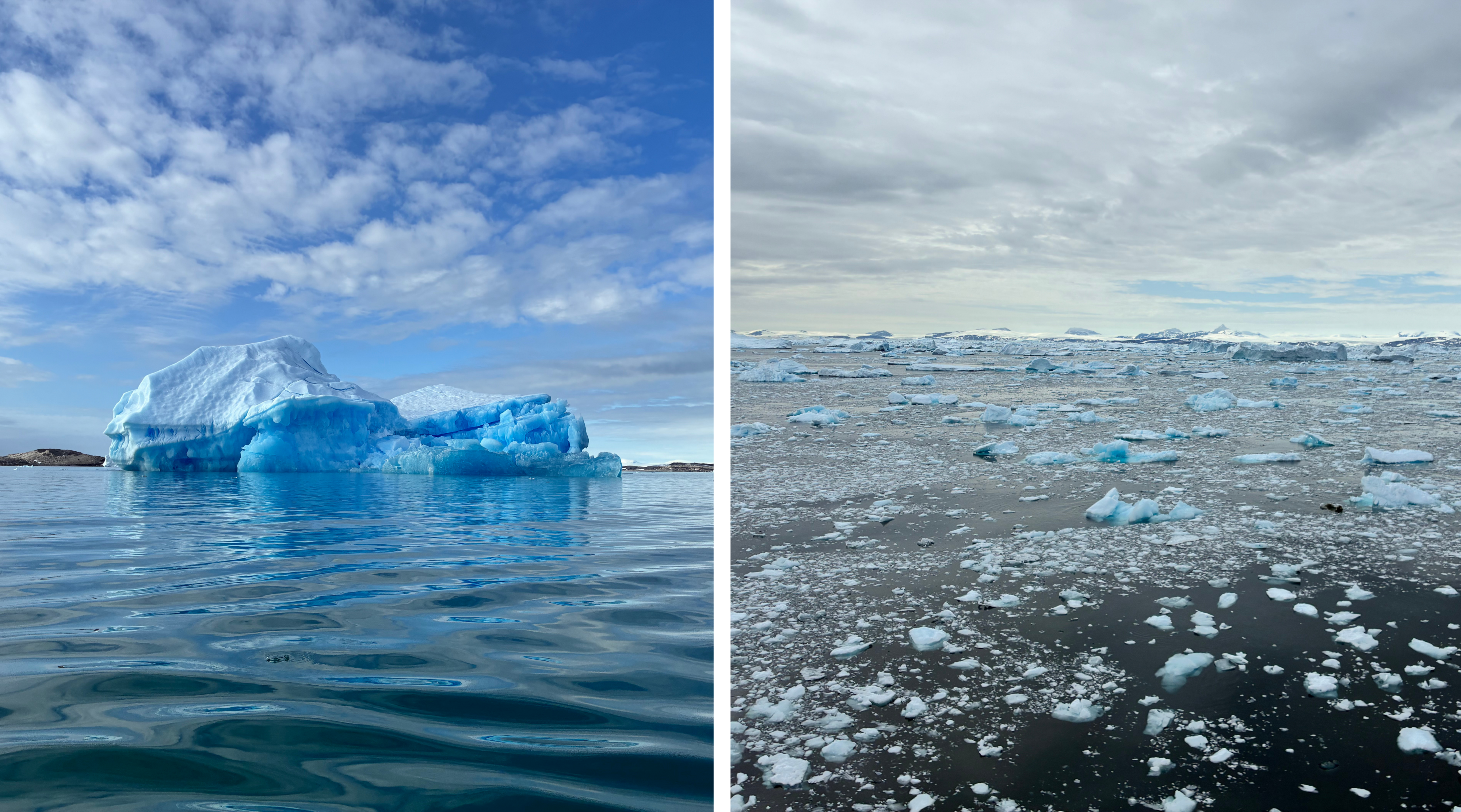
When we think of the Arctic, and for the lucky few who can visit, we are instantly enraptured by the ice. From the edge of a fjord, the surface acts as a fractured veneer of ice floating high above the deep, bathtub-shaped basin. The ancient, floating freshwater is visible in four distinct scales: towering icebergs that dwarf the surrounding landscape; bergy bits, which are car-sized chunks of ice riding a few meters above the water; growlers, hazardous, table-sized lumps hiding just at the surface; and the fragmented, watery slush known as brash ice.
If you stand near the water’s edge and listen closely, the ocean actually fizzes and pops. This acoustic phenomenon, affectionately known as “ice crispies,” is the sound of melting glacial ice releasing highly pressurized air bubbles. These bubbles were trapped by falling snow centuries and thousands of years ago; as the ice dissolves into the sea, it snaps and sizzles, exhaling ancient atmosphere into the contemporary world.
Left: A blue and white iceberg towers above the calm, rippling surface of the Arctic ocean, framed beneath a sky scattered with soft white clouds. Right: An expansive view of dense sea ice stretches across the deep basin of the polar fjord under an overcast sky. (Photos by: Cami Armendariz)
Below the surface
What we might miss amid this towering frozen architecture and crackling water is the biology beneath the surface layer. How do we convey this discrete chapter of life hidden within a marine biome that encompasses 71% of our planet’s surface? We can glimpse it via a human proxy. Specifically, those willing to carry a lens beneath the waves.
Underwater documentation has fundamentally reshaped humanity’s relationship with the ocean. When early pioneers first dragged heavy, custom-built camera housings into the sea, they transformed the ocean from a terrifying, inaccessible black box into a tangible, breathing ecosystem. Successive generations of divers and filmmakers built upon this foundation, bringing the vibrant reality of the underwater world directly into the living rooms of the general public. From the pioneering broadcasts of Jacques Cousteau’s “The Undersea World” capturing the public imagination in the 1960s, to the sweeping, high-definition grandeur of David Attenborough’s “The Blue Planet,” the camera became the ultimate bridge between terrestrial humans and marine life.
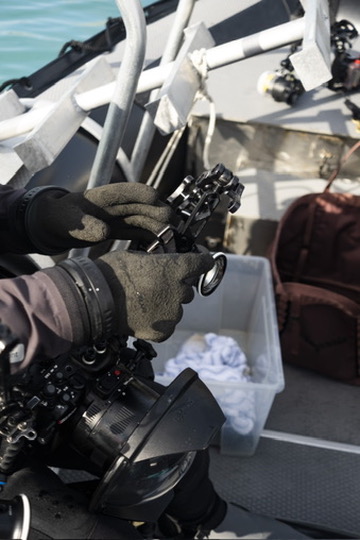
A diver prepares professional underwater camera housing from the edge of an inflatable expedition boat. (Photo by: Inuuteq Kriegel)
In 2026, diving with a camera is a comprehensive act of science translation. Some of the ocean’s most urgent crises are hidden behind shifting temperatures and plunging pH levels. Advanced laboratory techniques like micro-CT scanning and Scanning Electron Microscopy can detect nanoscale shell dissolution long before the damage is visible to the naked eye, underscoring exactly why visual tools like underwater macro photography are essential early warning indicators for identifying ocean acidification thresholds before a total ecosystem collapse occurs.
A macro lens in the hands of a dedicated communicator takes this esoteric, abstract scientific data and transforms it into an immediate, visceral narrative. The binary code written onto an SD card displays the almost relaxed flutter of a sea angel’s wings, directly juxtaposed against the frantic, terror-inspired evasion of the sea butterfly as it tries to escape. Ultimately, this raw footage becomes a visual lifeline, offering the public a profound reason to empathize with an environment they may never touch.
For communicators like Kayvon Malek, an Undersea Specialist with National Geographic-Lindblad Expeditions, this visual translation is the culmination of a career spent transforming the unknown into the unforgettable. What began as a whim in a college scuba course evolved into an obsession, leading Malek to work first as a diver and presenter at the Monterey Bay Aquarium, and eventually as a wildlife filmmaker for major television series like Netflix’s “Our Great National Parks” and Disney+’s “Incredible Animal Journeys.” Today, his expedition work takes him from pole to pole, documenting the planet’s most extreme and threatened cold-water environments to bring hidden marine worlds directly to the public.
Having worked extensively in both realms, Malek understands the unique power of expedition-style storytelling. Unlike traditional, multi-year documentary productions that often wait weeks to capture a single specific behavior, expedition diving is immediate and raw. “It’s almost like you’re doing the news,” Malek said. “We go on a dive and we’re reporting at the scene. The story tomorrow is not the story today.”
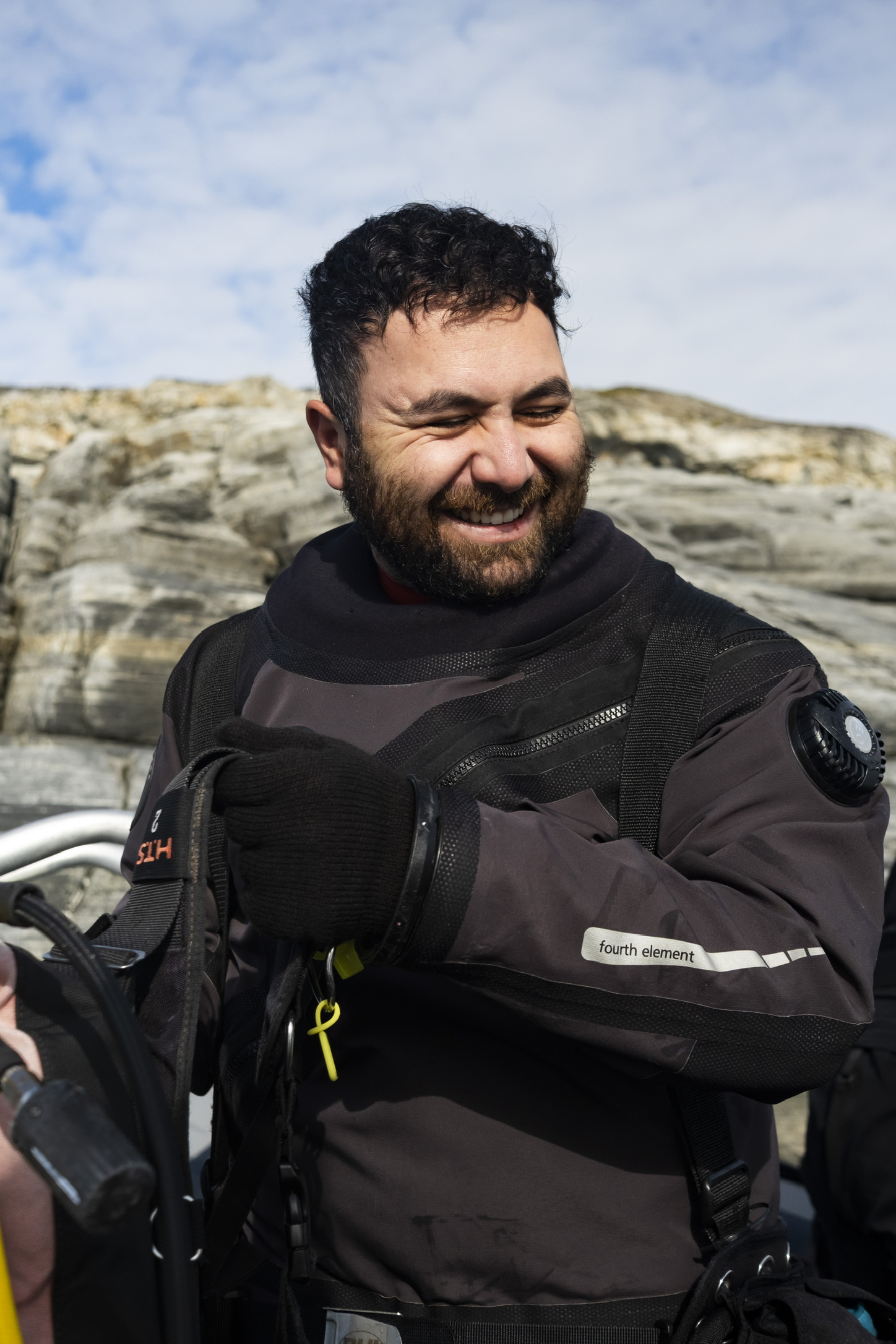
Close-up Shot of Undersea Specialist and wildlife filmmaker Kayvon Malek. (Photo by: Inuuteq Kriegel)
This boots-on-the-ground approach strips away the artificial polish of nature programming, giving audiences a closer connection to the marine world. When Malek drops into the freezing water and happens upon a sea angel, he isn’t just capturing biology; he’s capturing a bizarre predator whose biblical name invites the average person’s engagement and curiosity. By framing this “cat-and-mouse game” through the lens of a camera, the footage hooks the audience with the unapologetic wonder of the ocean.
The true power of this imagery isn’t in the data it collects. It is in the empathy it builds.
“At the end of the day, people won’t remember the facts and the figures that you quote them… but they’re going to remember how they felt when they saw something,” Malek said. “You get people to fall in love with it first, and then they’ll want to protect it.”
That is the ultimate goal of plunging a camera into sub-zero waters. Before the public can mourn the chemical collapse of the sea butterfly or rally against the shifting pH of the Arctic, they must first realize what is at stake. Through the lens of a dedicated diver, the sea angel transcends its biology, becoming the protagonist in a planetary story we can no longer afford to ignore.
Editor’s Note: Lindblad Expeditions, our Planet Forward Storyfest Competition partner, made these series possible by providing winners with an experiential learning opportunity aboard one of their ships. We thank Lindblad Expeditions for their support of our project.
This website uses cookies to provide you with an improved and personalized experience. By using this site you agree to our use of cookies. Please read our cookies policy for more information on the cookies we use and how to delete or block them.



 All Topics