Being a student is extremely difficult. Between rigorous schoolwork, scholarship applications, sometimes maintaining full time work outside of school, and volunteering; sometimes even eating healthy food can take the back burner in a students’ busy schedule.
In a 2024 article from the Journal of Nutrition and Behavior, they note that, 15% of college students experienced food insecurity from the years of 2015 to 2019, and factors such as race or being a first generation student compounded the rates at which people experienced food insecurity (Wolfson, Julia A et al).
Tuskegee University in Alabama is one example of a rural school where food security is an issue, and the Skegee Garden Club was founded in 2023 to help address the issues of nutrition and food access on the University’s campus.
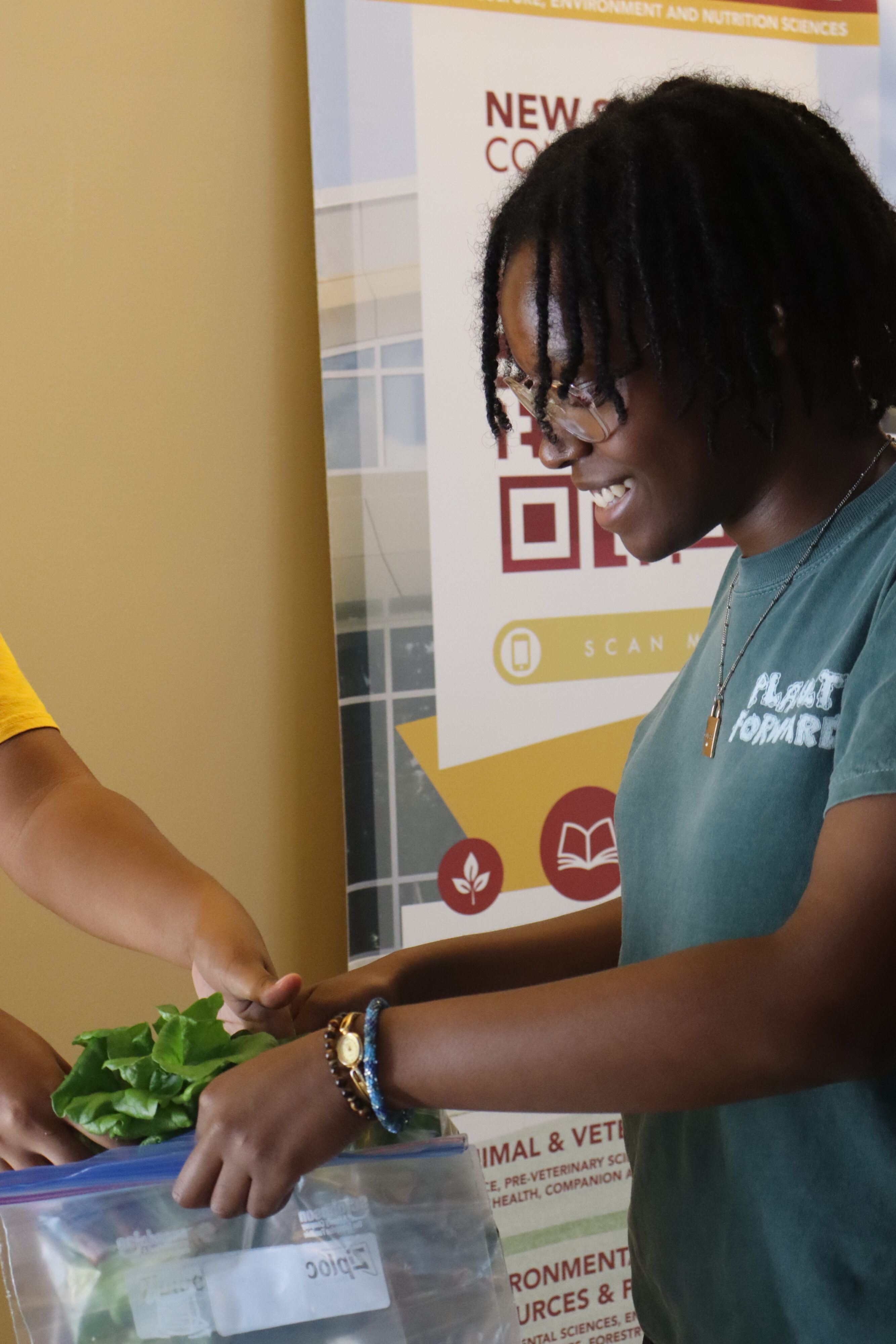
Eboard member and author of this article, Sylvia Leggette bags up fresh greens at a Skegee Garden Club event. (Courtesy of Sylvia Leggette)
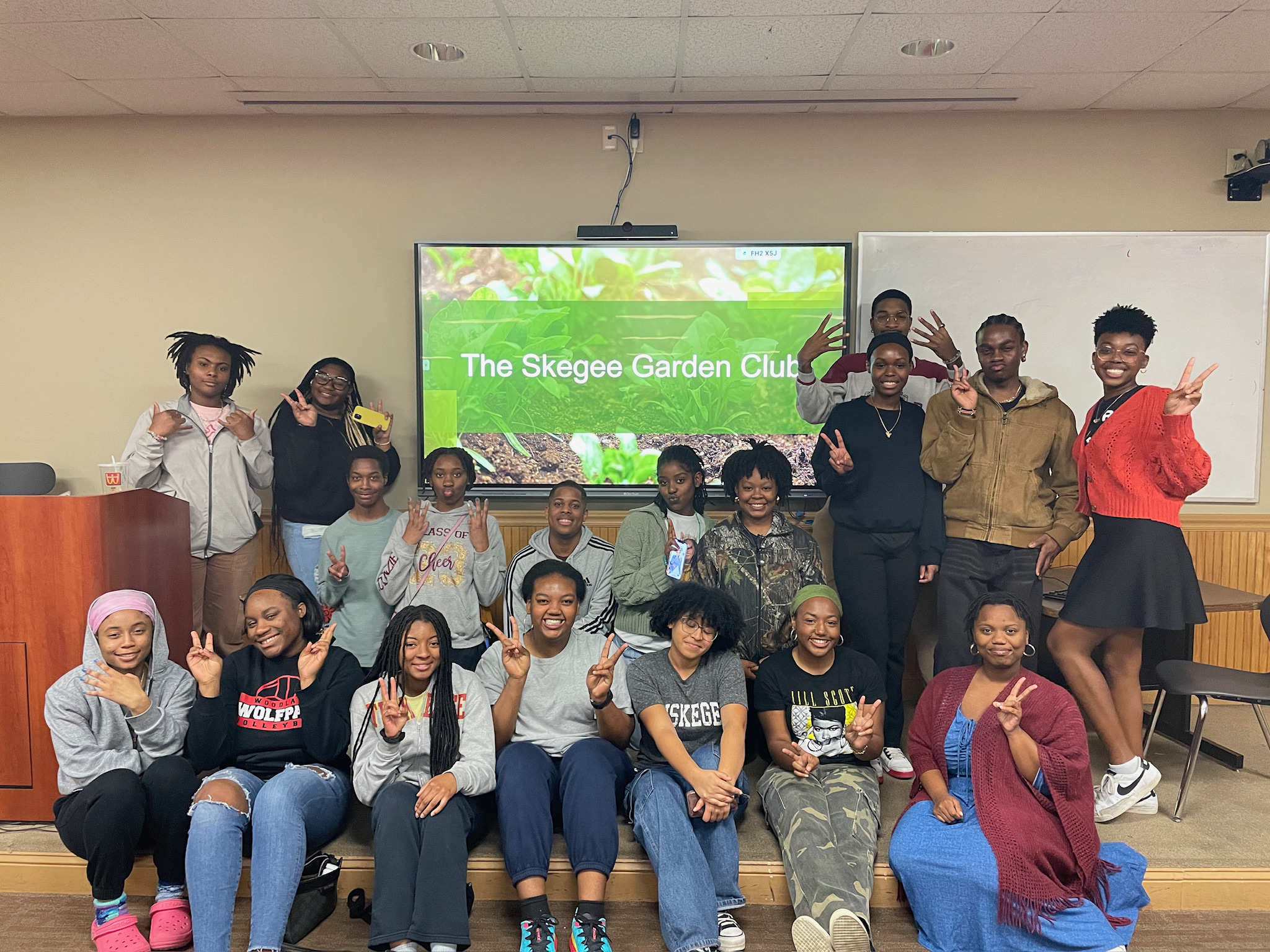
The Skegee Garden Club is a student-run organization founded by four ambitious freshmen: Dawn Earles, Sia Smith, Reuben Miree, and myself. Earles is a junior Environmental Science major and serves as the President; Smith is a junior Environmental Science major who serves as the Vice President; and Miree is a junior Health Science major serving as the Marketing Chair.
Initially started as an effort to combat food insecurity in the rural Tuskegee community, our mission has evolved to include promoting healthy lifestyles for Tuskegee students by partnering with farmers in the local community and connecting students with resources to reach their full potential.
Our current partners are the Shady Grove Blueberry Patch, the Tuskegee Honey Pollinator Habitat, and Harlem Comes to Cotton. We work with these organizations to provide students with opportunities to both gain volunteer hours, and network with local agriculture professionals while gaining hands-on insight into what an agricultural career might look like. The scope of our work has changed since launching and as we are ushering in a new year, I wanted to take the time to reflect with my fellow founding members about how far we have come and what we have learned along the way.
The following interviews have been edited for length and clarity.
Q: What was your vision for the Skegee Garden Club when we first started, and how satisfied are you with where we currently stand?
Sia Smith: My vision for the club was to have a piece of land because Tuskegee has a lot of land owned by the university. And so we [were] hoping to use some of that and put some of the farming knowledge that we learned in class into practice. When we first came together, we were inspired by the works of Dr. George Washington Carver and just the history of self-sufficiency that Tuskegee has in growing our own food and being involved in trades.
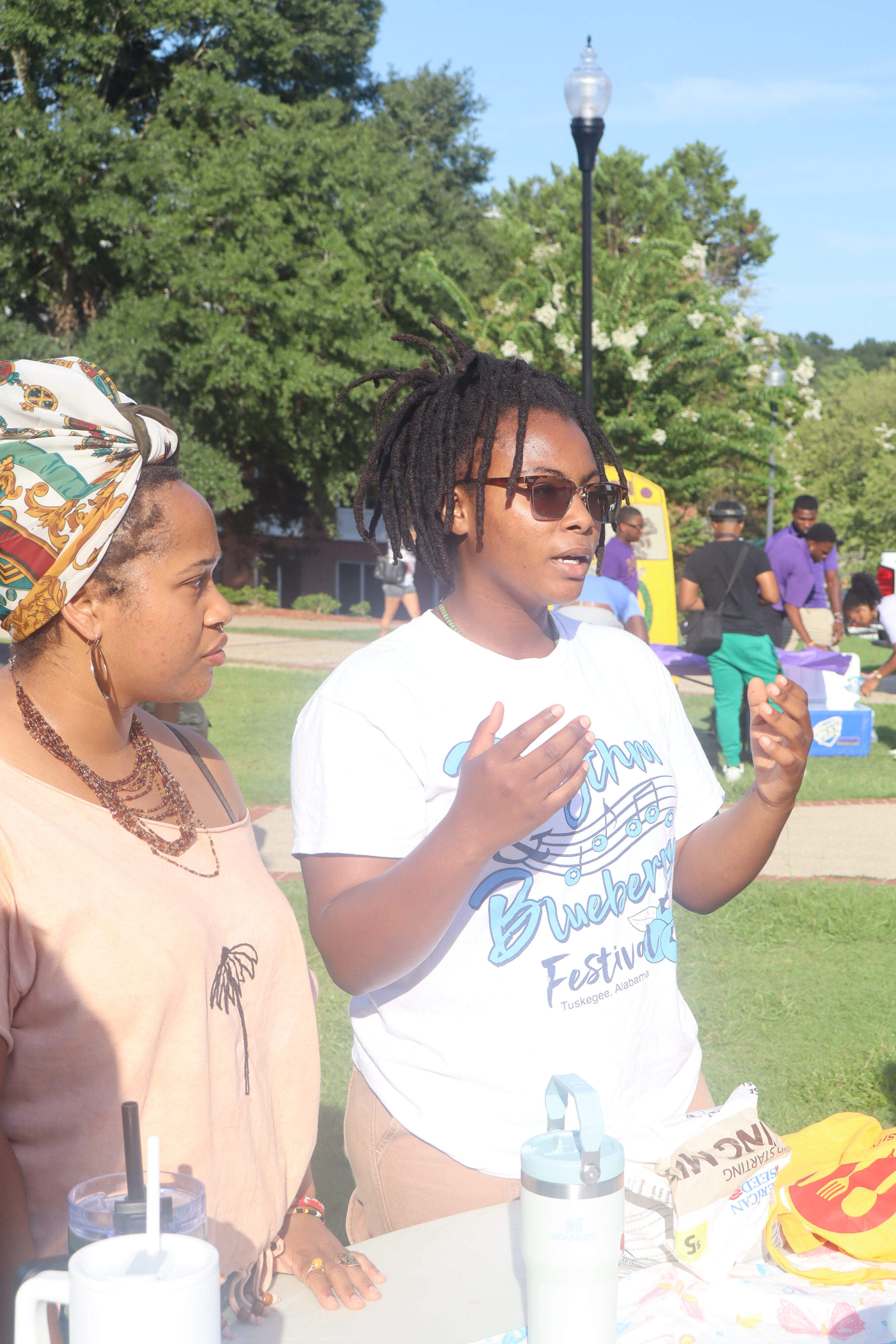
Sia Smith at a Skegee Garden Club event. (Courtesy of Sylvia Leggette)
We wanted to really get our hands in the dirt, like literally, but also address the food security issues that we were having, especially as freshmen. We didn’t have cars. The food in the cafeteria was really bad. At the time, the food was consistently fried, highly processed, and not fresh.
We wanted to provide opportunities for students to have fresh vegetables, but also to get their hands in the dirt. Although we didn’t necessarily get to hit the growing food part of it, we were able to make connections in the community.
Dawn Earles: I wanted to create a space where people could work outside and gain experiences beneficial to their education. As someone within the College of Agricultural, Environmental, and Nutritional Sciences (CAENS), I wanted the ability to reference the work I did outside when learning [in the classroom too].
I’m very satisfied with where we are now. Despite not satisfying the food production aspect, I do feel that my education has benefited from working in the garden club and this has in-turn benefited the community by making me a better leader.
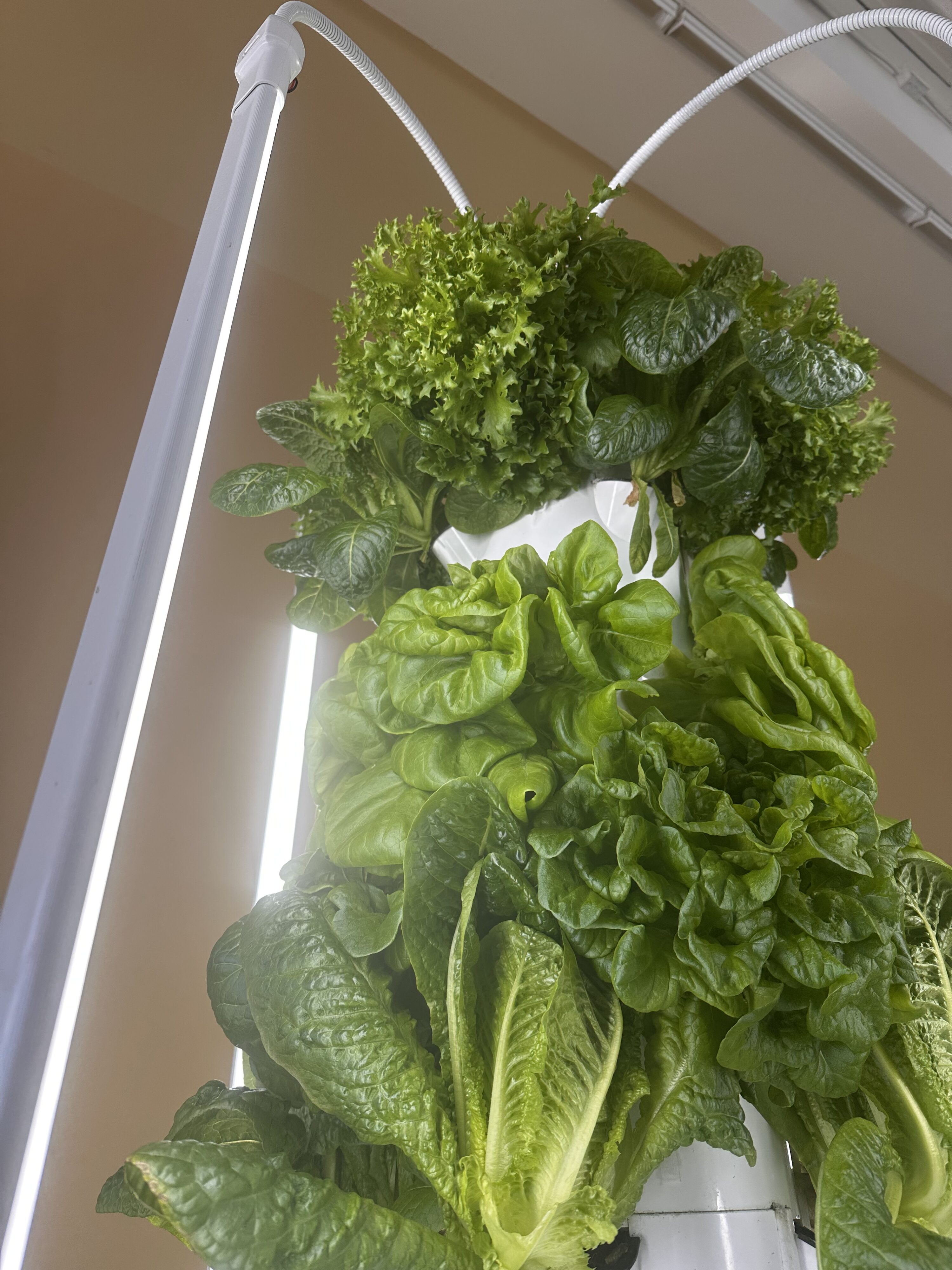
Fresh greens growing in a hydroponic tower garden, grown by the club. (Sylvia Leggette)
Reuben Miree: When we first started, I had a vision of combating food insecurity and nutritional insecurity and stuff like that. And currently, I feel like we’re making progress. One notable [accomplishment] was when we grew fresh greens in a makeshift tower garden with equipment donated by one of the professors here at Tuskegee. Those greens were introduced to the cafeteria through our efforts, which was pretty cool.
Q: Can you speak to what you have learned having worked with different community members and collaborating with them?
Dawn Earles: There are already resources available. When you notice deficits and seek to fill them without consulting current community members who have been living with these issues, there is a danger of recreating the wheel, in a sense. There are a lot of very capable actors already functioning in Tuskegee, both filling in the gaps that we noticed and problems we didn’t know existed. I love working with community members because most times they act as a resource to us. They’re always encouraging, looking for avenue of collaboration that allow for both of us to benefit.
Q: What challenges do students face when trying to eat nutritious food at Tuskegee and how is our club helping to address those issues?
Sia Smith: I would say that the main challenge is the quality of food available on campus. The cafeteria food quality, specifically was really bad quality. Sometimes there would be raw meat and uncooked food, or there would be no vegetables. During my freshman year, I remember [one time when] I had finally gotten to a gas station and there were grapes. I was so happy that I was crawling on the ground waiting to eat some grapes (like this is no exaggeration)!
After we got a new cafeteria this year, the food quality has improved quite a bit. Regarding what the garden club has done to help with that specifically, we advocated for the company that provides food for the cafeteria to start using lettuce from the Tuskegee’s organic farm. Once this happened, the lettuce quality was noticeably better. Where before it looked dark, old, and wilted, it now looks bright and fresh.
Q: What has been your favorite event that we have done and why?
Sia Smith: My current favorite event was the Farmer’s Market that we hosted on campus, partially because I hosted it and it was my idea, but also because we got to highlight the different businesses or farmers that we support.
We had honey from a bee farm that we work with, we had loofahs from another producer, and we had produce from another. We were able to just collaborate with a lot of community members to put their products on campus and present these producers as available resources for the students.
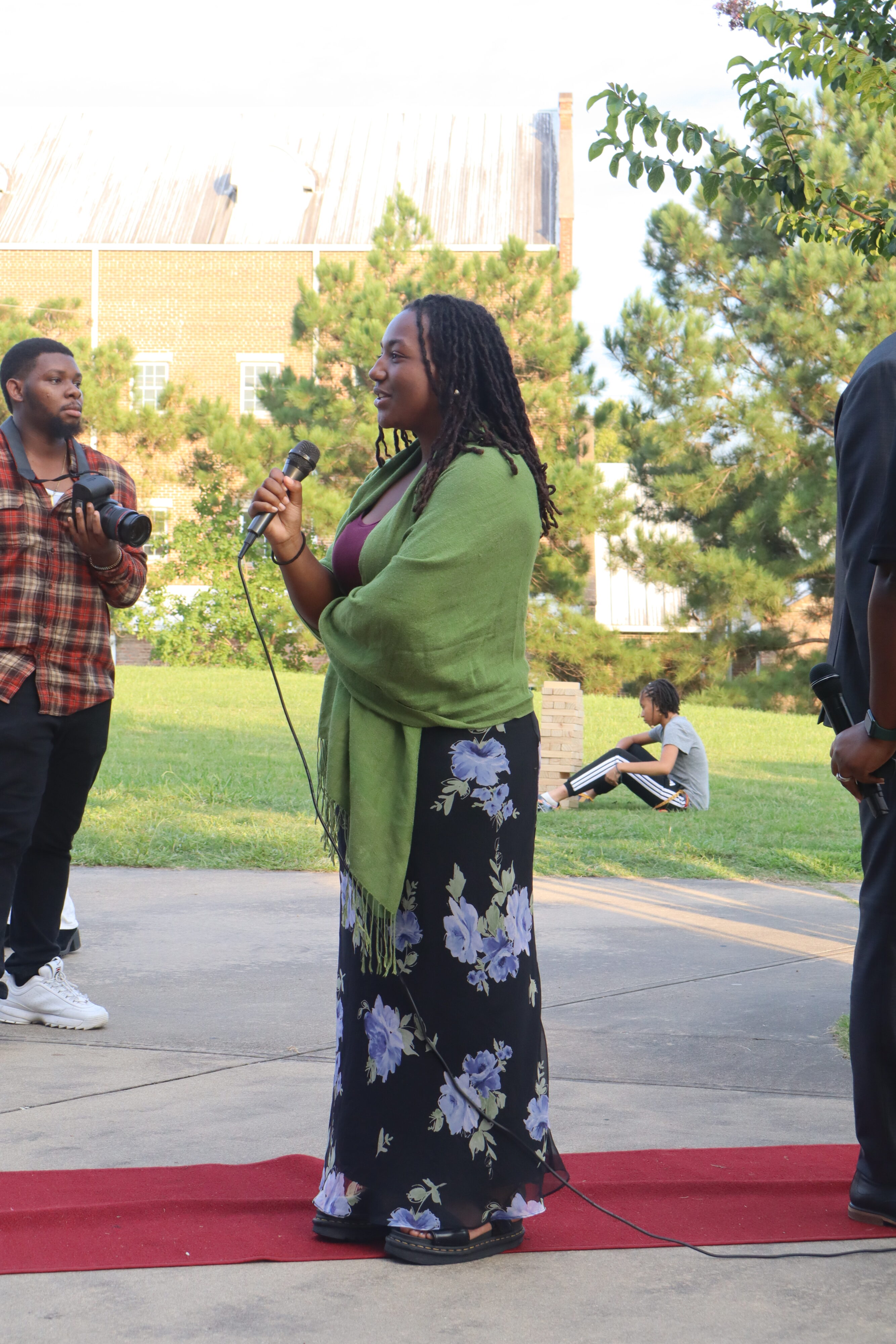
Dawn Earles speaking at a Skegee Garden Club event. (Sylvia Leggette)
Dawn Earles: I don’t have a favorite. With every event that we put on, I see people enjoying it in different ways, and that fills my cup. One example was when we took people to get their Produce Safety Alliance (PSA) certification.
The PSA course is a certification you can get through Grower’s Safety Alliance through Cornell to help small farmers make their operations more efficient. The students were able to benefit as some of them are aspiring farmers themselves and others simply wanted to gain the knowledge to be of help to farmers.
Q: What advice would you give to students at other institutions that may want to start their own garden club or community garden?
Sia Smith: Having friendship and camaraderie in your e-board is really helpful, especially when you just have to check somebody or present criticism. You need to build a relationship that isn’t mean or strictly business, like there needs to be some form of caring relationship. Another thing that could be helpful is building friendships within the community outside of the school within your local city.
For us, making community partners was essential because those are people who will stay here no matter how many groups of students pass through and no matter how many e-board shifts there are. Having those community partners was super beneficial for us, and they were kind of just our rock.
Dawn Earles: A garden can mean so many different things. You can have an in-ground garden, a raised garden bed, a hydroponic garden. It could be an ornamental garden to make the space prettier. It could produce food for you and your friends or your community. So figure out what you’re doing and why you’re doing it. And understand that it takes a lot of work. You can spend four hours outside and make a beautiful garden, but if you don’t go out there the next week, it’s going to die. But, it is rewarding.
Rueben Miree: Be as assertive as possible. If there are hurdles with your administration or getting your organization running, I would say to be outspoken and have confidence in your ideas.
This website uses cookies to provide you with an improved and personalized experience. By using this site you agree to our use of cookies. Please read our cookies policy for more information on the cookies we use and how to delete or block them.



 All Topics