 All Topics









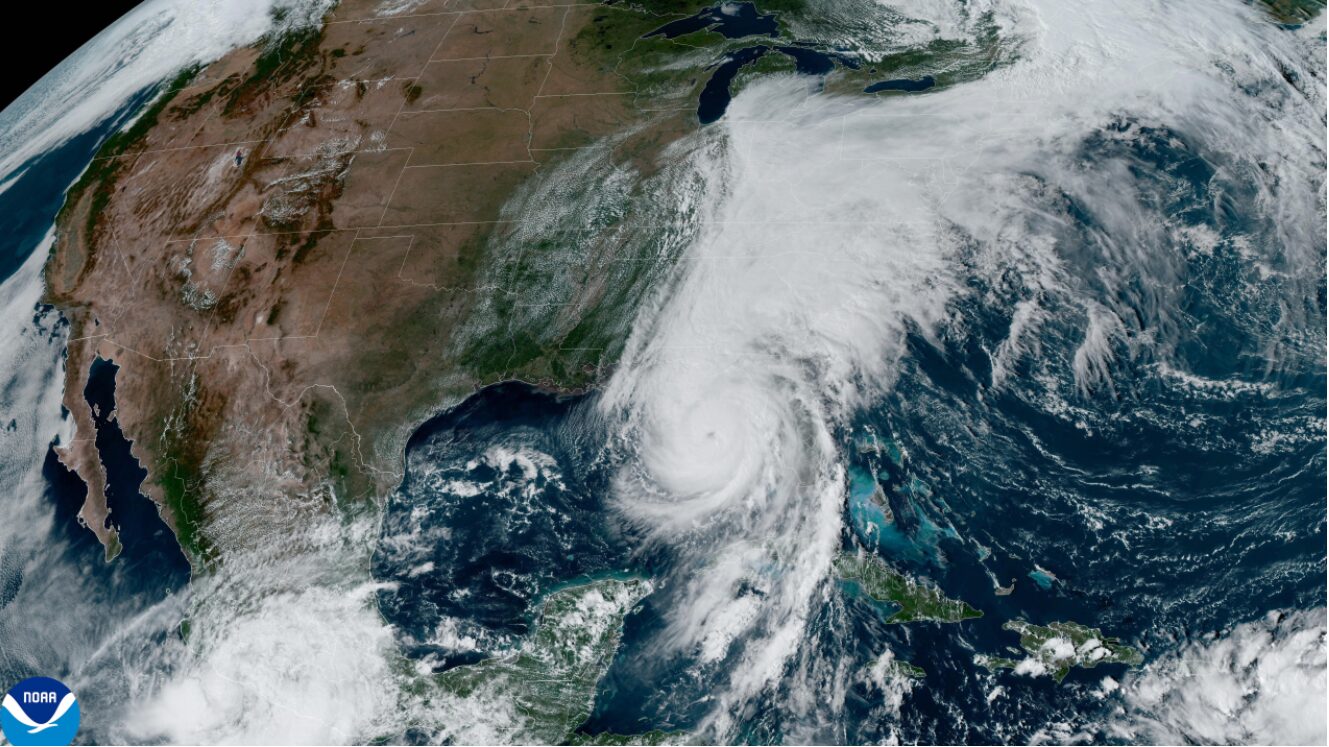
In the wake of major weather events like Hurricane Helene, FEMA faces significant cuts.
National Oceanic and Atmospheric Association Satellites
March 02, 2026
National Oceanic and Atmospheric Association Satellites

Hurricane Helene struck the East Coast at the end of September 2024, and almost a year and a half since landfall, areas are struggling to rebuild with depleting funds. Gov. Josh Stein (D-N.C.) stated that Helene created $59.6 billion in damage where 32% of his state’s population occupies. His state was pledged $7 billion by the Federal Emergency Management Agency (FEMA), covering only 12% of the cost. As a result, western North Carolina counties are exceeding their annual budgets while also experiencing delays from FEMA.
These delays are heightened by Department of Homeland Security (DHS) Secretary Kristi Noem’s directive requiring any FEMA expenditure over $100,000 be approved by her office. DHS also reclaimed authority of renewing and extending contracts of FEMA employees. FEMA supervisors announced that will cut thousands of employees this year, regardless of if they are actively working on a rebuilding project.
I sat down with Justin Knighten, former associate administrator in FEMA’s Office of External Affairs during Helene, to discuss what is happening within FEMA and the implications changes to staff and funding have on disaster recoveries and preparations.
The interview below has been edited for length and clarity.
Molly Thompson: Starting with the current cuts happening at FEMA, the Washington Post originally reported plans that about 50% of FEMA’s workforce would be cut and the former FEMA Chief of Staff Michael Coen estimated that the agency’s Cadre On-Call Response Recovery Team make up 40% of its workforce, the first FEMA employees on the ground at disaster sites. How will those cuts change the structure of FEMA?
Justin Knighten: What’s completely fact is any cuts to FEMA staff is putting the nation at significant risk. Hard stop. We could not recruit fast enough at FEMA. We could not get the right talent in the door quick enough because finding the people that know how to do this work is very difficult, not only with the caliber of expertise and background, but also this isn’t a job you take willy nilly because you’re looking for an income. This is a commitment to service, to show up for people on their worst day and to give your life when the mission demands it. These are not people that you fire.
MT: Have you spoken with some of those people you just touched on, those who have been cut and they’ve had their career turned around?
JK: I’ve spoken with many of them and many of them are my former staff. These are people that have not only expertise in communications, but expertise in risk communications, crisis communications, national security, hazard and risk response and they’ve been cut left and right.
It’s been devastating, and it should be one of the dark clouds of our nation’s history and an embarrassment of the federal government that we’ll look back on this time and cringe. We will cringe at what has happened.
MT: And when you say that we’ll look back on this, what are the future implications?
JK: We’re going to experience people who aren’t able to start their recoveries quickly, who are going to struggle through the chaos of disaster response longer and unfortunately, we’re going to experience loss of life. FEMA’s job has always been, despite narrative and rhetoric we’re hearing from the White House, to be responsive to our customers at the state or tribal nations who need federal assistance, and not only federal assistance in the resources, but federal assistance and the expertise and the capacity that FEMA provides every state … with how to handle those early days of response and recovery.
Having a partner in FEMA helps you manage the truth to help people that are survivors get information on where to find water and shelter. Without the people who can help make that happen, FEMA will not have the capacity to show up in that way.
At the same time, we have a veil of ignorance on in this country, because the disaster threat landscape last year was low in comparison to where we’ve been in the last decade, we could potentially be walking into a situation in which the threat landscape is the highest it’s ever been. Bad actors have been cutting FEMA funding, have been cutting FEMA staff, have significantly cut FEMA off at the knees at a time when the nation needs FEMA the most.
MT: So FEMA is getting cut as climate change gets worse? How is this whole cycle going to play out?
JK: Climate change is a risk multiplier, so think of every risk that exists, a changing climate makes those risks more difficult, more deadly, more complicated, and more frequent.
MT: How are disruptions within FEMA impacting disseminating correct information to people who are experiencing disasters and times of trouble?
JK: Connecting the failures of Hurricane Katrina response 20 years ago to how the federal government has not shown up for people today — most recently Texas, with the flooding that happened at the end of the summer — the Office of External Affairs at FEMA did not do their jobs. They were not being responsive to members of Congress. They were being told by political appointees at DHS to not communicate and to not do their job. If that’s an indicator, or that’s the bellwether for what we should be experiencing moving forward, we should all be very concerned. I hope they fixed it.
I’ve hoped they’ve learned that there’s actually a way to communicate that is helping people, that is not political, that needs to happen. That’s the function of the Office of External Affairs at FEMA and it’s separate completely of DHS.
MT: In 2006, Congress passed the Post-Katrina Emergency Management Reform Act to strengthen FEMA’s authority by barring DHS from making cuts to the agency that would significantly hamper the agency’s ability to respond to disasters. How does DHS approving contract renewals violate that law?
JK: Yeah, DHS is breaking the law completely and not following any of the requirements from Congress on FEMA. This administration, the second round, they’re putting in people who’ve never even heard the word Emergency Management until they were told to take the job, and there is yet to be a person put in the Emergency Management FEMA Administrator role who has the background. And as the Department of Homeland Security more and more tries to run FEMA themselves, it’s a further demonstration of that because no one who’s running the Department of Homeland Security has emergency management experience.
MT: I want to touch back on your background. You were working at FEMA during Hurricane Helene, and I know North Carolina is still recovering from that. How is that process being impacted by what’s happening at FEMA now?
JK: There’s a policy that every expenditure at FEMA over $100,000 has to be personally approved by Secretary Noem. That level of bureaucracy and just really kind of unhelpful, wacky oversight means that dollars are not getting to states in the way that they should, dollars are not getting to communities in the way that they should, and dollars are not getting to people in the way that they should.
MT: Is that something that people on the ground know — that money is not coming to their state?
JK: There was a New York Times story calling this out specifically, about two or three weeks ago, calling out this specific policy from Kristi Noem and how both Republicans and Democrats are not only upset, they’re at their peak end of this whole thing. It is that consequential in communities. Everyone’s tracking.
MT: Are there directives that you had put into place at FEMA while you were there that you’ve seen overturned? I would love to hear more about what you’re learning from staff still there.
JK: I think the easiest way that I can help answer this question is: I spent four years operationalizing how to be accessible in our language … to make sure that everyone in the community was getting access to information to support their recovery, to help get the resources they needed to understand how to access programs.
Executive orders have been issued by the White House last year banning all languages other than English. I don’t know how FEMA can advance its mission to be accessible in language, which is a requirement in the very policy you referenced after Katrina. This is a congressionally mandated requirement law. I don’t know how the agency is going to implement that effectively, when there’s also a requirement from the White House to not do that.
MT: How will these cuts disproportionately impact communities who already struggle to be on the offense and to withstand disasters? U.S. Census data shows that socially vulnerable groups are displaced at a higher rate when natural disasters strike.
JK: Any community that is socially vulnerable or is disproportionately impacted by disasters already is unfortunately going to bear the brunt of these devastating cuts more significantly. These are low-income communities. These are older adult populations, people with disabilities, rural communities.
These are all populations that are going to unfortunately be front and center for the national narrative when these disasters happen because they’re going to need a lot of support. That support may not come from the government. We’re going to have to look at nonprofits, the faith community, organizations like United Way and others who are going to have to help us fill gaps that government has created.

Planet Forward Correspondent | Rutgers University

Brown University / Middlebury School of the Environment
A project of

in collaboration with