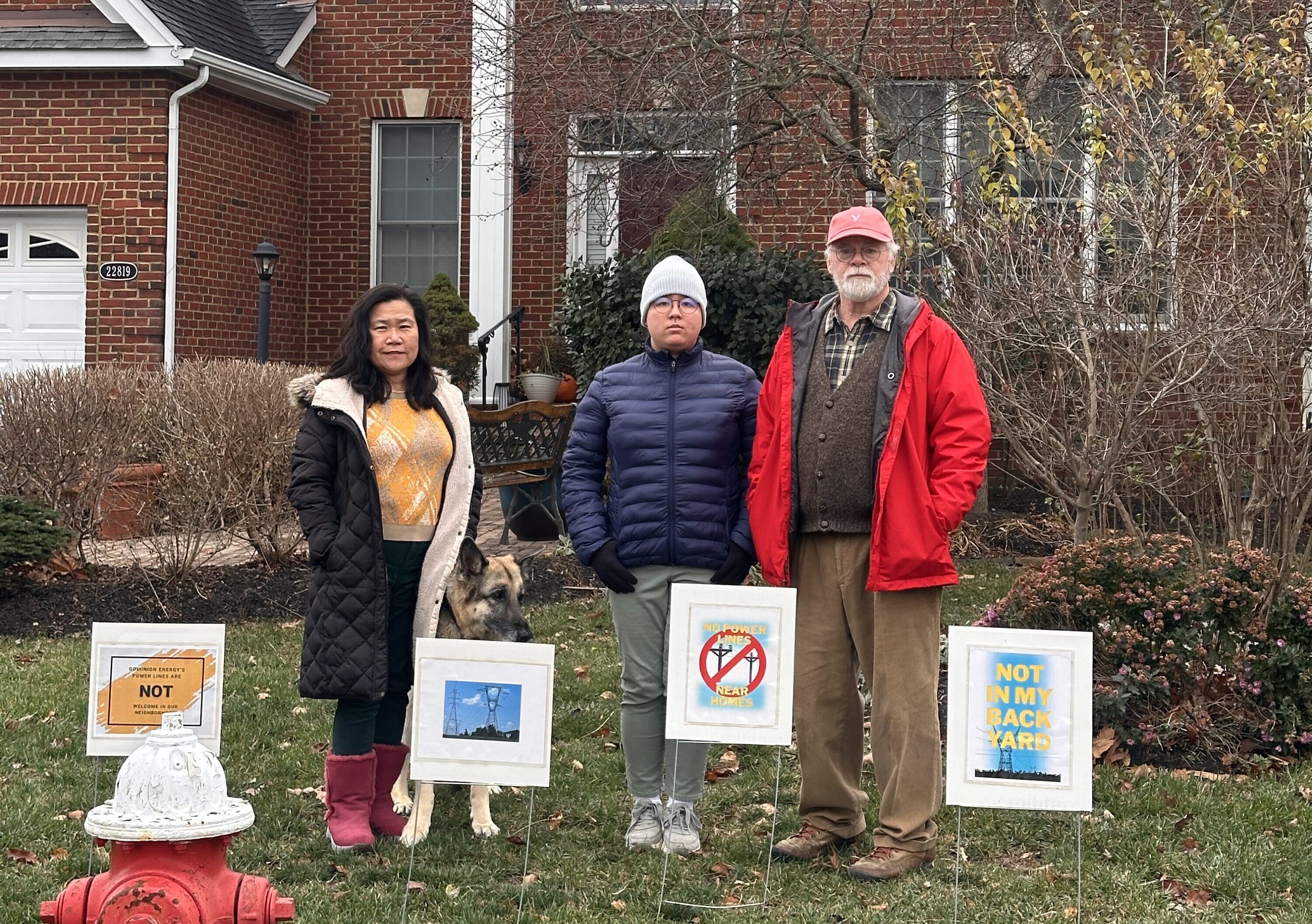
Madison Taggart has lived her whole life in the same Ashburn, Va., home with her parents.
After finishing college in Pittsburgh, Taggart, 22, returned to their house where she had lived her whole life. It’s a rural setting: As you pass through the black gate into the backyard, you encounter acres upon acres of sprawling hills and trees, wetlands, and even a stream that is home to beavers and cranes.
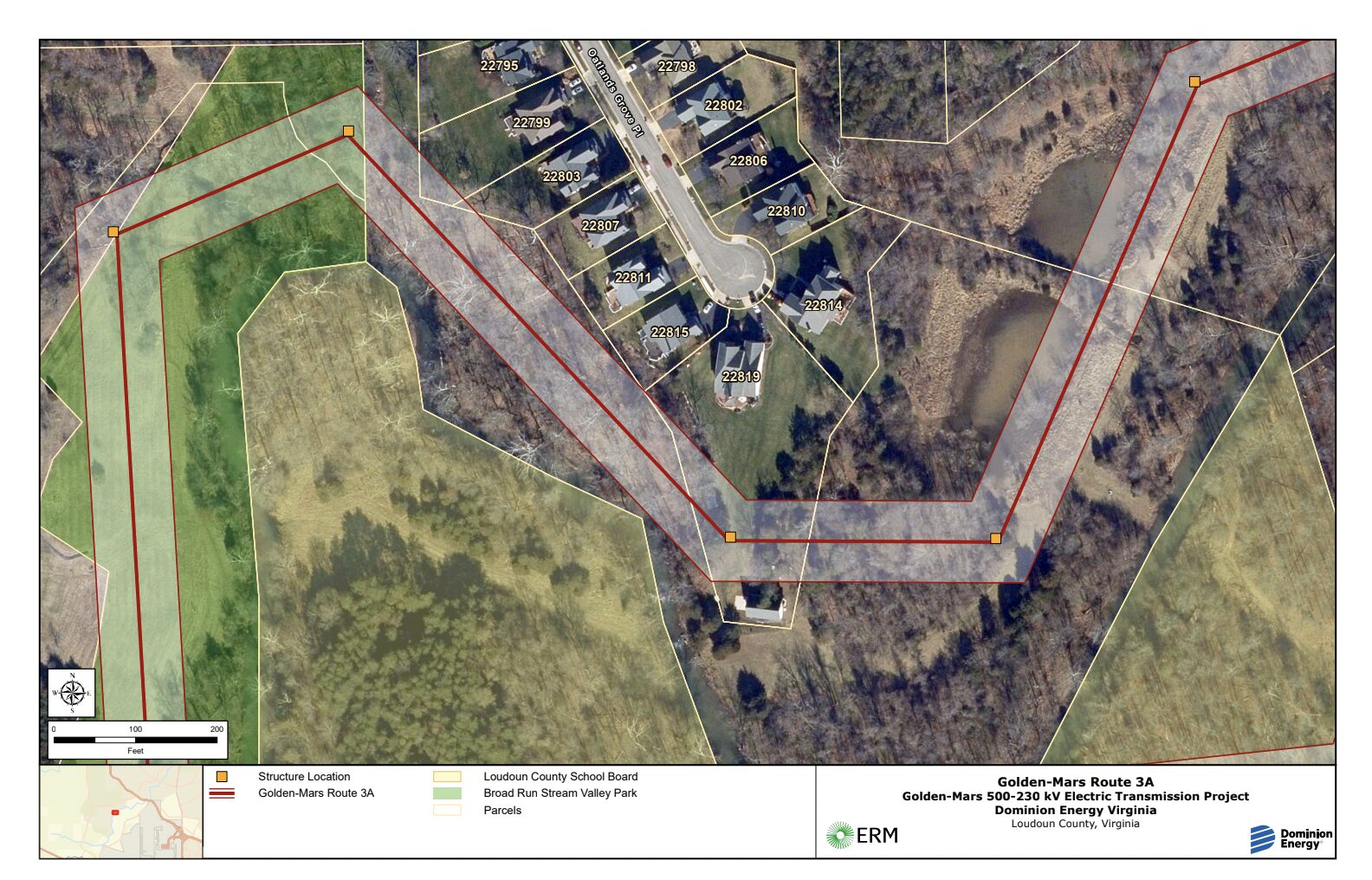
You’ll also find the spot where Taggart’s father has placed stakes in the ground to mark where the local energy company, Dominion Energy, intends to build a transmission line pole to service nearby data centers.
“If the route goes through, all the trees will be cut down, and we basically have a gigantic metal pole sitting in the middle of our backyard,” Taggart said.
Taggart, who is pursuing a master’s in science writing at Johns Hopkins University, is active in the fight against Dominion Energy’s plans — joining the hundreds of young people around the country protesting the development of new data centers, and the power lines they require, into their own backyards. It puts Taggart’s generation in a unique position. While Gen Zers lead the fight against the environmental threat of an energy-hungry data market, they are at the same time the most active artificial intelligence users.
Welcome to Data Center Alley
Northern Virginia, where Taggart lives, has been dubbed “Data Center Alley.” It is home to 493 data centers, 152 of which are in Ashburn alone. The region, considered the largest data center market in the world, holds roughly 35% of all global data centers.
But while Taggart and some of her peers advocate against the transmission lines used to power AI, others are also its biggest users. In a 2024 Gallup survey, 47% of Gen Z reported using a form of generative AI on a weekly basis (compared to fewer than one-third of Gen Xers in a different survey from Deloitte).
“I think there’s a bit of a disconnect there,” said Dimitrios Nikolopoulos, a professor of computer science and electrical engineering at The Virginia Polytechnic Institute and State University. He said AI users might not understand the consequences of their own frequent use until they turn up in their backyard.
According to Nikolopoulos, the scale and pace at which data centers are being developed in Northern Virginia is straining the environment, energy infrastructure, and communities.
“There is no way we can keep building data centers the way we do now; it’s not working,” Nikolopoulos said. “You will have to fight for your water and your power, basically against data centers, and that’s not sustainable right now.”
Costs come to the consumer
Nikolopoulos said that the transmission lines they are planning to build in Ashburn are just a part of the “real danger that this might have strain on the grid and might be a cost for the consumer.” The amount of energy these data centers require involve “transmitting massive, massive power,” he said, much more than is currently sent to homes or schools.
Rob Richardson, an electric transmission consultant for Dominion Energy, said the data centers being built in Data Center Alley need about 100 megawatts of continuous energy. That is enough to power 25,000 homes. But the planned transmission lines won’t be powering nearby homes.
“It’s hard to argue it’s for anything other than data centers,” Richardson said.
At the moment, the energy consumption in Data Center Alley seems to be a one-way exchange, with the data centers failing to provide any direct benefits to the communities where they are built.
Youth rise to the challenge
Young people like Taggart are hoping to change that. They intend to push for building and zoning regulations that would protect families against further property encroachment and environmental harm.
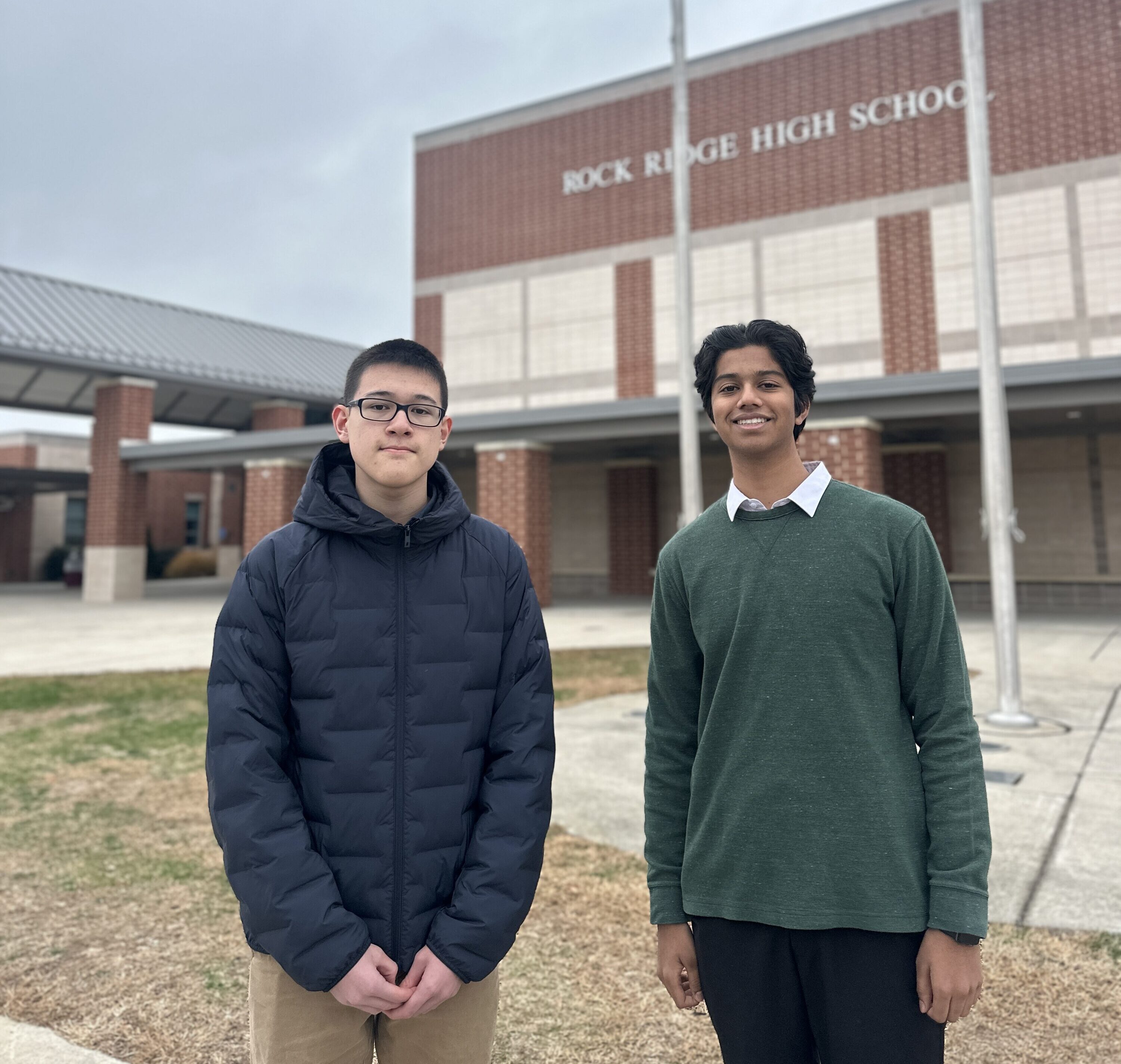
Among them are Joshua Weber and Mihir Nimkar, who are sophomores at Rock Ridge High School in Ashburn.
Joshua Weber (left) and Mihir Nimkar (right) pictured in front of Rock Ridge High School in Ashburn, Va. (Photo by Avril Silva)
In March 2025, they formed Students Against High-Voltage Expansion (SAHVE) at Rock Ridge High to fight all proposed high-voltage 500/230 kV power line routes that would run through their community. That includes Dominion Energy’s planned “Golden to Mars” project intended to link two data center substations, with proposed routes that bring transmission lines very close to both the high school and Rosa Lee Carter Elementary School.
While the Environmental Protection Agency and Dominion Energy say there is not consistent evidence linking electric and magnetic field radiation with cancer risk in the project, Nimkar and Weber disagree. They say the Golden to Mars project threatens public health, citing a 20-year-old study to appeal to their community and peers’ concerns.
“We also realized that as students, there are a lot of us, so our voice is powerful, especially when the school board gets involved,” Weber said.
At a September 2025 hearing, they were able to successfully petition against one of the proposed routes that would run alongside their athletic fields and destroy a small forest. But several other routes proposed would continue to run through school property.
Weber and Nimkar, both 16, have lived in the area their whole lives. As data centers have sprouted up and lined their streets, Nimkar said, “it’s almost been kind of an invasion.”
While the increased usage of AI is projected to impact data center and transmission line development, Weber and Nimkar said they aren’t anti-AI.
“We think that instead of being anti-AI to fix this issue, we kind of need to push back and say that these are the reforms that kind of need to take place in order for us to sustainably grow AI in a way that benefits communities instead of harms it,” Weber said in an interview. They both shared that they each use generative AI three to four times a week.
Since March 2025, Weber and Nimkar have mobilized students to go to school board and Virginia State Corporation Commission (SCC) hearings to advocate for undergrounding the power lines. While they are hopeful for that solution, Richardson and Dominion Energy argue it is not feasible, due to existing infrastructure, a lack of space for transition stations, and shallow rock, making construction costly and difficult. The county, nevertheless, still proposed new undergrounding routes to the SCC last month to try to minimize the impact on neighborhoods and schools.
Like Nikolopoulos, Nimkar is especially worried about the pace of the change, and what might happen as demand continues to grow for more AI. “It’s not as much that it’s happening, but more that it’s happening so quickly, and the people that are in power and the people that are in charge of making decisions that affect communities are just being so rushed with this process,” Nimkar said.
What’s next?
Taggart also said that while she doesn’t use AI, she doesn’t think that being against AI is going to solve the problem, but that people should start to make the connection between its use and how it could impact their community.
“I don’t really see much conversation connecting usage of AI to more data centers and transmission lines, just because it seems like, at this point, all people still see it as a local Ashburn issue instead of a national issue,” Taggart said.
After a public hearing that spanned two months and closing arguments delivered on Feb. 3, the State Corporation Commission is set to make a decision about where the transmission lines will be built in the coming weeks. At the moment, Richardson said that Dominion Energy favors route 3A, the one that would run through the Taggarts’ property.
A map of Dominion Energy’s 3A route passing through Madison Taggart’s family home (labeled home 22819). (Courtesy of Madison Taggart)
Taggart and her family said they will continue to fight for their home despite the threat.
“No one should have to worry about losing their house to some big company,” Taggart said. “It’s a sort of nightmare that you don’t think could ever happen to you, and yet it could.”
This website uses cookies to provide you with an improved and personalized experience. By using this site you agree to our use of cookies. Please read our cookies policy for more information on the cookies we use and how to delete or block them.

 All Topics