
 All Topics







Getty Images Signature/Canva Pro license

Manuella d'Almeida
Planet Forward Reporting Intern | SUNY-Plattsburgh
October 26, 2026
Getty Images Signature/Canva Pro license
Planet Forward Reporting Intern | SUNY-Plattsburgh
The U.S. Constitution, particularly the Bill of Rights, famously lists fundamental rights for Americans citizens. However, we don’t often think about what rights it does not cover. According to a recent ruling — a surprising one to some — clean drinking water is not one of them.
In early September, the Fifth Circuit Court of Appeals upheld a lower level’s court dismissal of Jackson, Mississippi, residents’ lawsuit over the city’s lead contaminated water system in a 10-5 ruling.
Judge Kurt Engelhardt wrote that, despite the deprivation of clean water being “grievous,” it did “not infringe upon any deeply rooted constitutional right,” clarifying that the U.S. Constitution does not guarantee the right to clean drinking water.
“The Constitution does not provide redress for every governmental wrongdoing,” Engelhardt wrote, which is why federal judges have not been able to interpret the Constitution to cover things like a clean environment.
Although this ruling says it is not a constitutional right, it is a human right recognized by the United Nations.
“Governments must take a human rights-based approach (HRBA) to water and sanitation,” the U.N. website states.
It is the U.S. government’s responsibility to ensure the general welfare of its citizens and maintain law and order, but what does it mean when the government’s interpretation of the law is not prioritizing the well-being of its citizens?
The “Climate Change for the American Mind” biannual report by George Mason University’s Center for Climate Change Communication shares findings on how registered voters view various domestic climate and energy policies. Their most recent report found “91% of registered voters think funding for the Federal Emergency Management should be increased (49%) or kept about the same (42%).”
“Disasters don’t check party registration, and neither does the public’s support for FEMA,” said Justin Ángel Knighten, a Sustainable Future Fellow for the George Washington University Alliance for a Sustainable Future.
Yet, President Donald Trump’s administration has terminated vital federal grants. The decisions put at least $3 billion in disaster preparedness and mitigation grants in jeopardy, cut FEMA’s workforce by around 17%, denied 26% of requests for major disaster declarations and politicized the disaster recovery process, jeopardizing funds in states with Democratic leaders or representation in Congress.
“Gutting FEMA is a climate resilience failure and a national security catastrophe,” Knighten said. “We have to call out the lack of leadership recently that has weakened the very agency and emergency management profession that Americans count on in their worst moments.”
So, why the disparity?
One factor could be attributed to a mismatch of public sentiment and voter turnout. In the 2024 Election, 156.7 million ballots were counted out of 243.8 million eligible voters. That means there were more than 80 million people who could have voted but did not. Those who did vote are seeing the policies the majority voted for come to fruition.
“One setback is not an absolute end, it is simply increasing the need for other avenues of political change,” said John McMahon, Ph.D., an associate professor of political science at SUNY Plattsburgh, who teaches a course called “Environmental Political Thought.”
Public demand and “local action such as getting involved in grassroots movement or calling your local/state legislators” are potential avenues that can be taken to reach a larger scale, he said.
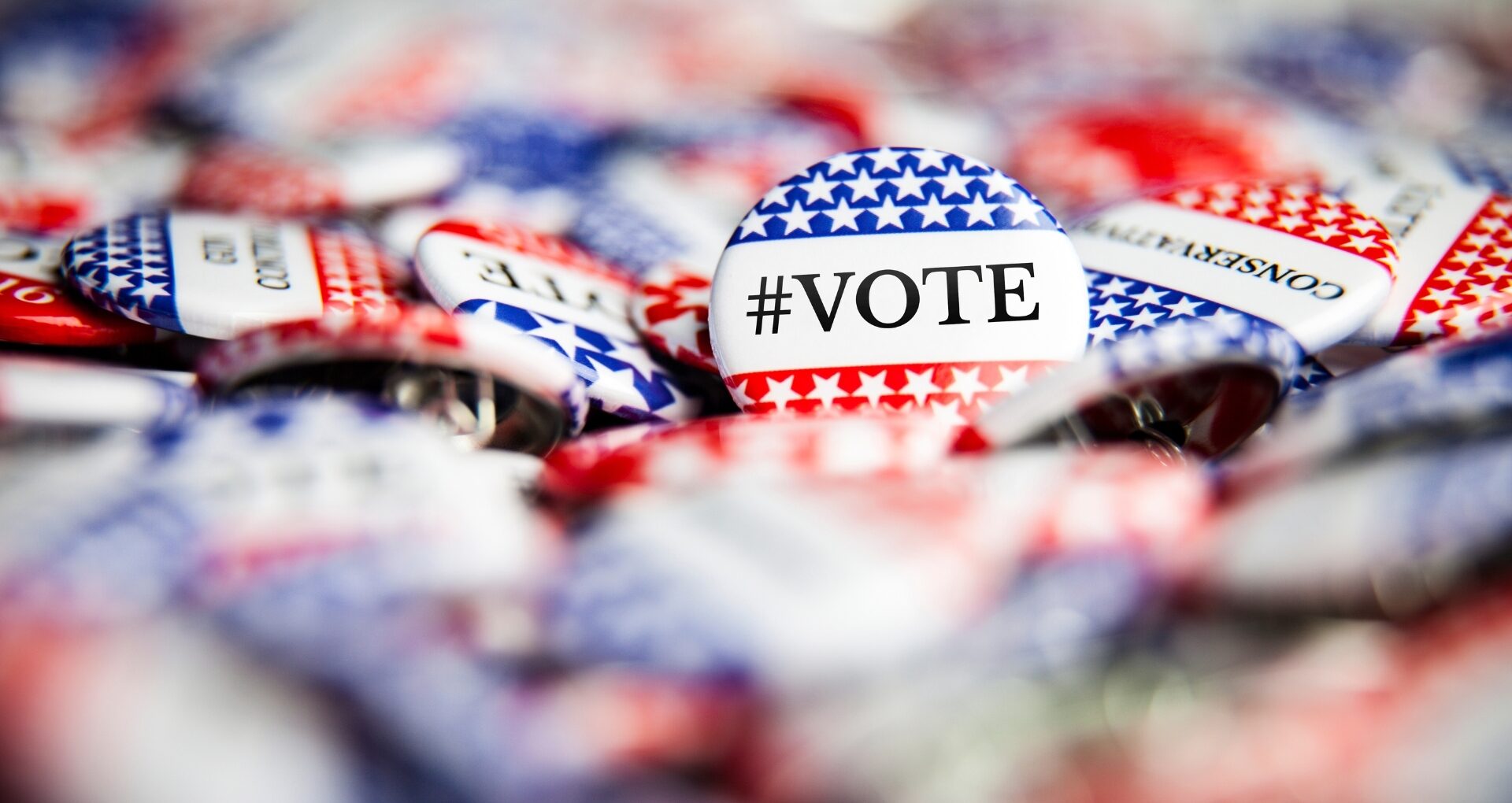
Voting is another feasible measure that allows the public to vote for officials who reflect stances similar to our own on certain matters. When it comes to issues like environmental justice, there often are stark differences between candidates’ positions. This puts the work on us, as voters, and requires us to investigate candidates and ballot initiatives deeply to ensure they align with your beliefs. Ballotpedia, Votesmart, Guides, and Isidewith are a few resources that can provide information on candidates and elections.
While this water ruling does not counteract environmental regulations like the Clean Water Act, it does narrow its scope. Robert L. Glicksman, a nationally and internationally recognized expert on environmental law and a professor at the George Washington Law School, said, “There is nothing in this circuit’s decision, or any Constitutional decision, that would prevent Congress if it were willing to expand the scope of the statute’s coverage.”
This is all the more reason for, “concerned citizens [to] vote for members of Congress that they think will support that agenda,” Glicksman said. “Vote for presidential candidates who could reinstate the kind of [environmental] executive orders that Clinton and Biden adopted.”
Voting can act as a safeguard because presidents nominate Supreme Court justices and the Senate votes on federal judges. By voting for candidates who align with your values, it increases the likelihood that they will appoint nominees who also align with them ideologically because, like Larry J. Sabato said, “Every election is determined by the people who show up.”
Planet Forward Correspondent | UC Santa Barbara


University of Wisconsin - Milwaukee | School of Freshwater Sciences

A project of

in collaboration with