

 All Topics






Southeastern Virginia houses one of the world's largest natural harbors, so flooding is a constant issue.
Milo Kouremetis
Milo Kouremetis

“It’s kind of a way of life,” Kim Sudderth said, speaking to NPR after yet another flooded street cut her off from her home in Norfolk, Va. “We’re doing our best to work with the water.”
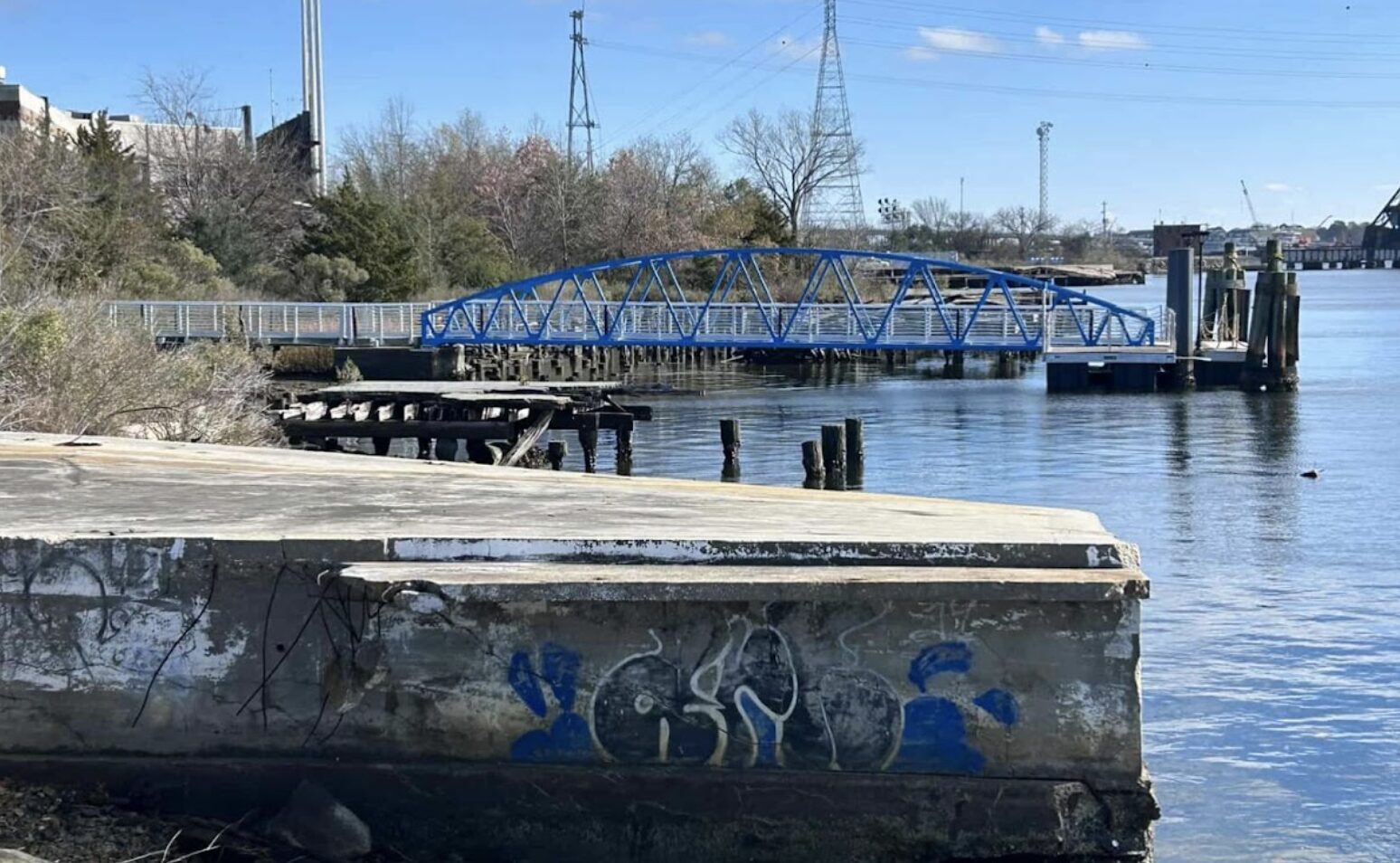
It’s what life in Hampton Roads has become for thousands of people. This region in southeastern Virginia houses one of the world’s largest natural harbors, so flooding is a constant issue.
The city of Norfolk is undoubtedly seeing the worst of the flooding. Sea levels are rising faster in Norfolk than anywhere else on the East Coast, driven by a combination of warming oceans and sinking land in the region. Norfolk is second only to New Orleans in the number of people threatened by rising sea levels, according to the National Oceanic and Atmospheric Administration.
In response, Norfolk proposed a floodwall project in 2012. The $2.6 billion initiative, funded primarily by the federal government, intends to protect the city from coastal storms and rising sea levels, but unfortunately, some communities are being left out of this plan.
The U.S. Army Corps of Engineers designed the project to protect the regions with the highest predicted property losses. For residents of the Berkley neighborhood, where historic disinvestment suppressed property values for generations, the consequences of that equation are devastating.
“When the Corps told us we didn’t get a wall because the cost to protect our homes outweighed their value, I said, ‘That is the definition of environmental injustice,’” Sudderth said. “Redlining suppressed our home values — and now that history is being used against us.”
The floodwall, in its initial design, wrapped around downtown and wealthier adjacent neighborhoods. Berkley, across the Elizabeth River, was left exposed.
“Downtown gets the wall first,” Sudderth said. “Meanwhile, if a Katrina-like storm hits, the water is coming straight for us — because we’re on the other side of that wall.”
Sudderth is both a resident and a city official, one of the few who lives in a historically Black, low-income neighborhood disproportionately vulnerable to flooding. “It’s rare for someone in my position to live in a community like mine,” she said, “but that’s exactly why my voice matters.”
Sudderth explained that she appreciates Berkley’s tight-knit community. “I’ve never lived in a place that felt like a real community until I moved here,” she said. “When I crashed my car, three neighbors showed up before the police did. Of course I’m fighting for this place.”
But fighting takes energy — and faith. “Hope is expensive,” she said. “After decades of mistreatment, my neighbors are used to being told nothing will ever change. It’s my job to prove them wrong.”
Residents of Norfolk’s historically Black neighborhoods have been no strangers to flooding. Sudderth told NPR that she loves the “porch culture” of Berkley, where she’s lived for eight years. However, frequent flooding affects many of the neighborhood’s streets whenever it rains.
So here’s another reason why the flood wall project is controversial: The $2.6 billion project largely won’t protect neighborhoods like Sudderth’s from the regular flooding they already experience.
Katherine Hafner, the environmental and climate reporter at WHRO Public Media in Norfolk, first reported on this story for NPR. As someone who has reported extensively on climate and environmental issues in the area, Hafner recognized how systematic inequities played a role in which communities get protection.
“This project is interesting because it’s a federal Army Corps project,” Hafner said. “Not to be bold, but discrimination is kind of built into the way that they do projects.”
According to Sudderth, the Norfolk community is pushing back and continuing to fight against environmental injustice.
After learning their neighborhood was excluded from the floodwall project, Sudderth and her neighbors organized community meetings, gathered signatures for petitions, and met with city officials to demand equitable flood protection.
As a result, Norfolk requested that the U.S. Army Corps of Engineers review the plan through a Post-Authorization Change Report (PACR), the official process for revising federal flood control projects. Funding and approval are still pending, but this action represents a first step toward adding protections for historically underserved neighborhoods like Berkley.
Many marginalized communities in Norfolk struggle to access climate solutions, which makes them more vulnerable to climate risk. Instead, Berkley residents continue to rely on each other by helping move cars out of flooded streets and checking on elderly neighbors when heavy rain hits.
Sudderth describes her neighborhood as “fiercely protective and deeply interconnected.” From neighbors helping one another after accidents to confronting the threat of flooding, Berkley shows that resilience isn’t just built in concrete: It’s built in community. The fight for fair protection is ongoing, but it is fueled by a deep-rooted commitment to one another and a refusal to be sidelined.
Planet Forward Chautauqua Fellow | University of Connecticut
Planet Forward Correspondent | Florida State University, Massachusetts Institute of Technology
Planet Forward Correspondent | Florida State University, Massachusetts Institute of Technology

Planet Forward Correspondent | Middlebury College
A project of

in collaboration with