
 All Topics











Susan Powers
Clarkson University
January 12, 2012
Clarkson University
Food. Most engineering students don’t consider the application of their high-tech creativity for food production, but a team of students from Clarkson University have proven that they can grow produce year round. Using an energy, water and space efficient technique, vegetables can grow in even the cold and dark climate of northern New York. As petroleum costs increase and shipping produce becomes uneconomical, having the technologies to produce food locally will become increasingly important, especially in urban environments and regions with short growing seasons.
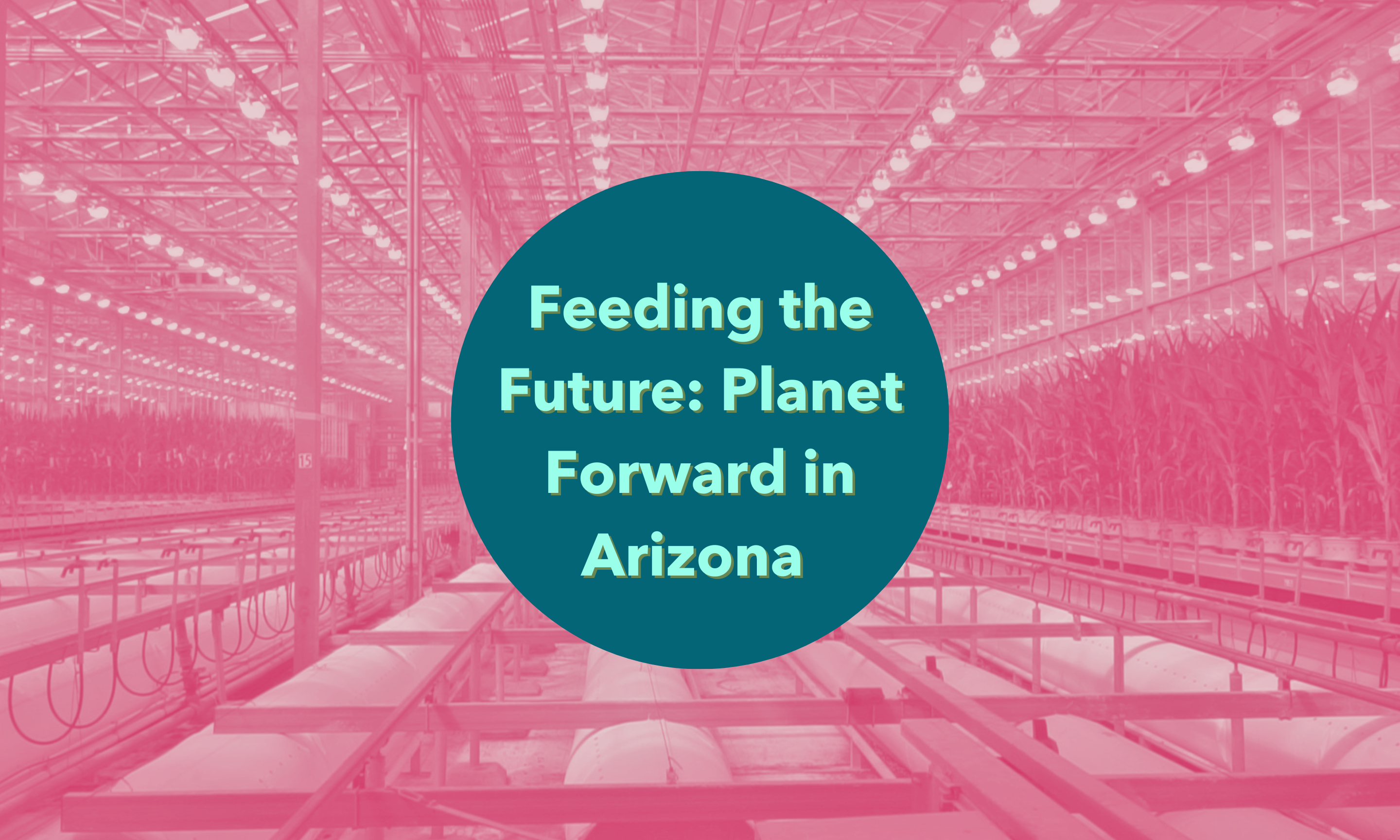
A new pilot-scale Controlled Environment High Rise Farm (CEHRF) system on Clarkson University’s campus is enabling faculty and students to research and explore new technologies for integrating food production and energy recovery from waste.
A three-year research project developed by engineering students has culminated in the construction and implementation of a pilot-scale greenhouse on Clarkson’s campus that utilizes innovative energy efficient technologies for the year-round production of leafy green vegetables.
Related idea: The Climate-Friendly Gardener
The 650 sq. ft. greenhouse is designed to grow produce year-round in northern climates limited by cold and dark winters. Its internal heating, LED lighting, and water and plant growth systems are designed to maximize plant growth while limiting fossil fuel energy inputs. The state-of-art aeroponic growing system uses only a small fraction of the water and nutrient inputs required by other greenhouse growing operations.
“This pilot scale system is a prototype for controlled environment high-rise farming (CEHRF), which promotes the production of vegetables in cold climates and urban settings thereby reducing the energy we currently consume shipping produce around the world,” says Susan Powers, Spence Professor of Sustainable Environmental Systems.
The interdisciplinary project was originally conceived by Clarkson physics student Daegan Gonyer ’09, now a graduate student in engineering science. Student teams raised Phase I and Phase II funding for the project in 2009 and 2010 from the EPA through their People, Prosperity and the Planet (P3) student design competition for sustainability They also conducted laboratory and feasibility studies and did all of the design, construction and operation aspects of the greenhouse and its systems.
Earlier this year, Gonyer and two fellow graduate students Sean Bonnell and Shaun Jones started their own business, Blue Sphere Industries, Inc., to further develop the technologies and construct larger scale systems. The company has already received awards in several business plan design competition.
A Zero-Waste Integrated System
The CEHRF system uses a biomass-solar thermal heating system and an anaerobic digester for cafeteria waste to create a closed-loop, energy efficient and zero-waste system that contributes to Clarkson’s sustainability efforts. Collectively, these coupled systems represent an approach to maximize mass and energy efficiencies as the “waste” resources (heat, plant matter, nutrient rich digester effluent, CO2) are shared among the building facilities.
Clarkson’s anaerobic digester system consists of three 1,400 gallon anaerobic mixed reactors, a combined heat and power system, heaters, and a grinding system. The self-contained anaerobic food digester and combined heat and power unit, which is valued at approximately $300,000, was donated by Feed Resource Recovery. It is currently being implemented to manage some of Clarkson University’s food waste. Approximately 200 lpd (650 pounds per day) of cafeteria waste are ground up and fed to the pilot digester system. “The net result will be a reduction in the volume of solid waste sent to a landfill, generation of heat and power, and discharge of a nutrient rich effluent that can be used in the greenhouse and on campus grounds,” said Powers.
Auxiliary heat for the digester and greenhouse is provided by a wood pellet boiler and solar thermal heating system. ACT Bioenergy of Schenectady, N.Y., supplied this self-contained, integrated heating system that combines a 20kW wood pellet boiler with 2kW solar-thermal heating panels and integrated hot water storage and control system. The unit is fitted with a solar thermal system that can provide free hot water for six months of the year and the pellet boiler will provide the bulk of the hot water during the winter season.
Research and Educational Opportunities
The integrated food-waste-energy system provides ample opportunities for project-based and hands-on learning, as well as research experiences for students. The systems have already been integrated into several senior capstone projects and directed study research efforts for student learning. A grant from the Dominion Foundation will help with data collection from this integrated system for use in classroom activities.

Staff | Planet Forward


Founding Director | Planet Forward

Sr. Editor & Education Lead | Planet Forward

Planet Forward Correspondent | Teesside University
A project of

in collaboration with