
Topic Page: Biofuels


Algae! Trash! Poop! Organisms convert energy from the sun into energy for life. PF Members offer their solutions on how to turn that biomass into an energy source for mankind. Have an idea in Biofuels? Tell us

Related Categories : | Agriculture | Business | Renewable Energy | Science |


Back to Top

News

Bras create 32 tons of fuel

In Japan, companies have been collecting used bras from customers and turning the raw materials into refuse paper and plastic fuel (RPF).

Panda poop may be a treasure trove of microbes for making biofuels!

Panda poop may be a treasure trove of microbes for making biofuels!

Cali. Updates Alternative Fuel Technology Investments

California enters year 3 of its investment plan for alternative fuel technology, and offers a progress update: There’s more money available.

Landfill gas to power first ‘green Marine Corps’ base

The U.S. Marines are showcasing a new landfill gas recovery project at Marine Corps Air Station Miramar near San Diego.

Google sponsors Green Flight electric plane challenge

The CAFE Foundation‘s 2011 Green Flight Challenge, hosted by NASA and sponsored by Google, will award a grand prize of $1.3 million to winner of the electric-plane contest.

Behind veneer, doubt on future of natural gas

Government documents reveal that promises of natural gas has been over hyped.

Palms hold Indonesia’s future

Willie Smitts has received a grant from National Geographic to study Indonesian sugar palms and develop a viable system to utilize the “sentry” plant’s sustainable qualities.

Senate Votes To Repeal Ethanol Subsidies

The U.S. Senate has voted to repeal tax credits for producing ethanol, just days after rejecting an identical measure.

Obama Admin. Launches Pilot Program For EVs, Alternative Fuels

The directive from President Obama will require the federal government to purchase 100% alternative-fuel vehicles.

Using Human Fat as Fuel

Can human fat harvested from liposuction be used as fuel? It’s been done. Moral issues abound. Plus, it’s kinda gross.

How Great is Your State?

Really fascinating map of areas where each state excels–and lags–in environmental impact.

Our Energy Use – a Snapshot

Grist’s David Roberts takes a step back to see where our energy comes from… and where it goes… thanks to a cool graphic.

Back to Top

Webisodes

From Fryer To Fuel: Making Biofuel from Vegetable Oil

THIS WEEK: Did you know the vegetable oil we use to make our french fries could also power our cars? In this webisode, Planet Forward drops by GreenLight BioFuels’ new plant in Maryland where they’ve been turning cooking waste into biofuel.

Could Palm Oil Biofuels Work?

This WEBISODE focuses on Dom Bosco Catholic University’s biochemistry laboratory in Campo Grande, Brazil. Dom Bosco is experimenting with a plant called bocaiúva, a native palm which could yield a new source of renewable energy.

Energy Freedom Fries: Is this Cooking Oil Powered Speed Car the Missing Ingredient in the Energy Mix?

Planet Forward member Dan Gray shares an innovation that goes from the fryer to the racetrack. Do you think this idea can be supersized? Watch>>

Top Online Vote Getters – Who Did YOU Choose?

Your viability ratings helped up select 22 nominees, then your votes determined the top three online vote getters. These three pieces made the cut and will be on our April PBS prime time special. Check them out…

Give Poop a Purpose

Planet Forward is looking for tech innovations that will shape our energy future. Dan LeFevers, Executive Director of Washington Operations for the Gas Technology Institute, says we should use what we have – collect biogas from livestock manure, landfills, and trees and pumping it through pipelines that are already in place. What’s your energy innovation?

Planet Forward: Our Energy Future

Our first TV special focused on great ideas from you, our members, about how we as a country should approach our energy future. Originally broadcast on April 15, 2009 on PBS.


NBR

Algae as Alternative Energy Source

Sapphire Energy is a company with quite a dream: to make algae-based fuel ready for commercial production by next year. There’s a lot of advantages to algae-based fuels. It’s carbon neutral, it uses salt water to grow, it doesn’t compete with food commodities and, with a possibility of gas hitting $5 per gallon, figuring out …Read More…

nbr
Back to Top

Articles From the Blog Related to Biofuels

The Latest Breakthrough in Biofuels: Low-Cost Seaweed?

By Katrina Schwartz, KQED Climate Watch The newest biofuel making a splash is seaweed. Researchers at Berkeley-based Bio Architecture Lab (BAL) have discovered a way to genetically manufacture a microbe that can break down the sugars in seaweed, so that it can be used as a fuel source. Biofuels from sources other than corn have generated a lot of hype but …Read More…

Seeking Sustainable Oil? Turn to Trash!

It’s no surprise that oil and coal companies are having a banner year. Earthquakes in Japan and revolutions in Africa have oil riding a profitable wave of instability. The Wall Street Journal noted that rising gas prices are a boon to oil companies even as costs pinch consumers. Fortunately there are plenty of energy innovators …Read More…

Obama Calls for Green Fleet, Reduction of Oil Imports

Facing some of the most intractable foreign policy situations of his term, President Barack Obama is looking inward. In a major speech on March 30th, Obama outlined his plan to reduce oil imports by a third over the next decade and a half while transitioning the federal government to an all-alternative-fuel vehicle fleet by 2014. …Read More…

President Obama calls for Electric Vehicles and Clean Energy in his State of the Union Address

During his State of the Union address, President Obama set a new goal: by 2035, 80 percent of America’s electricity will come from clean energy sources.

Watch

Save Water, Save Energy, Save the Planet

It’s time for a restructuring of America’s sewage system. When you flush waste and water down the toilet, it takes energy to pump and filter that water. And much of our country’s energy is created through the burning of harmful fossil fuels. So how do we use less water and energy? The answer? It’s a …Read More…

Planes, Grains, and Peeing on Meals

Next time you flush the toilet, think about all the CO2 you are releasing into the atmosphere. No, you are not personally releasing gases into the atmosphere when you tug down on that handle and see the water spinning, but we could offset about half of total airline carbon emissions if we used urine to …Read More…

NGV’s: an ‘ethanol’-like boondoggle?

Despite all the green washing out there (and there is lots of it, lets be clear), corn-based ethanol is far from a panacea in terms of reducing America’s dependence on imported oil, dependency on fossil fuels, reducing greenhouse gases and representing a good investment for the taxpayer. While supporting corn ethanol is, it seems, great …Read More…

SBSC: Promotes “Go Beyond Oil”

SBSC (Spectrum Blue Steel Corporation) promotes “Go beyond oil” It is never new to us that world’s dependency on oil has ruined not only many wildlife species but also endangered our environment and our future generation. Oil is just one of the three major forms of fossil fuels; others are coal and natural gas. And …Read More…

Sufficient Energy Density

This term Energy Density is appearing with increasing frequency. The message is that non carbon alternatives, solar, wind, bio, etc cannot attain the needed prevalance to ever replace coal, petroleum and natural gas . Energy number crunchers say the energy output from green sources in relation to achievable infrastructure and sustainable cost will be insufficient …Read More…

Back to Top

Science Corner articles filed under Biofuels

Biochar Produces Better Crops and Cleaner Air

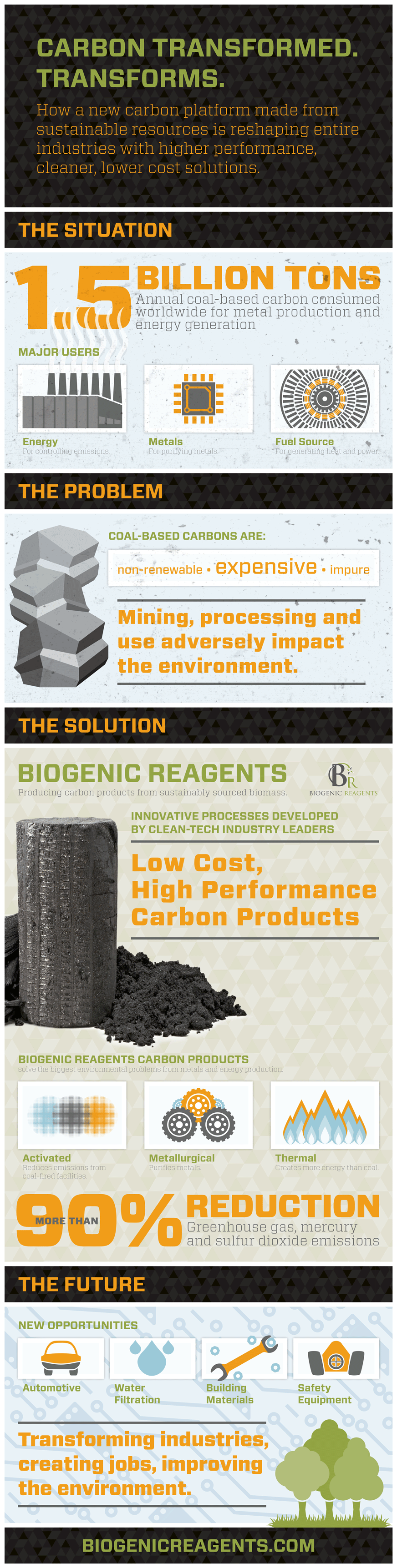
A multinational research team is developing biochars–fine-grained, highly porous charcoal that helps soils retain nutrients and water. These additives can improve crop yields, help inoculate plants with beneficial microorganisms and reduce greenhouse gas emissions. Better crop yields can increase farm income and improve human nutrition. The combination of biochar production and clean-burning cook stoves may …Read More…

Controlling Light Pollution

New measurements of the NSF-funded Kitt Peak National Observatory near Tucson, Ariz., show that sky brightness has remained remarkably constant over the past 20 years, despite the area’s rapid population growth. The study demonstrates that with a conscientious effort, human-caused light pollution can remain constant, despite large population growth in cities. Shielded outdoor lights, required …Read More…

Sparking the Algae Harvest

A team of engineers and scientists at North Carolina State University has developed a new method for harvesting marine algae. By applying an electric charge they change the chemistry of the algae cell boundary and cause cells to clump together. These algae clumps are easier to collect. One of the challenges facing algal oil production …Read More…

Conversion of Sugars to Make Fuels, Plastics and Pharmaceuticals

Researchers have developed a way to make an efficient catalyst that transforms biomass-derived sugars into a compound used in fuels, plastics and pharmaceuticals. The solid acid catalyst is noncorrosive and easily recovered for re-use, making it easier and potentially cheaper than other catalysts such as mineral acids. Renewable sources of fuels and chemicals are in …Read More…

Engineering Bacteria to Make Biofuels

Researchers have re-engineered an anaerobic bacterium known as clostridia to prevent spore formation, a change that improves the bacteria’s productivity in making biofuels. The University of Delaware engineers demonstrated the feasibility of using clostridia (specifically, C. acetobutylicum) as an economically viable, industrial-scale producer of biorenewable fuels and chemicals. Their work could help lower the cost …Read More…

Identifying Severe Weather Outbreaks Earlier

A team of scientists from three universities has developed a weather-prediction system that will allow forecasters to predict tornadoes and other severe storms at least three days before the storms start. Tornadoes and other severe weather outbreaks annually cause loss of life and massive property damage to many portions of the U.S. These research findings …Read More…

Understanding the Nanoparticle in Renewable Energy

Using a powerful electron microscope, a research group at Arizona State University has observed dynamic behavior in small catalytic nanoparticles during energy-related chemical reactions. Nanomaterials can act as catalysts for many important chemical reactions related to sustainable energy. However, many of the best catalysts are composed of expensive precious metals such as platinum or gold. …Read More…

Winter Shrinking by Seven Days Each Decade

Climate trends in the northeastern U.S. show that in the past 40 years, winter has lost seven days every decade and the growing season has expanded by nearly four days each decade. Researchers are figuring out how these changes will impact farmers, foresters, outdoor recreation and wildlife to help them adapt their practices to the altered climate.

Toward a Low Energy Computer: Efficient Caches

In an NSF-sponsored project, computer scientists at the University of Utah have developed techniques to reduce the energy consumption of computers associated with large, temporary storage areas, called caches. The innovation could significantly lower energy consumption and improve performance within multi-core processors, directly impacting future computing devices including laptops, desktops and server processors. The group …Read More…

Oil-spill Cleanup Material: Coal Fly Ash

A team of undergraduate and graduate students at the University of Central Florida is transforming fly ash–a waste product from coal-fired power plants–into an environmentally friendly adsorbent for oil-spill cleanup. Researchers hope this material will be an economical alternative to current methods of soaking up oil at clean-up sites. At the same time, it could …Read More…

Back to Top