
 All Topics











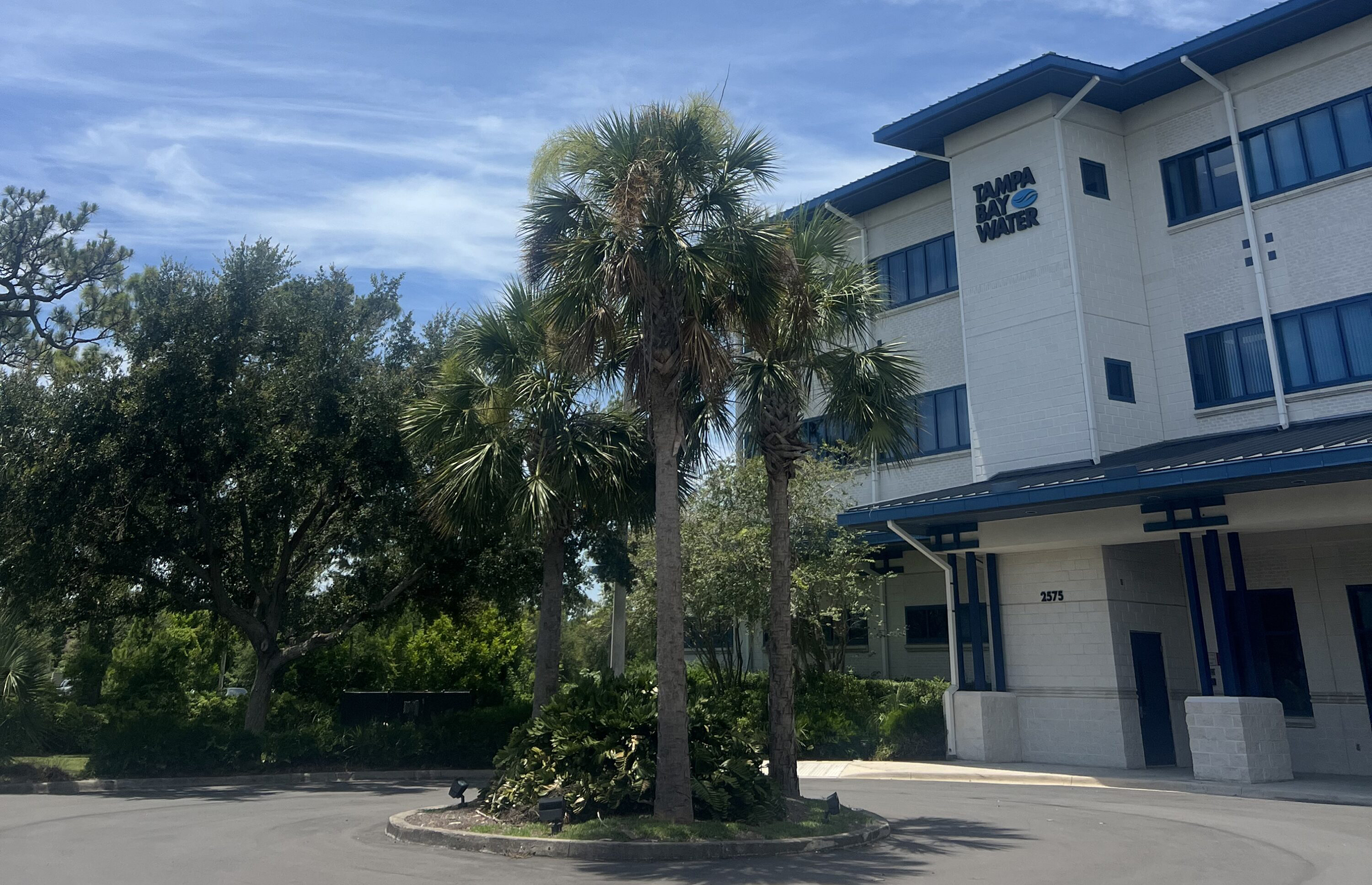
In 2019, Tampa Bay Water Board of Directors joined litigation against PFAS manufacturers to protect ratepayers from contamination-related costs.
Photo by Hannah Goldman

February 27, 2026
Photo by Hannah Goldman

Residents of the Tampa Bay region rarely think about what happens when they turn on the tap. Behind the scenes, a complex network of reservoirs, aquifers, treatment facilities, and distribution systems work continuously to supply clean drinking water to more than 2.6 million people.
With more public attention on PFAS, a form of “forever chemicals” linked to extreme health concerns, as a result of continued Environmental Protection Agency (EPA) research, public utilities such as Tampa Bay Water have faced pressure to upgrade, test, and monitor their treatment systems. But in Tampa Bay, the response to PFAS doesn’t stop at filtration. Some agencies, including Tampa Bay Water, are turning to the courts to hold chemical manufacturers accountable.
In the national reckoning over “forever chemicals,” Tampa Bay Water’s $21.7 million settlement against chemical manufacturers demonstrates that environmental justice is not only about regulation, but about ensuring a shift toward corporate responsibility in the fight for clean drinking water.
Perfluoroalkyl and Polyfluoroalkyl Substances (PFAS) are a group of synthetic chemicals that have been commonly used in consumer products since the 1950s, according to the U.S. Department of Health and Human Services. They are found in stain-resistant fabrics, nonstick cookware, food packaging, and firefighting foam. Additionally, the U.S. Department of Health and Human Service explains that the carbon-fluorine bond that makes up PFAS are extremely strong and are unable to degrade easily in the environment, hence the name: Forever chemicals.
The previous Environmental Protection Agency rule from April 2024 set the maximum contaminant levels as low as four parts per trillion (4 ppt) and gave public water systems until 2031 to comply. This marked the first time the federal government had imposed nationwide limits on these “forever chemicals.”
Since the EPA last updated its compliance records in November 2025, more than 100 additional water systems have reported yearly averages of PFOA, PFOS, or PFAS over the limit of four parts per trillion (4 ppt), according to reporting by USA Today. The updated records highlight the large-scale challenge facing utility agencies across the country as the deadline approaches. While the initial regulation demonstrates a significant step for public health protection, it also introduces financial and operational challenges for utilities responsible for testing, filtration, and long-term monitoring. For large regional suppliers such as Tampa Bay Water, the question is not only how to meet these standards, but how to fund the infrastructure necessary to do so.

Tampa Bay Water took a proactive step years before the regulation was finalized. In 2019, its Board of Directors joined a class action lawsuit against manufacturers, sellers, and distributors of PFAS, seeking to recover costs associated with sampling, testing, and treatment.
In July 2025, that decision resulted in a $21.7 million settlement being awarded to Tampa Bay Water, with the possibility of additional funds pending according to Tampa Bay Water. The settlement was a part of a national agreement that included billions of dollars from major manufacturers such as 3M and Dupont.
This reflects an effort to shift the financial burden of PFAS contamination away from ratepayers and toward the companies that produced the chemicals. The outcome represents not only a financial recovery, but a statement about accountability.
Research suggests that PFAS contamination is not evenly distributed. A 2023 peer-reviewed study led by researchers at Harvard T.H. Chan School of Public Health found that communities with a large percentage of Black and Hispanic/Latino residents are more likely to be impacted by elevated PFAS in their drinking water. The researchers linked this disparity to sources of PFAS pollution such as manufacturers, airports, military bases, wastewater treatment plants, and landfills near bodies of water located by these marginalized communities.
The study estimated that roughly 25% of the residents in the states examined had community water systems consisting of PFAS levels above the EPA’s proposed limits of four parts per trillion. These findings emphasize how PFAS contamination is not solely a regulatory challenge, but also an environmental justice issue.
As utility agencies like Tampa Bay Water pursue legal and regulatory solutions, they also highlight a commitment to protecting communities from enduring the consequences of industrial pollution. The research showing how marginalized communities face disproportionate PFAS exposure stresses why accountability matters beyond financial recovery.
Environmental justice requires not only regulating harmful chemicals but ensuring that cleanup costs do not fall on the communities facing greater health risks. Protecting drinking water means upholding the principle that those who created the contamination help fund the solution. As manufacturers begin to take accountability and marginalized communities continue facing detrimental health risks, one question remains, who truly pays for “forever.”
A project of

in collaboration with