 All Topics






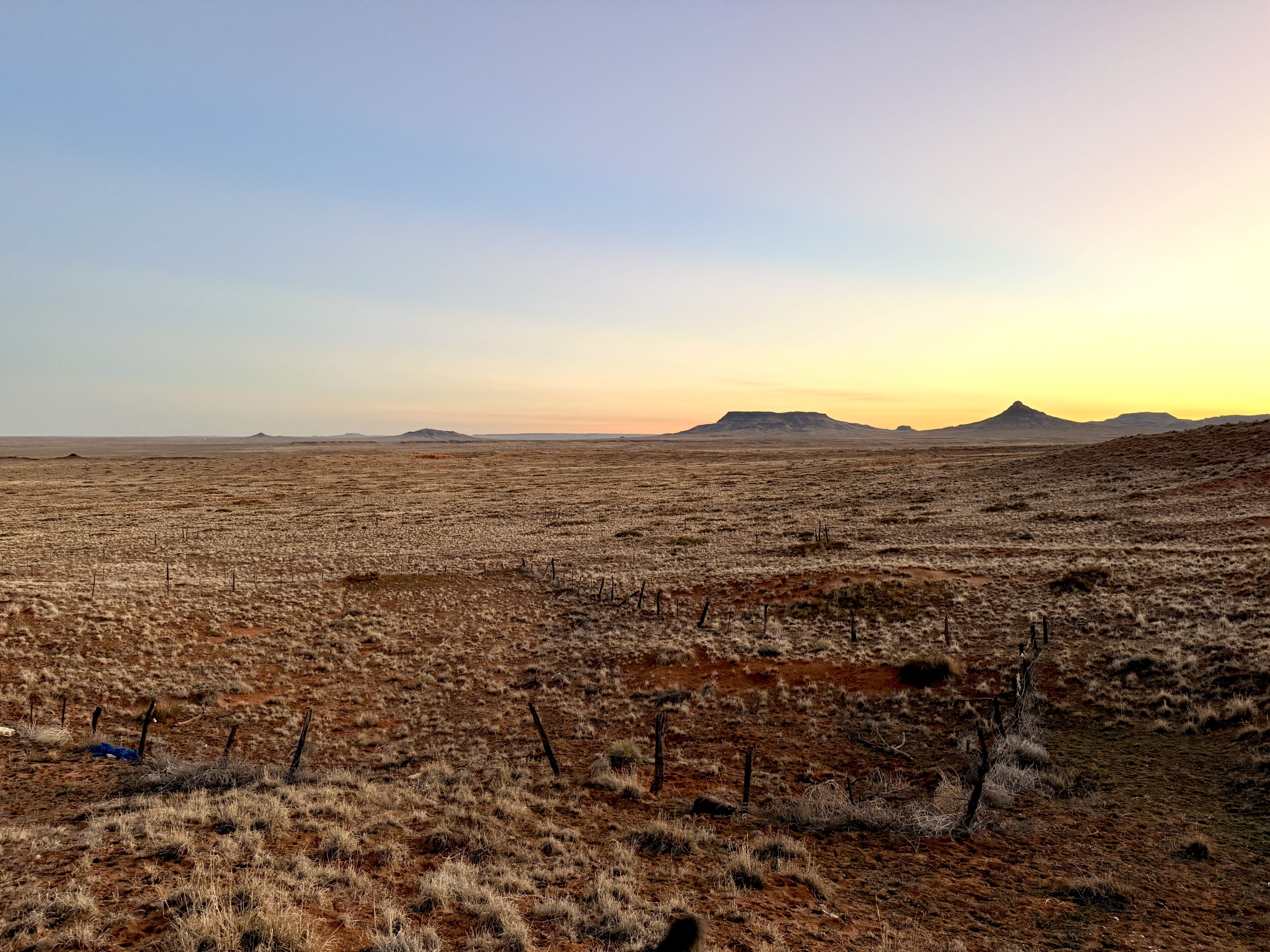
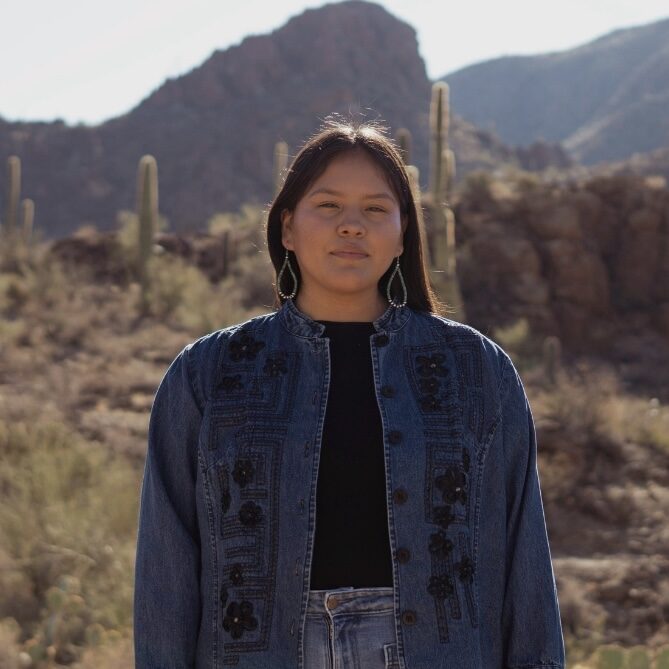
My great-grandmother's cornfield in Seba Delkai, Arizona, where generations of my maternal family have lived and planted.
Photo by Tommey Jodie
Photo by Tommey Jodie
The Present Tense of a Cornfield
After Natalie Diaz

In Seba Delkai, my great-grandmother preserved a 600-year-old cornfield until her death in 1985. But it is not merely a cornfield, it is also a part of my body.
Her house is situated on a plateau, and the cornfield is nestled in a crest below, carpeting Hopi and Diné homelands.
At first glance, the rows are gone, fence posts lean at uneven angles, split by years of bursting sun and weather. My parents and I stood there for a while before we began tending it. My mom inspected the field and told me our relatives had not planted here in decades.
“The ground…,” she said, scooping up a handful of dirt, “…it’s alive. Hungry for planting. It’s rested for too long.”
↠
This field was not placed at random. It lies below so that when a monsoon cuts across the desert, the runoff will carry the sediment and the upland topsoil nutrients can stream downward with the rain, renewing the ground season after season.
Our subsistence was/is structured through this observation of land moving water and placing our fields accordingly, it reflects an intricate understanding of regional topography and seasonal water flow by my relatives.
↡
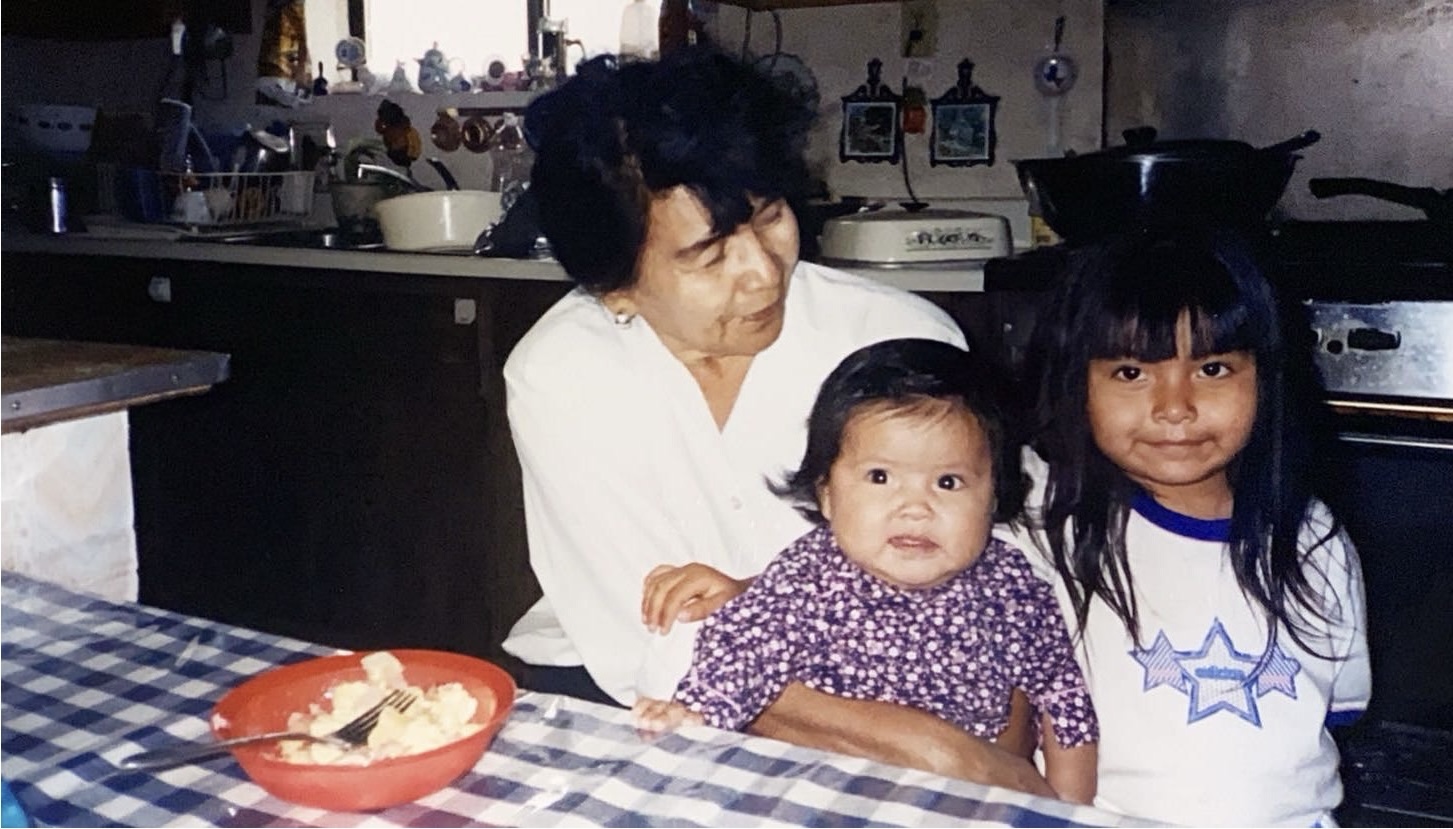
I am because of my great-grandmother, my ancestors. Therefore, I am because of dá’ák’eh / cornfield / dá’ák’eh. I carry this field in me. This is not a metaphor. It is a happening — living through my feet into my legs fielding my body into my palms outward my mouth blooming into speech. My great-grandmother pressed seeds into its soil. The tending moved through her muscles and into my grandmother’s, into my mother’s, into mine. This cornfield has nourished my entire maternal genealogy for hundreds of years.
↞
As Diné, we know a cornfield is forever in the present tense. This way of placing ourselves within land-centric systems was not accidental, it was practiced and carried forward across generations.
Our relations endured, but the systems that allowed them to flourish were systematically restructured. To understand why planting no longer organizes our days, we have to examine that disruption:
↟
Jennifer Denetdale, Ph.D., makes this plain: “The [military] campaigns against our people were not only about removal…they were about breaking down the systems that allowed our communities to be self-sustaining.”
To have your feet planted in this land, then suspended is to feel the severing not only in land but in body. This is how a state asserts itself: it decides where feet may roam, it decides which fields may feed you, it decides which seeds you may touch.
Anthropologists name this aftermath the law of contagion: things once in contact continue to act on one another long after separation. If the contact endures, so does the condition. Colonial contact does not remain in the past, it persists as systems: subsistence gave way to rations, rations gave way to wages, wages reshaped hunger. The body remembers each shift.
↠
When my ancestors walked more than five hundred miles home after the 1868 Treaty, Denesia Livingston explains, “Everything was destroyed…the fields were burned. Our people had nothing to go back to, except for what was negotiated in the treaty, which were rations…. and the seeds were not our seeds, the seeds came from the U.S. government.” Seeds carry lineage the same way we do, they remember the land they were shaped by and that memory re-enters us when we eat our traditional foods.
In the years that followed, herds grew fewer, flour came in government sacks, corn was still grinded, but less often. We brought home things we did not raise. What we ate no longer answered only to our own hands. The body learned new engineered hungers.
↡
Livingston names the present condition that grew out of this history as food apartheid: a system built through policy, power, and intentional design that separates Indigenous communities from their ancestral foodways. “Our food systems were disrupted on purpose…what we are living with now is the result of that design.”
The 2014 Diné Food Sovereignty Report traces that design in numbers: half of respondents travel off the reservation just to purchase groceries; more than 27,000 square miles are served by only 13 grocery stores; more than half of Diné households live below the national poverty line.
This was not inevitable. This is a scorched-earth campaign that never ended, it reorganized Diné subsistence into dependence and called it “sovereignty.” This is what it was meant to do.
And yet the same report records something else: 82 percent of respondents expressed interest in revitalizing traditional Diné food and agricultural practices; 90 percent said they would learn about traditional foods if information were available. Even under imposed conditions, the desire to plant remains.
↞
Planting is not merely agricultural labor, it is a cosmological practice. The cornfield below my great-grandmother’s house is not an isolated plot. It is hundreds of years of living in right relation to water, soil, season, and one another.
Dá’ák’eh is not only a field, it is how I understand my place in this world.
↟
When I say that this cornfield is part of my body, I do not mean this sentimentally. I mean that the way I move through the world has been shaped by (eco)systems that precede me and will continue beyond me.
The cornfields train the hands that tend it, the tending trains the body, the body learns rhythm from season and season from water. The land has always been a teacher to those who seek it.
To plant again, then, is not a return to the past. It is an act of re-centering the (eco)systems that have sustained Diné life for generations. It is a refusal to organize ourselves solely around extraction, capitalism, and engineered hunger. It is a decision to live under the authority of the land.
↠
The cornfield and the desert pulse through us Diné. They are older than our grief and wider than our lifetimes, and they remember us even when we forget ourselves. We are only passing through what has always lived here.
I am because of dá’ák’eh, because of its enduring presence and its refusal to cede and run dry. I am formed within the cosmology it holds. The field does not end with my body. My body is only one moment within its ongoing life.
Its life-giving, life-making ability has sustained all of my mothers, all of my fathers, all of my grandmothers, all of my grandfathers, and it will continue.
It is part of my body, and I am a tiny bit of its greatness.
A project of

in collaboration with