Aspen Institute fellows make dreams a reality with food justice solutions in Chicago
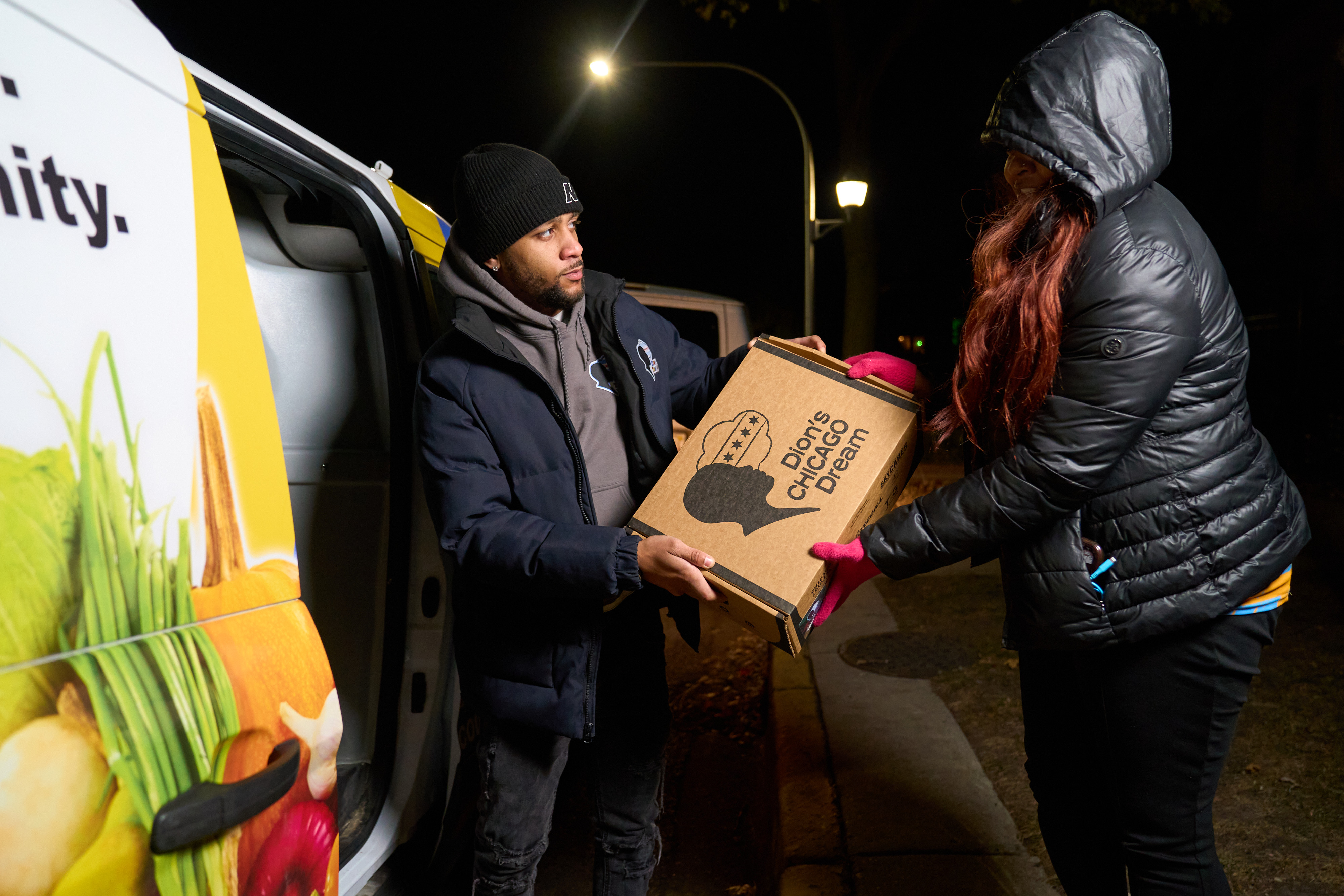
"Sprinters," or food delivery employees at Dion's Chicago Dream, bring fresh produce to households experiencing food insecurity in all 77 of Chicago's neighborhoods.
In 2020, Dion Dawson’s vision for fighting food insecurity in Chicago began with a GoFundMe and a dream.
Since then, his team has grown to 53 employees, who have provided more than five million pounds of fresh fruits and vegetables to households experiencing food insecurity in Chicagoland.
Dawson described his organization, Dion’s Chicago Dream, as a social enterprise that “fights food insecurity at the intersection of last mile logistics and health equity.” His business model does this by purchasing, packing, and delivering 10 pound boxes of food to households enrolled in the program.
After signing up for the program, households are guaranteed weekly deliveries for at least a year. Beyond that, they can stay if they need to or unregister once they are in a stable financial position.
The boxes delivered by Dion’s Chicago Dreams provide underserved families with 5 days’ worth of healthy food options. (Photo courtesy Dion’s Chicago Dream)
Dawson said he has been aware of food insecurity in Chicago for much of his life, ever since he was a kid growing up homeless in Englewood — a neighborhood whose average life expectancy is more than 30 years lower than that of Streeterville in downtown Chicago, accounting for the largest living gap in the nation.
Dion’s Chicago Dream currently serves more than 5,300 households across 182 ZIP codes in Cook County, Illinois, including all 77 neighborhoods in Chicago.
Food justice solutions through community
To completely solve the problem of food insecurity in Chicago, Ruby Ferguson, a food equity policy worker and friend of Dawson, said racism and poverty would need to be reversed.
A dietitian by training, Ferguson was led to her work as a means to address becoming “really tired of trying to help [her] patients get access to food.” Now, as the Senior Director for Community Engagement at the Greater Chicago Food Depository, she works with roughly 850 partners in Cook County to help Chicagoans get access to food: this includes food pantries, soup kitchens, shelters, local growers, and more.
Ferguson said issues with food equity in Chicago are not unique to the city.
“There has been historic and intentional divestment in certain community areas that have resulted in a mass exodus of food businesses” nationwide, she said. Restaurants, mom and pop shops, and grocery stores are among the most affected.
However, she said many of the solutions in progress have to do with supporting preexisting methods rather than creating new ones altogether. She also said communities often have ideas for solutions, but face barriers in accessing the capital to pursue them.
That capital often comes from the American Rescue Plan Act and the Chicago Rescue Plan Act. One recent success made possible by the Chicago Rescue Plan was the launch of a community growers program, which allocated $2 million to local growers to give them access to land and water.
Maximizing availability, minimizing waste
Ferguson and her team also “unlocked” a license that gave Chicago growers permission to sell food directly from their property instead of going through a secondary distributor, reducing potential blockages in getting food into the hands of those who need it.
Ferguson’s main approach to ensuring sustainability is to find out where there are opportunities for food rescue in Chicago. That allows for an “agency enabled model,” where partners of the food depository are connected with retailers who can pick up food and distribute it.
She also said building a local food system promotes sustainability in a number of ways, as it minimizes the need for food to be transported long distances and automatically makes produce more seasonal.
Moving forward, Ferguson hopes to continue increasing access to local, sustainable food, possibly by creating a year-round public market.
Since its inception, Dream Deliveries has provided more than 170,000 pounds of fresh produce to more than 2,000 residents every week. (Photo courtesy Dion’s Chicago Dream)
Dawson said his team also strives for sustainability when procuring food, and 22% of their produce is sourced locally from organizations like the Urban Growers Collective and Growing Home.
Additionally, when Dion’s Chicago Dream relocates to a new headquarters in Chicago’s Englewood neighborhood next summer, the goal is to reduce emissions by taking its fleet fully electric.
Recognition and mission success
Though Dawson and his team have been featured on the Ellen Show and traveled around the world to spread the word about their mission, Dawson said “the dopest part” about the organization’s progress is when people recognize delivery staff out in their communities and know what they represent.
He said he is proud of “the consistency of what [they’ve] been able to do,” such as creating wage-paying jobs and becoming a nearly $7 million company while upholding their goals and values.
“We just want to make sure that every single day, we’re putting one foot in front of the other one and we’re serving people with dignity,” Dawson said.
This website uses cookies to provide you with an improved and personalized experience. By using this site you agree to our use of cookies. Please read our cookies policy for more information on the cookies we use and how to delete or block them.

 All Topics