
 All Topics







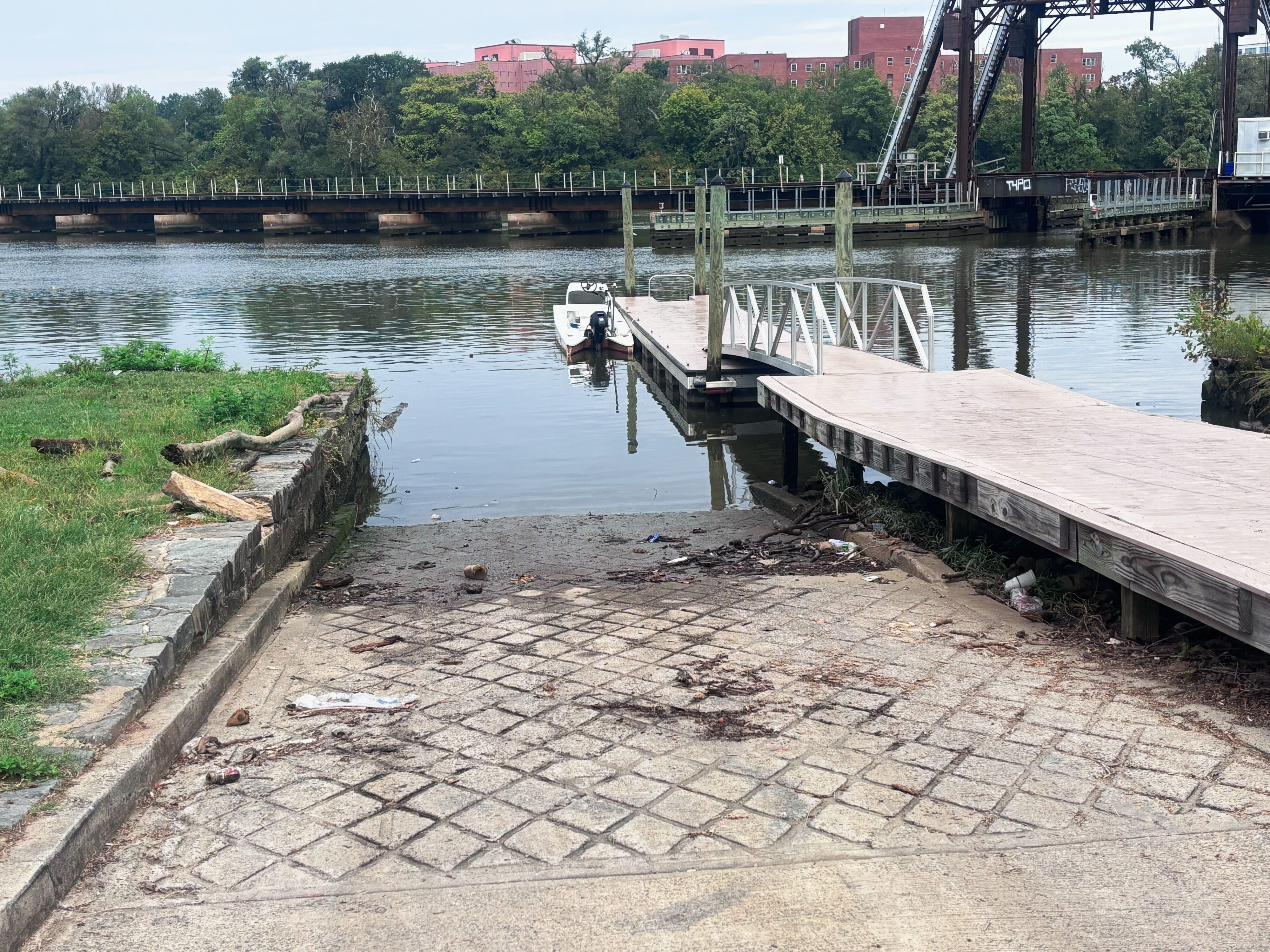
Bottles and cans sit along the Anacostia River.
Maggie Rhoads
Maggie Rhoads
Planet Forward Editorial Assistant | George Washington University
November 13, 2025
Maggie Rhoads
Planet Forward Editorial Assistant | George Washington University
The DC Council held an 11-hour 15-minute hearing on the Recycling Refund and Litter Reduction Act of 2025, also called the “bottle bill,” on Oct. 1.
Plastic bottles account for 60% of all trash retrieved from the Anacostia River by weight, according to the Anacostia Riverkeeper. Councilmember Brianne K. Nadeau, a Democrat from Ward 1, said the goal of the bill is to reduce the overall amount of litter found in the Anacostia River by providing monetary incentive, along with benefiting the public health of people and wildlife.
Nadeau introduced the law in January. It would enable customers to return empty bottles and cans to businesses in the District where they would receive 10 cents for each container.
“If you travel by boat along the Anacostia River, you can see how many bottles and cans wash out from neighborhoods into the river,” Nadeau said in an email.
Chris Weiss, 58, executive director of the DC Environmental Network, testified on behalf of the bottle bill at the DC Council hearing. During his testimony, he said over 50 regions globally operate a system similar to the scheme being proposed in the bottle bill, including 17 European countries, Australia, Canada and more.
Weiss later added in an interview that 10 states have implemented bottle bills, including his home state of California. When he used to live in California, he said he would go around and collect bottles to receive a little extra cash.
“My dad would say, ‘Hey, you want some money? Go collect some bottles,’” Weiss said.
California passed its Beverage Container Recycling and Litter Reduction Act, or bottle bill, in 1986.
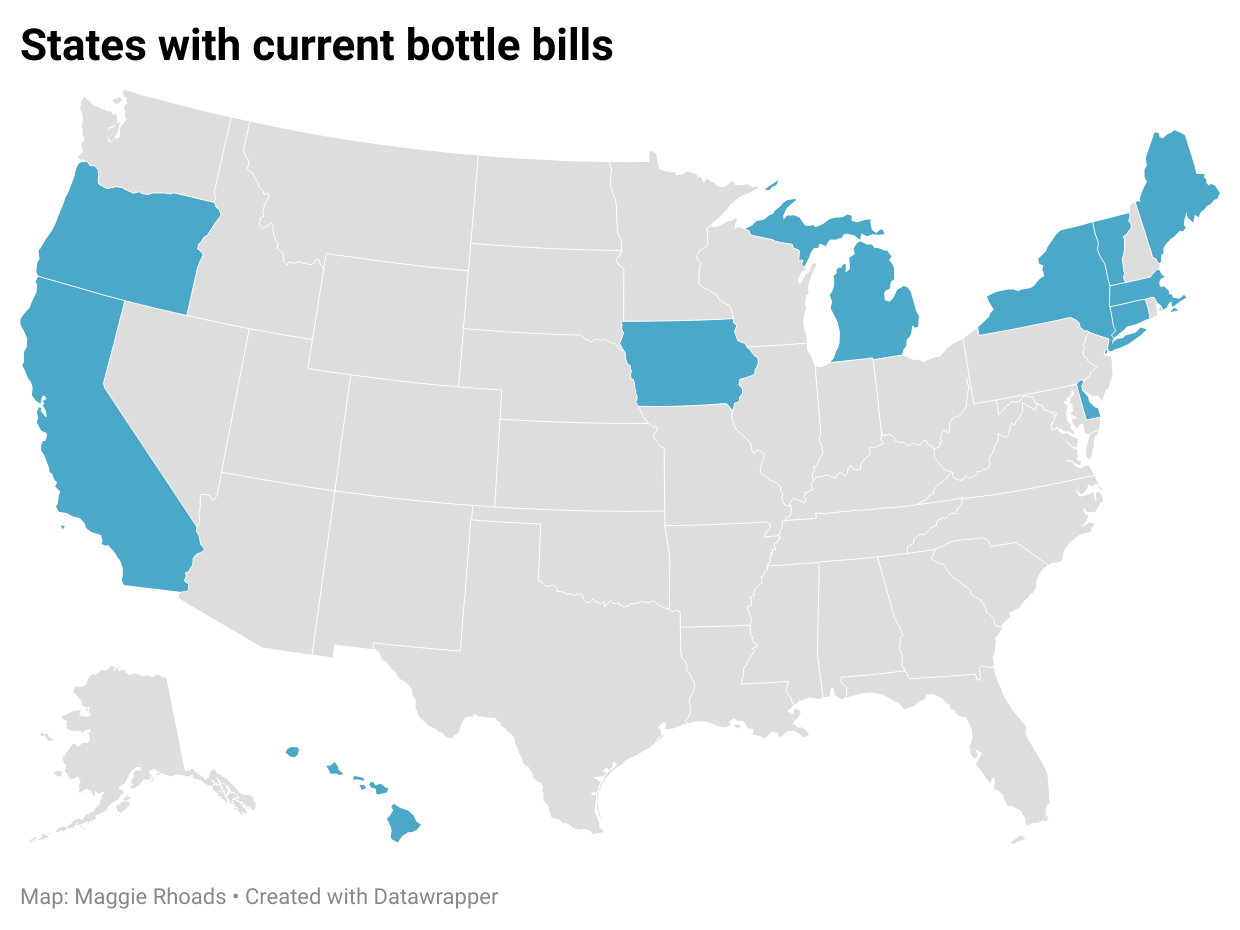
In addition to California, Connecticut, Delaware, Hawaii, Iowa, Maine, Massachusetts, Michigan, New York, Oregon and Vermont also have bottle bills. The first state to enact one was Oregon in 1971 with the Beverage Container Act, according to the Oregon Beverage Recycling Cooperative, which runs the program.
During his testimony, Weiss said the Ocean Conservancy reported nearly 27% of the U.S. population is covered by a system like the one being proposed in the District. Despite representing just over a quarter of the country, he said these programs are responsible for more than 50% of aluminum can recycling.
This spring, the District faced a potential $1 billion budget cut when a federal continuing resolution would have caused the government to move back to its fiscal year 2024 spending levels mid-year, according to the DC Fiscal Policy Institute.
This budget bill did not pass but the city responded with hiring and pay raise freezes along with employee furloughs, per Axios.
Weiss said beverage producers will fund the program rather than taxpayers.
During the hearing, Risa Hirao, president and general counsel of the District of Columbia Association of Beverage Alcohol Wholesalers, stood in opposition to the bill. She said distributors will be responsible for funding the program rather than the District government.
“D.C. businesses cannot absorb this level of cost,” she said during the hearing.
Riverkeeper Trey Sherard, 41, from the Anacostia Riverkeeper, an organization working to restore and protect the Anacostia River, said during the hearing that small businesses with under 2,000 square feet of retail space are exempt from the law, meaning they are not required to collect bottles or cans from the public, Sherard said.
The Anacostia Riverkeeper contributes to trash collection in the Anacostia River. They host river clean-up events and have Bandalong Litter Traps working to catch trash in the river according to their website.

Since 2015, when the Anacostia Riverkeeper began keeping detailed data collection of their community cleanups and traps, they have removed 187,098.2 pounds of trash from the Anacostia River, averaging out to 17,000 pounds of trash per year as of October 2025, according to an email sent by a representative of the Anacostia Riverkeeper.
The email said they have removed approximately 339,293 plastic bottles from the river.
These plastic bottles have effects on people, Sherard said. He said the bottles add microplastics, or pieces of plastic less than five millimeters, into the environment for people to breathe, drink and eat. Microplastics are absorbed into humans’ bodies and cause various diseases within the endocrine and reproductive systems, according to the Yonsei Medical Journal.
“We have plasticized ourselves,” Sherard said.
Lorraine Docherty, 56, also spoke in support of the bill. Docherty is executive director of City Wildlife, an organization rehabilitating injured and orphaned wildlife in the District. She said in an interview that wildlife “frequently” becomes entangled with plastics, which can lead to an untimely death through starvation or predation.
During her testimony, she said a study from the American Chemical Society of Environmental Science and Technology which she said plastic pollution has exceeded the safe planetary boundary, meaning rainwater is no longer safe to drink due to microplastics.
“D.C.’s bottle bill offers a proven solution,” Docherty said.
As of publication, it is unclear when the next hearing on a potential District bottle bill will occur.

Planet Forward Correspondent | University of Georgia

A project of

in collaboration with