
Topic Page: Adaptation


The planet is changing. The cockroaches will be fine, but what about us? See what these PF Members are doing to adapt to the impacts of climate change. Have an idea in Adaptation? Tell us

Related Categories : | Biomimicry | Climate Change | Green Communities | Green Living | Health |


Back to Top

News

Environmentalists hope to turn the tide against use of sea walls.

The longtime practice of dumping huge rocks and chunks of concrete along the coastline to stop erosion is coming under fire

‘Venice of Northwest Alaska’ sinking because of climate change.

he permafrost has sunk so much in one Northwest Alaska village that bridges are shifting, outdoor stairways hang over the ground and sagging

Hobbits Had it Right

The McLaren Tech Center strikes it big by merging with the landscape rather than dominating.

Receding Sea Ice Helps Storm Hammer Alaska’s Coast

Alaska is getting hit by a historic storm, and their melting icy coastline has only made it worse.

Facebook building a giant, sustainable server farm in Northern Sweden

Facebook is building a server farm in cold, Northern Sweden. It will draw all of its electricity from the town’s massive geothermal network.

Most U.S. billion-dollar disasters ever

There were 14 weather-related disasters that cost over $1 billion in 2011. See the chart for how much the number has climbed since 1980.

Climate Change, White Roofs, and Common Sense

White roofs are a popular way to “cool” a city down, but are there negative side effects?

Even the Wind is Bigger in Texas

Texas’ wind power infrastructure is expected to double by 2013 based on current projections.

Mobile Solar Technologies

Companies are developing apps for electric vehicles to find the nearest and cheapest recharging stations.

Crop scientists now fret about heat not just water

Crop scientists are pondering an odd question: could the danger of global warming really be the heat?

Wallets will soon feel effect of climate change

Panel says home insurance rates and cost of city water will rise as the planet gets hotter and the weather worsens.

Cities hit hardest by rising seas

Calcutta, India leads the list of cities that will be most damaged by rising sea levels. Which two U.S. cities are on the list?

Back to Top

Webisodes

Beer as a Model for Sustainable Business

THIS WEEK: Holy cow! This week Planet Forward got up close and personal with some Virginia livestock. DC Brau, the first local brewery in D.C. feeds their organic waste to livestock in the Virginia area. Take a look!

Learning How to Adapt from our Ancestors

THIS WEEK: This week Planet Forward is taking a look at the work PISA, a GW-based group, is doing in Nam Dinh, Vietnam. The women in Nam Dinh are adapting to a changing planet and they say they learned their tricks from none other than their ancestors!

Building Green for the Future

This week, we take you into the classroom and look at how some organizations are hoping that kids will be “sustainability natives.”

An Innovative Approach to Water Conservation

THIS WEEK: Our rapidly increasing consumption of water is creating concerns about what the world would be like without any! One team, however, created an innovative solution to the planet’s quickly disappearing water. Check it out in this week’s webisode!

WATCH!

Living Sustainably on a College Campus

We profile three schools that are working toward more sustainable college campuses.

WATCH

A Solar Conversation with Secretary Chu

THIS WEEK: In this week’s webisode, Planet Forward’s Frank Sesno interviews Secretary of Energy, Dr. Steven Chu at the 2011 Solar Decathlon! Chu talks about the coolest innovations, and even wonks out a bit on r-values and building materials.

WATCH!

SD2011 Trend: Green Roofs

Check out this week’s webisode where Planet Forward’s host Frank Sesno speaks with Don Ferrier of the National Association of Home Builders at the Solar Decathlon about the costs and benefits of green roofs.

WATCH!

Solar and the City – Team New York’s Solar Decathlon House

THIS WEEK’s WEBISODE: The Solar Decathlon teams are in Washington DC! Check out Team New York’s Roof Pod — it sits atop a sky rise building and helps generate power PLUS: Brendan Owens, Planet Forward’s newest Expert weighs in the use of new building materials.
WATCH!

Solar Decathlon – Tennessee’s on Top

Viewers voted and TENNESSEE is on top in the race for the Solar Decathlon! Check out the Tennessee team’s use of solar energy, insulated windows and a remote control iPad. Ask expert Bill Worthen what HIS thoughts are on the Tennessee team’s Living Light House.
WATCH!

DOE's Solar Decathlon Brings #SunnyIdeas to Planet Forward

This week, we begin Planet Forward’s coverage of the Solar Decathlon! 20 collegiate teams from around the world are designing and building sustainable solar homes. In this week’s WEBISODE, we take a look at the unique use of water in The University of Maryland‘s home.
WATCH!

‘The Big Uneasy,’ The PF Interview with Harry Shearer

In this week’s WEBISODE Planet Forward host Frank Sesno sits down with Harry Shearer, the multi-talented comedian who is the voice of more than 21 Simpsons characters about his documentary on Hurricane Katrina The Big Uneasy
WATCH!

Bangkok Underground

In this week’s WEBISODE we travel to Bangkok to see what they are doing to cope with floods. PF Producer Victoria Riess talks with Porntep Techapaibul, the Deputy Governor of Bangkok.

WATCH!


NBR

Amphibious House (Your Loss, Hurricane Irene)

As the east coast picks up after Hurricane Irene, ask yourself this: would you invest in a house that can float only when it needs to? Planet Forward host Frank Sesno, brings you the story for this month’s Nightly Business Report segment.

WATCH!

Screen shot 2011-08-26 at 12.48.57 PM

Solar Decathlon: The Race to Build the Most Efficient Solar Home

Peek into the solar powered house designs from Middlebury College in Vermont and University of Maryland. It’s all for the Solar Decathlon competition sponsored by the U.S. Department of Energy.

WATCH!

Back to Top

Articles From the Blog Related to Adaptation

A Few Smart Ideas to Clean Up and Re-energize Cities

More people live in cities now than in any other time in human history–nearly half the world’s population. They are the economic engines of our society, but they are also the source of 80% of global greenhouse gas emissions. We all have a choice in where we live, and a lot of us are moving …Read More…

DC’s National Mall Gets a New Defender

By Morgan Weil and Haley Milon Watch the video>> As someone who lives a block away from the National Mall, I cannot imagine looking out my window and seeing a lake. Or a river. Or a bay? Well, that’s a possibility. Yep. Those 309.2 acres of federal property known as the National Mall, home to …Read More…

After COP17: Time for Local Climate Action

Two things are clear in the wake of the COP17 international climate negotiations in Durban, South Africa. First, time is not on our side in the fight against climate change. And second, the world needs to look beyond national governments for meaningful ways to reduce greenhouse gas emissions today. The leadership of local governments—on display in Durban—takes on a new level of importance.
Read This

Hotter, Drier, Meaner: Trends Show Planet More Hostile to Agriculture

A host of data point to one conclusion: Our increasingly hotter, drier planet is going to be a tough place to farm.

Read This

An International Look at 5 Sustainable Communities

Take a green tour of 5 sustainable communities around the world. From South Africa to Japan, local communities are going green. Has your community made any steps towards a cleaner future? Let us know, here!

“Cooking Shouldn’t Kill”

Every year, two million people die from a killer in the kitchen: their cookstoves. A new report from the UN Foundation says the toxic smoke from these crude devices cookstoves can lead to child pneumonia, lung cancer, chronic obstructive pulmonary disease, and heart disease, as well as burns and disfigurement. The report lays out a …Read More…

Ask an Expert: Linda Yarr

Linda Yarr has been working with communities in Southeast Asia to build resiliency to climate change. How can we help the developing world adapt to climate change and gain access to energy when oil and coal are becoming more restricted? What is the best way to help these communities grow sustainably?

Ask your questions now!

Green Building in Schools could save $20 billion in 10 years

Here’s a puzzler.  Right at the time of day when some kids are most likely to get into trouble, most schools close the door and turn off the lights.  Seems silly, doesn’t it?  That disconnect, along with a slew of other good reasons, has helped give  birth to the community schools movement. It aims to …Read More…

Center for Green Schools and UTC Announce New Findings on Green Schools

At the annual Greenbuild Conference Expo in Toronto, the Center for Green Schools and United Technologies Corp. held a press conference to announce findings from a new independent study conducted on green schools, as well as initiatives the Center will be taking in 2012. The results of the survey brought light to the fact that Americans are concerned about …Read More…

Using Sustainable Water to Plan for the Next Billion

By Frank Sesno
Last week, Danica May Camacho of the Philippines became the world’s symbolic seven billionth person. The occasion drew mixed feelings in the policy world — what does a booming global population mean for climate risks? To cite one issue, leaders are worried about the declining supply of water in regions vital to economic growth.

Read

Nepal: Front Lines of Climate Change

By Isabella Woods
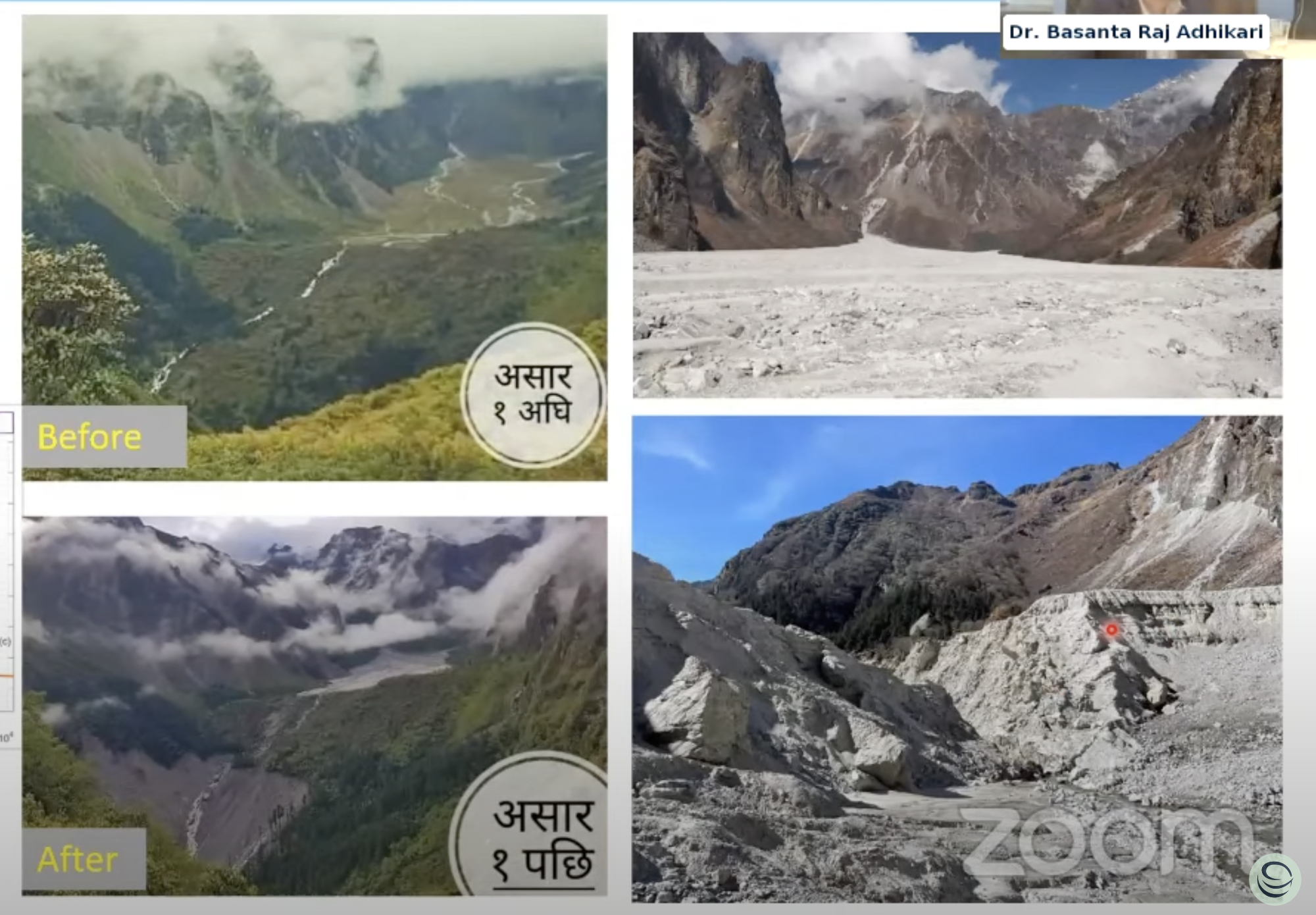
In Nepal, some communities are already experiencing dramatic effects from climate change. Practical Action Nepal is working to support communities to work together to counter these problems.

Read

The Raft House

Coastal communities are facing increased threats from sea level rise, but this idea will help homeowners rise above it. Check out our photo gallery!

Back to Top

Science Corner articles filed under Adaptation

Biochar Produces Better Crops and Cleaner Air

A multinational research team is developing biochars–fine-grained, highly porous charcoal that helps soils retain nutrients and water. These additives can improve crop yields, help inoculate plants with beneficial microorganisms and reduce greenhouse gas emissions. Better crop yields can increase farm income and improve human nutrition. The combination of biochar production and clean-burning cook stoves may …Read More…

Controlling Light Pollution

New measurements of the NSF-funded Kitt Peak National Observatory near Tucson, Ariz., show that sky brightness has remained remarkably constant over the past 20 years, despite the area’s rapid population growth. The study demonstrates that with a conscientious effort, human-caused light pollution can remain constant, despite large population growth in cities. Shielded outdoor lights, required …Read More…

Sparking the Algae Harvest

A team of engineers and scientists at North Carolina State University has developed a new method for harvesting marine algae. By applying an electric charge they change the chemistry of the algae cell boundary and cause cells to clump together. These algae clumps are easier to collect. One of the challenges facing algal oil production …Read More…

Conversion of Sugars to Make Fuels, Plastics and Pharmaceuticals

Researchers have developed a way to make an efficient catalyst that transforms biomass-derived sugars into a compound used in fuels, plastics and pharmaceuticals. The solid acid catalyst is noncorrosive and easily recovered for re-use, making it easier and potentially cheaper than other catalysts such as mineral acids. Renewable sources of fuels and chemicals are in …Read More…

Engineering Bacteria to Make Biofuels

Researchers have re-engineered an anaerobic bacterium known as clostridia to prevent spore formation, a change that improves the bacteria’s productivity in making biofuels. The University of Delaware engineers demonstrated the feasibility of using clostridia (specifically, C. acetobutylicum) as an economically viable, industrial-scale producer of biorenewable fuels and chemicals. Their work could help lower the cost …Read More…

Identifying Severe Weather Outbreaks Earlier

A team of scientists from three universities has developed a weather-prediction system that will allow forecasters to predict tornadoes and other severe storms at least three days before the storms start. Tornadoes and other severe weather outbreaks annually cause loss of life and massive property damage to many portions of the U.S. These research findings …Read More…

Understanding the Nanoparticle in Renewable Energy

Using a powerful electron microscope, a research group at Arizona State University has observed dynamic behavior in small catalytic nanoparticles during energy-related chemical reactions. Nanomaterials can act as catalysts for many important chemical reactions related to sustainable energy. However, many of the best catalysts are composed of expensive precious metals such as platinum or gold. …Read More…

Winter Shrinking by Seven Days Each Decade

Climate trends in the northeastern U.S. show that in the past 40 years, winter has lost seven days every decade and the growing season has expanded by nearly four days each decade. Researchers are figuring out how these changes will impact farmers, foresters, outdoor recreation and wildlife to help them adapt their practices to the altered climate.

Toward a Low Energy Computer: Efficient Caches

In an NSF-sponsored project, computer scientists at the University of Utah have developed techniques to reduce the energy consumption of computers associated with large, temporary storage areas, called caches. The innovation could significantly lower energy consumption and improve performance within multi-core processors, directly impacting future computing devices including laptops, desktops and server processors. The group …Read More…

Oil-spill Cleanup Material: Coal Fly Ash

A team of undergraduate and graduate students at the University of Central Florida is transforming fly ash–a waste product from coal-fired power plants–into an environmentally friendly adsorbent for oil-spill cleanup. Researchers hope this material will be an economical alternative to current methods of soaking up oil at clean-up sites. At the same time, it could …Read More…

Back to Top